Scaled nuclear propulsion in U.S. commercial shipping has the potential to improve efficiency, cut costs, reduce dependence on fossil fuels, and eliminate the need for frequent refueling.
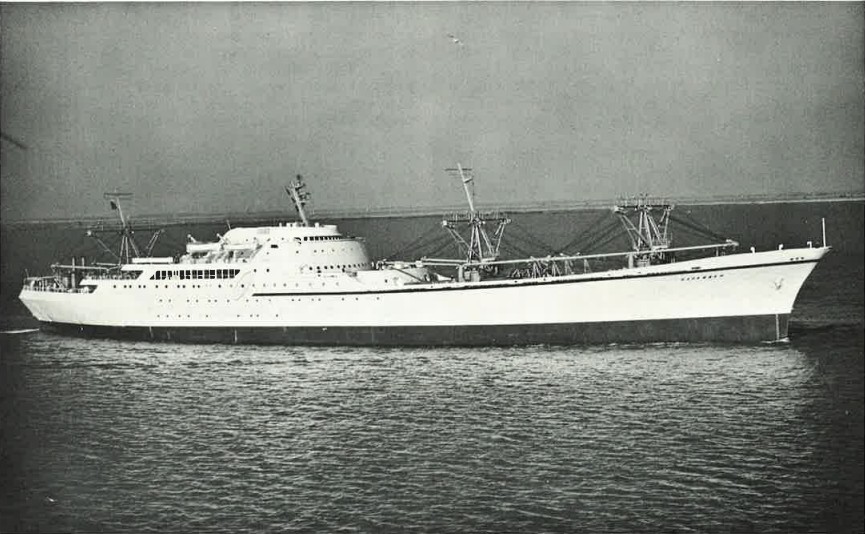
Maritime nuclear propulsion is already widely used by military vessels but has had limited commercial use. Existing systems have tended to be expensive and take up a significant amount of space.
A typical commercial ship generally needs 10 MW–80 MW of propulsion power, which is well within the scope of many small reactor designs.
MARAD is seeking to introduce reactor-powered propulsion through a system-transition lens, rather than a technology demonstration. The agency will take on the role of supporting “stabilization, standards coordination, infrastructure integration, diplomatic engagement, and strategic signaling to reduce uncertainty and enable commercially led deployment.”
The RFI seeks to understand recent advancements in reactor technology and whether nuclear-powered propulsion can be made commercially viable in the United States.
According to MARAD, “Global competitors are advancing the integration of nuclear propulsion into the broader maritime industry, including shipyards, ports, insurance regimes, and logistics networks, which places the U.S. at a strategic disadvantage in the absence of domestic SMR development.”
MARAD has instructed respondents to the RFI to emphasize system architecture, safety, and commercial viability, seeking information on concepts that are developed past the stage of demonstration assets, where uncertainty has been reduced to levels that allow for scalability. This includes seeking to understand both the state of reactor technology as well as liability and regulatory barriers that would need to be resolved.
They said it: “To secure this future for America’s shipbuilding industry, we need to innovate. By partnering with industry experts and outside-the-box thinkers to develop a strong SMR model, we will deliver a state-of-the-art energy source that cuts costs and bolsters national security,” said Secretary of Transportation Sean P. Duffy.
MARAD Administrator Stephen M. Carmel said, “We are seeking critical insights on how the government can help reduce systemic uncertainty, align regulatory structures, and enable the market conditions necessary for private capital and operators to scale these groundbreaking technologies.”
At ANS: The American Nuclear Society’s Operations and Power Division initiated a Civilian Nuclear Maritime Task Force in 2025, seeking to act as convener of Society members and participants to integrate into the process of advancing international codes and standards, regulatory harmonization, workforce development, and public policy engagement.