This threat to food security and the livelihoods of millions of farmers worldwide could be reduced with early detection and disease-mitigation tools, but this remains a major challenge. According to the IAEA, many infections remain latent, making them difficult to detect before they spread.
But nuclear techniques such as gamma and X-ray irradiation have proven valuable, offering the ability to make beneficial microorganisms even more effective biofertilizers.
“By improving traits such as pathogen suppression, plant growth promotion, and environmental resilience, these nuclear-augmented biocontrol agents can reduce the need for chemical pesticides/fungicides and, in some systems, complement or reduce reliance on synthetic fertilizers,” said Naeela Qureshi, a molecular geneticist at the Plant Breeding and Genetics Laboratory of the Joint FAO/IAEA Center of Nuclear Techniques in Food Agriculture.
The CRP aims to develop well-tested pipelines for disease suppression. In combination with high-throughput screening and sensor-based phenotyping tools, nuclear-enabled approaches provide more targeted and efficient interventions.
“The outcome is not just a product but a methodology that countries can adopt, supporting more sustainable plant health management,” Qureshi said.
Launched through the United Nations’ Food and Agriculture Organization’s joint Center on Nuclear Techniques in Food and Agriculture with the IAEA, the CRP is linked to IAEA’s Atoms4Food initiative, which aims to help countries build tailored solutions to tackle the issue of food insecurity. According to the FAO’s 2025 report The State of Food Security and Nutrition in the World, food insecurity impacted around 8.2 percent of the global population in 2024.
The Joint FOA/IAEA center has already had success using this approach to tackle Fusarium wilt in bananas. The center developed multiplex diagnostic assays that offer portable, point-of-care diagnostics at quarantine sites and field offices, and it conducted a research project using the nuclear technique of mutation breeding to generate disease-resistant bananas with promising results.
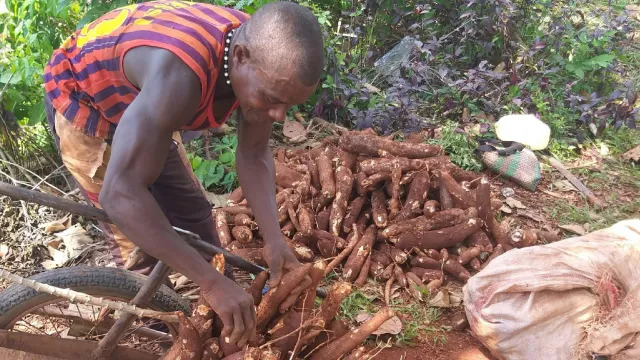
“Together, these examples demonstrate how nuclear techniques can support both rapid, field-level detection and sustainable disease management, which are central to strengthening plant health systems and addressing transboundary crop disease threats,” Qureshi said. “Building on the successful development of multiplex diagnostic tools for Fusarium wilt, the CRP is now expanding this work to other important transboundary pathogens affecting wheat, potato, and cassava.”