-3 2x1.jpg)
ANS hosts webinar on EPRI liquid fuel research
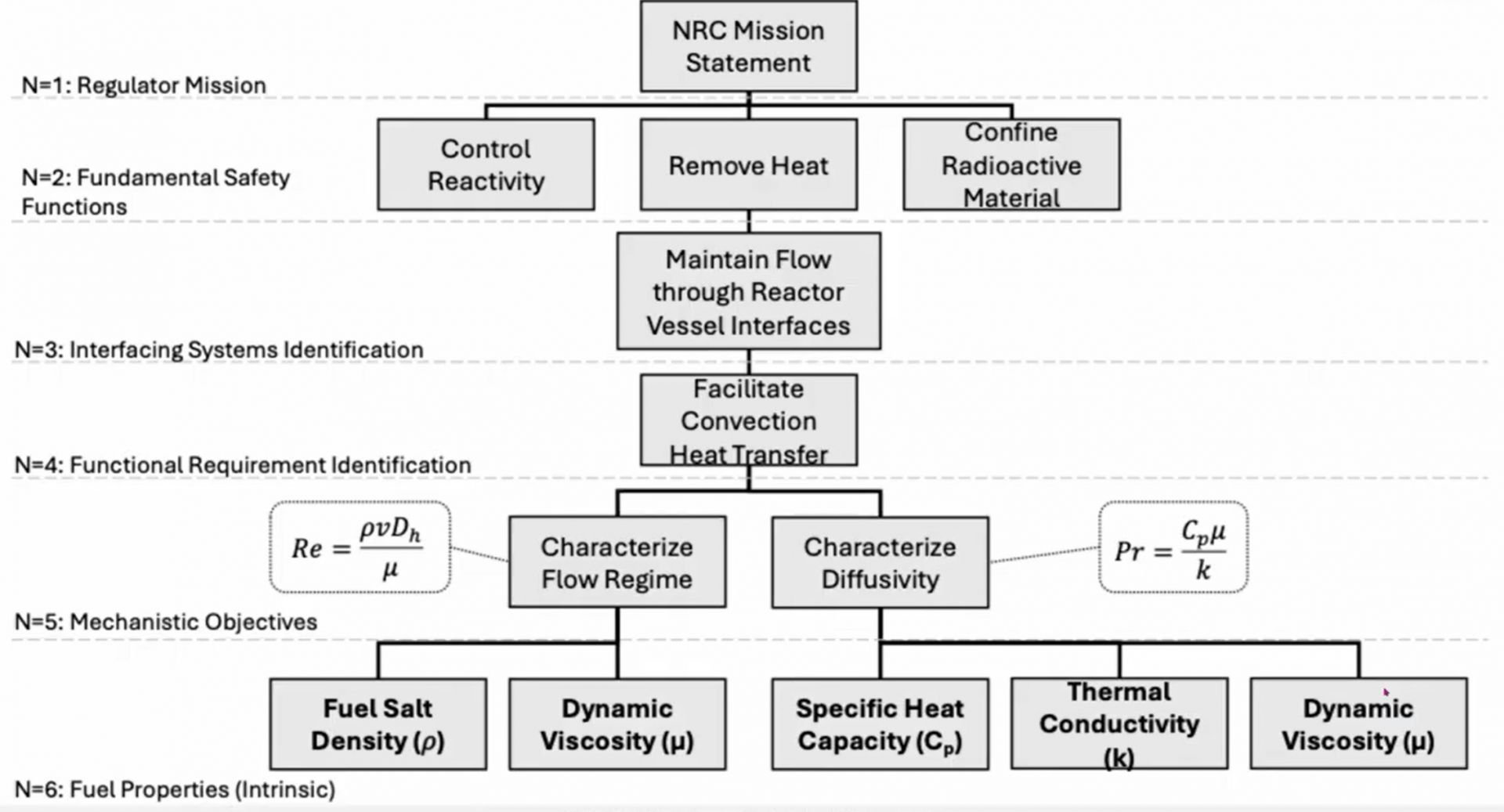
The visual hierarchy of stakeholder concerns used throughout the development of EPRI’s newest report on liquid fuel licensing pathways. (Source: EPRI)
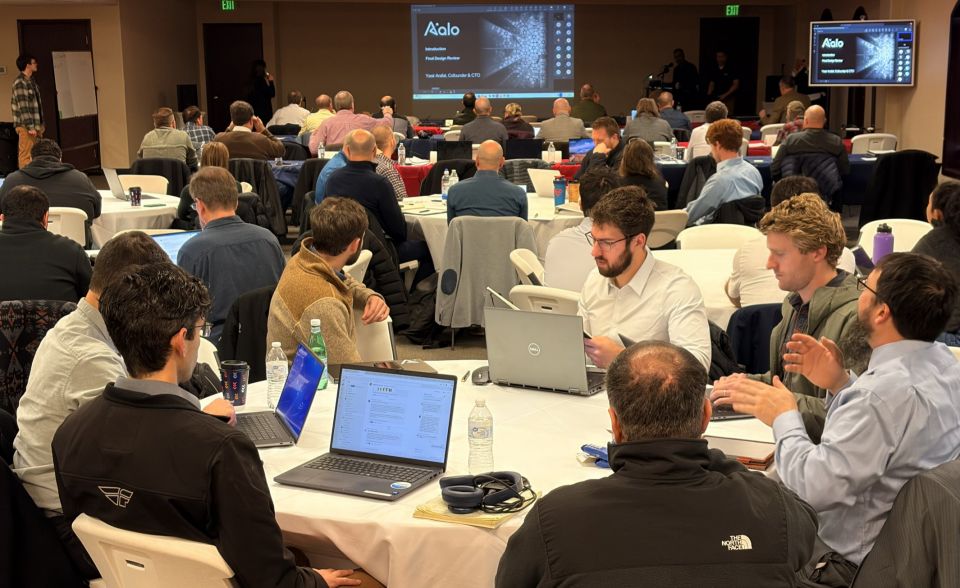
The American Nuclear Society’s Risk-informed, Performance-based Principles and Policy Committee (RP3C) has held another presentation in its monthly Community of Practice (CoP) series. Former RP3C chair N. Prasad Kadambi opened the meeting with brief introductory remarks about the RP3C and the need for new approaches to nuclear design that go beyond conventional and deterministic methods. He then welcomed this month’s speaker: Dan Moneghan from the Electric Power Research Institute, who presented “Characterization vs. Qualification: A Pathway to Liquid Fuel Licensing."
Some background: RP3C is a special committee created by the ANS Standards Board and chaired by Steven Krahn that provides guidance to ANS standards committees on the use of risk-informed, performance-based (RIPB) methods. The CoP is part of RP3C’s charter, which includes training and knowledge-sharing of RIPB principles to exchange ideas outside of the normal management and project processes.
This newest presentation marks the sixth year that RP3C has held regular CoPs. In those six years, these presentations have frequently been used by organizations to help break down barriers that impede the flow of information.
Starting off: EPRI is an international, independent, nonprofit energy research and development organization that collaborates with more than 450 companies on a variety of energy-related technologies.
As a senior technical leader at EPRI, Moneghan runs the organization’s advanced reactor fuel cycle research. Over the past several years, his team has been pursuing a project focused on “ensuring that there is a realistic pathway available to take a liquid-fueled reactor through the licensing process from the perspective of fuel safety.”
In other words, his team is aiming to “provide a qualification pathway for these liquid fuels, because one doesn’t really exist right now.” Their work thus far is gathered in an EPRI technical report—Liquid Fuel Performance Characterization—the findings of which are summarized in this CoP.
Qualification vs. characterization: Moneghan got into the details by asking a simple question: “What are we doing when we are qualifying fuel?” In simple terms, he said, “We are effectively taking a product and we’re evaluating it to make sure that it works the way we want and that it is safe.”
Of course, reactor fuel is a particularly complicated product to assess in terms of both efficacy and safety. These considerations “can’t be made in isolation,” Moneghan said. “The fuel in a reactor is part of an extremely large set of complex systems. It fills a number of roles,” chief among them generating heat, “but it does a number of other things too, because the whole reactor system has to be able to do this safely and for a very long time.”
In the qualification of standard solid fuel, “a combination of conservative modeling and validated experiments” permit an understanding of fuel performance and lead to a defined burnup limit. Safety is ensured by not exceeding this one-dimensional limit.
When it comes to qualifying liquid fuel, the process and associated safety metrics are significantly more complicated. Rather than burnup being the only relevant limit as with solid fuel, a combination of properties contributes to a liquid fuel’s safety case. Each of these properties must be individually limited to ensure safety. Moneghan called this a multidimensional approach to fuel safety performance characterization.
The method: To begin defining the licensing pathway and safety case for liquid fuels, Moneghan and his team developed a hierarchical structure of stakeholder requirements.
When qualifying fuel, the most important stakeholder is the regulator. First, the EPRI team looked at various regulators’ mission statements. In the case of the Nuclear Regulatory Commission, that statement is to provide a “reasonable assurance of adequate protection of public health and safety.”
The NRC lists controlling reactivity, limiting the release of radioactivity, and removing heat as the three fundamental safety functions to meet this goal. So, any fuel safety case must orient itself primarily around these functions.
With these functions in mind, interfacing systems and functional requirements are identified. A safety case must consider what systems are required to support each fundamental safety function, and what must take place within each system.
With those requirements understood, the physics of the system and the properties of the fuel itself are then closely examined. Following this logical thread back up the hierarchy, each specific property of a liquid fuel is concretely linked back to the requirements of the regulator.
The takeaway: If this process is followed, and a multidimensional safety case is developed through a rigorous and exhaustive objectives hierarchy that accounts for all relevant sensitivities and guarantees that a liquid fuel will be safe, what happens next? Is the fuel qualified?
As he concluded his presentation, Moneghan answered these questions by saying “I don’t know, because these methods don’t have acceptance from the regulator yet; that’s actually what we’re working on next.”
Still, if this method is successfully followed, Moneghan said, “I think it’s very reasonable to conclude that your fuel is at least safety function satisfying . . . . Whether or not that is sufficient and adequate for a regulator to say ‘this is equivalent to qualification,’ that is a question that we all are hopefully going to be answering in real time over the next couple of years.”