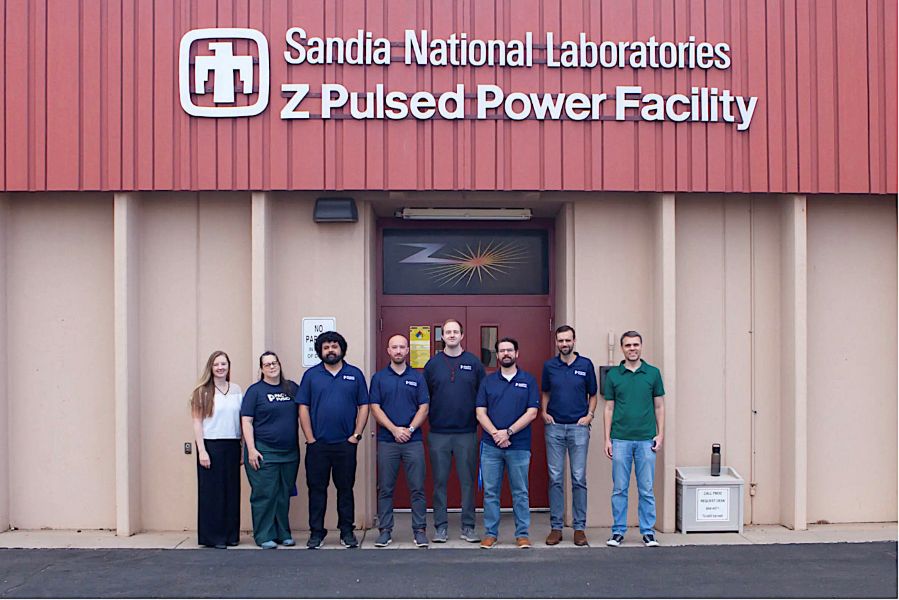
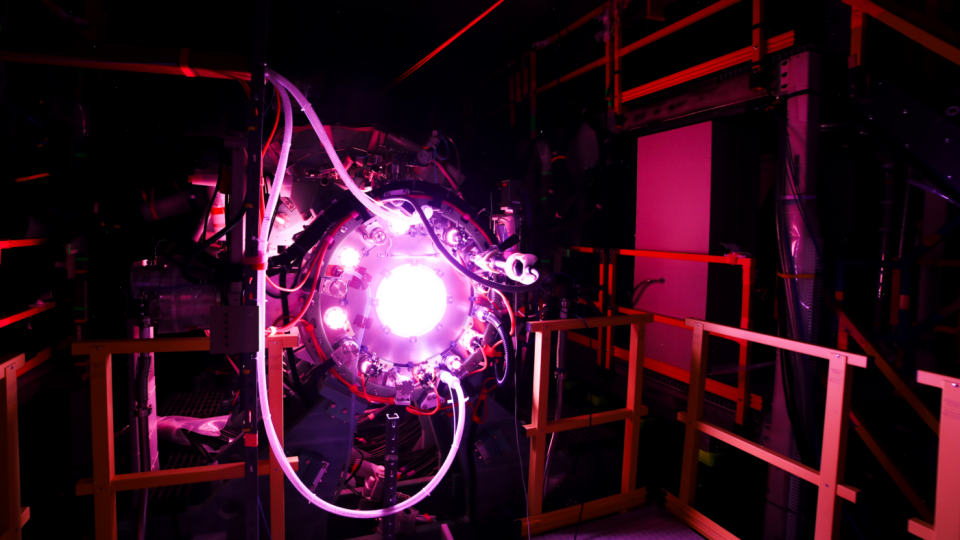
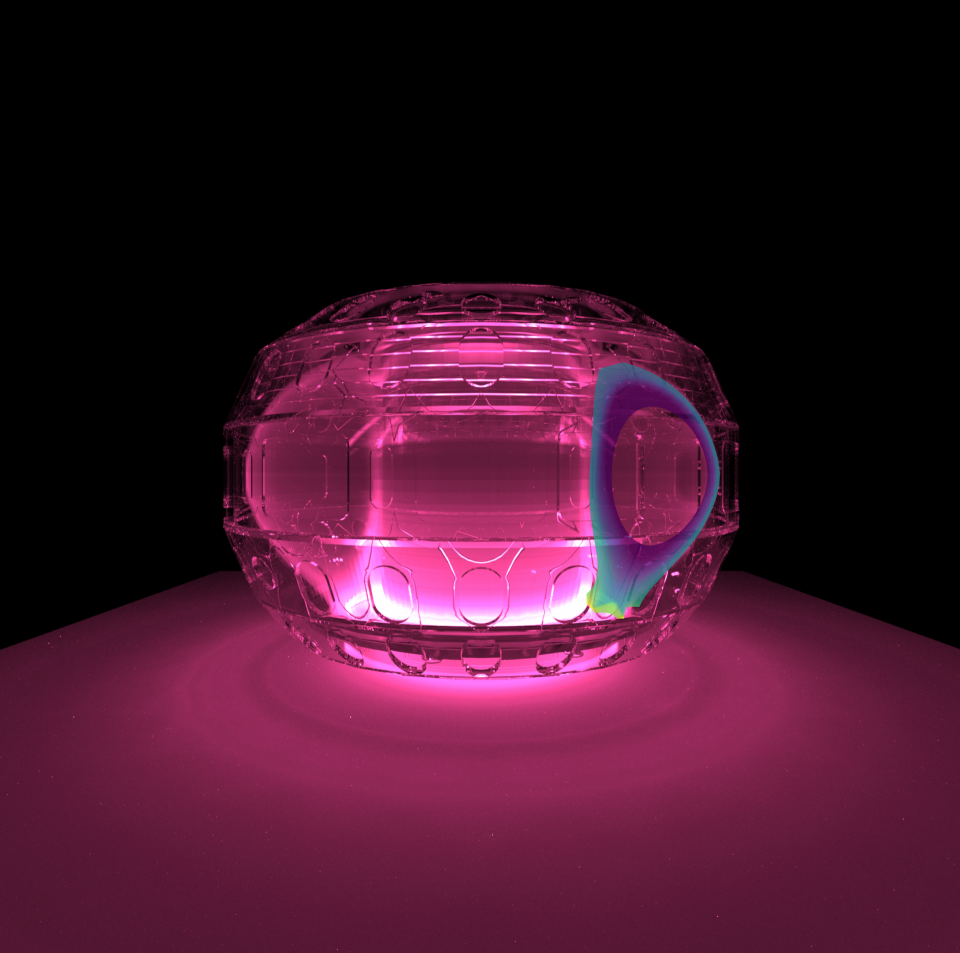
After testing the approach at Sandia’s Z Pulsed Power Facility in Albuquerque, N.M., the team said, “We successfully demonstrated a new family of target concepts . . . that is inexpensive and eliminates the need for external magnetic coils. Instead, the simple targets, made of plastic and aluminum, create their own internal magnetic field to premagnetize the fusion fuel. Premagnetization is desirable for pulser-driven inertial fusion energy because it helps trap heat in the fusion fuel, letting it ignite more easily.”
Advancing 2022 milestone: ICF, in which pulses of laser light or electric current are used to implode targets of fusion fuel, was first demonstrated at Lawrence Livermore National Laboratory’s National Ignition Facility in December 2022. Although this milestone proved that fusion ignition can be accomplished, high cost and impracticality have remained challenges. That is because the fusion targets and associated hardware (such as the large external magnetic coils used in the traditional MagLIF technique) are destroyed with each pulse, or “shot,” of laser or electricity. In other words, according to Pacific Fusion, “the cost of the components destroyed far exceeds the value of the energy that would be released on each shot.”
A pulser-driven ICF system in which the fusion fuel targets could be premagnetized right before a large electric pulse is triggered to drive the fusion reaction—but without using expensive external magnetic coils to do so—could be cost-effective alternative. The Pacific Fusion–Sandia team demonstrated a technique that “dramatically simplifies the entire target-chamber architecture compared to traditional designs, enabling us to build a system that meets the criteria for enabling economically viable fusion power.”
Further goals: The research team plans to follow this work by exploring different metallic conductors and insulating materials, such as ceramics, to further improve their experimental results. They also hope to further simplify the process to eliminate not only the need for external premagnetization but also the need for laser preheating, which adds complexity in the traditional MagLIF approach.
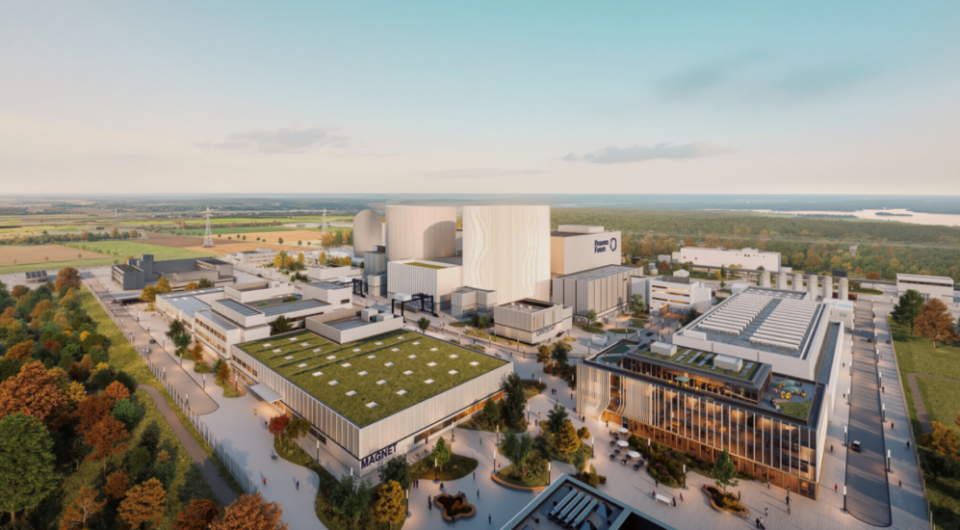
The team’s main goal is to use Pacific Fusion’s planned Research and Manufacturing Campus in Albuquerque to continue its research and “deliver the first commercial fusion system in the United States by the mid-2030s and then move quickly to scaled deployment of affordable fusion energy.” The company reported last August that it is on target to achieve net facility gain—more fusion energy out than all energy stored in the system—with a demonstration system by 2030.

-3 2x1.jpg)