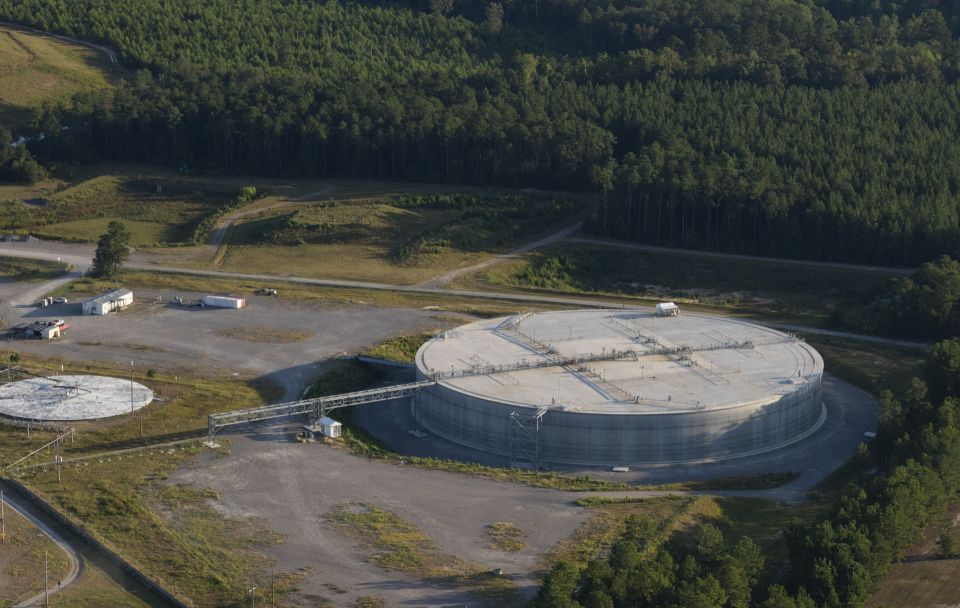
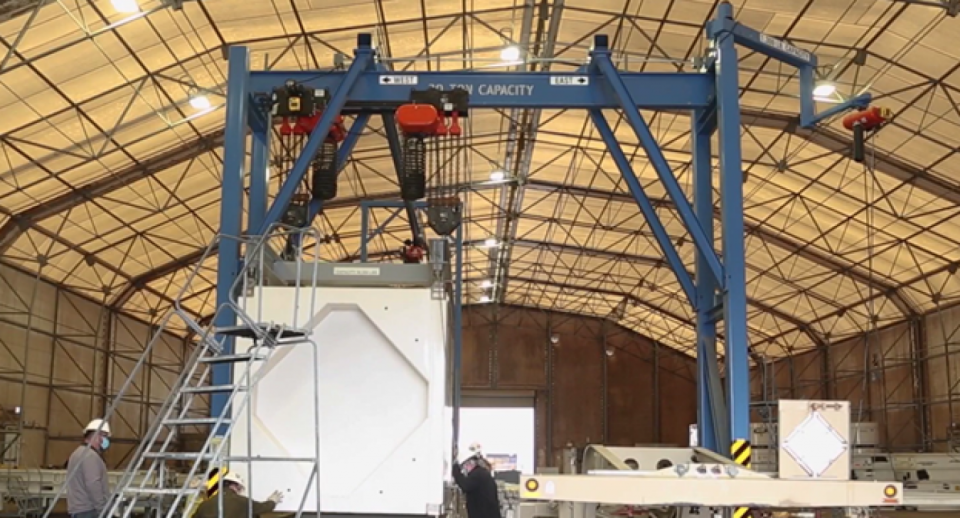
A Mark-18A target assembly stored at the Savannah River Site. (Photo: SRNL)
The Department of Energy has announced the successful transfer of the first Mark-18A target from the Savannah River Site to Savannah River National Laboratory, marking “the beginning of operations for a newly established radiochemical separation capability to recover valuable isotopes.” The agency stated that the Mark-18A Target Recovery Program—which involves the DOE National Nuclear Security Administration, the Office of Environmental Management, and the Office of Science—is demonstrating “how legacy materials previously destined for disposal can be recovered and transformed into valuable resources.”
Heavy curium and plutonium-244: The irradiated Mark-18A target assemblies have been stored at SRS for several decades and were once part of a campaign to use the high-flux characteristics of the site’s K Reactor—which was operational from the 1950s to the 1980s—to produce beneficial isotopes.
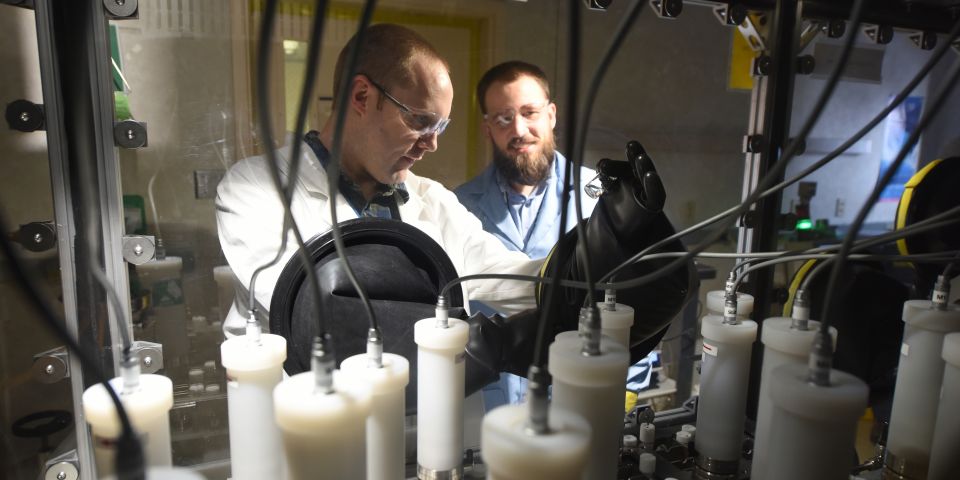
The Mark-18A targets contain both heavy curium and unseparated plutonium-244. The Pu-244, which is rare and useful in nuclear forensics, is being separated and recovered in the Target Recovery Program. The heavy curium is being collected for later conversion into californium-252, an important startup material for nuclear reactors and other purposes. The recovery process for these isotopes was largely designed, constructed, and programmed at SRS.
Monumental step: SRNL director Johney Green noted, “The Mark-18A Target Recovery Program is a monumental step forward in advancing our nation’s nuclear capabilities. Recovering rare isotopes not only strengthens U.S. nuclear nonproliferation efforts and critical scientific research but also exemplifies the transformative power of innovation. By turning legacy nuclear materials into indispensable resources, this program showcases the vital role SRNL plays in supporting national security, fostering technological leadership, and preparing the next generation of scientists and engineers to tackle the challenges of tomorrow.”
Reestablishment of capabilities: Ahmad Al-Daouk, the NNSA associate administrator for the Office of Environment, Safety, and Health, observed, “Beyond the intrinsic value of the recovered isotopes, this project signifies the reestablishment of capabilities that have been lost since the Cold War. This commences operations at an opportune time, coinciding with the nuclear renaissance and supporting multiple priorities outlined in the recent presidential executive orders on nuclear energy.”
Proactive stewardship: Edwin Deshong, SRS operations office manager, pointed out that the Mark-18A Target Recovery Program is “about proactive stewardship and unlocking the inherent value within our legacy materials. The transfer of this first target is a testament to the seamless integration of our environmental cleanup mission, while turning historical waste materials into strategic resources for the nation.”

-3 2x1.jpg)