According to the company, Project UPWARDS was delivered on time and on budget with support from partners University of California–Berkeley, Lawrence Berkeley National Laboratory, and NAC International. The project was supported by a $3.6 million grant from the Department of Energy’s Advanced Research Projects Agency–Energy (ARPA-E) through its ONWARDS (Optimizing Nuclear Waste and Advanced Reactor Disposal Systems) program.
The details: Project UPWARDS, which stands for Universal Performance Criteria and Canister for Advanced Reactor Waste Form Acceptance in Borehole and Mined Repositories Considering Design Safety, was created to advance the development of a first-of-a-kind integrated waste management system for advanced reactors.
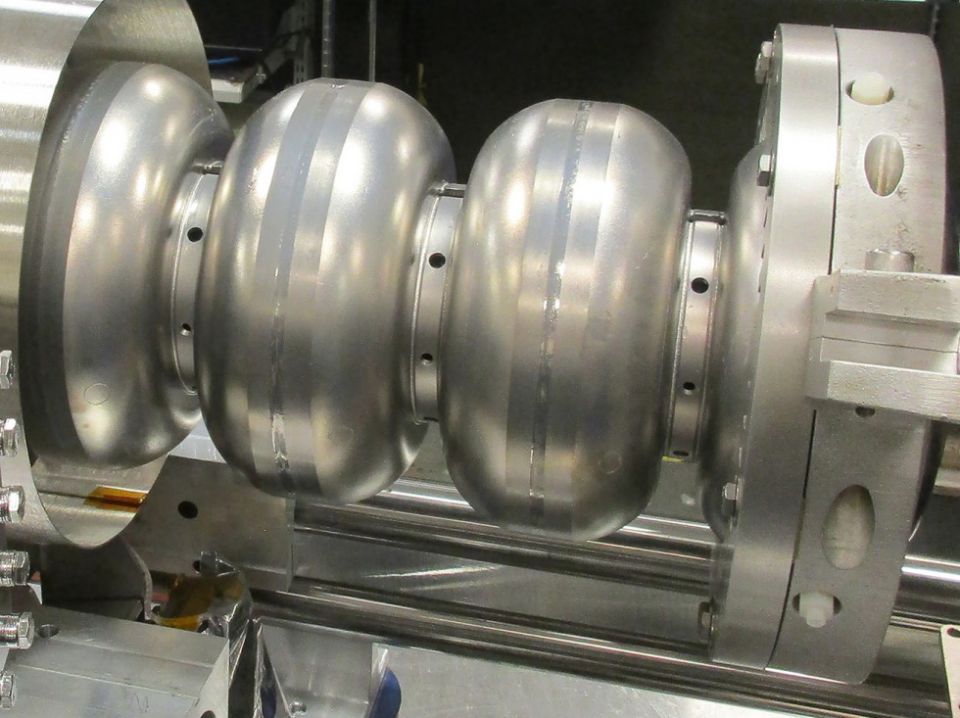
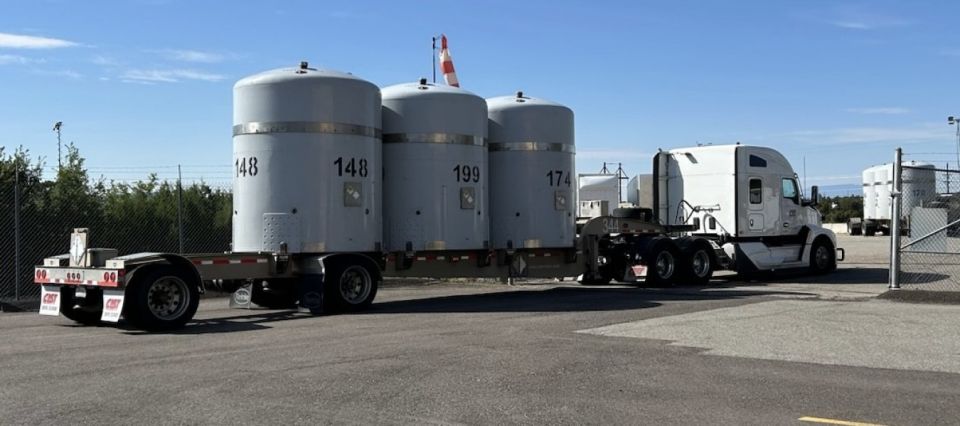
Capable of storing, transporting, and disposing of advanced reactor waste, the UCS is designed to accommodate a range of waste streams, including vitrified waste from reprocessing, TRISO spent fuel, and halide salts from molten salt reactors. According to Deep Isolation, the system is compatible with modern dry storage and transport infrastructure and meets performance and safety requirements for both deep borehole and mined repository options.
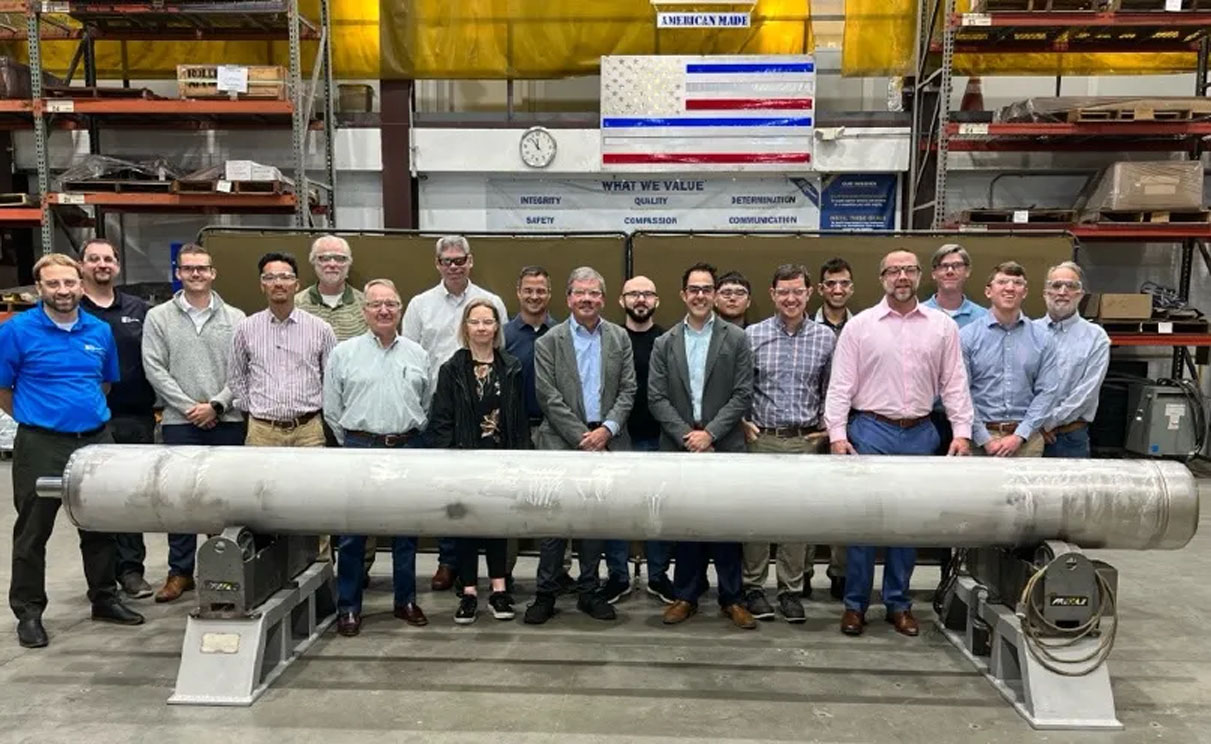
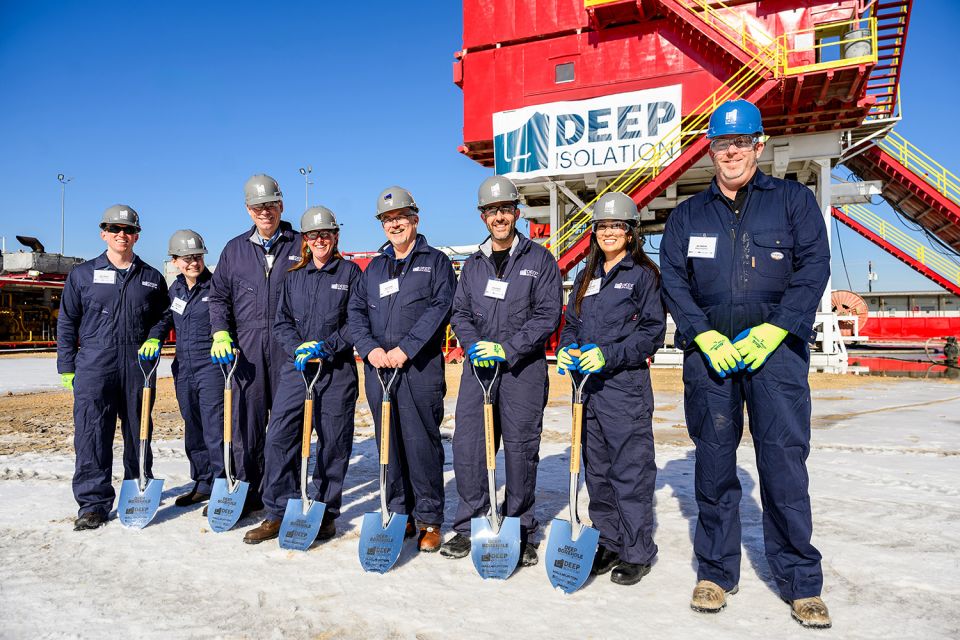
Commercialization: The first UCS prototype canister was fabricated at R-V Industries in Pennsylvania. and testing was completed at the Deep Borehole Demonstration Center in Texas. Deep Isolation said the nonradiological testing of the UCS proved the system’s mechanical integrity and operational viability in simulated real-world geologic conditions, providing a rare level of physical validation.
Deep Isolation said the completion of Project UPWARDS marks an important milestone in the company’s road map toward full-scale demonstration and eventual use for spent fuel disposal. The project results will be used to support future licensing, pilot deployment, and commercialization of the UCS.
NAC International CEO Kent Cole said his company “is eager to advance the integration of this exciting innovation into our existing licensed systems for storage and transportation of spent nuclear fuel and to partner with Deep Isolation in commercializing it around the world.”
Quotables: Jesse Sloane, executive vice president of engineering at Deep Isolation and principal investigator for the project, said, “By fabricating and testing a universal, triple-purpose canister that is engineered for storage, transportation, and disposal of nuclear waste in multiple repository types, we have delivered a flexible and technically robust solution that has undergone extensive testing and is intended to support future real-world deployment.”
“Deep Isolation and its UPWARDS partners developed a groundbreaking disposal solution for a broad range of advanced fuels and recycling products,” said Assel Aitkaliyeva, ARPA-E program director. “ARPA-E’s mission is to support disruptive, outlier ideas, and this universal canister system has the potential to transform the nuclear industry by offering a safe, scalable pathway to manage used nuclear fuel.”

-3 2x1.jpg)