-3 2x1.jpg)
Op-ed: UAMPS project needed for abundant, carbon-free energy
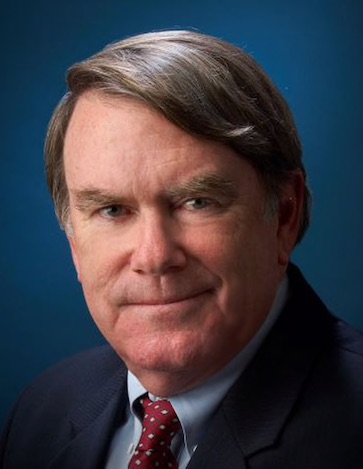
Hunter
An op-ed piece in the September 17 Salt Lake City Tribune touts nuclear energy as needed for a carbon-free future. The piece was written by Doug Hunter, chief executive officer and general manager of Utah Associated Municipal Power Systems (UAMPS).
UAMPS: Hunter notes in the piece that UAMPS is proposing the Carbon Free Power Project, a cluster of small modular reactors that would serve the association’s members from a location in southeastern Idaho.
NuScale Power plans to supply the project with twelve 60-MWe modules for a 720-MWe plant. In addition to NuScale and UAMPS, partners in the project include the Department of Energy, Fluor Corporation, and Idaho National Laboratory.
Hunter comments in the piece, “Some people don’t like anything nuclear. And they’ve pointed out that nobody has done this before, that natural gas is awfully cheap right now and that prices for electricity from solar and wind are falling.”
So, why try? Hunter continues, “Because we’re entering a period of global uncertainty, especially over climate and over the rules that will govern emissions from the electric power sector.”
Hunter realizes that coal-fired power plants won’t be allowed to run forever and that they will need to be replaced. He also points out that with increasing policies to discourage carbon dioxide emissions, natural gas isn’t going to be cheap forever, either.
But, solar and wind … Hunter says that emissions-free energy will be needed that is “dispatchable.” Ask how to meet the electric system needs on a mild, sunny day in June (solar), or a blustery night in March (wind) and the answers are obvious. “Ask how to provide reliable electricity at reasonable cost 24 hours a day, 365 days a year, and the answer gets more complicated,” he said.
Nuclear is the answer: NuScale’s particular nuclear technology chosen by UAMPS is designed for a grid with highly variable wind and solar. Also, “It will operate using a limited amount of water, which is important in the arid West,” Hunter said.
Why UAMPS? “Because community-owned utilities have more freedom to do the right thing. We don’t make quarterly reports to Wall Street. We don’t divide our loyalties between our stockholders and our communities; we don’t have stockholders, and our communities own us,” Hunter said, adding that as a result, UAMPS’ executives don’t have to avoid tough decisions “that might depress our stock and the value of our stock options,” which keeps the communities’ best interest front and center.
Hedging bets: The Carbon Free Power Project isn’t going to be anybody’s main source of electricity. “It’s a hedge, a prudent step that we’re taking early, to keep our energy supply diverse and resilient,” Hunter said. “And the right thing to do is hedge our bets.”
 2x1.jpg)