
GUTOR 80: UPS, Battery Charger, & Inverter Solutions for Nuclear Applications, Built to ASME NQA-1
For North American nuclear projects, the quality and life-cycle program behind a secure-power system matters as much as the hardware itself.
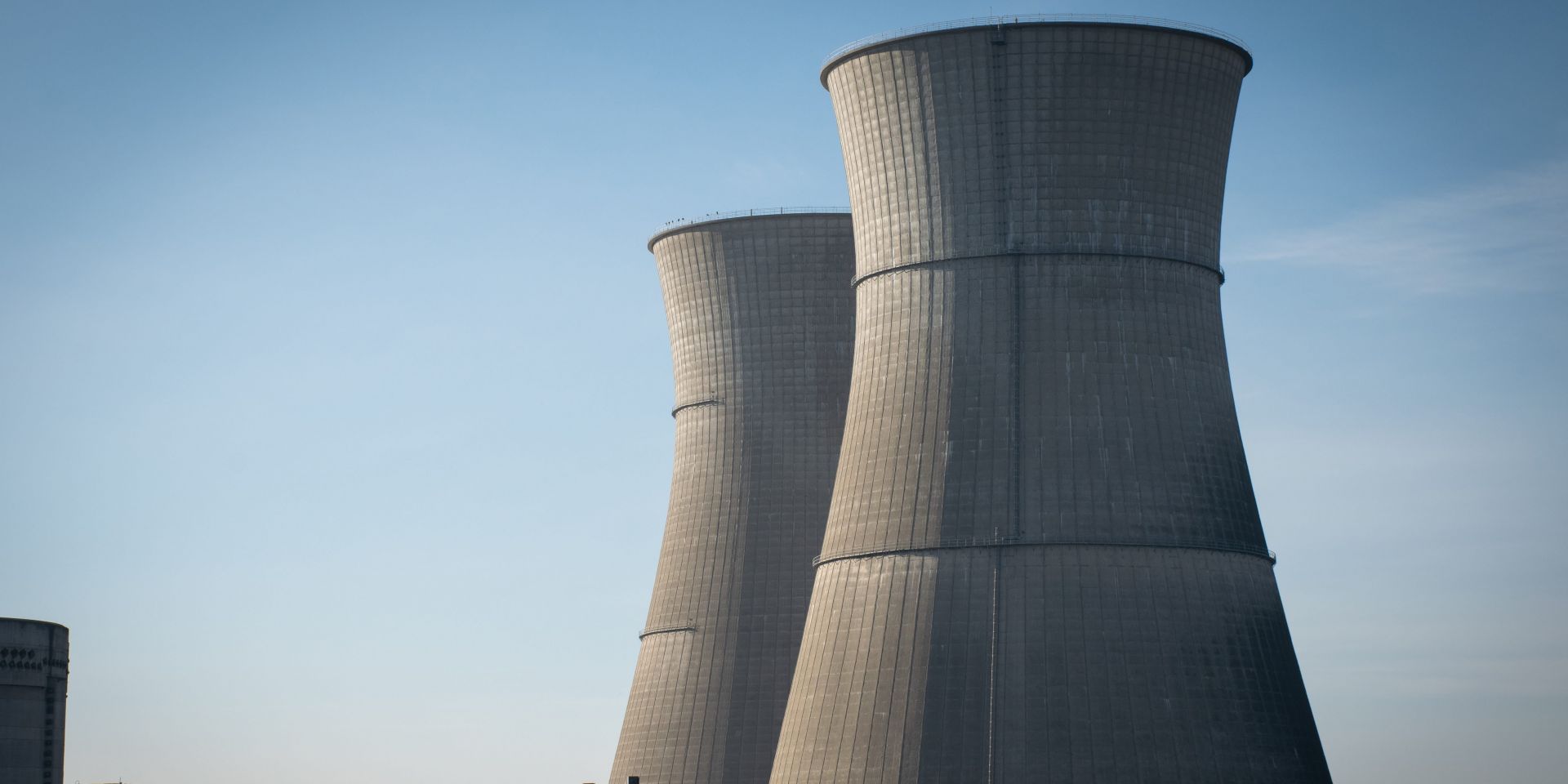
The United States and Canada are preparing to build and renew nuclear capacity at a scale not seen in decades. New construction, refurbishments, reactor restarts, license renewals, and a pipeline of small modular reactors and microreactors are advancing at once, driven by increasing power demands.
Every one of those projects rests on the same requirement: each safety-related component must be qualified, documented, and defensible to a regulator before it can be installed. That discipline is what separates a nuclear supplier from every other kind. It is where secure power earns its place: the uninterruptible power supplies, battery chargers, and inverters that provide critical power to instrumentation and electrical systems and keep them energized when power is interrupted are only as valuable as the quality pedigree that lets a plant put them in a safety system. In the U.S. market, that pedigree has a name: ASME NQA-1.
Gutor was founded in 1946 in Wettingen, Switzerland, and since 1992 has supplied more than 3,000 secure-power systems to over 175 reactors in more than 20 countries. Its expertise spans diverse reactor technologies, from PWR, BWR, and CANDU systems to EPR, AP1000, and VVER designs, as well as the emerging small modular reactor and microreactor markets.
A Full Secure-Power Solutions Portfolio
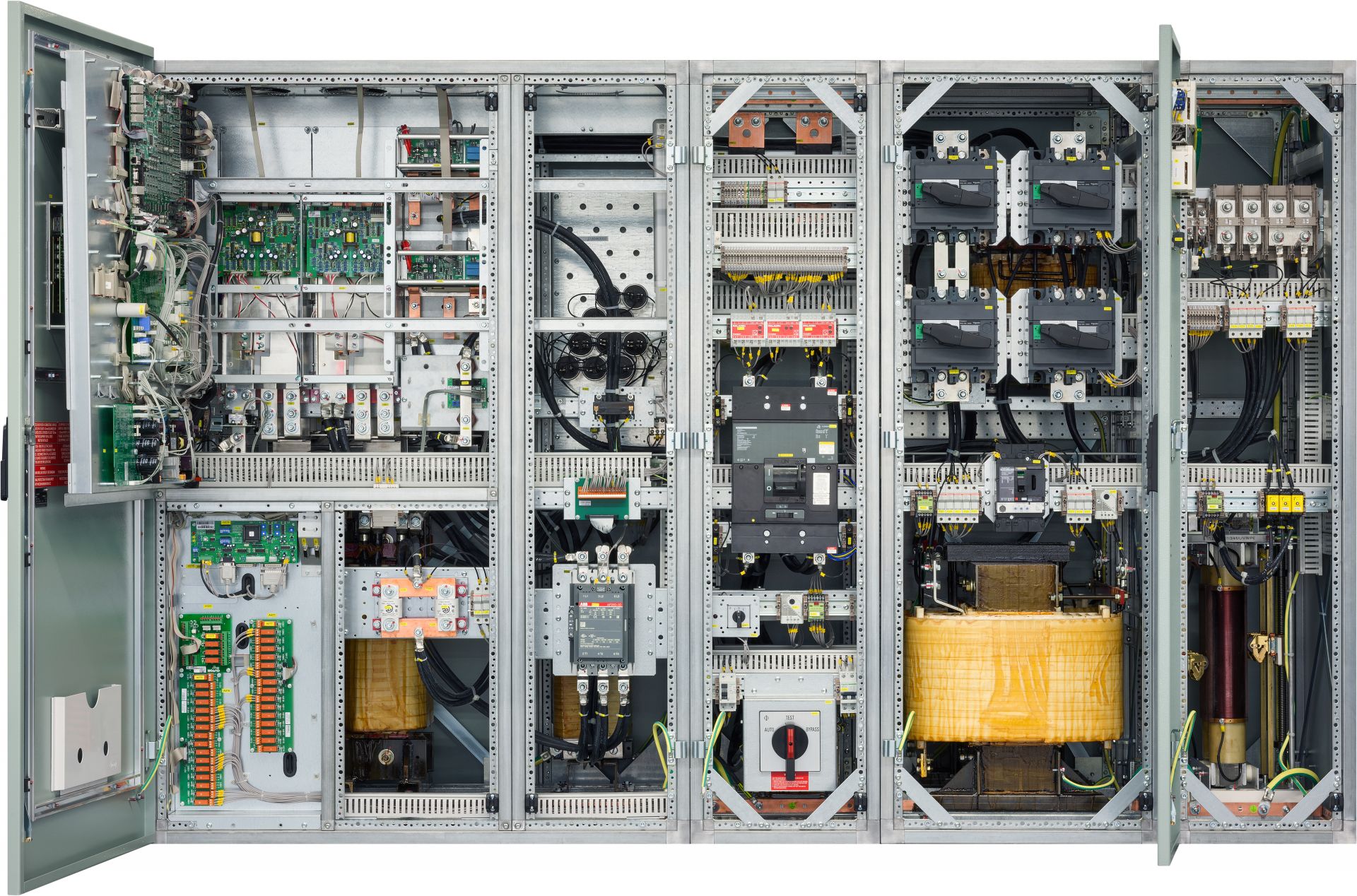
Gutor Industrial Inverter System
That record rests on a portfolio built to fit exact customer requirements. Gutor supplies UPS systems, battery chargers rated up to 2,000 A DC, and AC inverters up to 750 kVA, with higher ratings on request. For nuclear plants, a high-DC voltage limiter that guards against over-voltage from a power-line surge is utilized when required (Forsmark event). Gutor's organization and processes ensure obsolescence management throughout the equipment life cycle.
 Nuclear-Grade Technology, Independently Verified and Certified
What allows those solutions into a safety application, though, is less the cabinet than what runs inside it. At the core of every Gutor system is the Blackbird digital controller. Rather than write new software for each contract, Gutor qualifies one generic controller (firmware and smart-device hardware together) against the full set of nuclear standards, then configures it to each project through parameters alone. The approach is much like a type-certified aircraft, fitted out for each operator but flying on a single approved design: the underlying qualification is applicable to every project.
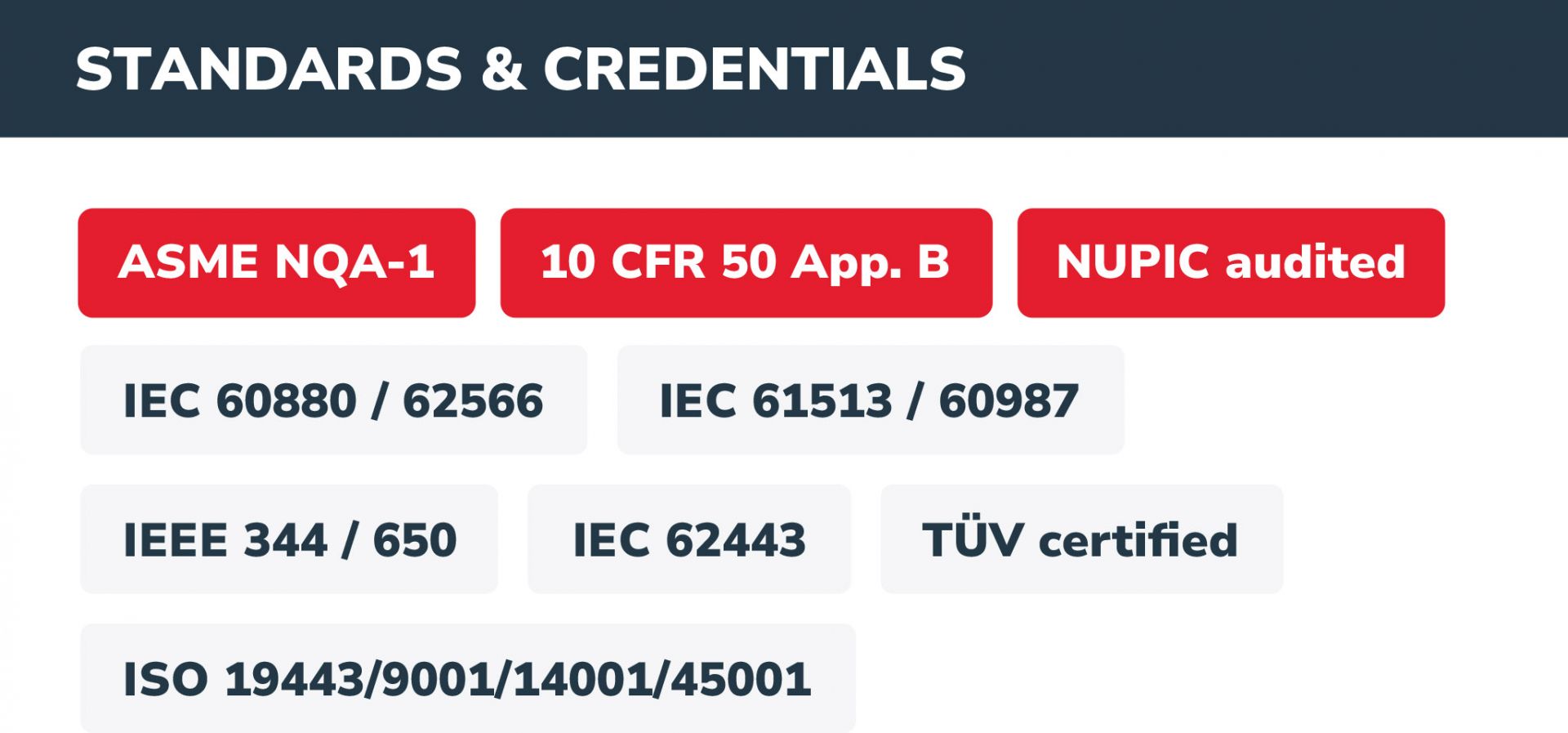
 The firmware is built to the standards for nuclear safety software (IEC 60880 and 62566) and the hardware to those for smart-device design (IEC 61513 and 60987), following a structured V-model process. And because an independent body, TÜV, certifies the full documentation and implementation, a customer's review can often come down to confirming the certificate applies, a real saving on the project schedule.
Verification does not stop at the controller. Gutor also qualifies its equipment against the physical stresses a plant imposes: seismic events, electromagnetic interference, humidity and temperature cycling, and long-term aging. It does so through full-scale testing, analysis, analogy, or a combination of the three, in line with IEEE 344 and 650. On cybersecurity, the design is deliberately closed: neither firmware nor parameters can be changed remotely, and systems meet the IEC 62443 framework plus NEI 08-09 in the United States and N290.7-14 in Canada.
 A Quality Program Built for the North American Market
Those technical qualifications, in various combinations, are shared by other reputable suppliers. What sets Gutor apart in the United States is the quality system wrapped around them. Its nuclear quality program is compliant with 10 CFR 50 Appendix B and ASME NQA-1, and is audited and qualified by NUPIC, the utility-led body whose supplier findings U.S. licensees rely on. Its firmware, in turn, meets ASME NQA-1 and IEEE 7-4.3.2.
Internationally, the same program aligns with KTA 1401, CSA N299.2, and IAEA GSR Part 2, and the company holds ISO 19443, ISO 9001, 14001, and 45001 certifications. For a U.S. utility, a supplier compliant with ASME NQA-1 and both audited and qualified by NUPIC removes one of the largest sources of qualification risk before a project even begins.
Proven Across the Global Fleet
That combination of capable solutions and an ASME NQA-1 quality pedigree is what puts Gutor on the projects the industry watches most closely. Recently, for Sizewell C in the United Kingdom, the company was awarded the secure-power systems package for its safety and operational loads. That work sits among many other major projects, including Hinkley Point C, ITER and the Jules Horowitz Reactor in France, Dukovany in the Czech Republic, and Kozloduy in Bulgaria. Closer to home in North America, Gutor solutions extensively support Southern Nuclear's Vogtle Units 3 and 4, Bruce Power Units 1 to 8, OPG's Darlington, NB Power's Point Lepreau, and TVA's Browns Ferry. Gutor is also proud to support other plants for Constellation Energy, Dominion Energy, Duke Energy, the DOE, and others.
As the U.S. fleet expands and modernizes, the solutions that secure and protect critical power will remain safety-related, not a commodity. Gutor pairs three decades of installed experience with an ASME NQA-1 quality program built for the standards U.S. licensees answer to.

To learn more, you can contact the Gutor nuclear team at nuclear@gutor.com, visit gutor.com/nuclear or follow us on LinkedIn.