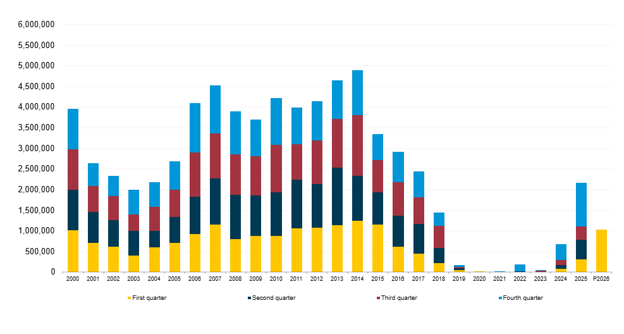
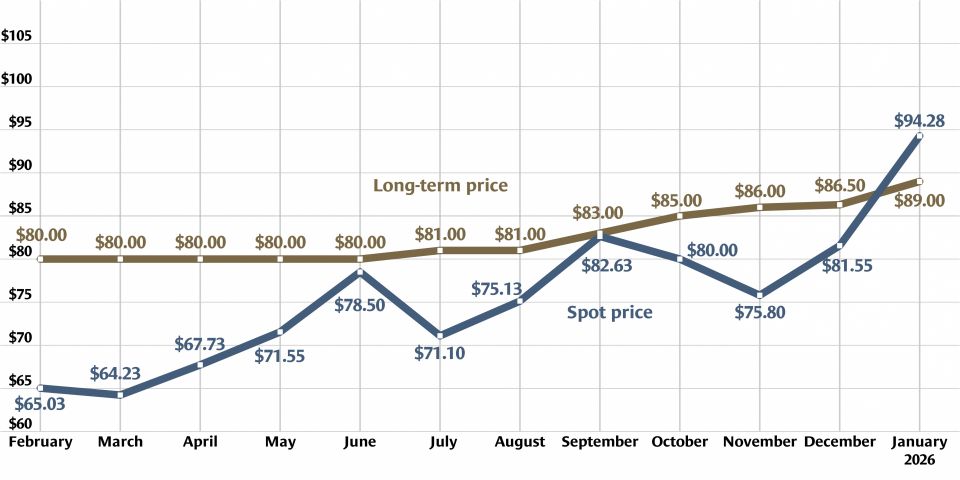
Quarterly U.S. uranium concentrate production. (Graph: U.S. EIA Domestic Uranium Production Report)
The U.S. Energy Information Administration has released its Domestic Uranium Production Report for the first quarter of 2026. According to the report, U.S. production of uranium concentrate (U3O8) during the first quarter of this year totaled 1,039,075 pounds, representing a 0.4 percent decrease from the fourth quarter of 2025, when U3O8 production totaled 1,043,474 pounds. However, the 2026 first-quarter production was the highest first-quarter production amount recorded since 2015, when 1,154,408 pounds were produced.
All of this year’s first-quarter uranium production occurred at six facilities. Four of these facilities are in Wyoming: the Ross Central Processing Plant, the Lost Creek Project, the Smith Ranch-Highland Operation, and the Willow Creek Project. One facility—the Alta Mesa Project—is in Texas, and one—White Mesa Mill—is in Utah. White Mesa Mill had the largest production, totaling 788,404 pounds.
Among the other data in the first-quarter report are owner, location, capacity, and operating-status details about uranium mills, heap leach facilities, and in situ recovery plants.
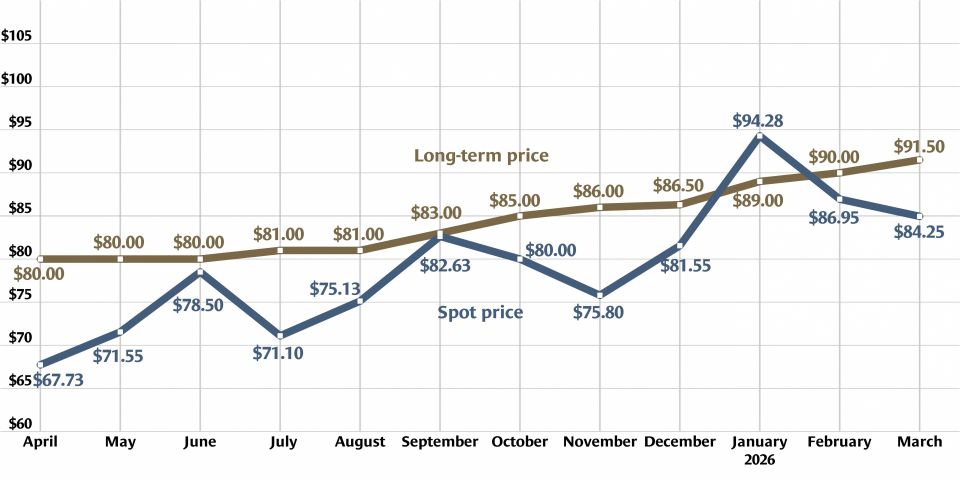
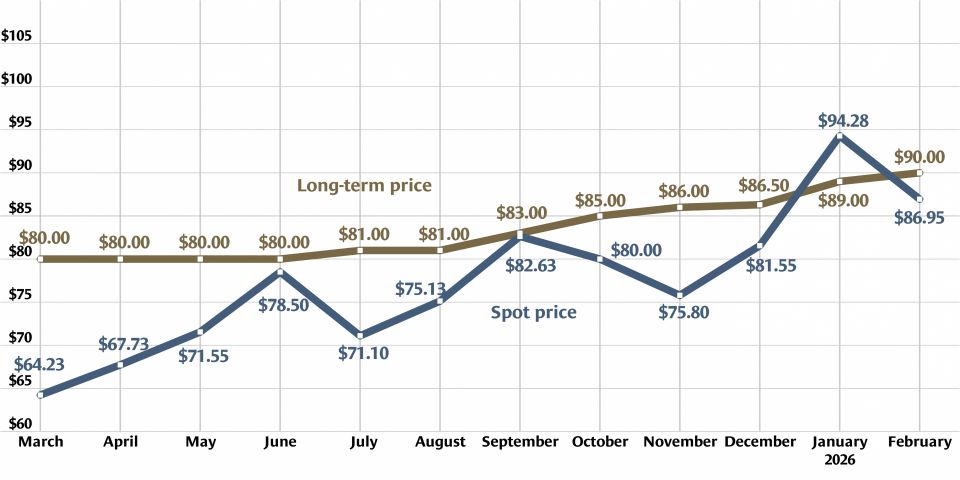
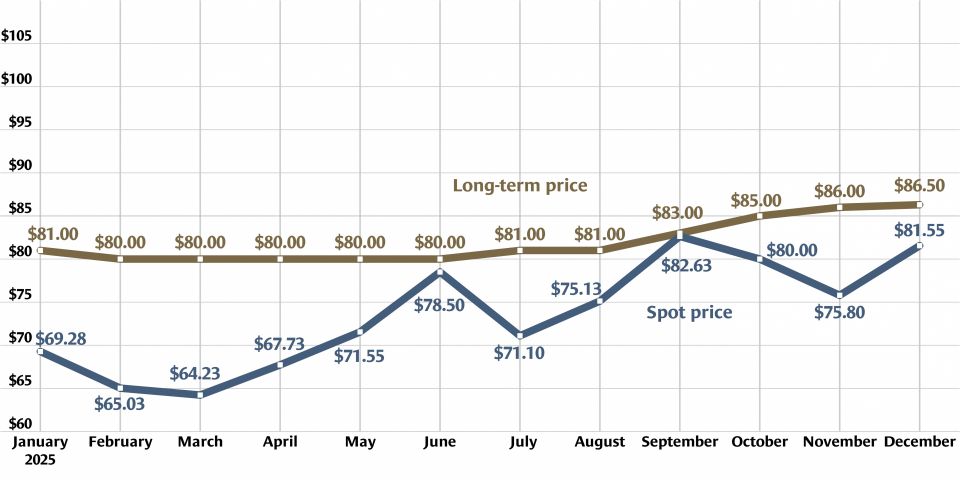
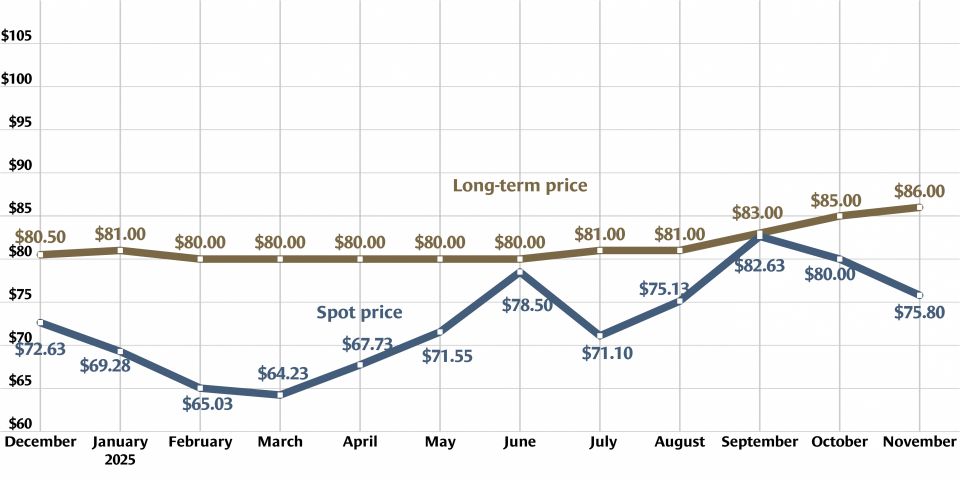
Price watch: The end-of-June spot price for uranium was $85.00 per pound, as reported by Cameco. That price was about midway between the previous month’s $84.18 and the end-of-April’s price of $86.35. The spot price was listed at $94.28 at the end of January.
Analytics firm Trading Economics reports that the uranium futures price was $86.05 per pound on July 1, representing an increase of 0.64 percent from the previous day. During the past month, the futures price has decreased 0.23 percent, though it is 10.60 percent higher than it was one year ago.
Uranium futures in the United States have traded within a narrow range around $85 since early April, according to Trading Economics, after erasing an early-year surge that boosted the futures price over $101 in late January.
Geopolitics and AI: The “cooldown from the speculative rally was combined with muted levels of spot buying by utilities, which have allocated from long-term contracts since the war between Russia and Ukraine raised short-term trade uncertainty,” the firm said, adding that “yellowcake prices were lifted by geopolitical tension driving power markets in major economies to be increasingly volatile, sparking interest in nuclear power by governments and power-hungry AI hyperscalers that develop data centers.”