Breaking ground on a new approach to construction
The drive to Kairos Power’s reactor demonstration site in Oak Ridge, Tenn., is not only scenic—it’s historic. Nearly 85 years ago, roughly 30,000 construction workers transformed orchards and farmland into a key Manhattan Project site. Depending on your route, you may pass by one of the three gatehouses that were once military checkpoints controlling access to Atomic Energy Commission production facilities.
Kairos’s Oak Ridge facility is located on the site of the former K-33 gaseous diffusion plant. The history is not lost on project leaders and those working closely with the nuclear energy company as the land is transformed once again, this time into a Reactor Demonstration Campus. That campus will house fluoride salt–cooled high-temperature reactors: the 35-MWt nonpower Hermes and the 50-MWe Hermes 2. Hermes became the first non–light water reactor to be granted a construction permit by the Nuclear Regulatory Commission in late 2023, and the first permitted in the United States in more than 50 years.
Hermes 2, the company’s first power-producing reactor, will be built under a research and test reactor construction permit granted in 2024. Kairos expects Hermes 2 to begin producing power in 2030 under a power purchase agreement it reached with Google and the Tennessee Valley Authority to supply the tech giant with 500 MW by 2035.
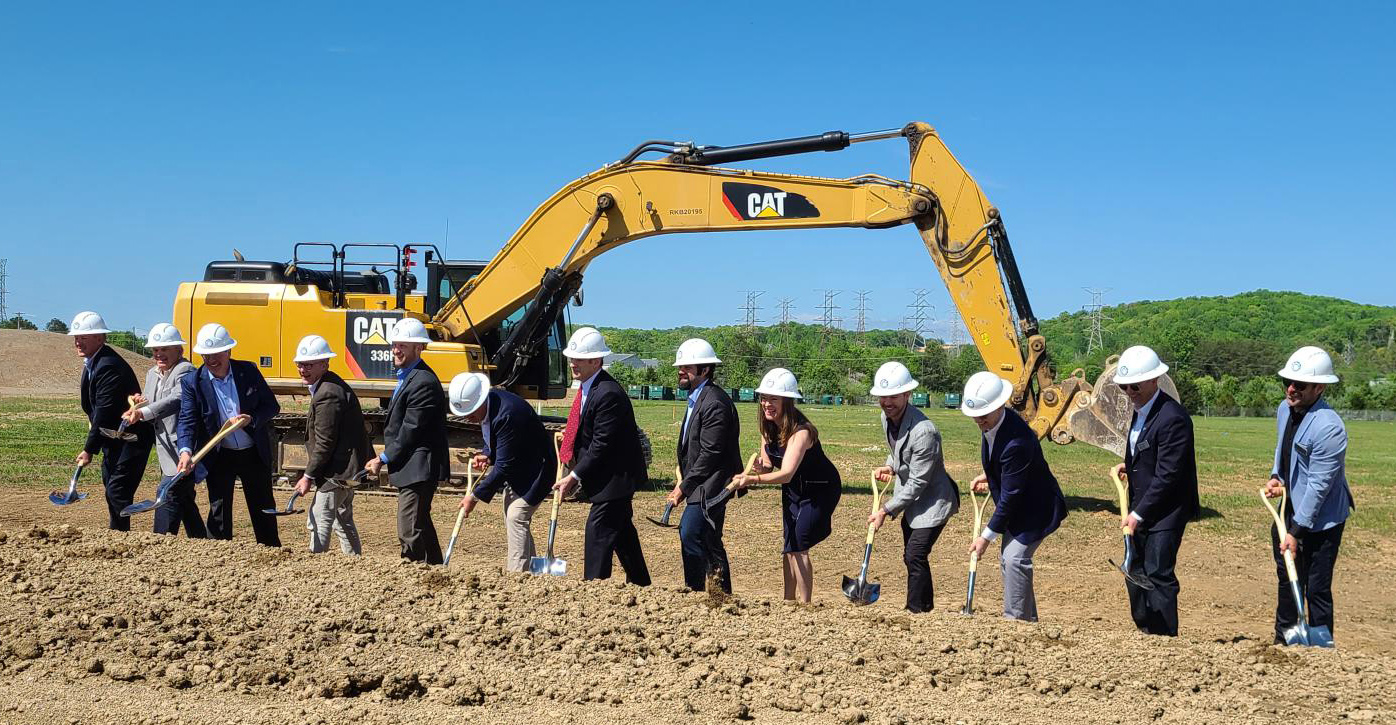
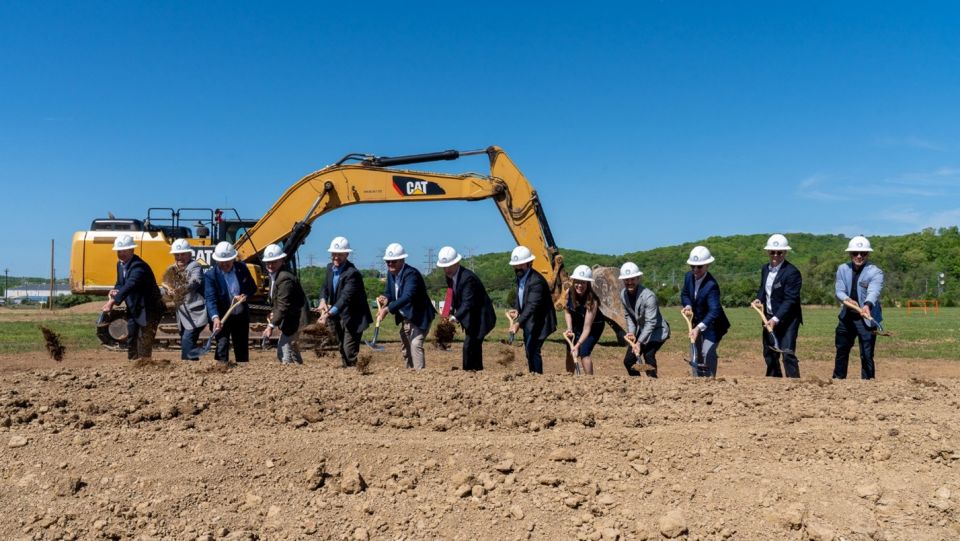
Kairos broke ground on Hermes 2 in April 2026. (Photo: Rafael Guerrero)
In April, Kairos broke ground on the Hermes 2 demonstration plant, with officials from near and far in attendance.
“As we start construction of Hermes 2, Kairos Power is working with discipline and urgency to meet the current moment—for the need for reliable and affordable energy has never been greater,” cofounder and Chief Technology Officer Edward Blandford said at the April 17 event.
Kairos seeks to make history on the advanced reactor front using an iterative development approach to construction, testing construction and manufacturing techniques and learning lessons from each phase to apply to the next. It is producing and assembling several parts and components in-house that are key to construction.
If the approach works, Kairos may succeed in a goal shared by other reactor developers: building and deploying smaller modular reactors and facilities on shorter construction timelines, reducing costs while ensuring nuclear safety, and creating processes that are scalable.
From one stage to the next
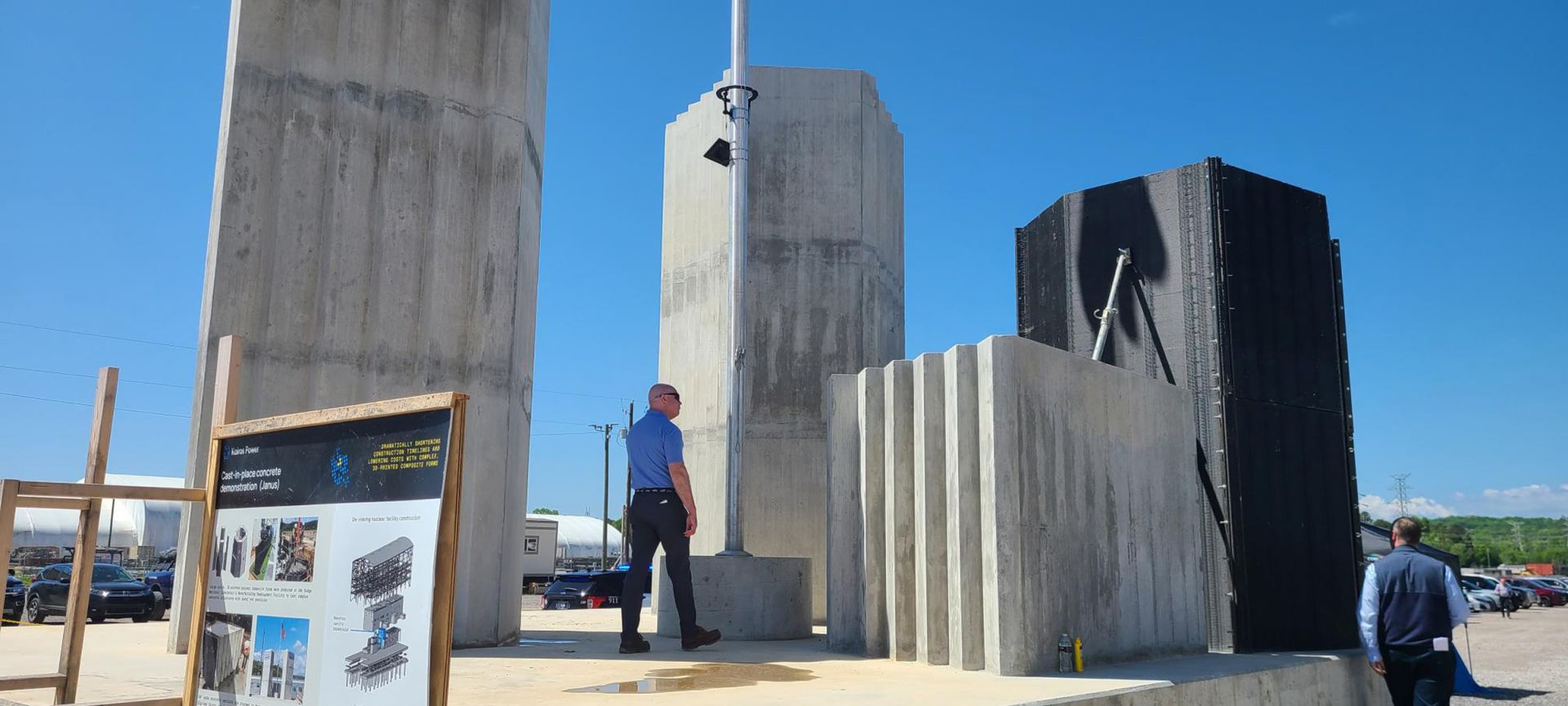
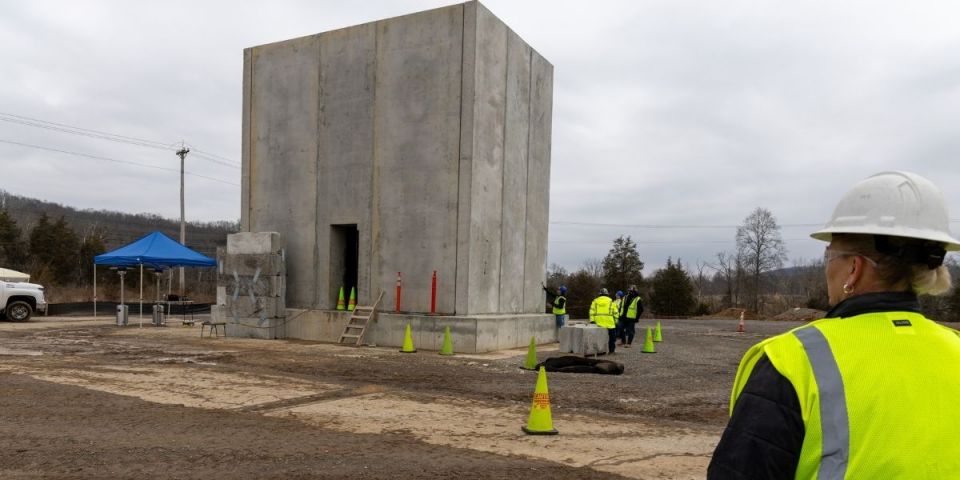
A cast-in-place concrete demonstration at Kairos Power’s Oak Ridge Reactor Demonstration Campus. (Photo: Rafael Guerrero)
Plan. Design. Build. Test.
The four words encompass Kairos’s approach to advanced reactor development, demonstrations, and commercialization.
It’s an approach intended to keep the company humble, Blandford said in an interview with Nuclear News. Rather than going straight to building a final commercial design, there’s a start line and progress to measure at each stage.
The Engineering Test Unit series that has preceded Hermes also takes an iterative approach. In ETU 1, staff transferred 14 tons of molten fluoride salt coolant into a nonnuclear prototype the same size as Hermes. In the second iteration, the Kairos team built upon ETU 1 by refining the reactor design and building the nonnuclear ETU 2 reactor vessel—the first ASME U2-stamped vessel built at the company’s Albuquerque, N.M., manufacturing facility. ETU 2 was assembled from more than 30 skid-mounted modules, and in April, Blandford said ETU 2 was close to startup.
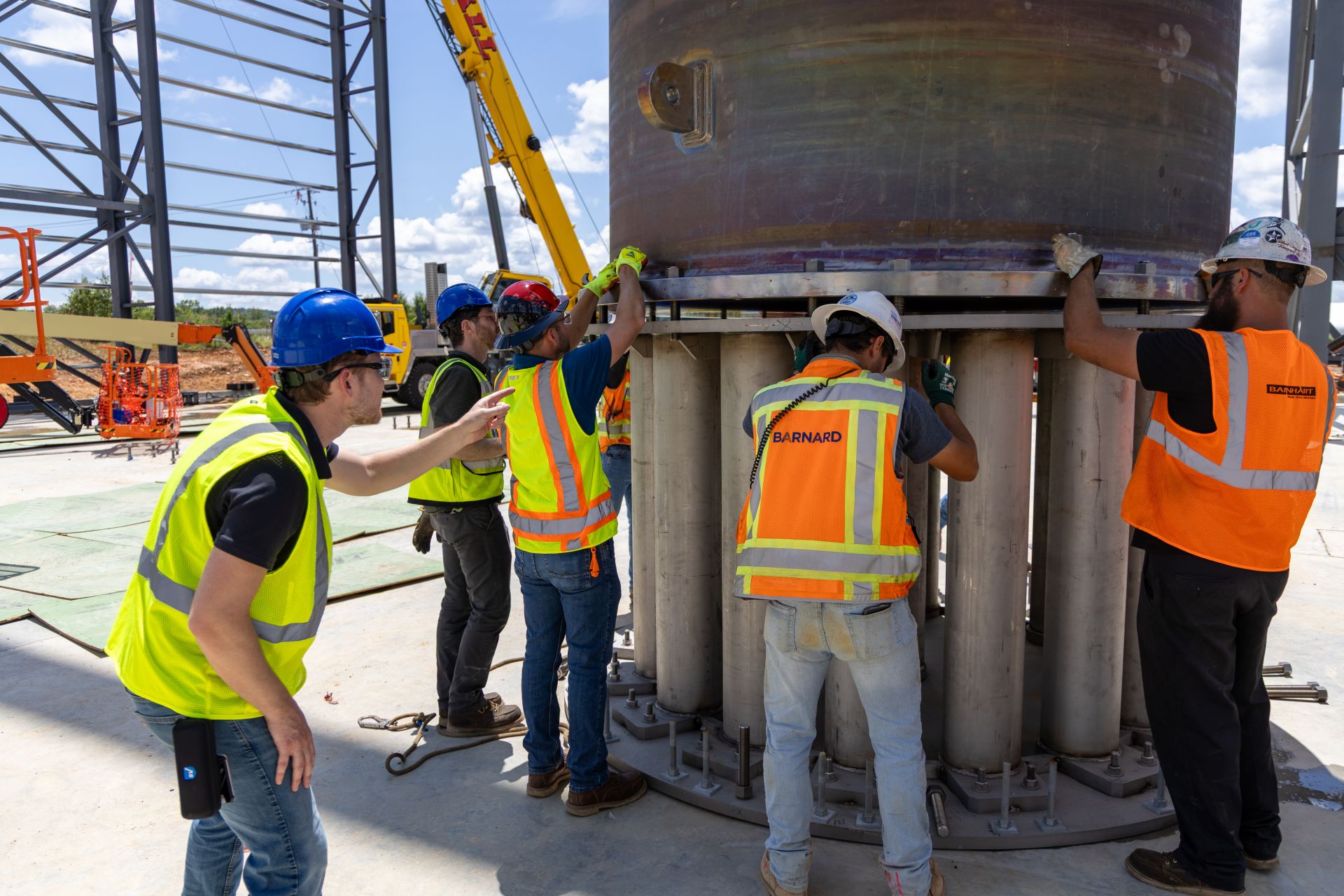
Installation of the ETU 3 reactor vessel mock-up in July 2025. (Photo: Kairos Power)
ETU 3, sited at Oak Ridge, will build on its predecessors and incorporate maintenance, operator training, manufacturing, and construction.
Rather than using traditional arc welding processes for the fabrication of the ETU 3 reactor vessel, the Kairos team partnered with Cambridge Vacuum Engineering and the University of Sheffield Advanced Manufacturing Research Centre to introduce electron beam welding. As the name suggests, an electron beam is focused on a component, typically inside a vacuum chamber, and the kinetic energy of the electron beam is converted into thermal energy, welding the pieces together.
Blandford said one of the benefits of electron beam welding over arc welding is that it doesn’t use filler metal, reducing costs and prioritizing the use of filler metal where arc welding is required. Electron beam welding also reduces the heat-affected zone, or the area around the weld that is impacted by the nearby heat.
“If you’re worried about how metal is going to distort, if you put a lot of heat into it, it’s going to want to distort more, especially if it’s been rolled in a configuration that it doesn’t want to be in,” Blandford said. “The ability to use and leverage advanced methods like electron beam welding allows us to have more control over distortion management and how that vessel will respond during the manufacturing sequence.”
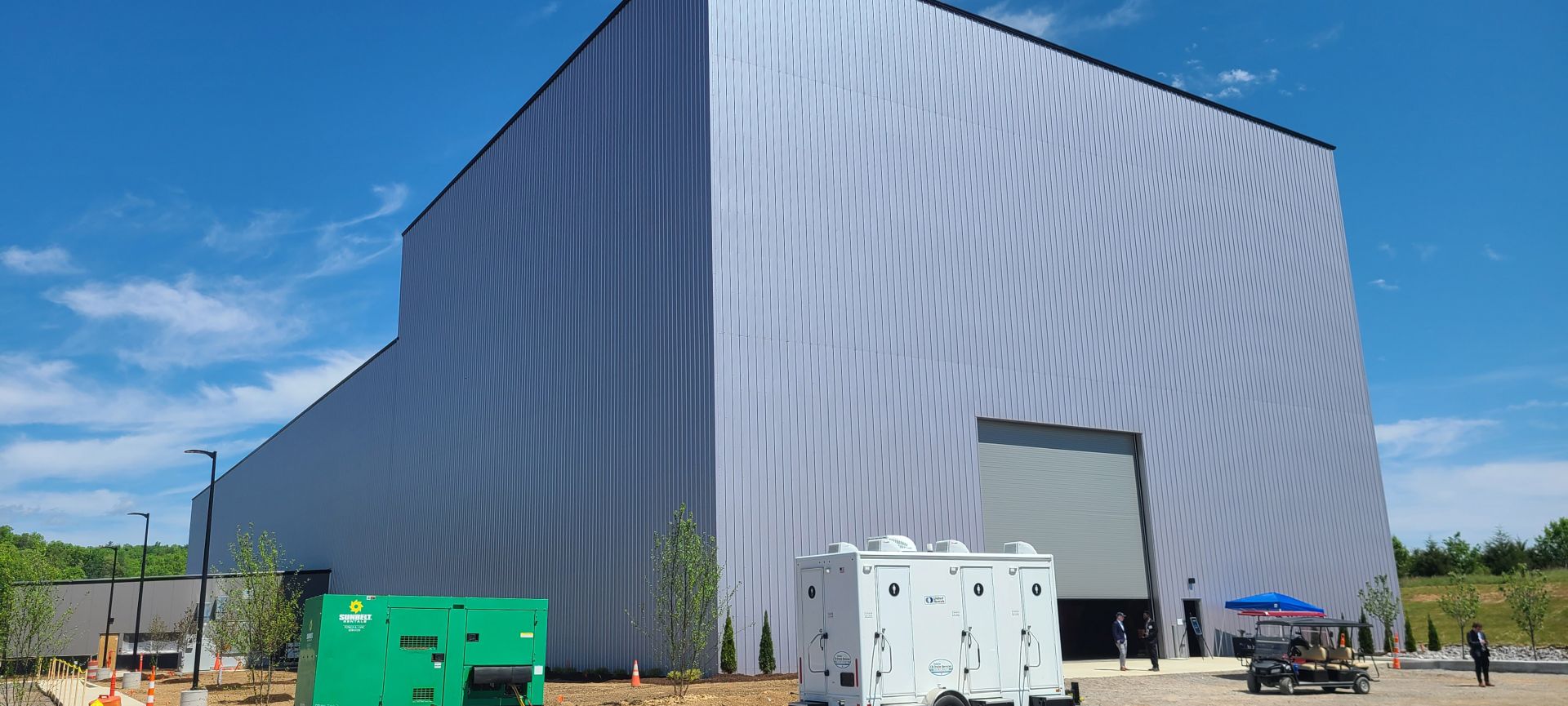
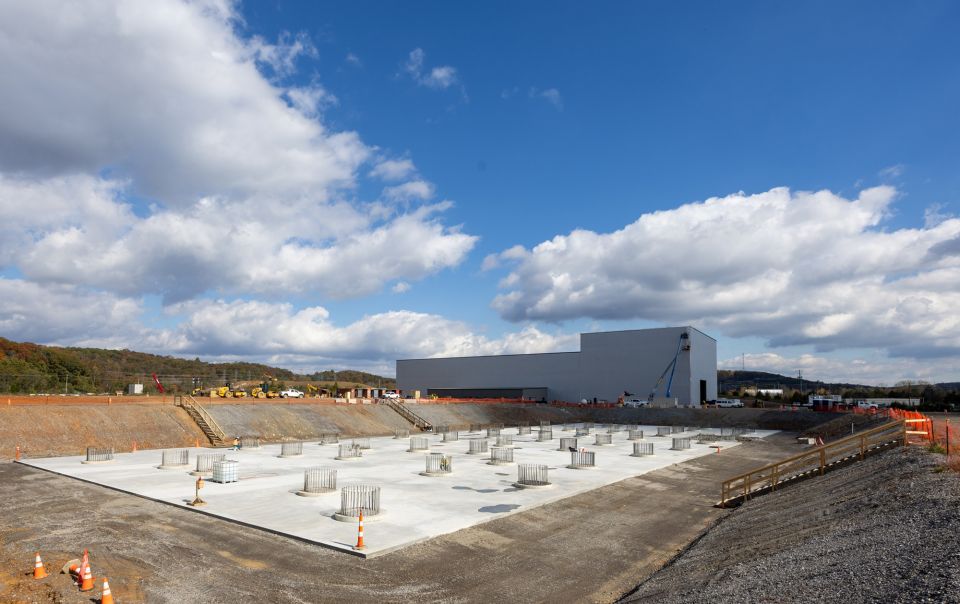
The modular systems facility and ETU 3 facility in April 2026. (Photo: Rafael Guerrero)
Once fabricated, the 14-foot-tall vessel was shipped to Oak Ridge and installed in July 2025 adjacent to the Hermes sites. Construction of the ETU 3 facility then proceeded around the vessel. ETU 3, which according to Kairos is scheduled to be completed this summer, is a test bed for construction techniques.
“The facility’s drilled pier foundation provided a unique opportunity to test the installation process, refine our quality control practices, and gain construction proficiency before starting on the nuclear-safety-related drilled piers for Hermes,” according to a Kairos LinkedIn article on the ETU series.
Kairos’s approach has allowed them to adjust and improve the nonnuclear aspects of construction to the Hermes sites, Blandford said.
“These types of decisions are not cheap in terms of spending the money to actually do them,” he said. “But on the back end, they give you certainty from a construction standpoint that could be a lot more expensive if you have delays in the field and challenges downstream.”
Looking inward
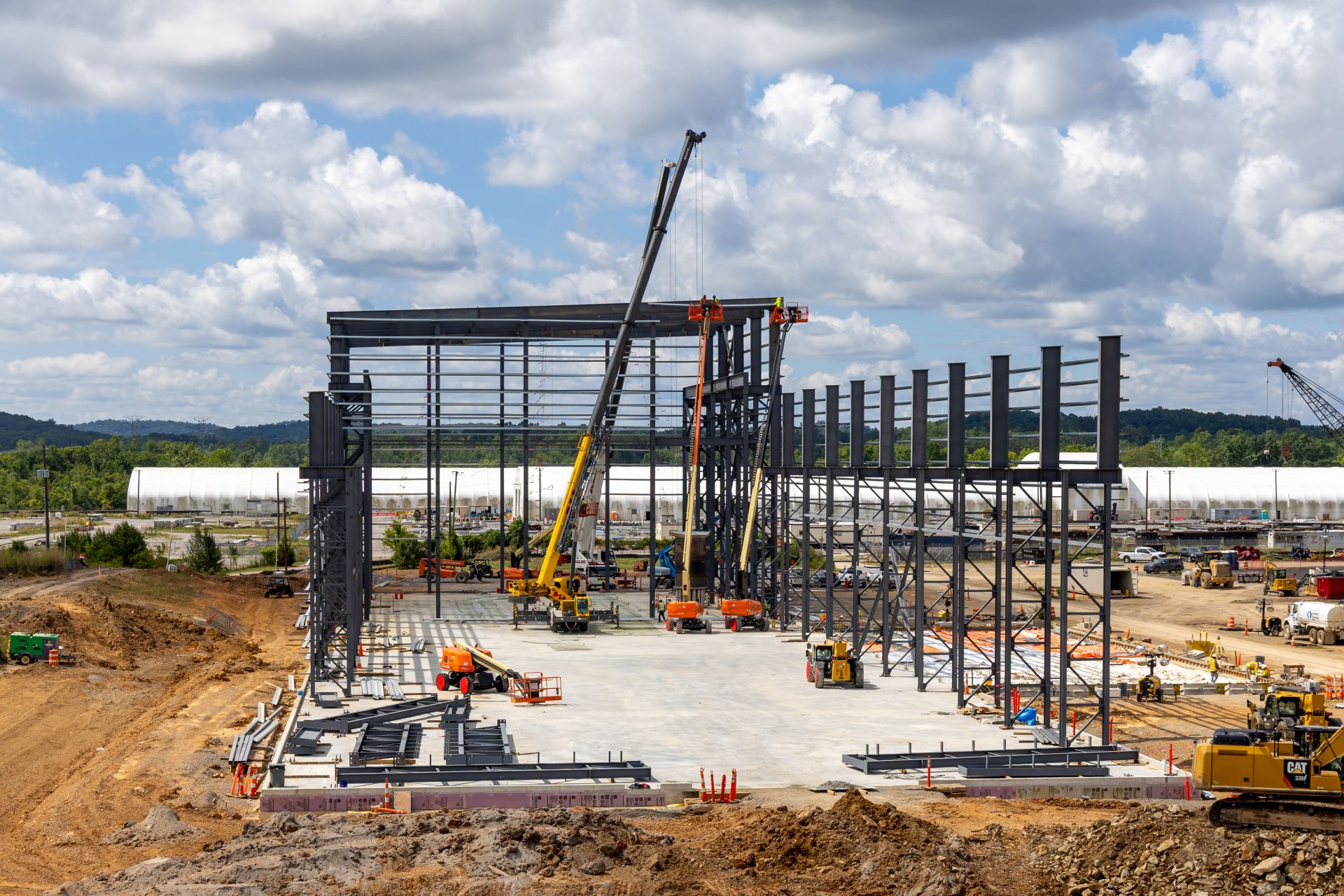
Work on ETU 3 in July 2025. The reactor vessel mock-up was installed before the walls and roof were built. (Photo: Kairos Power)
Department of Energy analysis in 2017 of published historic cost breakdowns for light water reactor projects concluded that the main driver of costs is not the technology but rather construction. Historically, nuclear plants experience high capital costs during construction—costs that have far outpaced fuel, operations, and maintenance in ways not seen in natural gas or coal projects. While Kairos did not provide financial estimates or a breakdown of costs for its Oak Ridge campus, Blandford said construction will dominate the final price tag.
One of Kairos’s goals is de-risking nuclear construction by keeping work in-house, opting for “vertically integrating production or assembly of components and materials that are 1) salt-connected, 2) safety-related, 3) not available off-the-shelf.”
Kairos’s vertical integration makes its way into plant construction and design by way of prefabricating and precasting plant components like concrete shielding, sinusoidal joints, and seismic isolation units.
At the Oak Ridge campus last December, workers installed a shielding structure made from precast concrete. Working alongside Barnard Construction, Oak Ridge National Laboratory, and the University of Maine, the Kairos team assembled premade wall panels of wood, steel, and 3D-printed polymer composite measuring 8 feet wide by 26 feet tall. The 3D-printed component incorporated sinusoidal wave joints that cannot be made with conventional formwork. The wave joints allow for grout-free assembly of the walls, which Blandford said will save time and money.
This past February, Kairos completed shielded radiation performance testing on the structure, using an iridium-192 source to measure the movement of radiation through its walls, joints, and seams. Test results indicated the structure performed well, with measurements closely matching engineering models.
“Kairos has invested a fair amount in better understanding and incorporating precast concrete construction in the Hermes 2 design,” said Blandford. “We’re incorporating it in Hermes 1, but largely in Hermes 2. Precast is not a new method . . . we’re relying on it more for what we call the safety-related portions of the building and using it more dominantly in the build process. It’s [a technology] that in conventional buildings isn’t maybe that exciting, but for nuclear it’s really exciting because it opens opportunities to be able to do rapid erection of these facilities.”
At the Hermes site, workers will install dampers and springs in the foundation to demonstrate the plant’s response to seismic activity. The springs and dampers will sit on safety-related steel pedestals to support the foundation. Blandford said dozens of these pedestals will be fabricated and installed.
And where are they being made? In-house. During a bidding process, the Kairos team realized it could fabricate the components internally.
“We looked at a new process; we looked at certain machining steps done externally and then automation internal to Kairos. And we were able to actually look at the process and find a much more efficient way of doing that work that was more cost-effective than externalizing it and was going to be more efficient than the existing capability set that we had,” Blandford said. “It resulted in some equipment purchases and some automation, but that allowed us to move a lot faster. By bringing that capability in, you can think more holistically about how you’re going to scale.”
Chief Nuclear Officer Matthew Rasmussen of TVA likened Kairos’s iterative approach to the scientific method, involving research, hypotheses, testing/experimenting, analyzing, concluding, and sharing results.
“It’s a trial-and-error approach, which doesn’t commit them to a final design,” said Rasmussen. “What it does is it gives them learning along the way, and that will inform the quality of their ultimate design and rightfully allow them to better deploy more in the future. They learned through all of these things along the way.”
What’s in store
Breaking ground on Hermes 2 may have been the centerpiece of the April event at Kairos Power’s demonstration site, but company officials noted it was more than that. It was a celebration of everything that was happening at the sprawling campus.
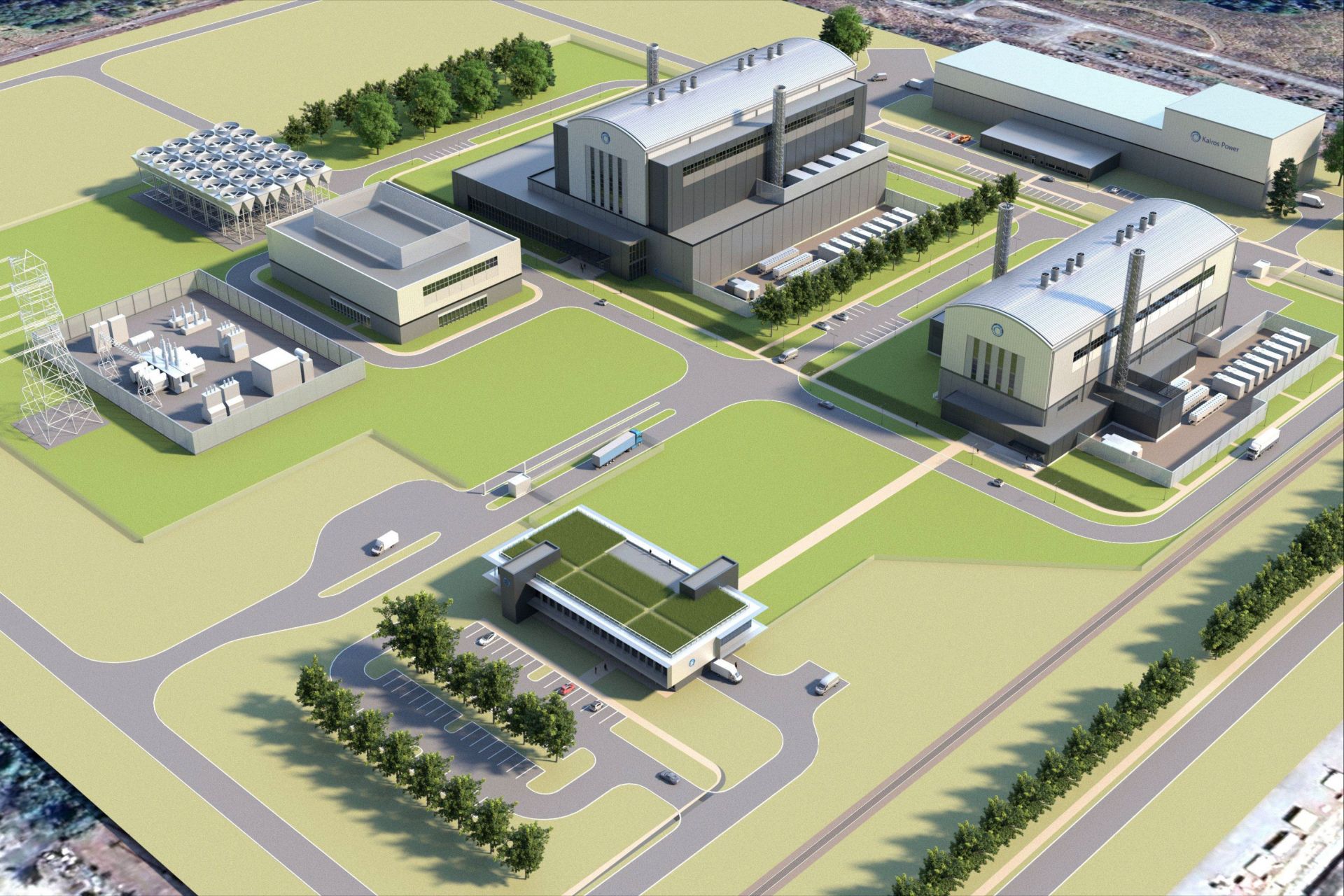
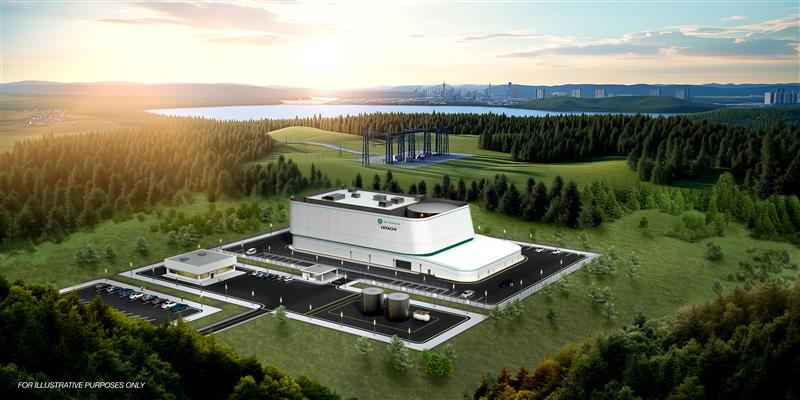
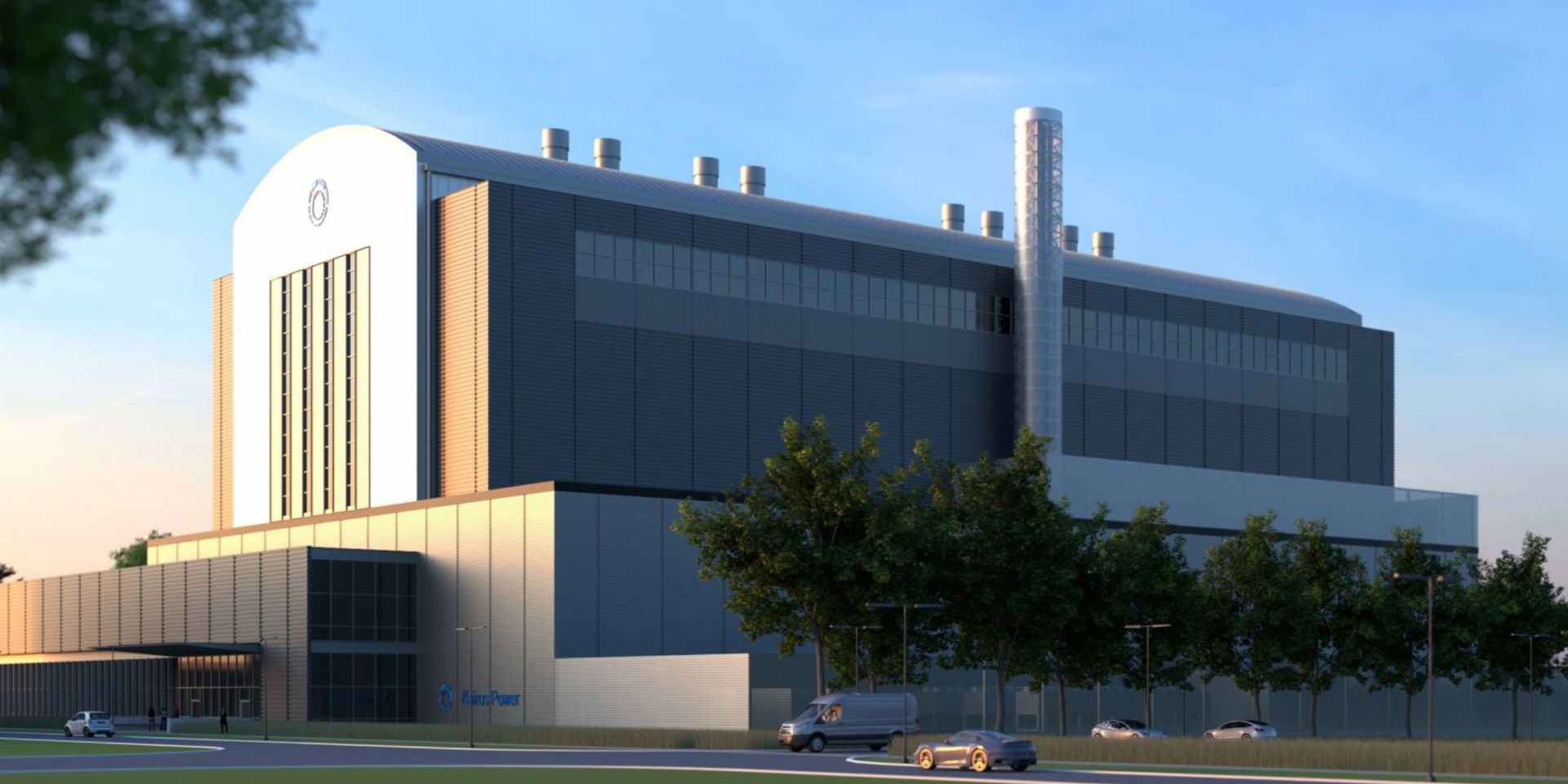
A depiction of Kairos Power’s planned Oak Ridge Reactor Demonstration Campus. (Image: Kairos Power)
When the campus is completed, it will have the two Hermes plants, a modular systems facility for fabrication and assembly, the ETU 3, and other supporting infrastructure. Now, however, it is a work in progress. Only the modular systems facility and the adjoining ETU 3 structure were standing in April. Foundation work was visible at the Hermes site, with the installation of the drilled piers completed. A few items were on display, such as a cast-in-place concrete demonstration near the site entrance. These large 3D-printed composite structures, produced at Oak Ridge National Laboratory, were examples of what will support the Hermes reactor bioshield.
The campus is symbolic of what nuclear power could and wants to be in the United States. At the April celebration, U.S. Deputy Secretary of Energy James Danly told those in attendance how AI and the reshoring of manufacturing were driving forces behind the renewed push for nuclear power. “Gone are the days where you could wait 10 years to build a factory,” Danly said. “We need power immediately.”
The plan is for the Hermes test reactor to be ready in 2028 and Hermes 2 in 2030, Blandford said. Kairos recently submitted a license amendment to the NRC requesting to extend the latest date for completion of construction for Hermes from December 31, 2026, to April 30, 2029; in the request, the company said it expects to finish in 2028. The request for an extension did not mention Hermes 2, which was approved by the NRC as a nonpower test reactor to demonstrate electricity production before Kairos announced a power purchase agreement and upped its planned output to 50 MWe. When the new power plan was announced in August 2025, Kairos said that a review of its research and test reactor construction permit indicated that “the conditions of the construction permit are not substantively affected, therefore, a new application or amendment is not required.”
It is yet to be proven whether power produced via new nuclear technology can be delivered affordably, Kairos CEO and cofounder Mike Laufer told the April celebration attendees. Laufer, though, was confident Kairos will reach that goal, noting that the company’s approach to small modular reactors is both aggressive and deliberate.
“It’s not just about the [Hermes 2] brownfield that we’re going to start excavation on, but it’s everything else that has made this possible and will allow us to go faster moving forward,” Laufer said.
Rafael Guerrero is a Nuclear News associate editor whose focus is power and operations.