NRC provides timeline update on rules, meeting EO deadline
Last May, President Trump issued Executive Order (EO) 14300, “Ordering the Reform of the Nuclear Regulatory Commission,” which mandated that the NRC review and overhaul its rules within 18 months of the EO being issued.
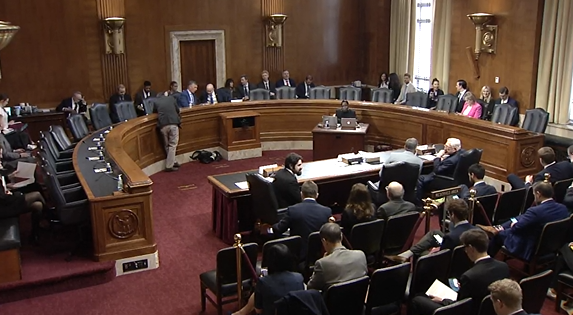
At a public meeting on Thursday, NRC officials shared details and an overview of the rulemaking process, saying that they were on target to have these rules ready by the November 23 deadline.
The timeline: According to the timeline presented Thursday—and information on the NRC’s website—21 proposed rules have or will be published through July. An additional six final rules are in the works that implement both the EO and rulemaking work that was in progress prior to the EO.
Five have already been published, such as the fees rule proposal issued Thursday that included fixed caps on service fees. Three have reached “completed” status.
Most of the rules fall under the category of proposed rules, but five are labeled direct final rules. The NRC can shorten the rulemaking process and issue a direct final rule if the NRC believes the regulatory changes in question are noncontroversial.
Officials weigh in: David Curtis, associate director of operations at the NRC’s Office of the Executive Director for Operations, said he broadly categorizes the rules under two categories: licensing efficiency and reducing regulatory burden. NRC staff has carefully looked at these rules, identifying places where they could reduce the burden on themselves, licensees, and applicants while still maintaining safety and security.
“Some of our regulations are decades old,” he said. “There have been technological changes since that time, there has been a lot of experience that we’ve had in overseeing regulations, and some of those things don't make sense anymore in terms of being able to provide adequate protection and ensure [the] safety and security of the American public.”
Curtis said the 18-month timeline has been sufficient for the agency’s rulemaking process.
“I just want to make sure people understand the commission, even though they are moving quickly, they’ve had the time that they’ve needed to make the decisions they have to make that are responsible and sensible and maintain their independence,” he said.
The NRC staff has taken a structured approach to rules development that has required partitioning, coordination, alignment, and partnership, according to material presented at the meeting.
Historically, the NRC has always had partnerships with other federal agencies, including the Department of Energy, said Curtis. The partnership between the NRC and the DOE, for instance, makes sense, given the nature of what each agency does.
“We have many other federal partnerships that are dependent upon our regulation, that have coregulation that is tightly intertwined,” he added. “The executive order only pinpointed the fact that as we’re doing this regulatory effort, we need to be in lockstep as a federal government, most importantly so that all our stakeholders—whether . . . those who apply for licenses or have licenses or are members of the public—understand exactly what our rules are and that we’re being coherent and consistent across the federal government and that we, the NRC, aren’t standing out.”
Public meetings: Some of these proposed rules already have had public meetings; other meetings are still to follow. The public will next have a chance to engage on a rule—the proposal on streamlining contested adjudications in licensing proceedings—on March 19. The NRC staff said that most of the unreleased rule proposals likely will have public meetings.