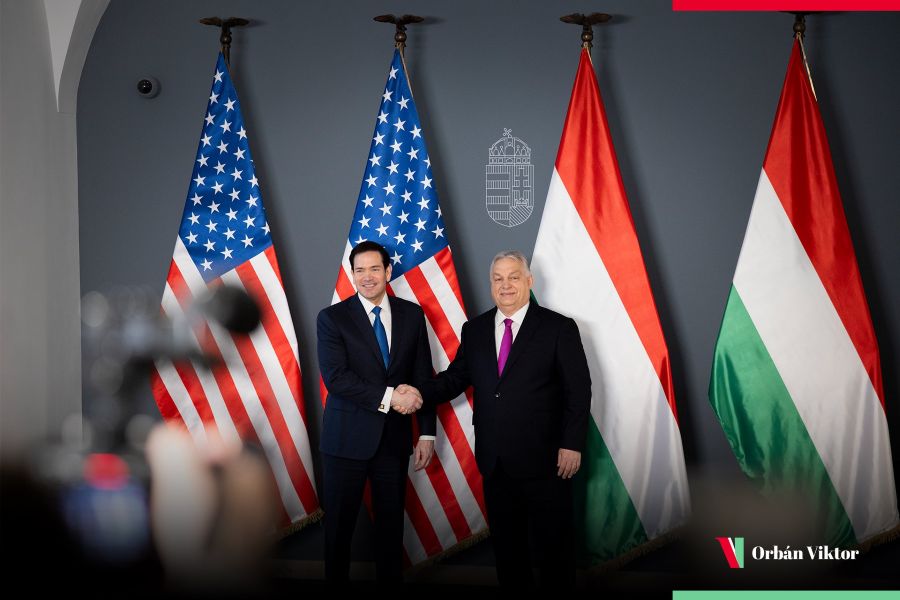
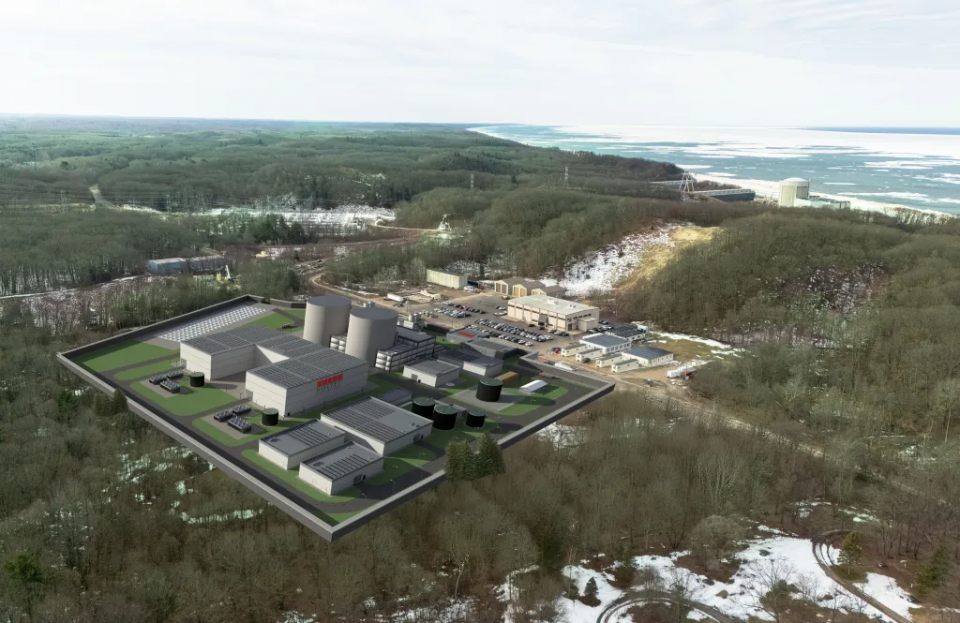
According to the State Department, both agreements represent “concrete steps toward building nuclear power plants in Central Europe using cutting-edge U.S. nuclear energy technologies, advancing our mutual security interests in the region.” The Hungary agreement, which was signed by Rubio and Hungarian Minister for Foreign Affairs and Trade Peter Szijjarto, “underscores U.S. commitment to making Hungary a hub for regional small modular reactor development.”
During his meetings with Orbán and Szijjarto, Rubio encouraged the Hungarian government to select U.S. SMR technology. He also affirmed that Florida-based Holtec International is ready to supply the firm’s dry cask spent fuel storage system in Hungary.
At the joint press conference announcing the agreement, Orbán noted that since the beginning of President Trump’s second term in January 2025, Hungary had “entered into agreements of key importance in the fields of energy, including oil, gas, and nuclear energy. And these agreements, with the exception provided by the President of United States of America which allows for the use of Russian gas and oil here in Hungary, jointly contribute to the fact that Hungary can continue to remain secure on the aspect of energy supply and that we shall be able to supply households and the industry with cheap energy in an international comparison.”
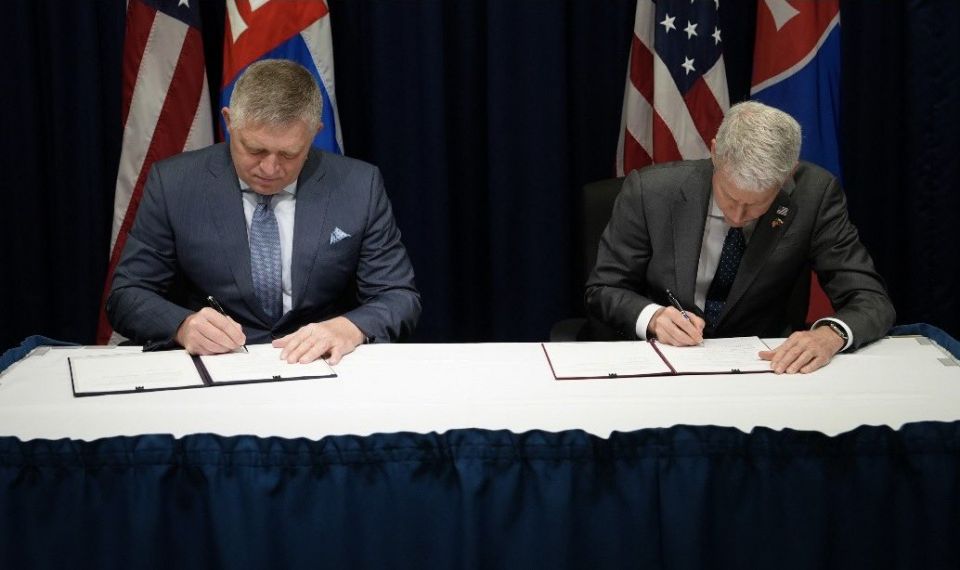
Central European alliances: The U.S.-Slovakia civil nuclear agreement signed in January is partly designed to help that country transition away from its long-time reliance on Russian-designed nuclear reactors, as well as to more closely align the overall Central European energy sector with the United States.
At the time, Energy Secretary Chris Wright said of the agreement that it “reflects our shared commitment to strengthening European energy security and sovereignty for decades to come.”
According to the State Department, the implementation of the Slovakia agreement will begin with a U.S.-funded front-end engineering and design (FEED) study, which will initiate the preconstruction phase for a new large Westinghouse reactor. The FEED study is being performed under the department’s Foundational Infrastructure for Responsible Use of Small Modular Reactor Technology (FIRST) Program, which was established to help countries build “safe, secure, responsible” nuclear energy programs.
Evolving international partnerships: Despite the stated goals of the U.S. government to bolster Central European and American energy security through closer collaboration, Hungary and Slovakia currently remain reliant on Russia. Some news outlets, including CNN, have reported that Hungary is continuing to purchase oil and gas from Russia despite the availability of alternative supplies. Those reports, which originated with the Europe-based Center for the Study of Democracy’s (CSD’s) recently published Cutting the Cord: Russian Oil Supply to Central Europe Is Not Indispensable, further allege that Hungary and Slovakia have both used the European Union’s 2022 exemption from sanctions on buying Russian oil and gas to deepen their dependence on Russia.
In 2025, according to the CSD, Russia accounted for more than 92 percent of Hungary’s crude oil imports, up from 61 percent before Russia’s invasion of Ukraine. According to Cutting the Cord, Hungary’s continued purchases of Russian energy supplies is a political choice rather than a commercial or logistical necessity. For example, the Adria pipeline, which pumps non-Russian crude oil from the Adriatic coast, “has sufficient capacity” to meet both Hungarian and Slovak energy demands.