-3 2x1.jpg)
Playing the “bad guy” to enhance next-generation safety
Sometimes, cops and robbers is more than just a kid’s game. At the Department of Energy’s national laboratories, researchers are channeling their inner saboteurs to discover vulnerabilities in next-generation nuclear reactors, making sure that they’re as safe as possible before they’re even constructed.
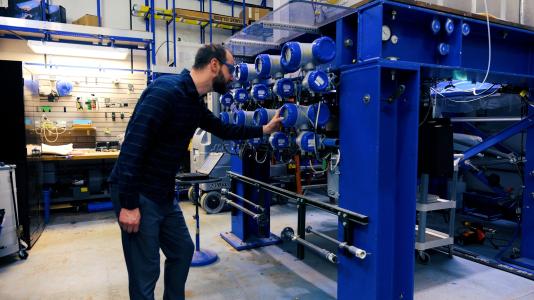
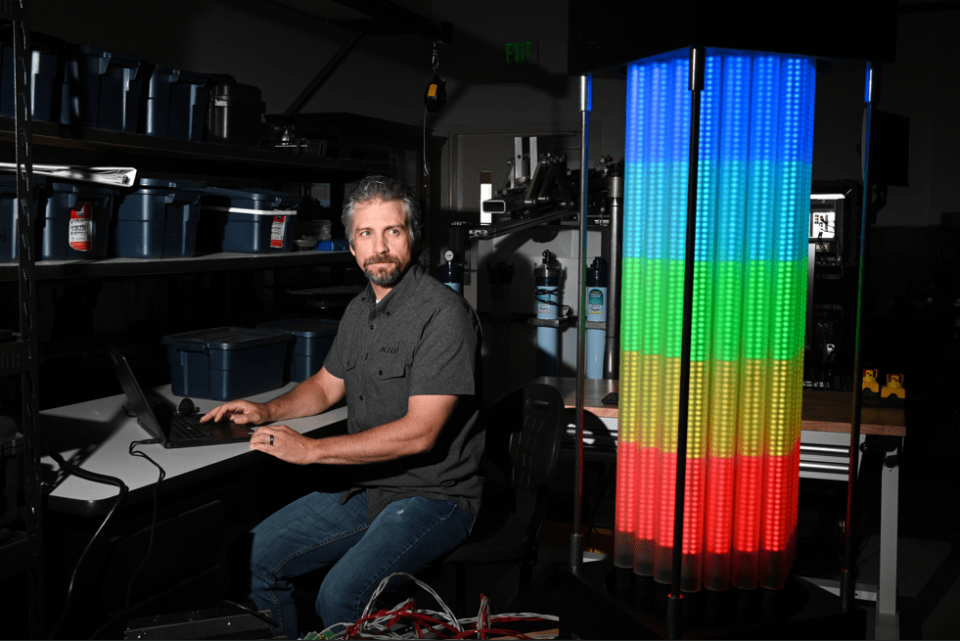
Darius Lisowski takes time to play "bad guy" to thwart those who would interfere with safe nuclear reactor operations. (Photo: Argonne)
Passive safety systems at Argonne: Argonne National Laboratory has been partnering with sister labs Sandia, Oak Ridge, and Idaho for more than two years to find potential weak spots in the passive safety systems which are a key feature in many new nuclear power plant designs.
Passive safety systems are so named because they rely on gravity, circulation, and other natural processes—rather than human intervention or active power sources—to cool or safely shut down reactors.
“Natural phenomena threats are unique to new reactors,” said Darius Lisowski, group manager of reactor safety testing and analysis and principal investigator at Argonne’s NSTF. “In this project, we’re focusing on bad guys who might have authorized access and knowledge of inside workings. What could they do to make things break?”
At Argonne’s Natural Convection Shutdown Heat Removal Test Facility (NSTF), researchers brainstormed potential weak spots that could be exploited by those who have access, such as access hatches that could be left open or cooling pathways that could be blocked.
They detailed their findings in a report, “Identifying Sabotage Risks and Adversarial Threats to Passive Decay Heat Removal Systems in Advanced Nuclear Reactors,” which was presented at the International Atomic Energy Agency’s International Conference on Small Modular Reactors and their Applications in October 2024.
The team found the expected—that nuclear plants are very safe, but could be vulnerable in unlikely scenarios. The most likely sabotage scenarios were sent to Argonne international security lead Matthew Bucknor and group manager of licensing and risk assessments Dave Grabaskas to test each potential weakness. “Our research is relevant and applicable to every U.S. nuclear vendor out there,” said Bucknor.
The goal was to inform better design by identifying risks early so that small issues can be caught before they become big problems. “By using redundancy, focusing on the most severe threats, and meeting strict design tests,” Lisowski said, “we can make sure passive safety features are robust. Design improvements will happen early, before the next generation of reactors goes into operation.”
Cybersecurity at INL: New digital technologies can expose operating nuclear plants to another kind of threat.
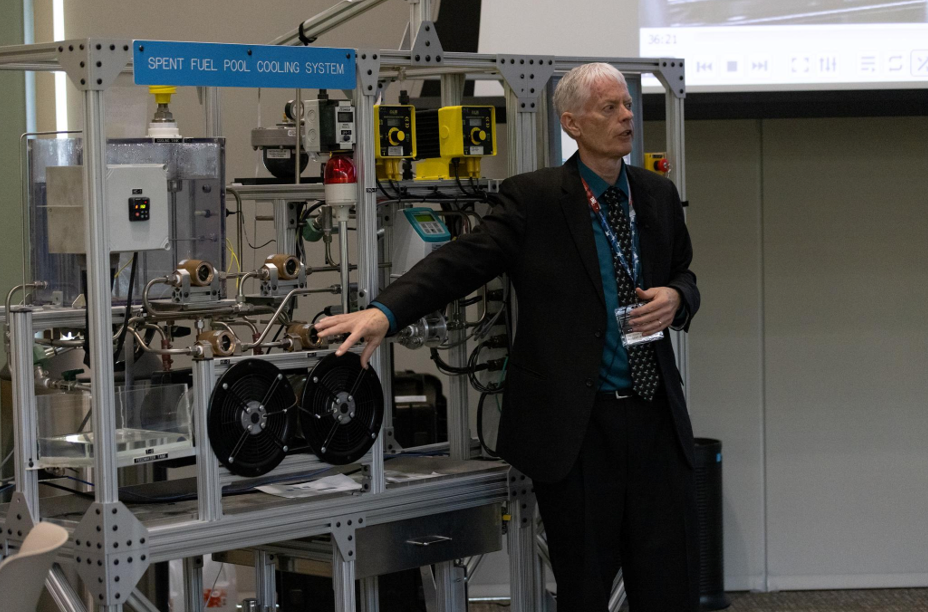
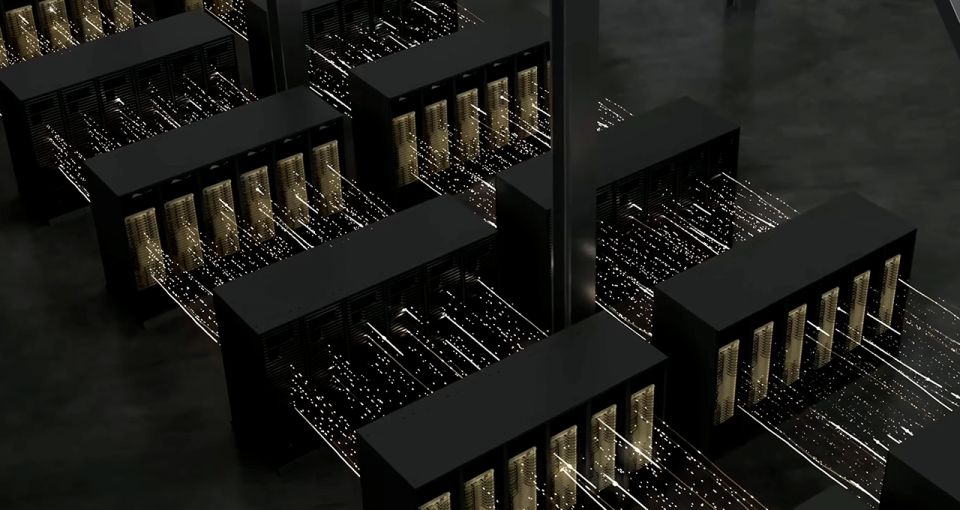
INL's spent fuel pool cooling system test bench. (Photo: INL)
“Digital technology has become inseparable from nuclear operations,” said Charlie Nickerson, a nuclear cybersecurity specialist at INL. “Every plant in operation today relies on a mix of sensors, control systems and data streams that would have been unthinkable three decades ago.”
The efficiencies and advancements that come with digitization also carry the risk of cyberattack. Fortunately, INL is home to a nuclear cyber team that uncovers reactors’ hidden vulnerabilities. In the lab’s engineered test bench environments, nuclear operators and cybersecurity professionals can confront real-world attacks in controlled conditions.
“Each test bench forces participants to see how a vulnerability unfolds during exploitation, what signals might have revealed it earlier and how defenses can be strengthened,” said Nickerson.
The test benches are part of a four-step process that begins with a simulated cyberattack. From there, each scenario is mapped out, and participants discuss where protection and detection opportunities were missed.
Afterward, participants take these experiences back to their own facilities and apply lessons learned. Similarly, INL may adjust or build new test benches based on previous collaborations. In the fourth step, partners return to the lab, bringing with them further ideas, new procedures, or even prototype technologies. This results in a better-trained workforce, a stronger security foundation, more collaborative practices, and the latest technologies for the industry.
“The future of nuclear energy depends on safety, cost and trust in the security,” Nickerson said. “That is why INL is not just defending nuclear power, we are reinventing how we secure it.”