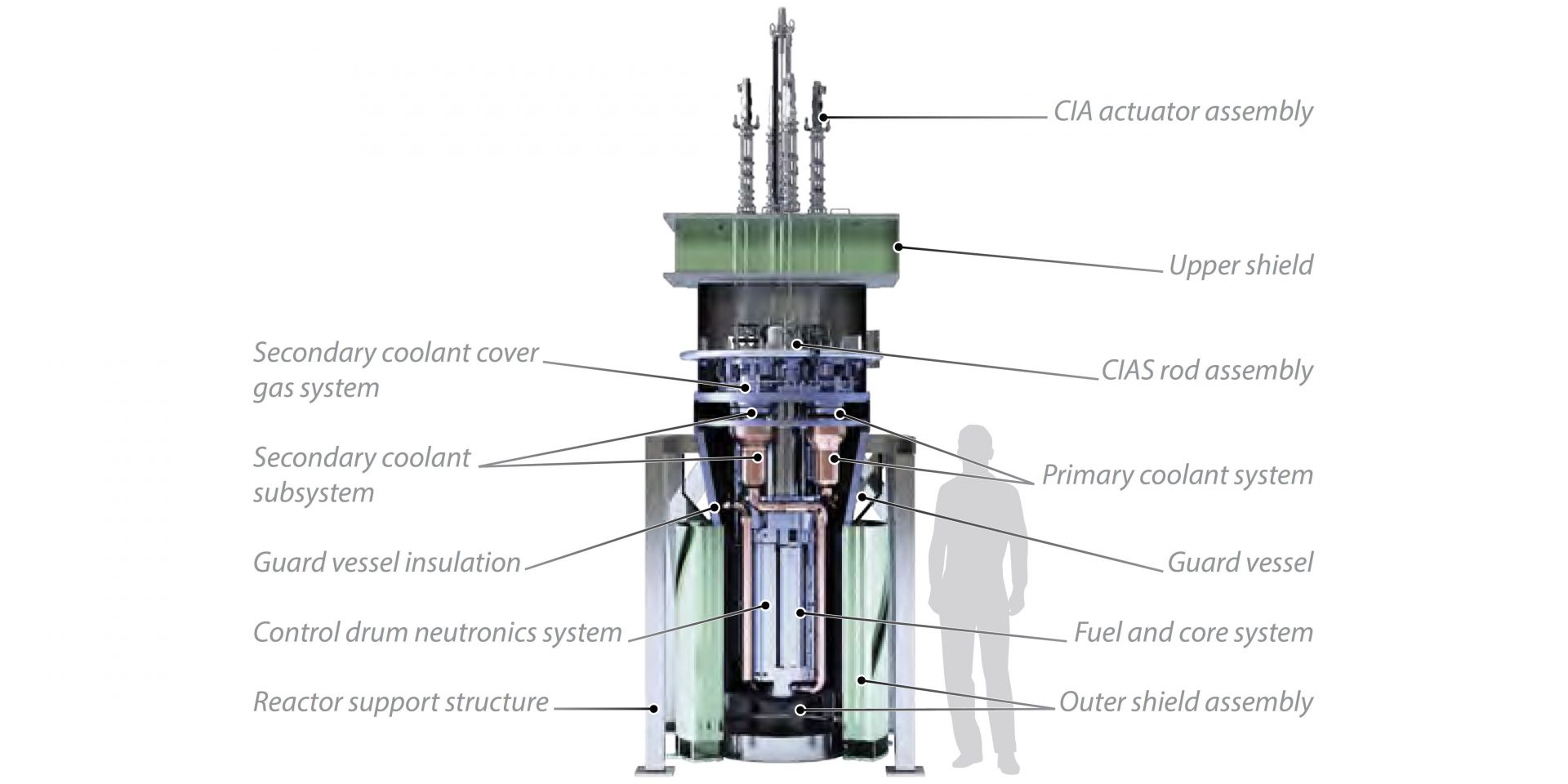
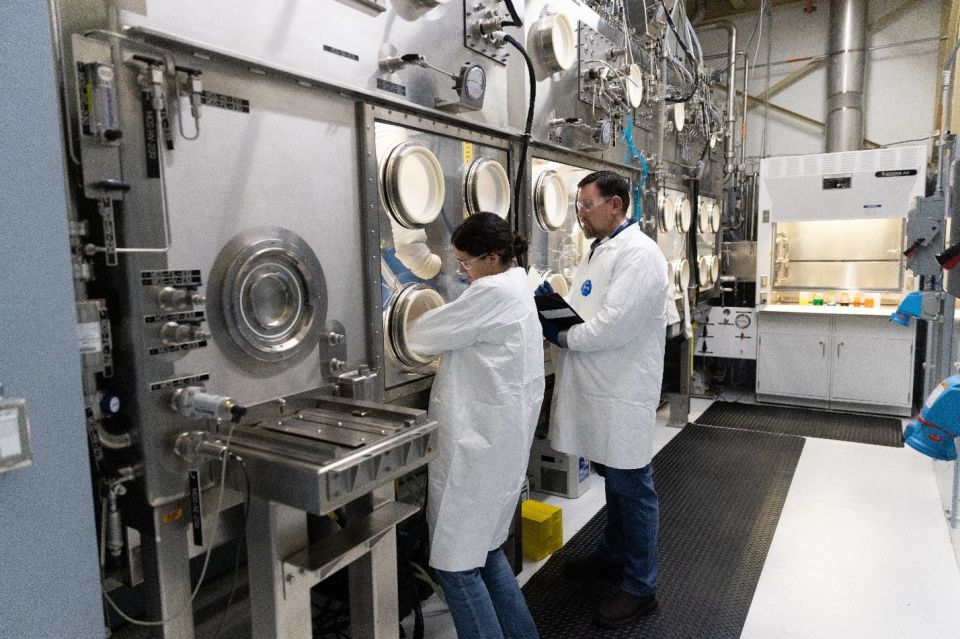
Cutaway view of MARVEL and its subsystems. (Image:INL)
Idaho National Laboratory has selected five teams for its Microreactor Application Research Validation and Evaluation (MARVEL) Project to develop a sodium-potassium–cooled microreactor designed to test microreactor applications, create regulatory processes, and explore electrical and nonelectrical uses.
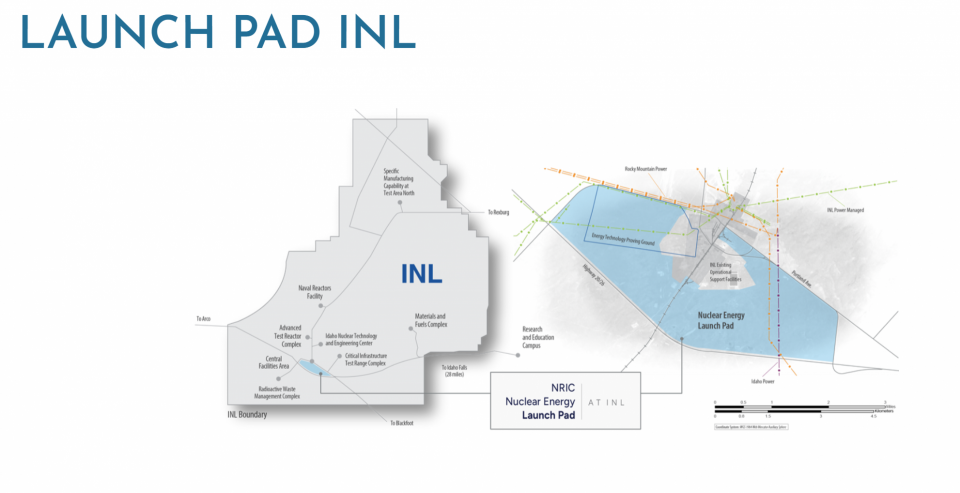
Demonstration: The MARVEL reactor is planned to generate 85 kW of thermal energy and as much as 20 kW of electricity. The unit will be located at the lab’s Transient Reactor Test Facility, where it will serve as an operational microreactor for demonstration purposes. INL intends to connect MARVEL to a nuclear microgrid and have the reactor operating by late 2027.
Five teams: INL’s initial five teams for MARVEL are Amazon Web Services; DCX USA and Arizona State University; General Electric Vernova; Radiation Detection Technologies; and Shepherd Power, NOV, and ConocoPhillips.
Researchers from these teams propose to demonstrate several test cases, including those involving desalination, remote operations, advanced sensors, and viability of powering data centers with advanced nuclear technologies.
In its announcement, INL provided a breakdown of the teams’ projects:
- AWS proposes coupling the MARVEL reactor with a modular data center, with the objective of enabling defense and government agencies to build data centers anywhere through creation of a self-sustaining, rapidly deployable system that can operate independently of traditional power infrastructure.
- DCX USA and Arizona State University propose to demonstrate the feasibility of using a microreactor to power a data center for artificial intelligence, yielding data on providing a power supply that can handle the demands of AI processing.
- GE Vernova proposes to demonstrate remote and autonomous reactor operations while establishing controls standards for broad application with commercial microreactors.
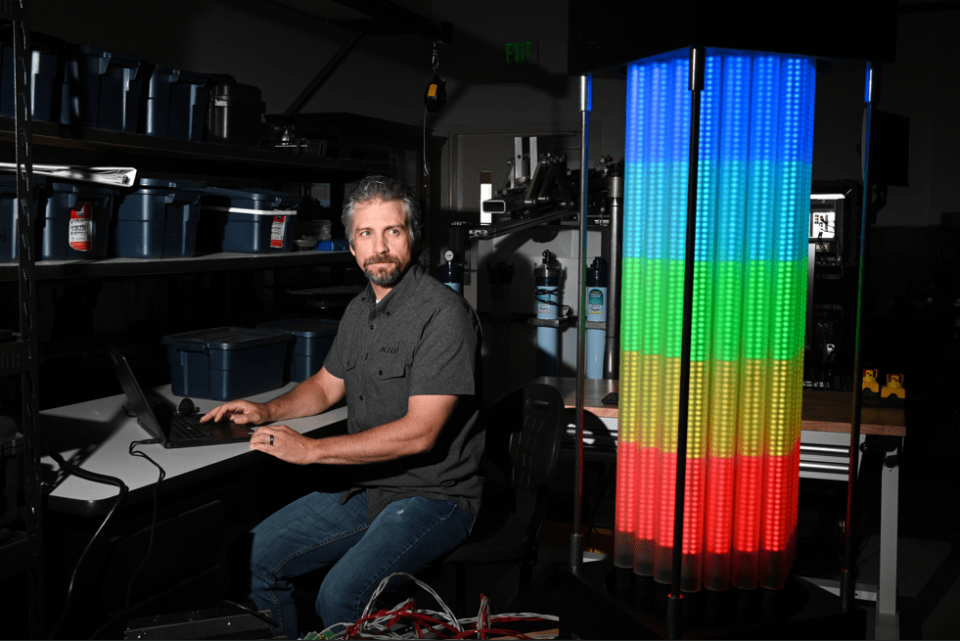
- Radiation Detection Technologies proposes to test advanced high-performance sensor technologies for monitoring the performance of advanced reactors.
- Shepherd Power, NOV, and ConocoPhillips propose to develop a pilot-scale desalination project using nuclear-generated process heat and to demonstrate the viability of applying advanced nuclear energy for desalination in oil and gas operations.
Coming up: The next step calls for the five teams to work with Department of Energy and INL staff to create implementation plans for their proposals and to better determine the feasibility of their proposed applications. Final agreements on projects for using MARVEL are expected to be announced in 2026.