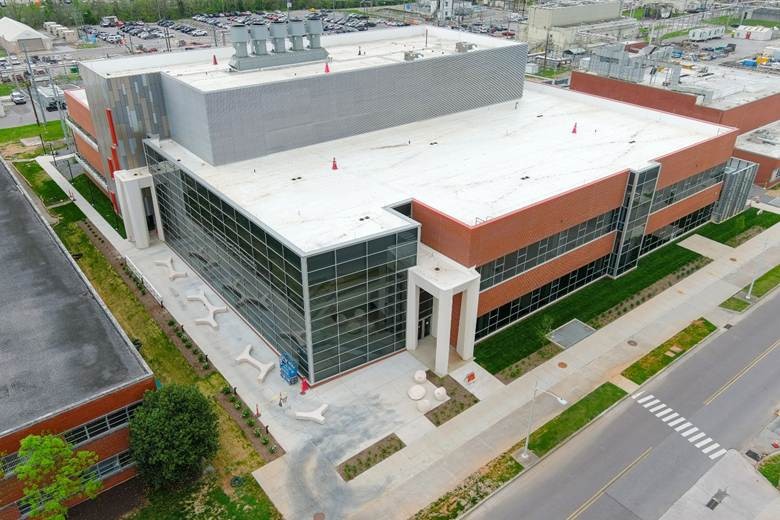
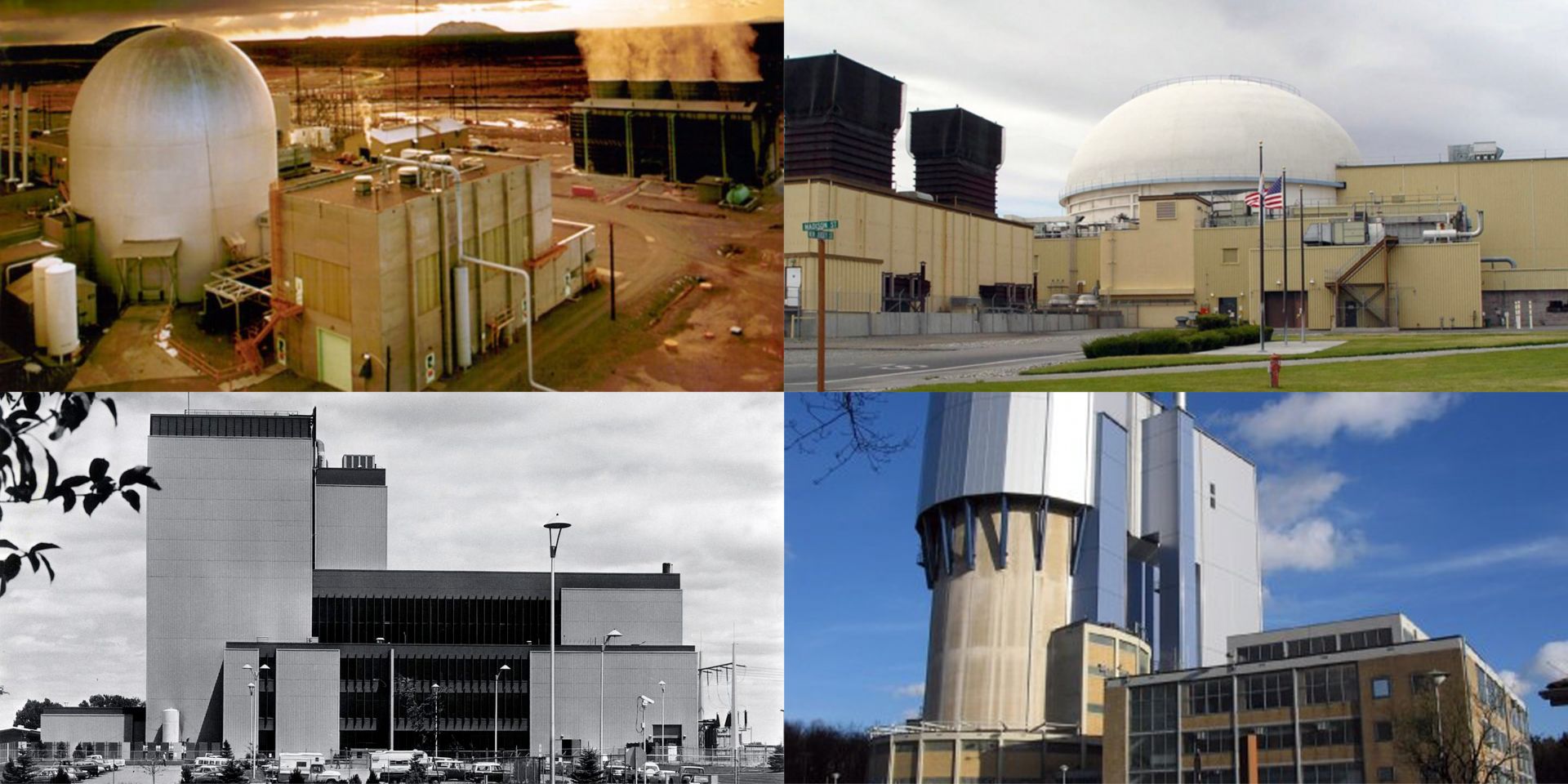
An aerial view of the Translational Research Capability, which is rapidly moving into full operations. (Photo: Carlos Jones/ORNL)
The newest addition to Oak Ridge National Laboratory’s materials research facilities is set to host a ribbon-cutting ceremony later this year now that construction is complete and laboratories are being phased into operation. The 100,000-square-foot, multipurpose Translational Research Capability building at ORNL houses a broad spectrum of research ranging from quantum science to energy storage, with several of the largest labs in the building focused on materials challenges for applications including nuclear fission and fusion, like the ORNL’s Corrosion Lab.
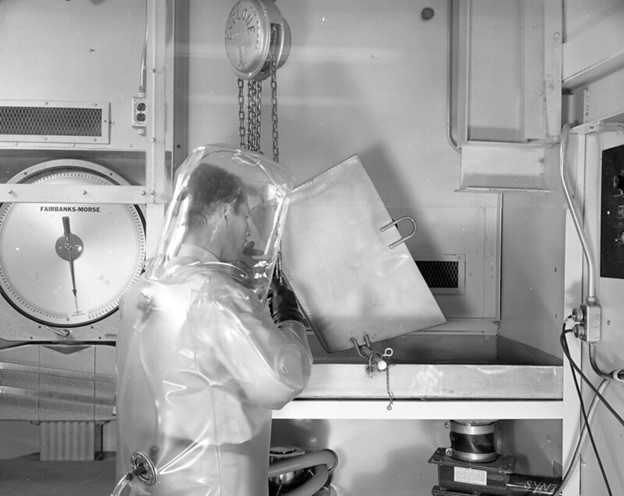
A technician prepares salts for use in MSRE in 1964. (Photo: ORNL)
FLiBe—a mixture of lithium fluoride and beryllium fluoride—is not an off-the-shelf commodity. The Department of Energy suspects that researchers and reactor developers may have a use for the 2,000 kilograms of fluoride-based salt that once ran through the secondary coolant loop of the Molten Salt Reactor Experiment (MSRE) at Oak Ridge National Laboratory.
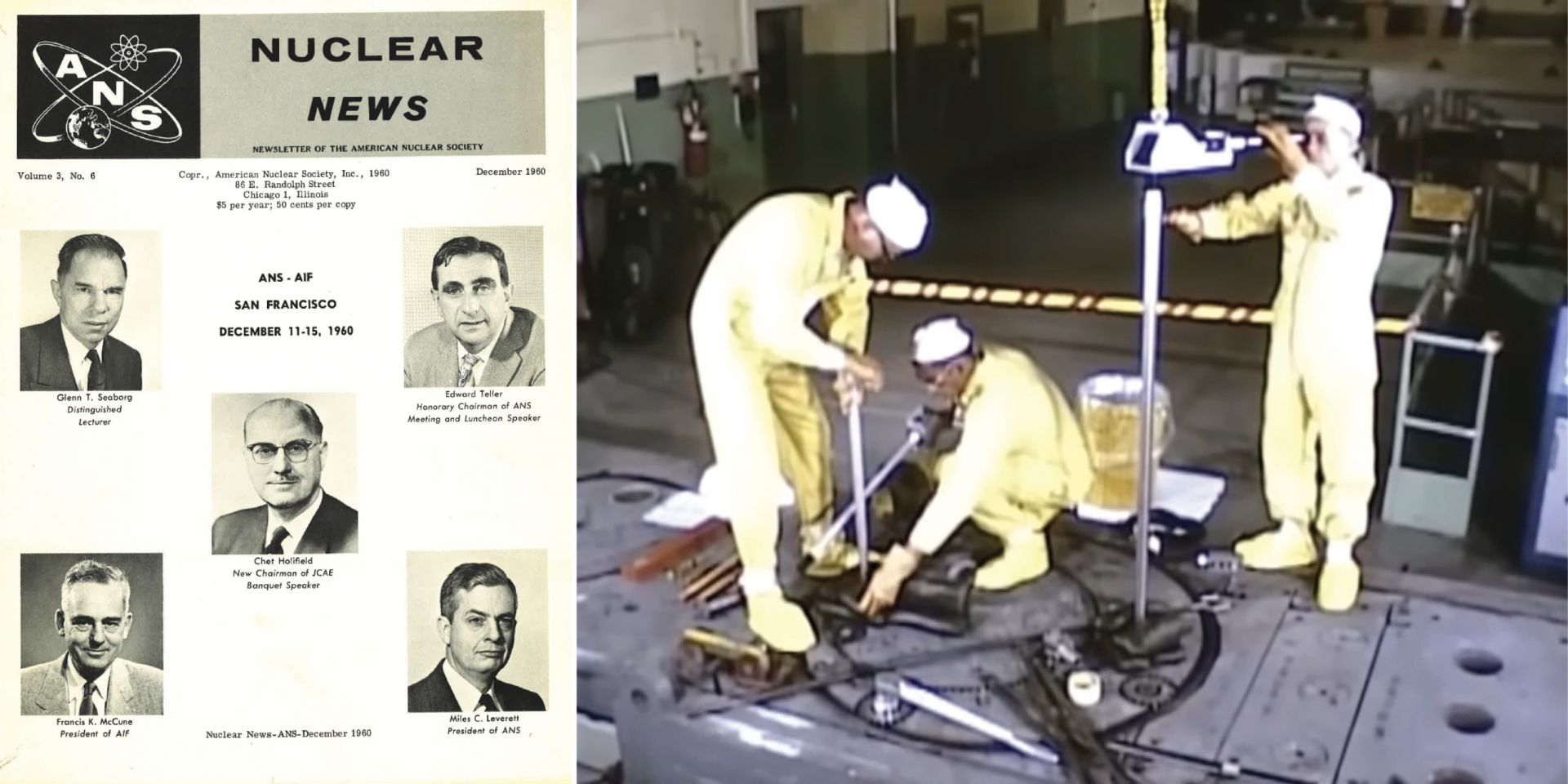
The December 1960 issue of NN, which announced plans to build the MSRE, paired with a still image from a 1969 video on the MSRE produced by ORNL.
By late 1960, when the U.S. Atomic Energy Commission authorized plans to build a Molten Salt Reactor Experiment (MSRE) at Oak Ridge National Laboratory, the lab already had about 13 years of experimentation with molten salt reactors under its longest-serving lab director, Alvin Weinberg. The MSRE operated from 1965 to 1969, proving that molten salt reactors could operate reliably, and with alternatives to uranium-235 too.
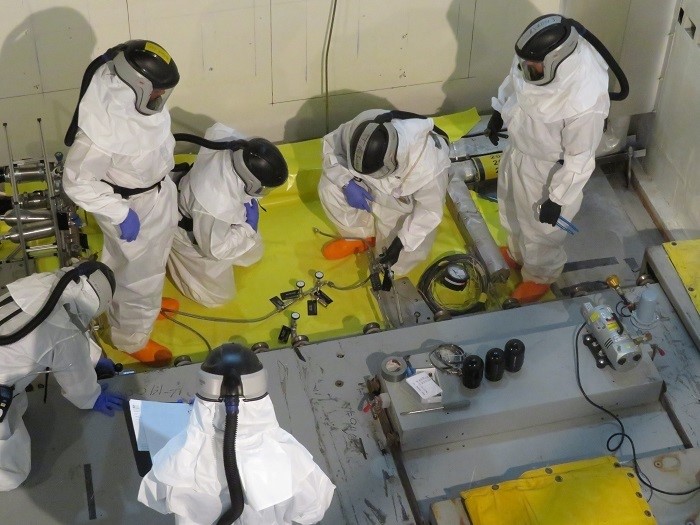
For the first time in 26 years, work crews performed sampling of gaseous byproducts at the MSRE. (Photo: DOE)