NASA’s Marshall Space Flight Center hosts nuclear propulsion cold-flow tests

April 24, 2026, 2:59PMNuclear NewsA Nuclear News photo feature
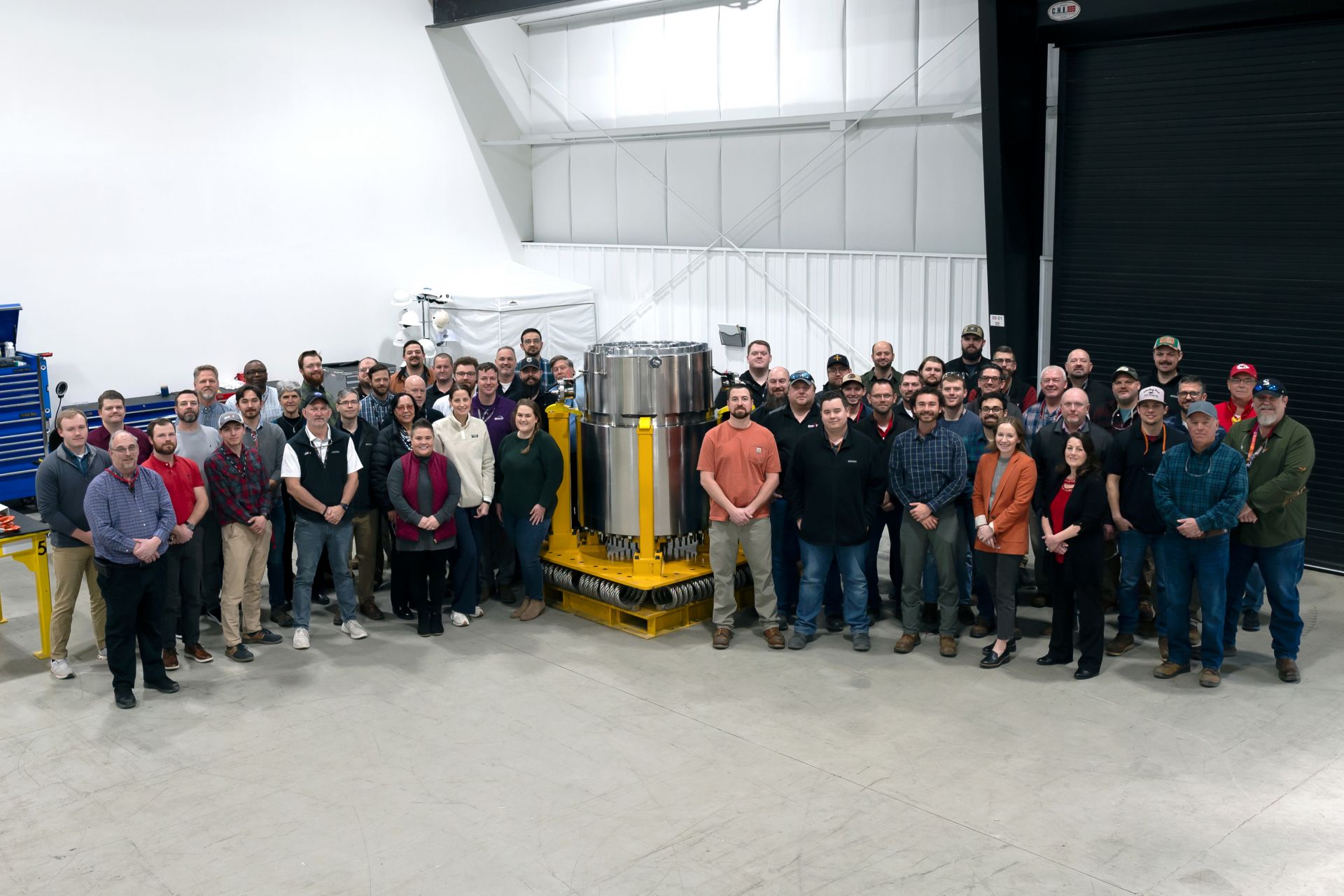
Kate Kelly, president of BWXT Advanced Technologies (front row, in orange blazer), stands with the team that designed and built the engineering demonstration unit at the BWXT Innovation Campus in Lynchburg, Va., in January 2025. (Photo: BWXT)

Nuclear rocket propulsion has been investigated for decades, and NASA and the Atomic Energy Commission carried out significant testing in the 1960s as part of the Nuclear Engine for Rocket Vehicle Application program. NERVA chased the potential of the efficiency and energy density of nuclear thermal propulsion to extend our reach to new space frontiers before the program ended in 1973.

Atoms: Space travel plans

April 26, 2023, 3:00PMNuclear News

Earthbound air travel can be a hassle, even for careful planners. So if you’re heading to the Moon or beyond, it’s time to shift your planning into hyperdrive. Our advice, when there’s no guidebook, no proven vehicle, and your destination is a moving target? Don’t forget to pack your nuclear power bank.

How has student research in nuclear thermal rockets shaped your career plans?

April 6, 2023, 3:00PMNuclear NewsMiguel Alessandro Lopez

Miguel Alessandro Lopez

At the University of Rhode Island, I initially enrolled as a candidate for an accelerated track to earn bachelor’s and master’s degrees in mechanical engineering, with a minor in nuclear engineering. My objective was to concentrate on reactor power design and join efforts to make nuclear energy safer, more efficient, and less stigmatized.

My plans changed after I attended a guest presentation on high-performance nuclear thermal propulsion (HP-NTP) led by Michael Houts, manager of NASA Nuclear Research at Marshall Space Flight Center. He posted his email address on one of the last slides, so I took a chance and contacted him about potential research opportunities and thesis work. As it turned out, that one little email ultimately led to four NASA-sponsored design projects at URI—two are complete, and two are in progress—as well as my thesis. My research has been on HP-NTP, specifically the centrifugal nuclear thermal rocket (CNTR) design. In that design, liquid uranium is heated to extremely high temperatures in a cylinder that is rotated between 5,000 and 7,000 revolutions per minute as liquid hydrogen passes through the center of the cylinder, where it is heated and expanded, exiting as a propellant while the liquid uranium is retained by centrifugal force.