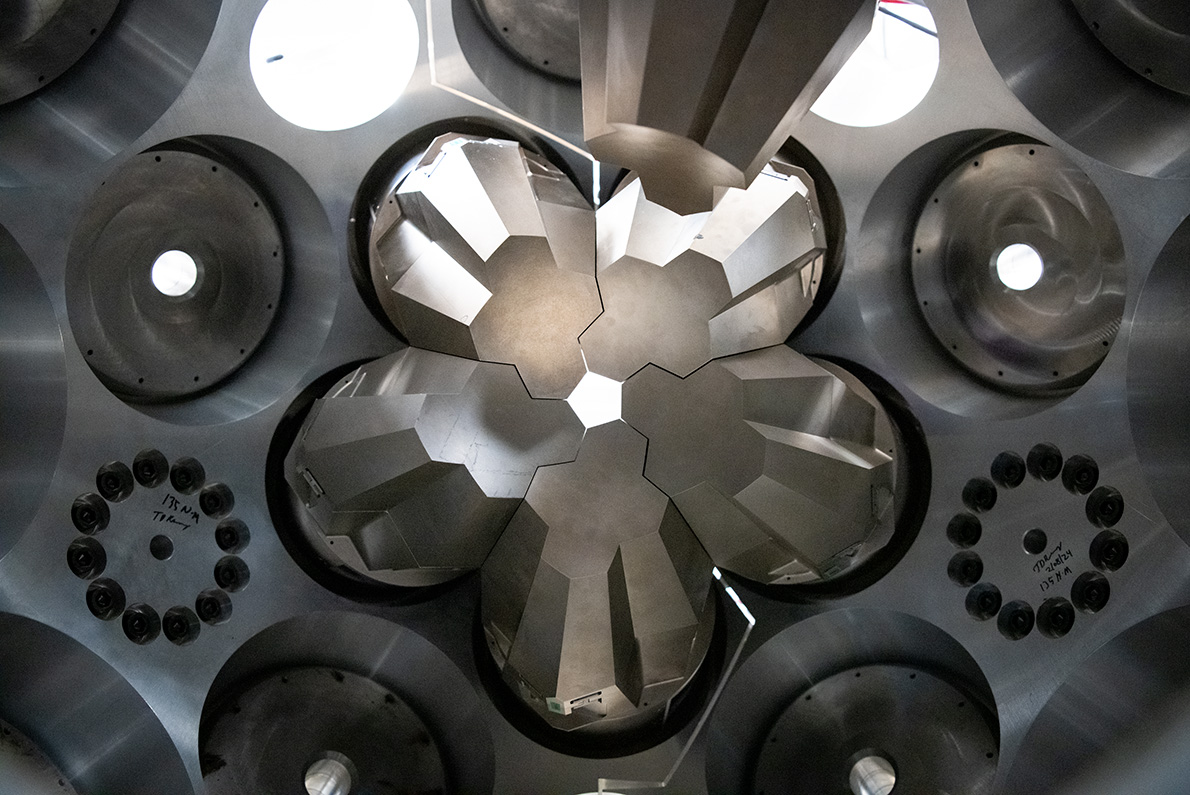
GRETA ready for full scientific operations
July 31, 2026, 12:46PMNuclear News
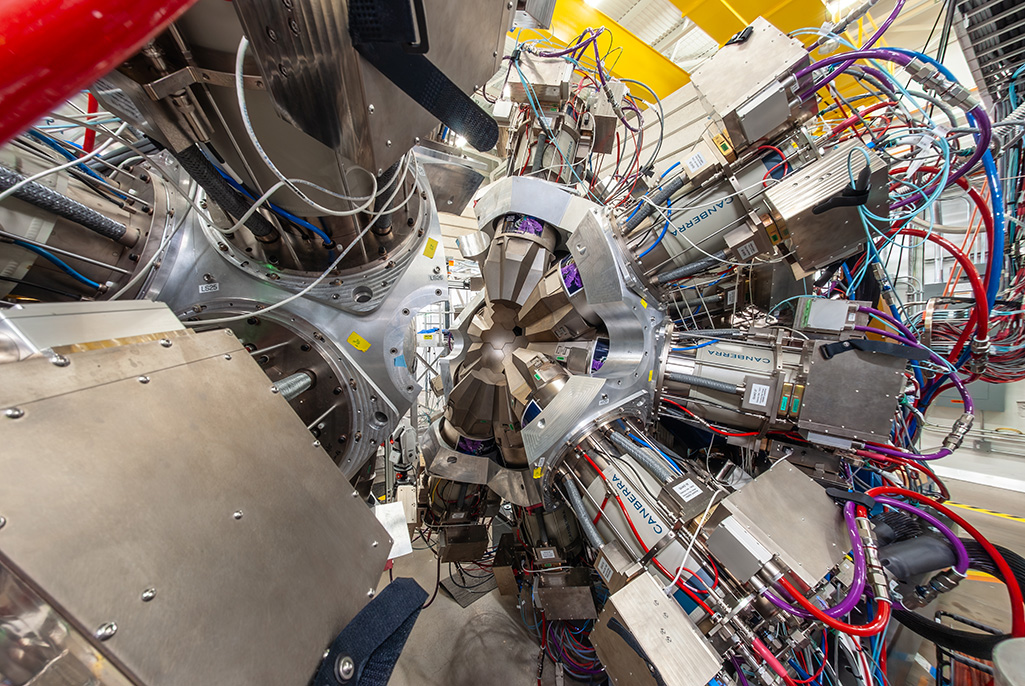
GRETA installed at Michigan State University’s Facility for Rare Isotope Beams. (Photo: Shumpei Noji/FRIB)
The Gamma-Ray Energy Tracking Array (GRETA), which is installed at the Facility for Rare Isotope Beams (FRIB) at Michigan State University, has successfully completed a commissioning and characterization run, establishing that it is ready for scientific operations.
According to Lawrence Berkeley National Laboratory, which made the announcement, the measurements that scientists make with GRETA will improve the theoretical models of the atomic nucleus that underpin research in nuclear physics, astrophysics, energy, medicine, and national security.
Tags:
Share: