“Positive psychology says when you think something is going to happen, it’s more likely to happen,” said Colby, a workshop leader and improvisor. “Some of the studies are insane; weightlifters could actually lift more weight when they thought they would be able to lift that amount of weight as opposed to those who looked at it, thinking, ‘I’m not going to be able to.’ It's all about mindset."
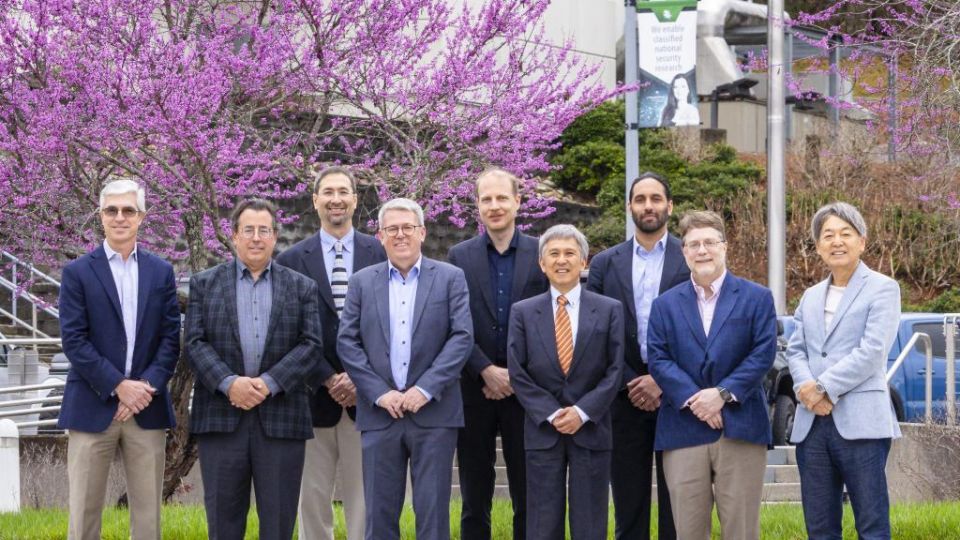
Colby and panelists Carl Perez of Exodys Energy, Brad Tomer of the National Reactor Innovation Center, Ben Reinke of X-energy, and Mark Natale of the Department of Energy were more optimistic about the long-term goal. In one of the last sessions of the four-day conference, “Unlocking the Path through Collaboration,” the four panelists shared their thoughts on the collaboration between industry, government, labs, and other stakeholders—with the 2050 goal front of mind.
Collaboration’s role: All four panelists have benefited from collaborating with other like-minded parties. Tomer, director of the National Reactor Innovation Center, said his office serves as a bridge between public and private entities. One notable example is the Nuclear Energy Launch Pad, the Department of Energy program run through NRIC that evolved from the Reactor Pilot Program and Fuel Line Pilot Program to support private nuclear developers in reactor and fuel cycle testing, authorization, and deployment.
On Wednesday, the DOE announced its latest round of Launch Pad participants, ranging from new names to companies who already participated in the reactor or fuel pilots. Tomer said the Launch Pad exposure can be game changing for participating companies, as Wednesday’s announcement already had private capital reaching out to participants.
“Our mission, if you will, is to partner with industry to bridge that gap between our research and development with commercial deployment,” Tomer said.
Natale, the director of the DOE’s Advanced Reactor Deployments division, said if you want to talk about collaboration, look no further than the Nuclear Lifecycle Innovation Campuses program, which looks to support work from the front end to the back end of the fuel cycle.
“We'll see where it goes, it’s just getting started . . . . If you want to talk collaboration, there’s the holy grail,” he said.
“I think vision is important,” added Perez, the CEO of Exodys Energy, a company focused on recycling spent nuclear fuel. “We want 4x by 2050—what should that look like? I think the Nuclear Lifecycle Innovation Campus is one way to really push forward with problems with fuel fabrication, recycling, with advanced reactors.”
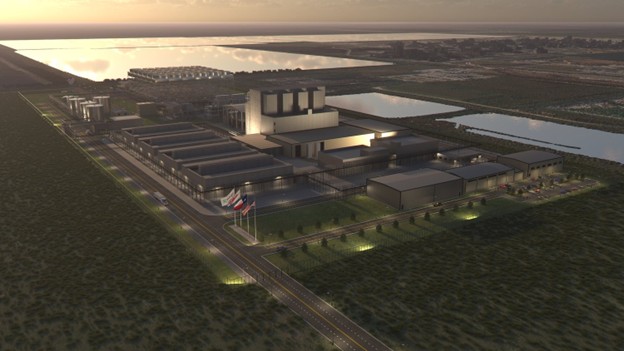
X-energy has shown its ability to collaborate with companies outside the nuclear sector. Among the company's notable projects is its Long Mott project in Seadrift, Texas, where the company wants to build four Xe-100 reactors at Dow’s UCC Seadrift Operations, a first-of-its-kind reactor deployment at a chemical production facility. Reinke, X-energy’s senior vice president of global business development, said the unique partnership has established a structure the company feels will help it contribute to the 2050 goal.
That is not to say there are no obstacles in the way. Reinke said the workforce is of particular concern with regard to the 2050 goal—everyone is or will be hiring from the same small pool of skilled tradespeople.
“I probably would wave that magic wand and miraculously turn a bunch of people into welders and pipefitters and electricians. We are going to be in a scale competition with everything else that’s getting built in this country,” said Reinke.