Shine receives $263M conditional DOE loan to complete isotope facility
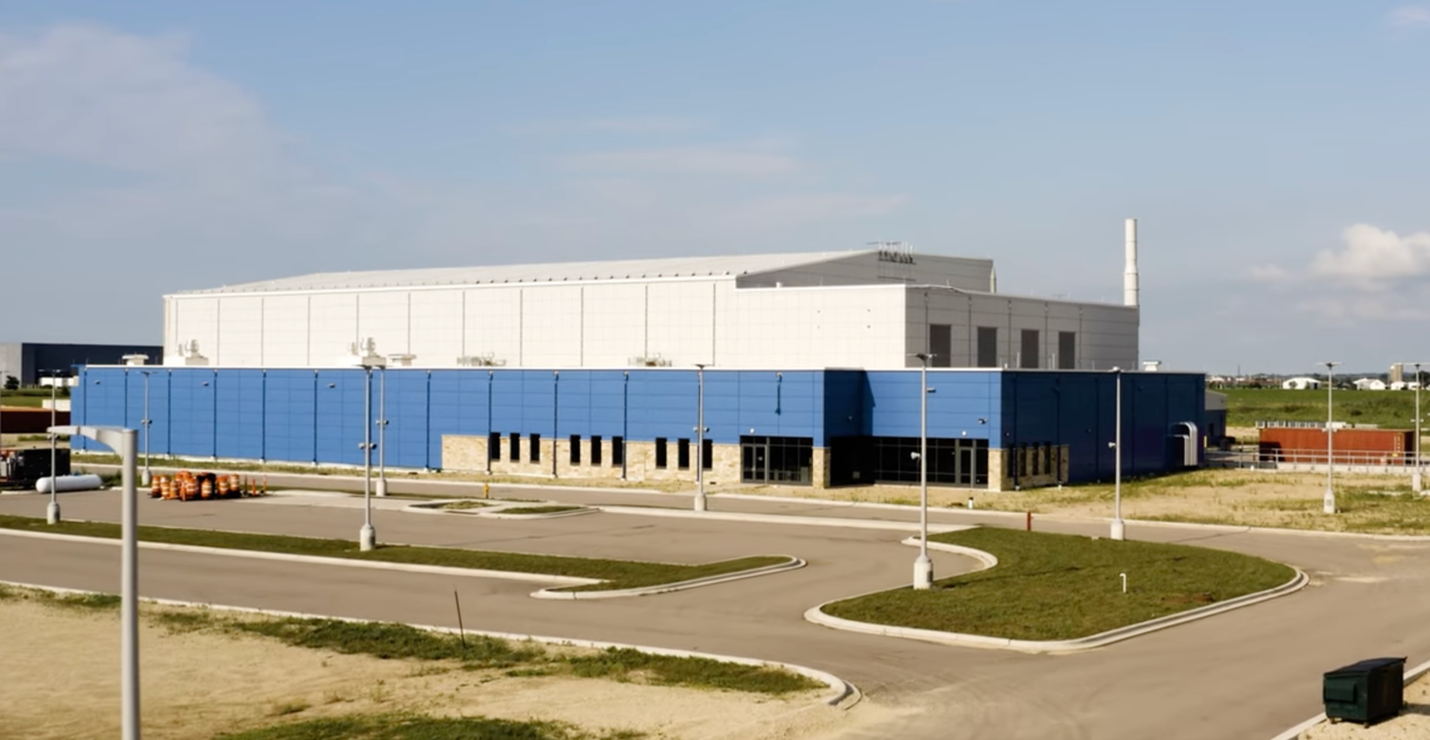
Fusion technology company Shine has been issued a conditional commitment for a loan of up to $263 million by the Department of Energy’s Office of Energy Dominance Financing (EDF) to support the construction of the company’s medical isotope production facility in Janesville, Wis.
Once completed, the Chrysalis production facility will be used to produce molybdenum-99. As the precursor to the medical radioisotope technetium-99m, Mo-99 is used in more than 40,000 medical procedures in the United States each day, primarily as a radioactive diagnostic tracer.
“The Shine Chrysalis project is vital to improving the nuclear supply chain and contributing to a strong next-generation nuclear workforce while onshoring this critical production and improving national security,” DOE-EDF director Gregory A. Beard said.
According to the DOE, while the conditional loan commitment from DOE-EDF indicates the department’s intent to provide financial support, certain technical, legal, environmental, and financial conditions must be satisfied by the DOE and Shine before the funds are provided.
Chrysalis background: Shine received a construction permit for the Chrysalis building from the Nuclear Regulatory Commission in February 2016, and the company broke ground on the 43,000-square-foot facility in May 2019. Chrysalis will use deuterium-tritium fusion neutron generators to produce up to 8,200 6-day curies of Mo-99 per week.
Shine is using a four-phased approach to ramping up operations at Chrysalis, with the first three phases seeing the eight neutron generators, referred to as irradiation units, being sequentially brought on line to produce Mo-99. The fourth phase will add xenon and iodine production. Chrysalis would contain both irradiation and isotope production facilities, licensed together under 10 CFR Part 50.2.
Construction of Chrysalis was originally scheduled to be completed by 2022. Shine, however, has twice extended that deadline. Most recently, in December 2025, the NRC approved a request from Shine to amend its construction permit, extending the latest date for completion from December 31, 2025, to December 31, 2029. According to the DOE, the facility is currently about 75 percent complete.
Attributing the delays to the first-of-a-kind nature of the production facility, Shine said the additional time will allow the company to complete the construction, preoperational testing, and licensing of each of the four phases of the phased approach to initial facility operations.
While Shine doesn’t expect to complete all four construction phases until 2029, the company said it will begin commercial production of Mo-99 during the first phase of construction, which it expects to be “substantially complete” in 2027.
A video tour of the facility from 2024 is available here.
NNSA involvement: Shine has developed and demonstrated its technology with support from the National Nuclear Security Administration, which was directed by the American Medical Isotopes Production Act of 2012 to establish a technology-neutral program to support the establishment of domestic supplies of Mo-99 without the use of high-enriched uranium.
According to the DOE, the national laboratories also played a key role in developing Shine’s technology through NNSA funding. Shine’s irradiation units produce Mo-99 by inducing a subcritical fission reaction in an aqueous low-enriched uranium target (19.75 percent uranium-235).
Quote: “Shine is the key to ending reliance on imports of foreign-produced Mo-99 and ensuring U.S. patients have reliable access to American-made medical isotopes,” said Matthew Napoli, the NNSA’s deputy administrator for defense nuclear nonproliferation. “The [DOE-EDF] conditional loan will get this project across the finish line, and Shine’s market entry will be a major win for American nuclear medicine, fusion technology, and nuclear nonproliferation leadership.”


 2x1.jpg)