Applications for Phase I awards, which will range from $500,000 to $750,000, are due on April 28, and will support a nine-month project period. Gil said this phase is intended to allow small teams to demonstrate data scaling laws and productivity approaches to validate their proposed method for using artificial intelligence to enhance the science workflows.
Applications for Phase II awards, which will range from $6 million to $15 million, are due on May 19, and will support a three-year project period. Gil said these awards are intended for larger teams of 15–25 people working across sectors to tackle projects at a larger scale.
“We’re moving with incredible speed, and we’re very excited to get this started,” he said. “These will be the teams that will be bringing the Genesis Mission to life.”
AI in nuclear: Gil expressed excitement for the role of AI in fusion development, nuclear nonproliferation, and accelerating the deployment of nuclear power.
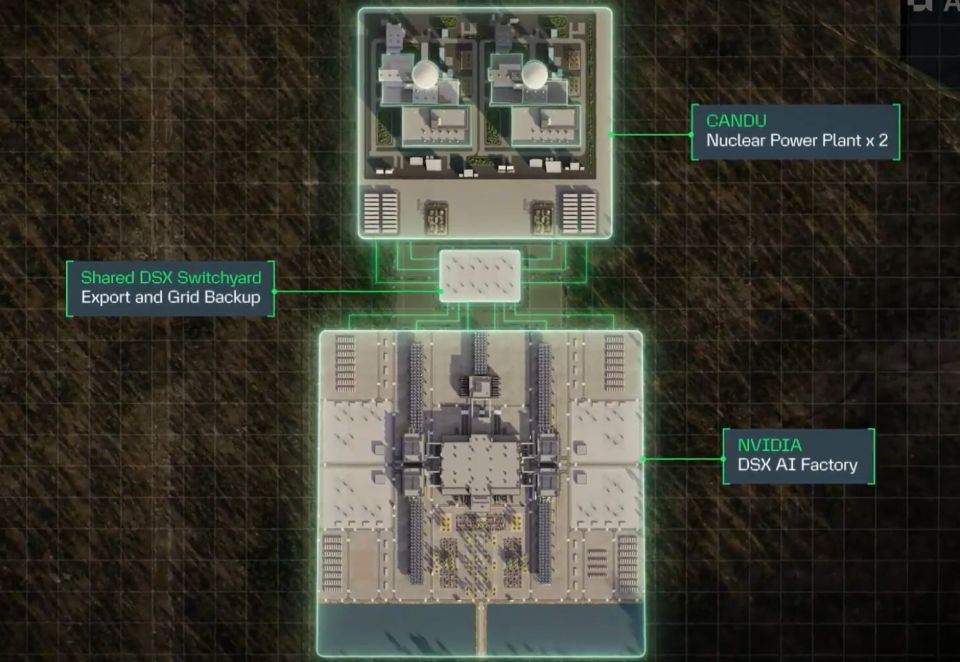
INL and computer chip maker Nvidia have partnered to drive the challenge “Delivering Nuclear Energy that Is Faster, Safer, and Cheaper,” codenamed Prometheus, which aims to cut reactor development times in half and reduce operational costs by 50 percent to drive what Gil described as “a renaissance of nuclear power in the United States.”
He said that AI surrogate models are allowing teams to iterate more effectively on experimental designs, which aligns with the “Accelerating Delivery of Fusion Energy” Genesis challenge.
“After decades of exquisite work of getting experimental data on unique fusion environments, the teams in the national laboratories and the broader ecosystem create these exquisite simulation codes that really conform with experimentation,” said Gil. “But now with AI surrogate models, we get to greatly accelerate—by factors of 10,000 and beyond—the speed at which we can do these simulations.”
Focus on collaboration: Gil said it is important to build a collaborative R&D model that takes advantage of the country’s strengths across industry, national labs, and universities. To facilitate that, Phase I proposals will require team members from at least two of those categories, and Phase II proposals will require that all three are present.
“I am convinced that on this aspect of revolutionizing science and engineering with AI and with quantum, we need to have all three stakeholders at the table,” said Gil.
What success looks like: Gil recounted the story of AlphaFold, an AI program developed by Google’s DeepMind that used a database of 200,000 protein structures compiled over 50 years of extensive effort to calculate up to 200 million structures in just a couple of years.
He highlighted the foundation of the project—the collection of that core data set—as an important effort that originated at a national lab and said the aim is to mobilize many fields to deploy their own versions of AlphaFold.
“This is what it means for microscopy, and this is what it means for high-energy physics, this is what it means for cosmology, and this is what it means for fusion and so on,” said Gil. “Success is that there will be 100 of those stories.”
Gil said the Genesis Mission further seeks to build out infrastructure that ingrains AI as a methodology for how R&D is conducted in the United States, citing fusion as an exciting example.

-3 2x1.jpg)