-3 2x1.jpg)
The progress so far: An update on the Reactor Pilot Program
It has been about three months since the Department of Energy named 10 companies for its new Reactor Pilot Program, which maps out how the DOE would meet the goal announced in May by Executive Order 14301 of having three reactors achieve criticality by July 4, 2026.
These reactor projects are progressing through DOE authorization and oversight rather than Nuclear Regulatory Commission licensing. Even so, several companies have kept the NRC in the loop as they progress on their projects. The DOE has said that “DOE-approved reactor designs can and will be fast tracked for future NRC licensing.”
With less than eight months remaining until the target date, some companies have provided more information on their plans than others. Below is a progress update for each company.
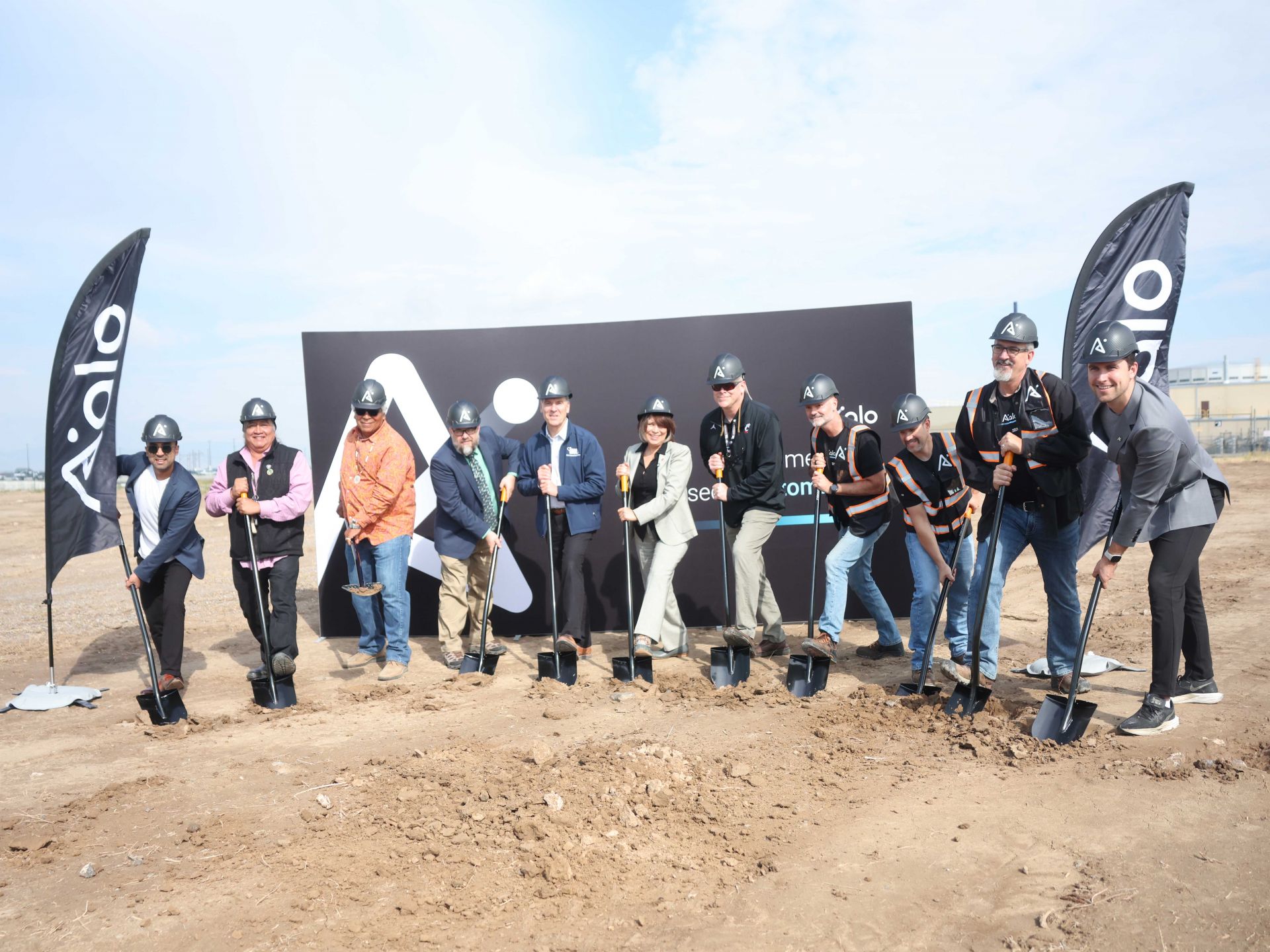
Aalo Atomics quickly made waves in August only a few weeks after the DOE’s initial announcement by breaking ground on its DOE-backed project on its Aalo-X (a 10-MWe sodium-cooled reactor) at Idaho National Laboratory. In September, the company signed an Other Transactional Agreement (OTA) with the DOE, which, according to Aalo, makes the company an official DOE contractor, meaning it no longer must route contracts through INL. This change, along with the broader framework provided by the OTA, simplifies and accelerates the two parties’ collaboration. At the end of October, Aalo announced that it had completed its preliminary design review for Aalo-X after two days of presentations delivered to DOE reviewers and NRC observers.
Antares Nuclear, which is pursuing a 500-kWt sodium heat pipe–cooled microreactor, had a head start in the demonstration program by repurposing a building at INL. In August, the DOE conditionally committed to providing the company with HALEU. This was followed by confirmation that Antares had executed its agreement with the DOE to reach criticality by the following July 4. By late October, fabrication of the TRISO fuel from the HALEU feedstock began, according to a company post on LinkedIn. The post also mentions that the Nuclear Safety Design Agreement was approved by the DOE and the manufacturing of “the first articles of the MARK-0 test reactor” was beginning. Antares concuded their statement with, “We will achieve k=1 before July 4, 2026!”
Atomic Alchemy, a radioisotope production company that was acquired by Oklo earlier this year, is working on its 15-MWt light water Versatile Isotope Production Reactor (VIPR). Although it has released no updates on its progress, Oklo’s third-quarter company update stated that both construction and procurement for the Atomic Alchemy Pilot Project are underway.
Deep Fission, which is developing its 15-MWe Deep Fission Borehole Reactor-1, has yet to provide concrete updates on its project. In a recent interview with Fox Business, CEO Elizabeth Muller reaffirmed that the company intends to build its reactor next year.
Last Energy is pursuing the 20-MWe PWR-20 for eventual commercial deployment. Its project is the PWR-5, a scaled-down version of the same design. In October, the company announced that it had reached an agreement to lease land for the project at the Texas A&M RELLIS campus.
Natura Resources has both commercial and research molten salt reactors in the works. The DOE has committed to providing HALEU to Abilene Christian University, Natura’s close partner, which received a construction permit from the NRC last year to build its first research reactor. In recent communications, Natura has said that ACU could operate the NRC-licensed project by 2026. The company has also said it intends to file two commercial license applications with the NRC before the year is out.
Oklo has two projects through the program—not including that of its subsidiary Atomic Alchemy. One of those projects is the Aurora-INL, slated to be Oklo’s first deployment of its Aurora Powerhouse, a 75-MWe liquid metal–cooled, metal-fueled fast reactor. Oklo broke ground on Aurora-INL in September. It was announced on November 11 that the DOE approved the NSDA for Oklo’s Aurora fuel fabrication facility (A3F), which isbeing built to fabricate fuel assemblies for the Aurora Powerhouse. Little is publicly known about the second Oklo project, which has been referred to as “Pluto.” In its Q3 company update, Oklo described Pluto as a “test reactor supporting advanced fuel and component development.”
Radiant Industries is pursuing the 1-MWe helium-cooled Kaleidos microreactor, which is scheduled to operate for 60 effective full power days (EFPD) in 2026 at INL’s Demonstration of Microreactor Experiments (DOME) facility. In April, Radiant received a commitment from the DOE for HALEU. In July, the company signed an agreement with the Department of Defense to deploy microreactors at military installations. In September, Radiant and Urenco executed the first public binding commercial contract by a U.S. advanced reactor developer for Western commercial HALEU enrichment. In October, Radiant announced its reactor factory, which will be built on former Manhattan Project sites in Oak Ridge, Tenn. The ground breaking is slated for next year, with production scaling up to 50 reactors.
Terrestrial Energy has identified its DOE-backed project as Project Tetra, a 195-MWe integral molten salt reactor. In a press release, the company described the project as involving “the completion of key testing that is essential to support licensing applications for the construction and operation of commercial IMSR plants in the U.S.” While the company was previously invited to the RELLIS campus to deploy a reactor, further details on Tetra are unknown.
Valar Atomics is developing its Ward 250, a 100-kWt, helium-cooled, TRISO-fueled, high-temperature gas reactor. The company broke ground on its DOE-backed project at Utah San Rafael Energy Lab in September.
The takeaways: A lot of companies have been moving at speeds not seen since the Manhattan Project, which is making it difficult to stay abreast of the latest information. The DOE has approved two NSDAs, one for Antares reactor and the other for Oklo. Three companies (Aalo, Valar, and Oklo) have broken ground on their projects (though not all companies in the project will have to formally break ground). It’s clear that all of the companies are at various stages of development and are rolling up their sleeves to accomplish criticality as quickly and safely as possible.
Go deeper: The Reactor Pilot Program slots into a complicated network of activities being undertaken by the Trump administration to support new nuclear development. The articles below provide a fuller understanding of the whole picture:
- On the Reactor Pilot Program: “DOE Fast Tracks Test Reactor Projects: What to Know.”
- On the Fuel Line Pilot Program, which aims to provide fuel in part for the Reactor Pilot Program: “Four Companies Picked for Fast-Tracked Fuel Fabrication.”
- On the DOD’s Janus Program: “Army’s Janus Program to Boost Advanced Nuclear Reactors.”
- On the reactions of industry experts, including leaders at companies in the Reactor Pilot Program: “ANS Winter Conference: Nuclear Start-ups Applaud DOE Executive Order on Reactor Testing.”
Editor's note: This story has been updated to include the latest information on some of the reactor demonstration projects.