Breakeven breakthrough at the National Ignition Facility
December 13, 2022, 3:02PMNuclear News
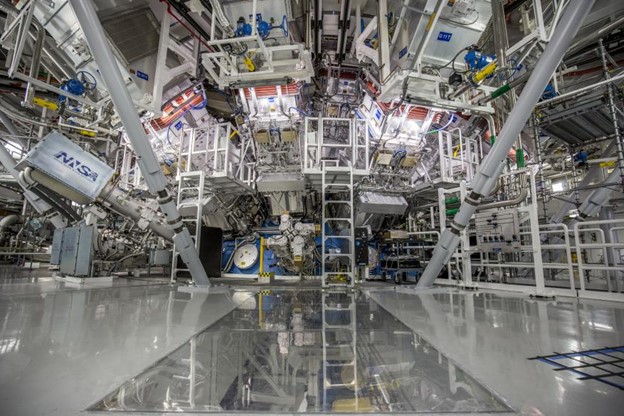
The target chamber of LLNL’s NIF, where 192 laser beams delivered more than 2 million joules of ultraviolet energy to a tiny fuel pellet to create fusion ignition on December 5, 2022.
It’s official: Early in the morning on December 5 at Lawrence Livermore National Laboratory’s National Ignition Facility (NIF), the laser-triggered implosion of a meticulously engineered capsule of deuterium and tritium about the size of a peppercorn yielded, for the first time on Earth, more energy from a fusion reaction than was delivered to the capsule. The input of 2.05 megajoules (MJ) to the target heated the diamond-shelled, spherical capsule to over 3 million degrees Celsius and yielded 3.15 MJ of fusion energy output. The achievement was announced earlier today by officials and scientists representing the Department of Energy and its National Nuclear Security Administration, the White House, and LLNL during a livestreamed event.
To continue reading, log in or create a free account!