What it means: The NRC has the authority to regulate commercial nuclear reactors under the Atomic Energy Act, while the DOE and DOD can regulate noncommercial initiatives like defense nuclear facilities or reactor demonstration projects. Executive Order 14300 directs the NRC to establish an expedited pathway for reactor designs that already went through DOE or DOD scrutiny and already “demonstrated the ability to function safely,” according to the Federal Register notice.
The proposed rule adds amendments to 10 CFR Parts 50 and 53 that would do just that, NRC officials said.
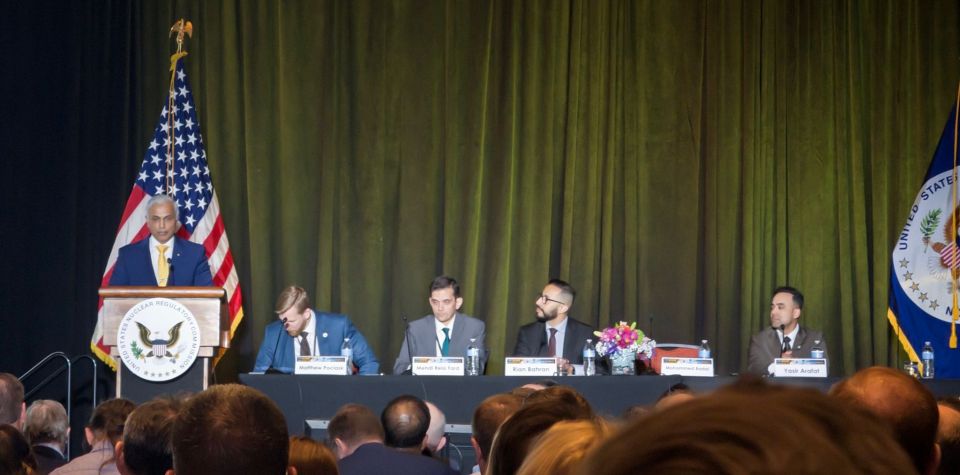
“This proposed rule reflects effective coordination of the U.S. government to safely accelerate the deployment of new nuclear reactors,” NRC Chair Ho Nieh said in a press call this morning. “If another federal agency has done the heavy lifting, the NRC will not make reactor developers start over from scratch.”
Mike King, executive director for operations at the NRC, said the agency is aware some of the participants in the DOE’s Reactor Pilot Program want to get a commercial license supported by interactions they have already had with the 12 NRC staffers embedded with the DOE and its reactor pilot projects.
If and when an applicant does want to come to the NRC, the proposed rule requires applicants to map out all the work they did under the other federal agency to ensure the project lines up with NRC requirements. Not only would this help out the applicant, but “that will enable [the NRC] to be able to accelerate our own review,” King said.
Anticipating the need to communicate with reactor developers, the NRC already has created an outreach option through a preapplication process that is publicly available. King said this process helps developers understand how to interact with the NRC, the agency’s role compared to that of the DOE or the DOD, and what to expect.
Officials said how quickly a reactor design gets expedited through this pathway will ultimately depend on a number of factors, including how broad or narrow the project is, whether a DOE pilot project addressed things like emergency preparedness, or whether the reactor is shifting to a new geographic location, to name a few.
“It's really going to depend heavily on the scope of the pilot project and what is new and different if they want to make that pilot and turn it into a commercial [reactor],” King said.
NRC’s role: The NRC’s independence has been questioned throughout the agency’s recent work associated with EOs that seemingly give the impression that another agency has greater oversight of nuclear reactor projects; this proposed rule prominently features the DOE and the DOD. On today’s call, Nieh said the NRC will have the final say in any review that falls under this proposed rule—there will be no “rubber stamping” someone else’s work under this process.
“The NRC through this process will make and own its decisions,” he said. “No other federal agency is going to tell NRC what decision to make.”
This also applies to the NRC’s engagement with the Office of Management and Budget (OMB) and rulemaking. Nieh said as they submit their rules through the OMB process, OMB responds with comments and questions on things like regulatory analyses. But NRC officials tend to be the technical experts on this matter, and their “technical judgments tend to hold their own through the interagency review,” he added.
Additional information: Public comments on the proposed rule can be submitted through May 4, 2026, by visiting regulations.gov and searching for Docket ID NRC–2025–1503. An NRC news release adds that a public meeting on the rule will be held on April 14.
The NRC had not prepared a regulatory analysis at the time of the FR notice being posted. However, the notice says, “The NRC expects cost savings to both applicants in preparing an application and the NRC in reviewing that application. . . . These savings would depend on the applicability of the DOE/DOD reviews to NRC requirements and the ability of applicants to demonstrate that applicability, the number of applications that may reference a previous DOE/DOD authorization, as well as how any potential differences (e.g., changes to the design or site-specific factors) from the previously authorized design also meet NRC requirements.”