Highlights from the 2025 ANS State of the Nuclear Workforce survey
Last year was marked by a general air of excitement across the nuclear sector. From conference halls to board rooms, momentum manifested in numerous new project announcements, robust federal support, and high-aiming ambitions.
This mood was captured by the 2025 ANS State of the Nuclear Workforce survey, which was conducted from October 1–14. In isolation, the results of this year’s survey are promising; but when compared with the 2024 survey, the story is even clearer, with optimism up almost across the board and renewed attention in the industry’s most critical sectors.
In total, 899 people completed this year’s survey. Of those respondents, 65 percent were employed full time. Retirees made up the second largest group at 17 percent. Students made up the third largest group at a relatively small 7 percent. The remaining respondents identified either as unemployed or “other.” The vast majority—89 percent—of respondents live in the United States, and 69 percent are members of the American Nuclear Society.
The graphs below highlight some of the key results from the 2025 survey, along with important comparisons between it and the 2024 survey.
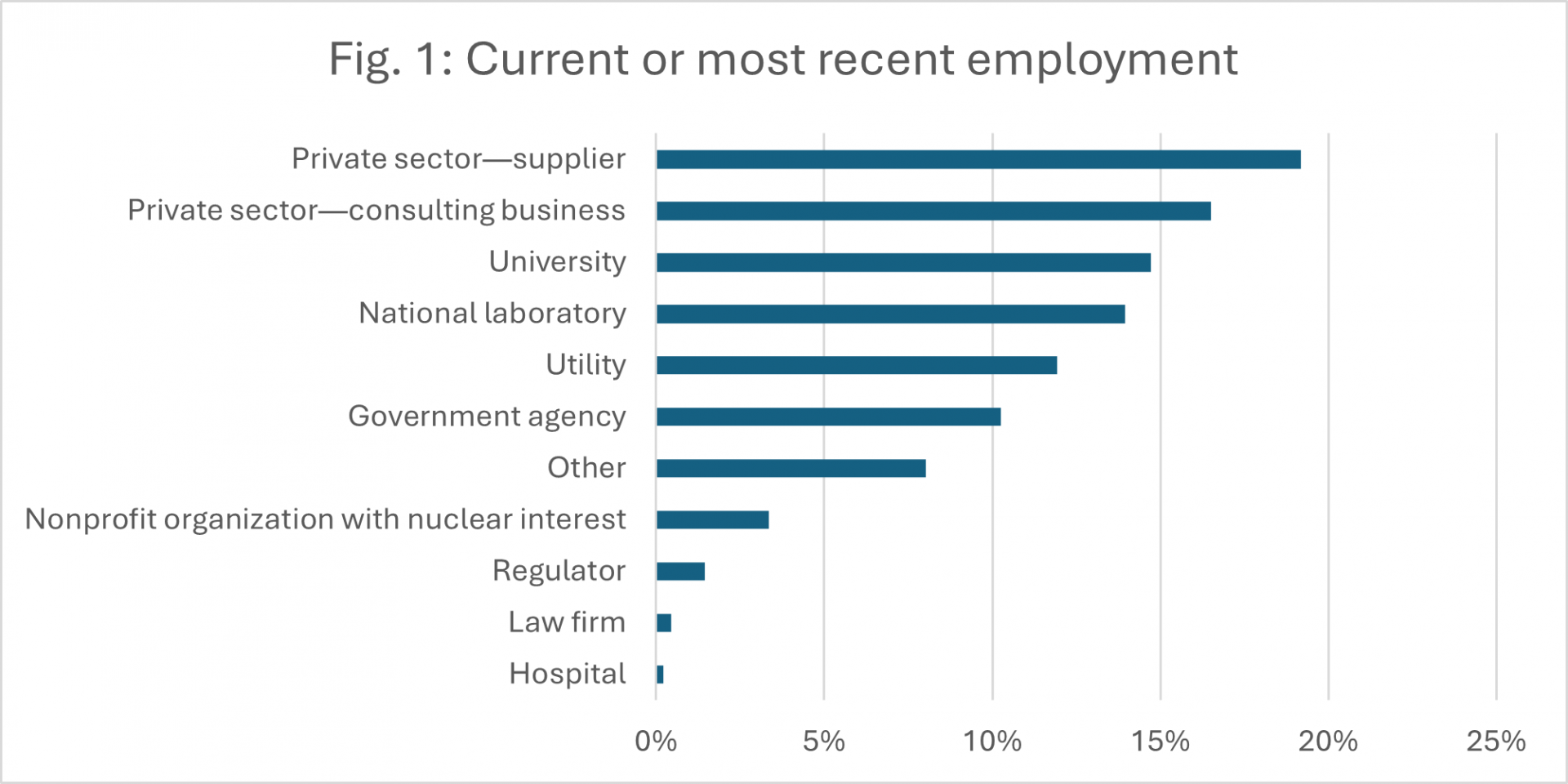
Fig. 1 graphs respondents’ current or most recent employment. Notably, between consultants and suppliers, 35 percent of respondents work in the private sector. A vanishingly small number of respondents work in a hospital.
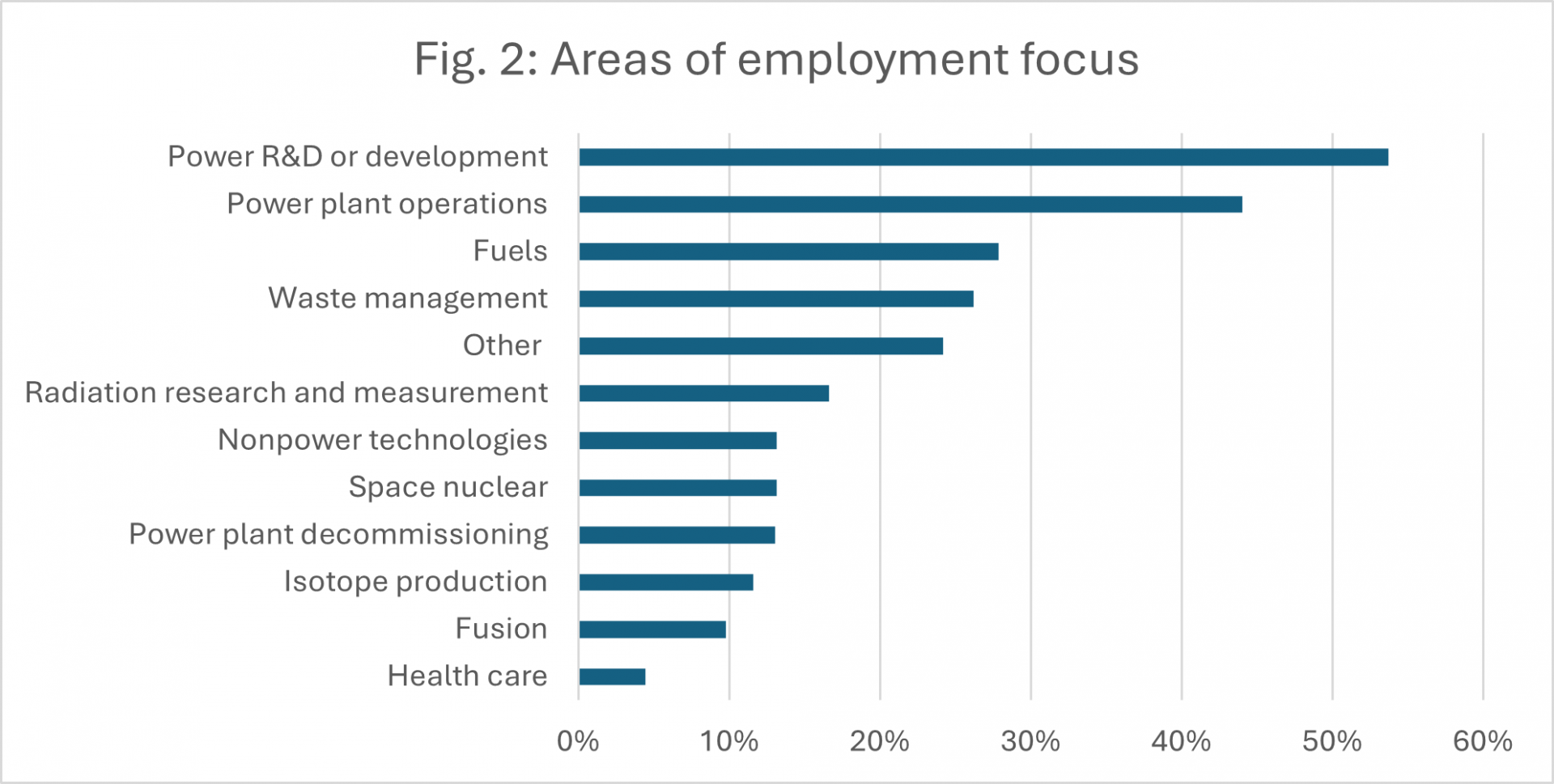
Fig. 2 graphs all areas of respondents’ past, current, or planned future employment focus. These responses add significant depth to the data reflected in Fig. 1. Experience in the fusion field comes in at just under 10 percent, and health care again is the smallest group by a significant margin.
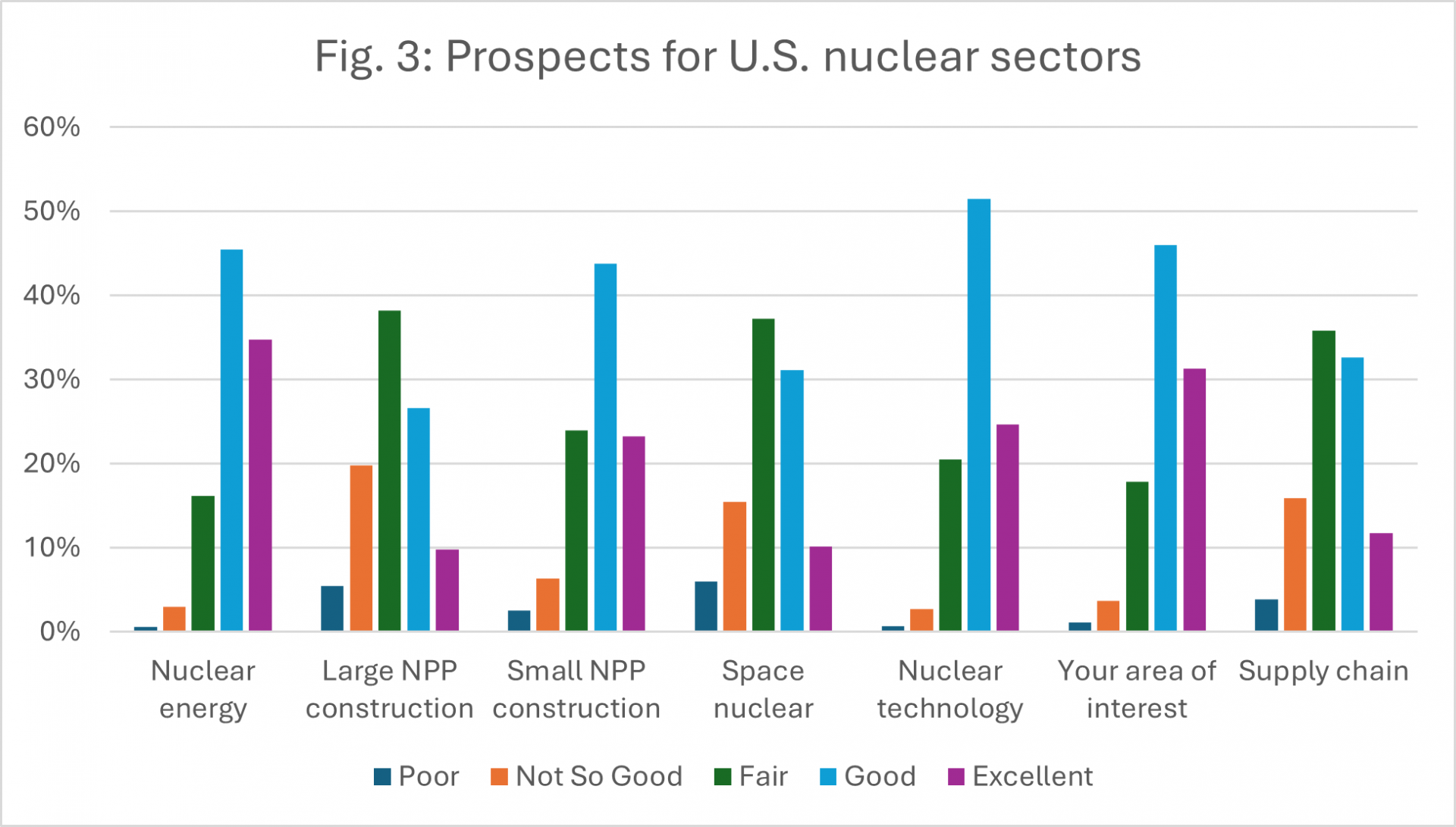
Fig. 3 graphs respondents’ opinions on the prospects for multiple nuclear sectors in the United States. Judging solely by selections of “excellent,” opinions on the prospects for nuclear energy in general are the highest, with respondents’ particular area of interest a close second. About 10 percent of respondents rated the prospects for large nuclear power plant construction as “excellent,” the lowest in this dataset.
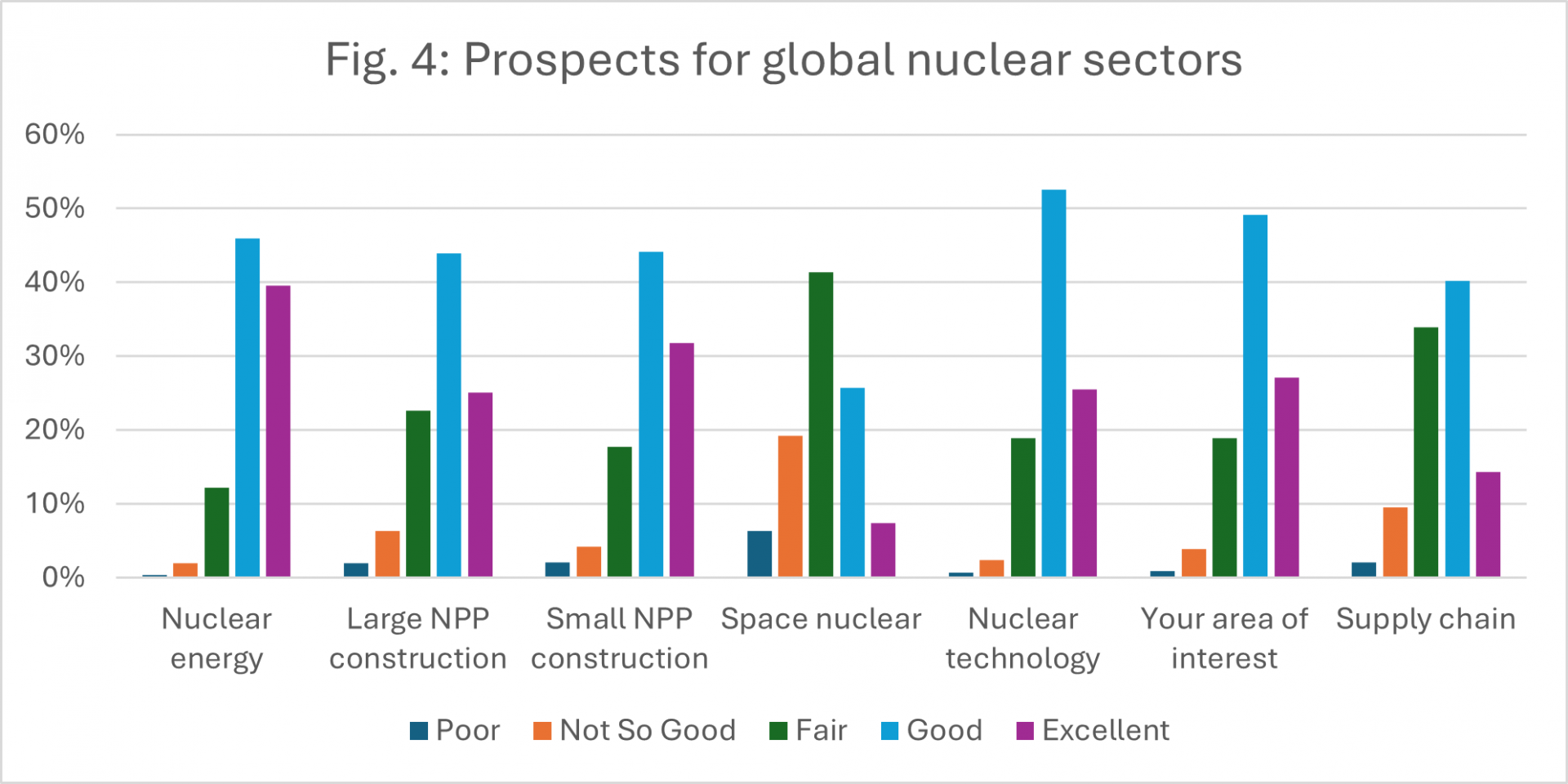
Fig. 4 tracks the same areas as Fig. 3, and takes a global view rather than a domestic one. Looking again at “excellent” ratings, prospects for nuclear energy in general are rated 5 percent higher globally than in the U.S. The largest gap, however, in global versus U.S. prospects is in large nuclear power plant construction, where 25 percent of respondents marked global large NPP prospects as “excellent,” compared with just under 10 percent in the U.S.
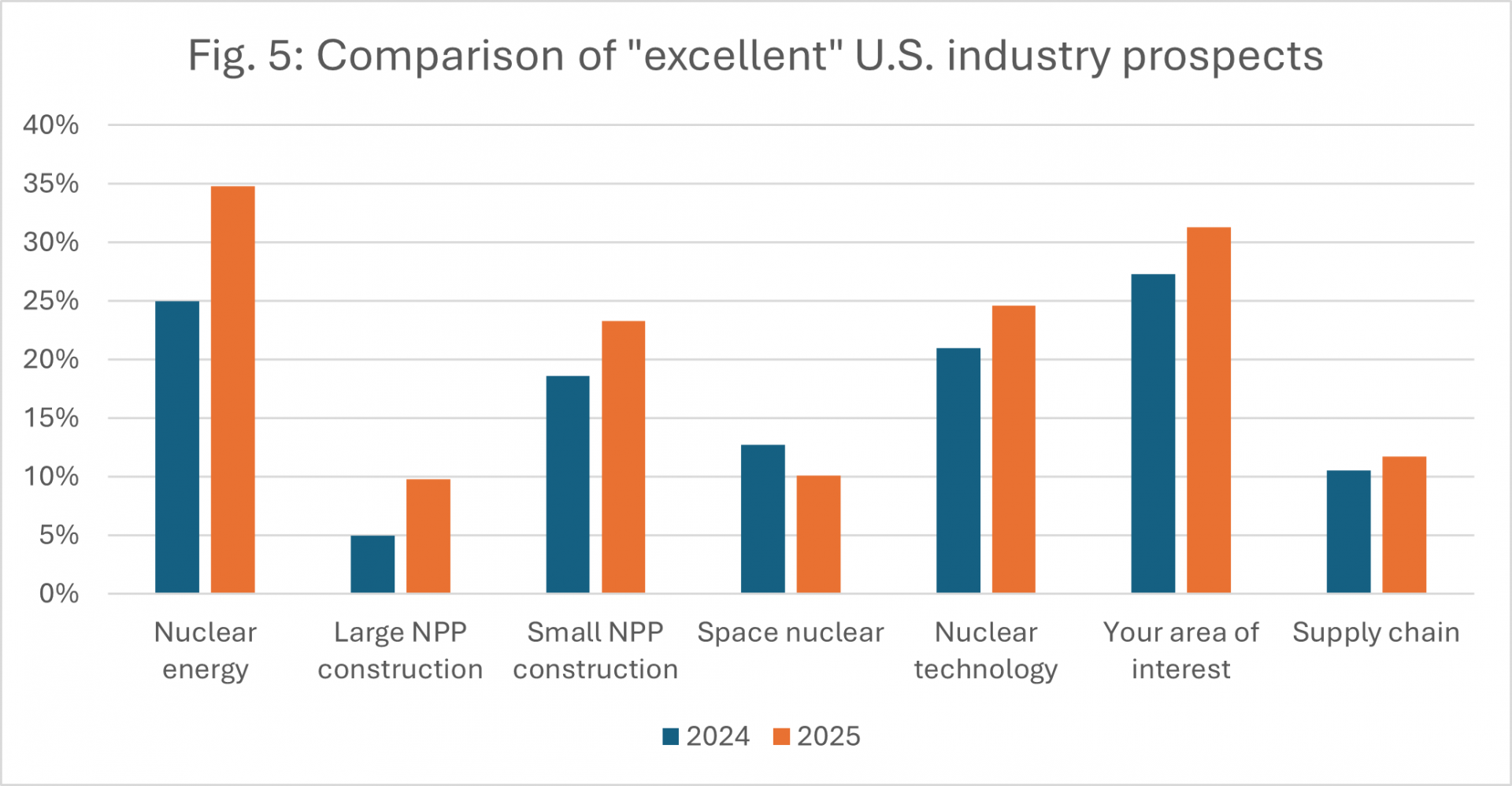
Fig. 5 compares the percentage of “excellent” ratings in each U.S. sector in 2024 and 2025. Aside from a small dip in prospects for space nuclear, opinions are higher across the board, with a 10 percent jump in nuclear energy representing the largest increase. Similar (though slightly more modest) increases are generally seen in global prospect ratings.
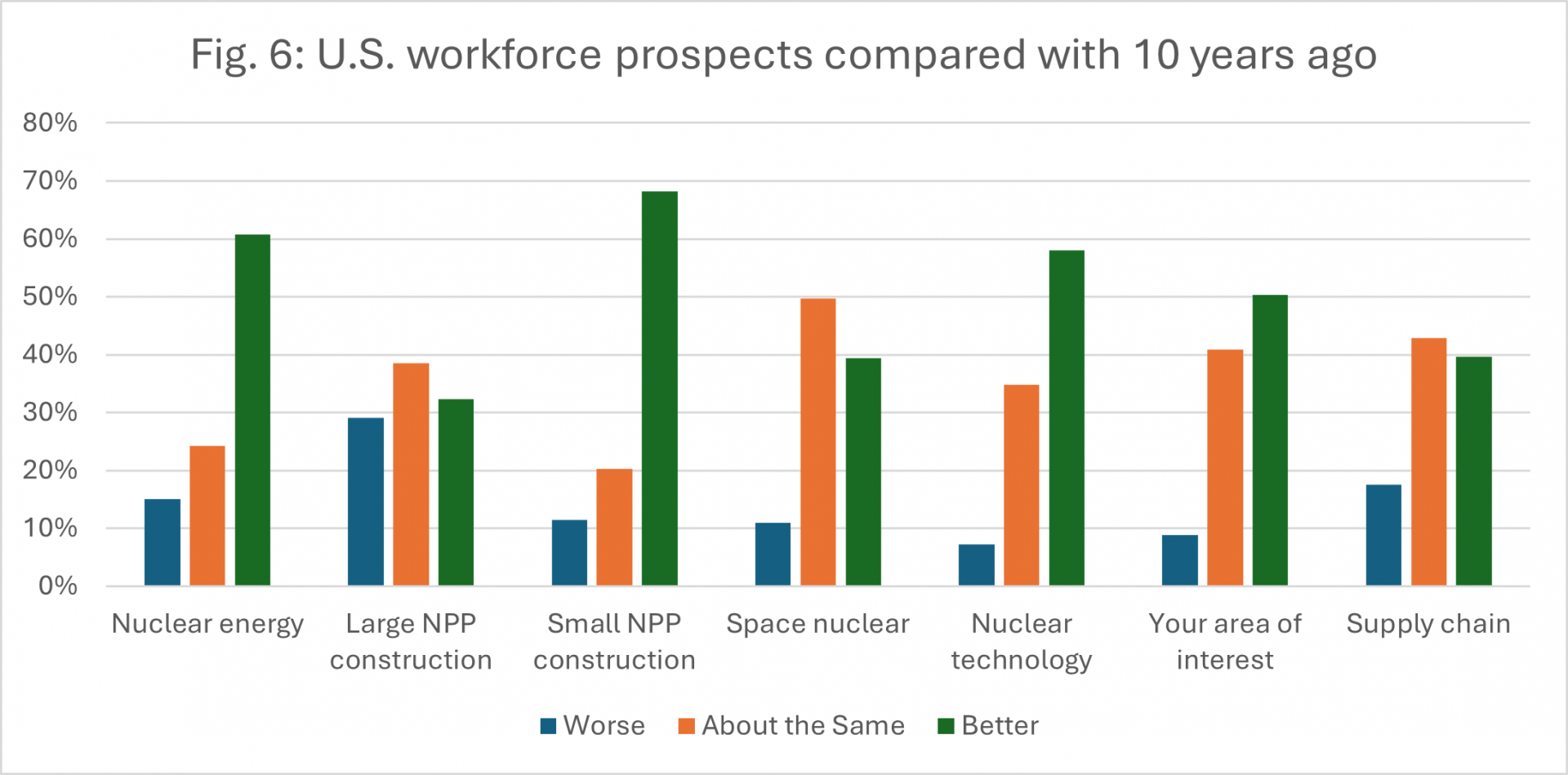
Fig. 6 tracks opinions on workforce prospects across U.S. nuclear sectors, compared with 10 years ago. In all, 68 percent of respondents said that workforce prospects for small nuclear power plant construction are higher now than they were a decade ago. Space and supply chain had the fewest respondents indicate that prospects have improved in the 10 years, and 29 percent of respondents indicated that large nuclear power plant construction has worse prospects now than it did in 2015.
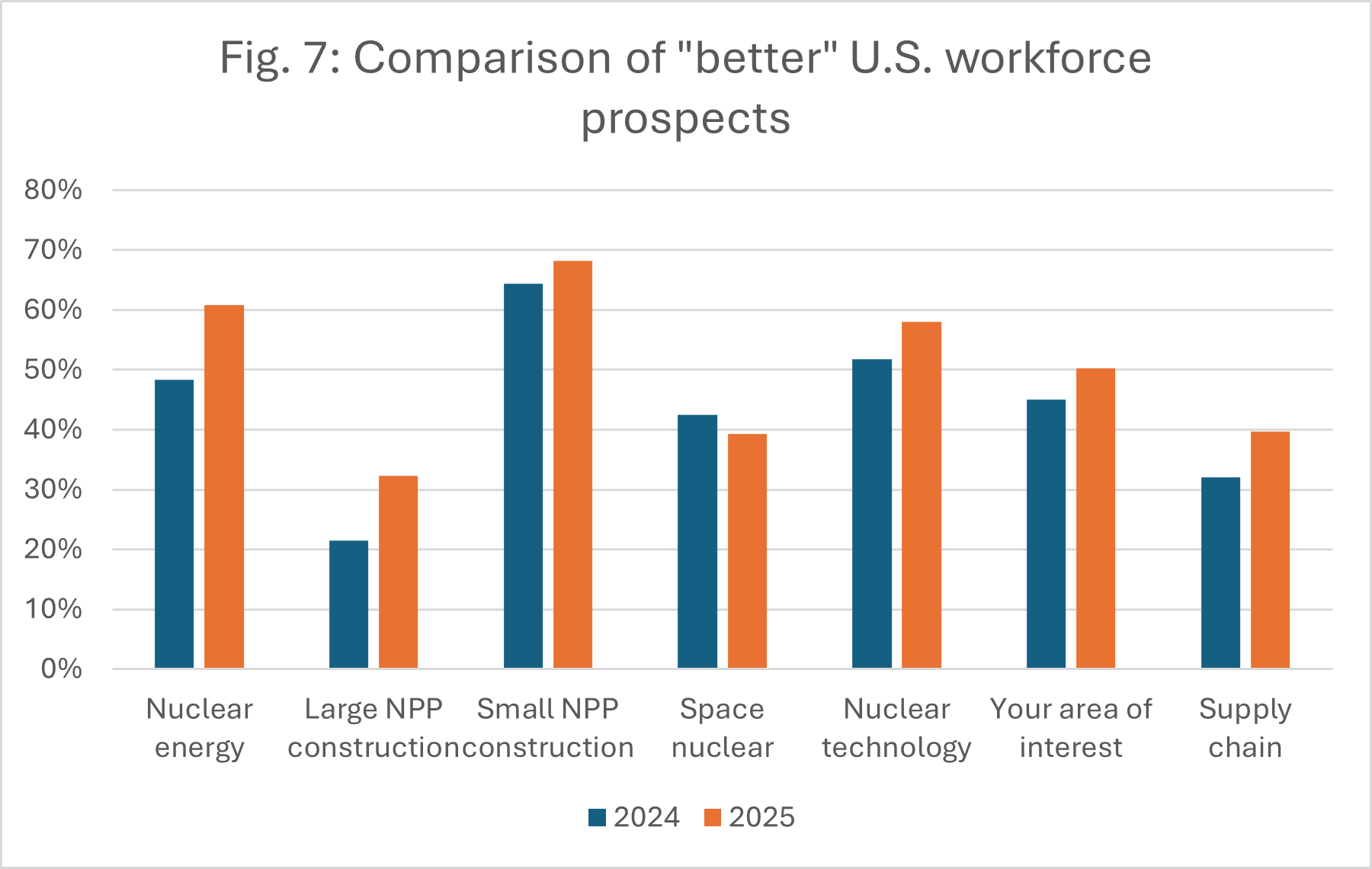
Fig. 7 compares the percentage of respondents in 2024 and 2025 who marked that workforce prospects in various nuclear sectors were “better,” compared with 10 years ago. This chart reveals modest-to-significant positive changes in opinion since last year in every sector other than space nuclear.
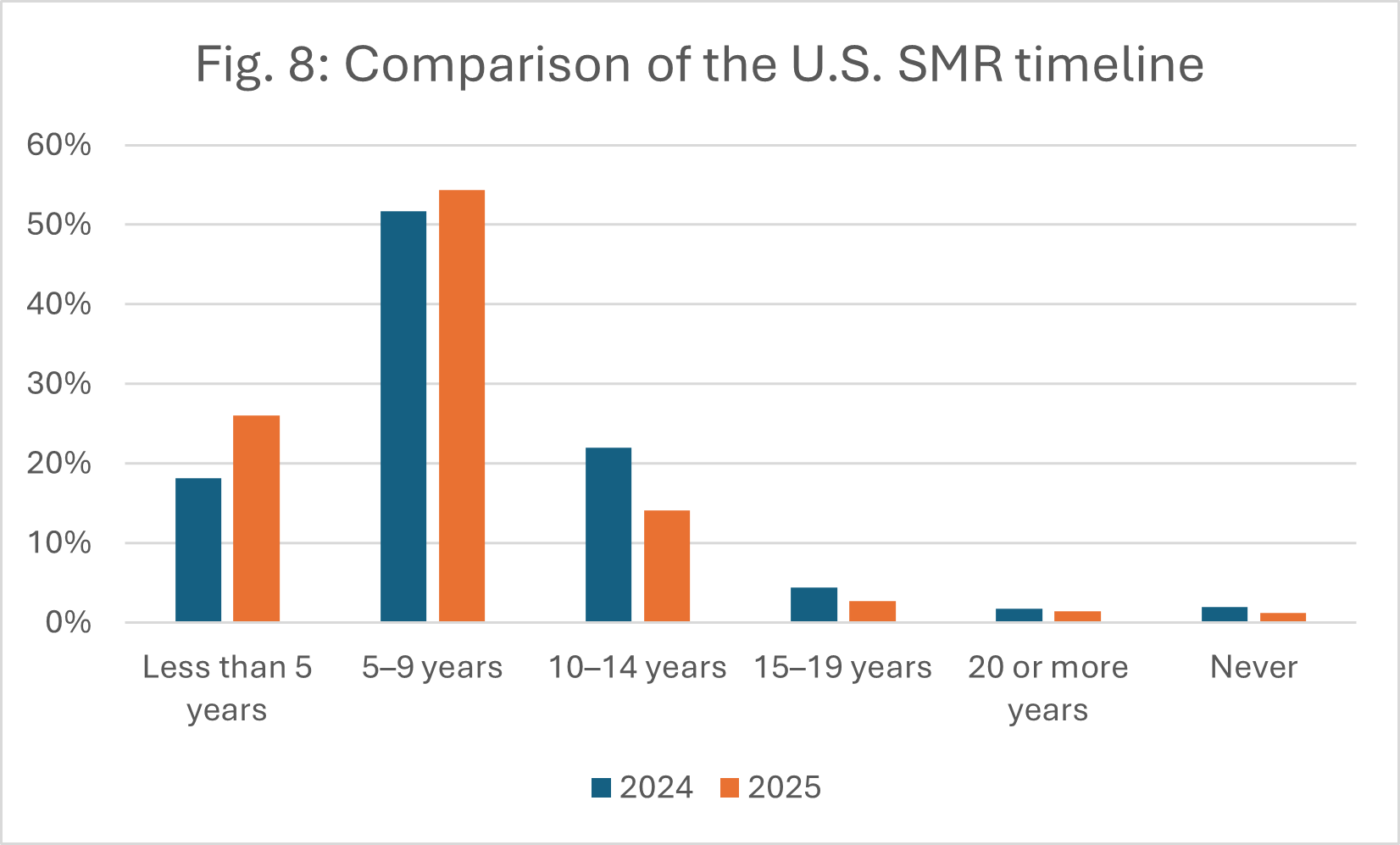
Fig. 8 compares 2024 and 2025 opinions on how soon a small modular reactor will be built and start producing electricity in the United States. Compared to last year, 8 percent more respondents think an SMR will be on line in less than 5 years, 3 percent more respondents now fall in the 5–9-year range, and each other category naturally decreased.
In all, the 2025 ANS State of the Nuclear Workforce survey crystallizes the general atmosphere of the year, reflecting the industry’s strong SMR optimism alongside a more guarded anticipation of new large-scale plants.
News of continued progress in countries like Egypt, Poland, China, and many others no doubt influenced higher opinions of global large prospects when compared to the outlook for gigawatt-scale builds in the United States. Small dips across the board on the prospects for new development in space nuclear may have been influenced by DARPA’s decision to cancel the DRACO project at the end of June.
Still, this small decrease stood out from a survey that otherwise captured an excited industry looking to the future with renewed confidence.