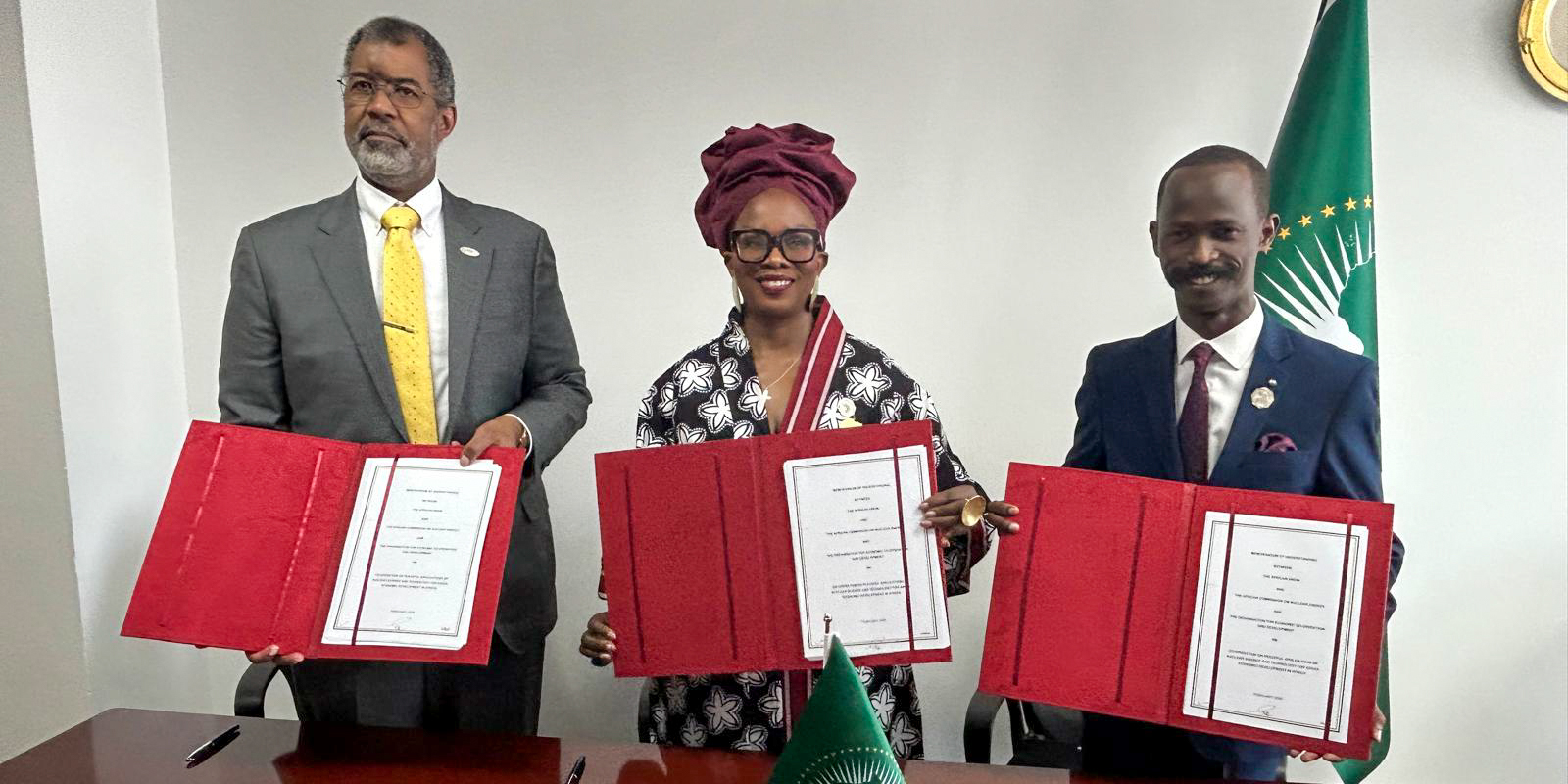
(From left) NEA director general William D. Magwood IV, AU commissioner for infrastructure and energy Lerato Dorothy Mataboge, and AFCONE chair Gaspard Liyoko Mboyo at the MOU signing. (Photo: OECD Nuclear Energy Agency)
On February 13 at the African Union (AU) Summit held in Addis Ababa, Ethiopia, the AU, the OECD Nuclear Energy Agency, and the African Commission on Nuclear Energy (AFCONE) signed a memorandum of understanding to cooperate on the support of nuclear science and technology development across Africa.
The details: The MOU signed by the three parties is aimed at advancing knowledge exchange and capacity building on nuclear regulation and safety, infrastructure and policy design, scientific and technological advances, and waste management. More broadly, it seeks to foster closer relationships among organizations in Africa and NEA member countries.
This development slots in with ongoing NEA efforts in Africa. In 2024, the organization launched the Common Journey initiative, which is similarly aimed at developing nuclear technology in African countries to improve quality of life, energy security, and environmental and economic development goals.
The NEA hopes to achieve this by serving as a forum for information sharing and analysis and as a facilitator of mutually beneficial partnerships across the continent. According to the NEA, the initiative will now “continue under the aegis of the new MOU.”
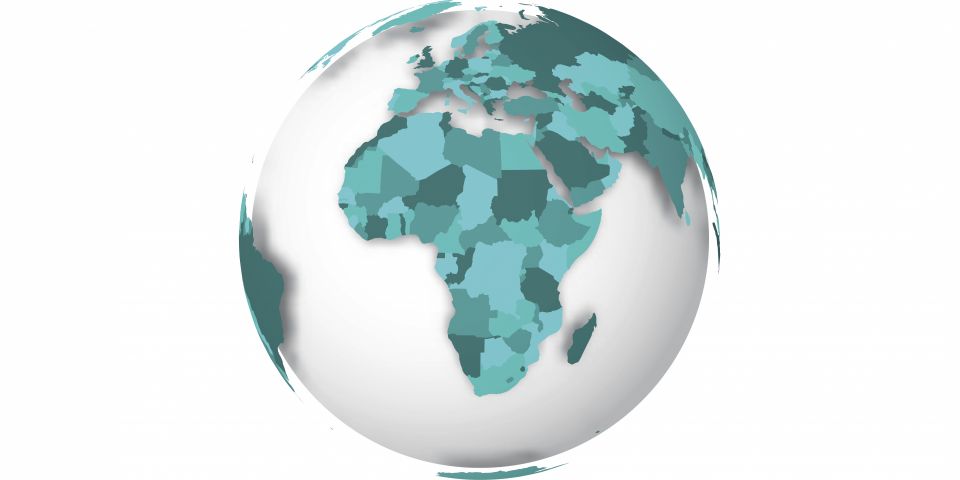
More on the members: The AU is composed of 55 member states which together represent the entirety of the African continent. Launched in 2002, the organization is broadly committed to promoting multifaceted economic, geopolitical, democratic, and technological development in all of its member states.
AFCONE is affiliated with the African Union Commission, the AU’s secretariat. It is responsible for promoting the peaceful use of nuclear technology and ensuring countries comply with nonproliferation requirements. This mandate comes from the African Nuclear-Weapon-Free Zone Treaty—also known as the Treaty of Pelindaba—and prohibits signatories from conducting research on, developing, or acquiring nuclear weaponry. The Pelindaba treaty has been signed by 53 countries and ratified by 43.
Quotable: “As some African countries explore the development of nuclear energy, this partnership creates a vital platform for promoting informed, fact-based decision making and shared progress,” said NEA director general William D. Magwood IV. “The challenges these countries face are similar to those experienced by many NEA members, and by working together we can advance economic development and skills expansion across the African continent.”