From uncertainty to vitality: The future of nuclear energy in Illinois
Nuclear is enjoying a bit of a resurgence. The momentum for reliable energy to support economic development around the country—specifically data centers and AI—remains strong, and strongly in favor of nuclear. And as feature coverage on the states in the January 2026 issue of Nuclear News made abundantly clear, many states now see nuclear as necessary to support rising electricity demand while maintaining a reliable grid and reaching decarbonization goals.
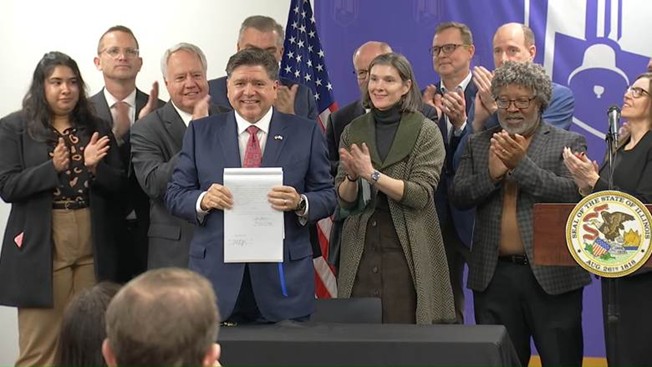
As the birthplace of nuclear, Illinois currently produces more nuclear power than any other state in the country. That being said, it is late to the starting line for the nuclear reboot, leaving its role in the future of nuclear far from certain. Fortunately, this has been evolving—albeit slowly—over the past decade within state energy policy. Just last month, Gov. J. B. Pritzker signed the Clean and Reliable Grid Affordability Act (CRGA Act) into law, fully lifting a decades-long moratorium on new nuclear development in the state, once again allowing nuclear to be a larger part of the solution to sustain the growing demand for clean, reliable energy to support economic development.

Rezin
Some in the state capital of Springfield, including state Sen. Sue Rezin (R., 38th Dist.), have been pushing for more support for nuclear power for years. In an email to NN, Rezin said, “Nuclear energy remains the only proven, carbon-free baseload resource capable of operating around the clock at the scale Illinois will need.” The recent victory to lift the moratorium is good news, moving Illinois to an “all-of-the-above” approach for electrification and grid stability, but “the outdated moratorium effectively sidelined Illinois from participating in commercial nuclear innovation,” Rezin added.
To get a better idea if Illinois can maintain its status as a leader in nuclear energy, or if it’s too little too late, NN dug into policy changes over the past 10 years and reached out to a number of stakeholders to get their perspectives on the future of nuclear in the state.
The difference a decade can make
For more than a decade NN has reported on the uncertainty facing nuclear power in Illinois. In June 2016, in a move to spur action from Springfield, Constellation (then Exelon Generation) announced plans to close both the Clinton and Quad Cities nuclear power plants within 12–24 months. The threat of closing those two power plants had the desired effect. By the end of that year, the Illinois General Assembly passed the Future Energy Jobs Act (FEJA), and the bill was signed into law by then Gov. Bruce Rauner. This wide-ranging piece of legislation established a zero-emission credit program to compensate Clinton and Quad Cities for their carbon-free power generation, resulting in a $235 million annual investment in nuclear power.
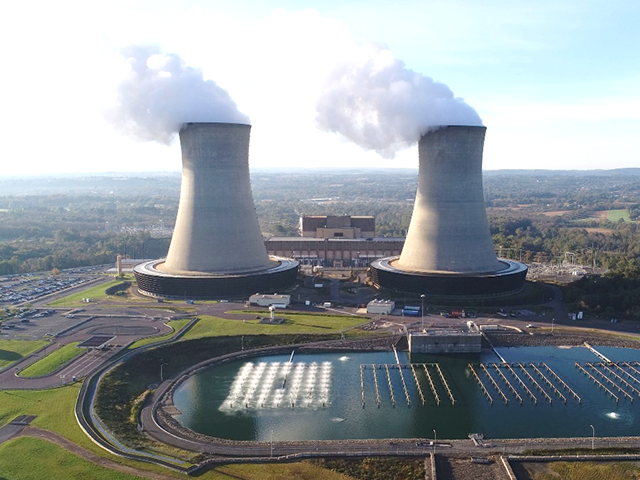
However, the four other plants in the state’s nuclear fleet—Braidwood, Byron, Dresden, and LaSalle (with a collective net capacity of about 8,900 MWe, close to 10 percent of the nation’s total nuclear power capacity)—were left unaided.
By 2020, it was clear that with declining energy prices from cheap natural gas and other market forces, the remaining reactors in the state’s fleet were vulnerable to closure. At the last minute—again—Constellation’s plants in Illinois were saved by the Climate and Equitable Jobs Act (CEJA), which was signed into law by Pritzker in September 2021.

Fey
According to Cathriona Fey, vice president of clean energy production and manufacturing with the Illinois Economic Development Council (Illinois EDC), which works with clean energy producers and other companies to identify the best locations in the state for their businesses, CEJA put Illinois ahead of other Midwestern states with ambitious clean energy targets while recognizing the value of nuclear power generation.
However, the 2021 law primarily centered on supporting a renewable-focused decarbonization plan, mandating that 40 percent of the state’s power come from wind and solar sources by 2030 and 50 percent by 2040. Nuclear, even as recently as five years ago, was seen as just a stopgap resource for the state, a bridge to get to a future dominated by wind and solar. The moratorium on new nuclear builds, in place since 1987, meant that Illinois could preserve nuclear plants but not develop more.
By 2023, cracks were appearing in the renewables-only approach, and lawmakers recognized that preventing reactor closures was not enough. Energy demand projections were rising, and electrification targets were accelerating. Illinois was seeing an increase in energy demand, “while at the same time, it [had] been retiring traditional fossil fuel–based generation at a rapid pace,” said Rezin. “During this same period, it had become increasingly clear that renewable energy alone cannot meet growing demand or maintain grid stability.” For the first time in decades, Illinois needed additional firm power that didn’t rely on intermittent sources.
Legislating change
At the end of 2023, Pritzker signed H.B. 2473, a bill that partially lifted the state’s decades-long moratorium on new nuclear power builds by permitting the construction of small modular reactors. The road to this milestone was rocky, however. Pritzker had vetoed similar legislation, S.B. 76, in August, saying that the bill included an overly broad definition of “advanced reactors,” which would “open the door to the proliferation of large-scale nuclear reactors that are so costly to build that they will cause exorbitant ratepayer-funded bailouts.”
Fast forward two years, and Pritzker has just signed the CRGA Act, firmly moving Illinois’s energy policy from a renewable-focused to an “all-of-the-above” strategy. According to Rezin, “rising consumer prices, warnings from regional grid operators, and accelerating load growth from data centers and advanced manufacturing underscor[ing] the need for an all-of-the-above energy strategy” finally led to the repeal of the moratorium.
Data centers driving demand
The winding path of policy changes over the past 10 years started with decarbonization and electrification in mind, but now the focus is on meeting demand growth projections. A 2024 report from the Federal Reserve1 describes how demand changed over this time period, noting that after years of stagnant growth, 2021–2023 saw electricity demand increase at more than twice the rate of the decade before the 2020 pandemic (see Chart 1).
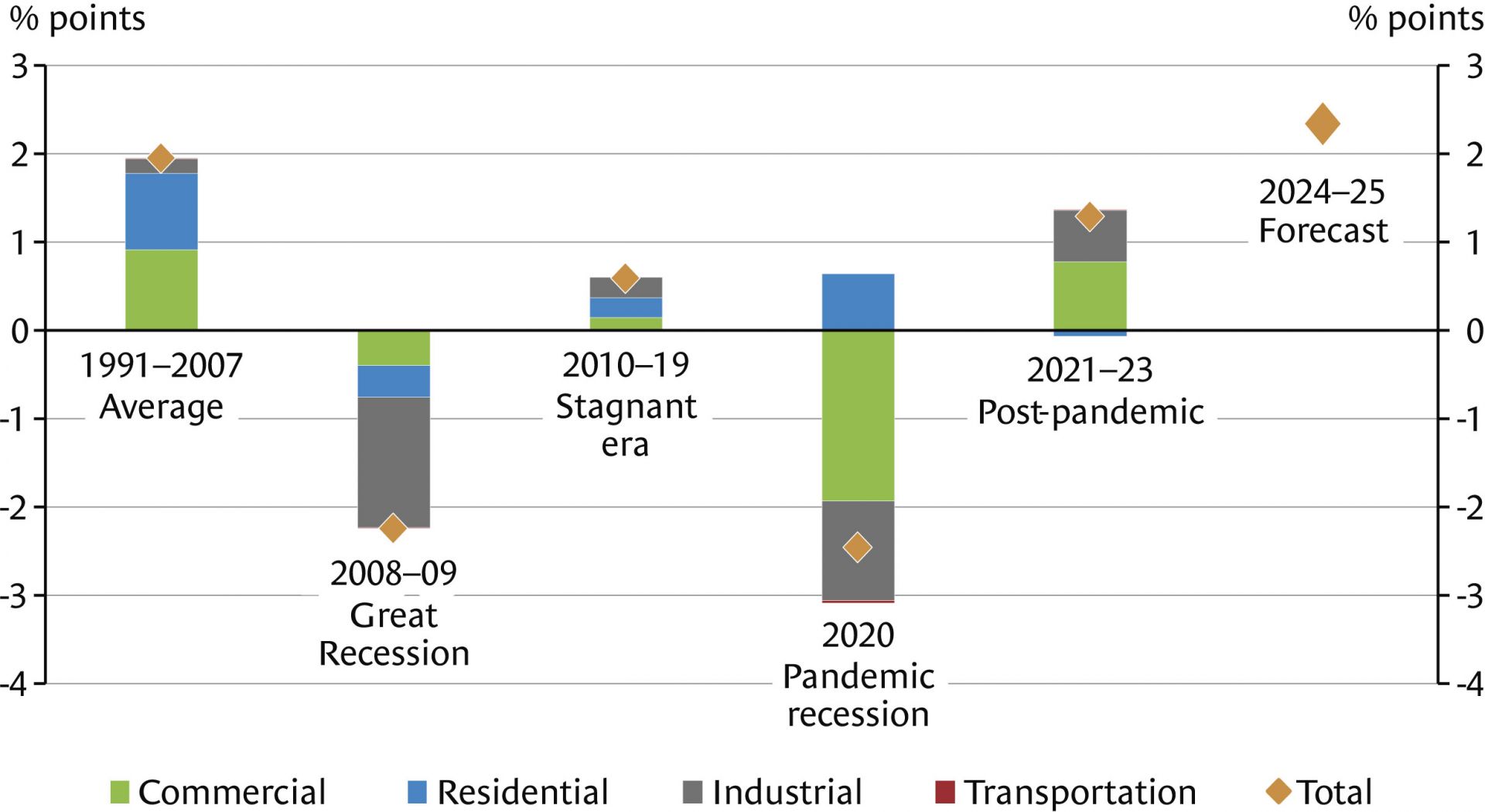
Chart 1. After a decade of stagnant growth, U.S. electricity demand has surged, driven largely by commercial demand.
Note: Stacked bars show the contributions of each component to growth in total electricity demand over the periods considered. The “2024–25 Forecast” diamond represents the average projected growth in total electricity demand from the September 2024 U.S. Energy Information Administration (EIA) Short-Term Energy Outlook (STEO) for 2024 and 2025. Data are annual.
Sources: See Nida Çakır Melek and Alex Gallin, “Powering Up: The Surging Demand for Electricity,” Economic Bulletin, September 2024 (Public Affairs Department of the Federal Reserve Bank of Kansas City).
Electrification, growth in advanced manufacturing, and the rise of AI have continued to shock forecasters since 2020; it seems that every few months a new forecast comes out that revises projected demand higher, often citing data center proliferation around the country. The Visual Capitalist provides a map that shows the scale of data center buildout, with counts of data centers by state. They show Virginia leading the country with 665 operating data centers, followed by Texas with 413; Illinois is fourth on the list with 244 data centers.2 Various outlets report conflicting numbers on the total amount of data centers in this country since new data centers are being built every year, but all agree the number is fast approaching 4,000 in total with thousands more under construction or planned.
A report published last year by Argonne National Laboratory titled Preliminary Analysis of Nuclear-Powered Data Center Scenarios3 delves into the demand from data centers, how nuclear power can supply the power needed to support load growth, and, importantly, the optimal places to site both nuclear power plants and data centers. In that report, the North American Electric Reliability Corporation is quoted as saying that energy growth forecasts continue to climb: “The size and speed with which data centers (including crypto and AI) can be constructed and connect to the grid presents unique challenges for demand forecasting and planning for system behavior.”
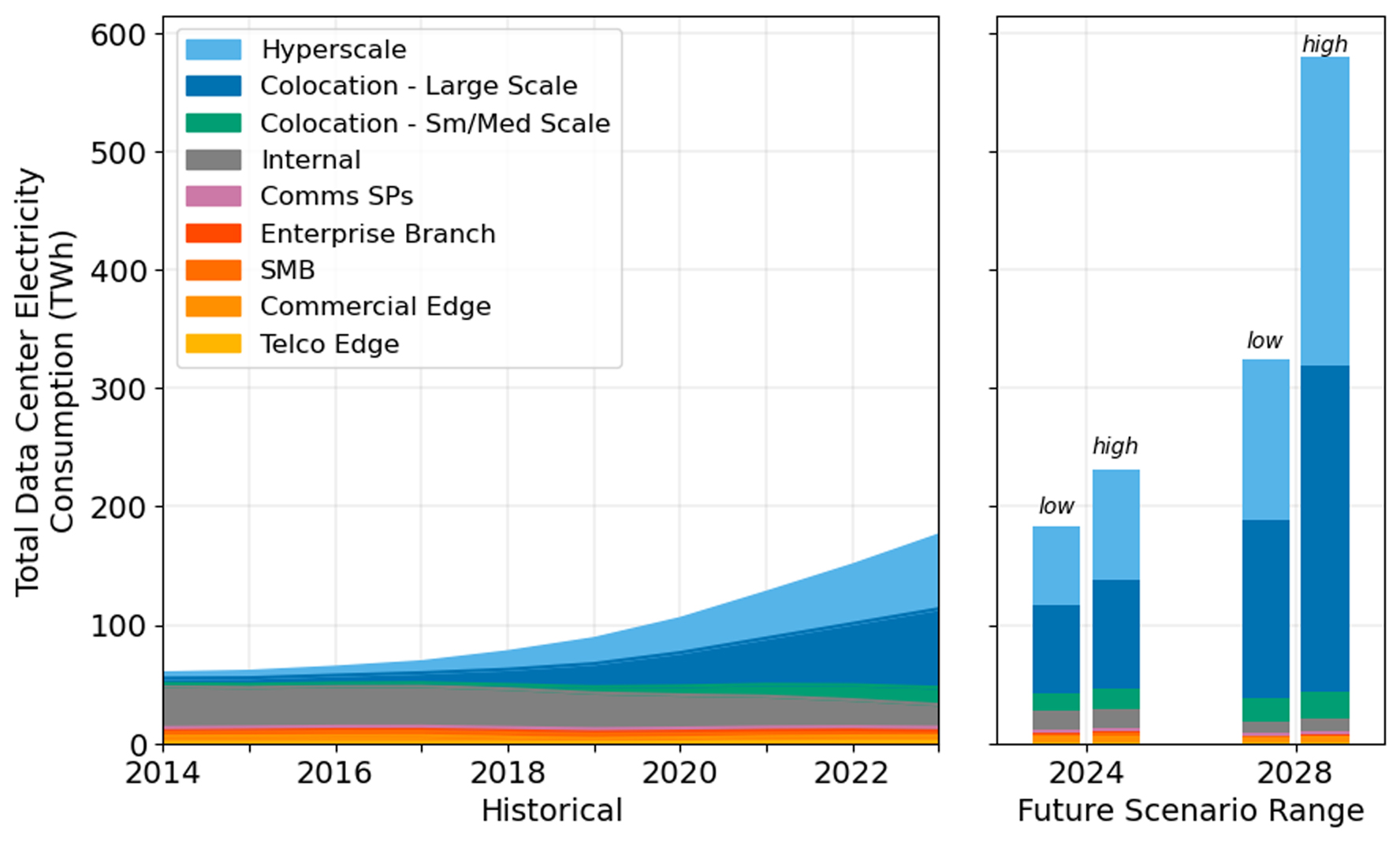
Chart 2. Total data center electricity use, 2014–2028, by space type.
The Argonne report estimates that peak demand will increase by 15–18 percent over the next 10 years, representing up to 150 GW, the majority of which will come from data centers and crypto mining. On the smaller end of the scale, data centers draw between 5–10 MW, and at the other end of the scale, large AI training and hyperscale facilities can draw as much as 200–600 MW. The report cites short-term projections from Lawrence Berkeley National Laboratory that show data centers consuming nearly 600 TWh of power in 2028 (see Chart 2),4 and states, “The projected increased energy demand through 2028 . . . represents a capacity increase from 24 to 74 GWy(e). In the ‘high’ scenario, the electricity demand from [data centers] accounts for 12 percent of total U.S. consumption in 2028.”
The report goes on to explain how nuclear power can help mitigate the burden of data center demand growth on the grid through uprates, restarts of recently retired reactors, power purchase agreements with the existing fleet, and new construction, and states that “approximately 20–28 GWe of nuclear capacity could be dedicated to [data centers] by the early 2030s.”
In a high-level review of siting options around the country for both data centers and nuclear power plants, certain states came out on top, with large open tracts of land, access to fresh water, stable power grids with nuclear power plants, and the possibility of developing new nuclear generation. Illinois was among the top states in that analysis (along with a few other Midwestern and Southeastern states), with the potential to site both nuclear power plants and data centers.
Will Illinois run out of power?
While Illinois is a prime location for data centers, the demand on the grid is already high. Can the state sustain its current load growth without nuclear? A report from Synapse commissioned last year by the Illinois Manufacturers’ Association looks at load growth and specifically points to data centers causing issues for Illinois’s long-term energy costs and decarbonization goals. According to the report, “In 2023, data center load in Illinois was 7 million MWh per year and made up 6 percent of electricity consumed in the state. This is expected to increase rapidly in the next few years, with low-growth scenarios estimating 9.6 million MWh per year and high-growth scenarios estimating 220 million MWh per year.”5 It goes on to project high-, medium-, and low-growth scenarios for data centers in the state. According to the medium scenario, “The forecast projects ComEd’s data center load to reach 18 TWh by 2030, which doubles to 36 TWh by 2039. By 2050, data center load reaches 72 TWh in ComEd alone. We extrapolate this growth rate to the other two major electric utilities based on the utility’s historical share of commercial retail sales in Illinois, resulting in a projected 103 TWh from Illinois data centers by 2050.”
Synapse’s projections for data center growth in Illinois have led to reports stating that Illinois will run out of power. A 2025 Resource Adequacy Study released in December said as much.5 Facing such bleak news, some stakeholders and analysts are looking to either natural gas or renewables plus battery backup, but not a lot of focus is placed on nuclear.
Rezin agreed with the dire reports—but not the knee-jerk solution. “Recent resource adequacy studies reinforce the urgency of adding firm, 24-hour baseload power to maintain grid reliability,” she said. “Without maintaining and expanding nuclear capacity, Illinois cannot realistically meet future electricity demand or emissions targets.”
Despite a nearly four-decade-long nuclear moratorium, Illinois is in a unique position to take advantage of long-term load growth projections. The Illinois EDC’s Fey described the state as a destination: “Illinois attracts advanced manufacturing, hi-tech, and other large-load customers that depend on a reliable, robust grid network,” she said. “These users create load and offtake synergies attractive to nuclear developers.” Fey added that growing Illinois’s nuclear footprint would allow the state to offer access to firm power that is clean and reliable and will allow the state to reach its decarbonization goals.
In addition, “Illinois isn’t approaching nuclear energy as a novice,” thanks to Constellation’s 11 reactors. Fey added that the existing fleet has shown how nuclear energy is a safe, smart, zero-emissions option to meet energy needs.
Constellation’s investments in Illinois

Pickett
Dwayne Pickett, vice president of regulatory advocacy and state government affairs at Constellation, told NN that the company sees Illinois as the ideal setting for the current “nuclear moment,” because “Illinois isn’t just in the game—it’s number one in this game.” No other state, he added, has as many communities that know and support nuclear power—a generational connection that brings stability and trust. The only impediment to investing in Illinois was the state’s policies—but those policies have now changed.
These recent policy changes are pivotal in shaping Illinois’s nuclear trajectory, and Constellation sees the latest legislation as a catalyst for long-term growth. “I’m hopeful this new law can serve as a spark to make Illinois the center of the nuclear restart,” Pickett said, referring to the CRGA Act, which not only lifted the moratorium but strengthened regulatory oversight around safety and emergency planning. “We are grateful for what the state has done [to support the fleet]. Now [Constellation] has the opportunity to go out in the market to find sustainable solutions to carry us into the future.”
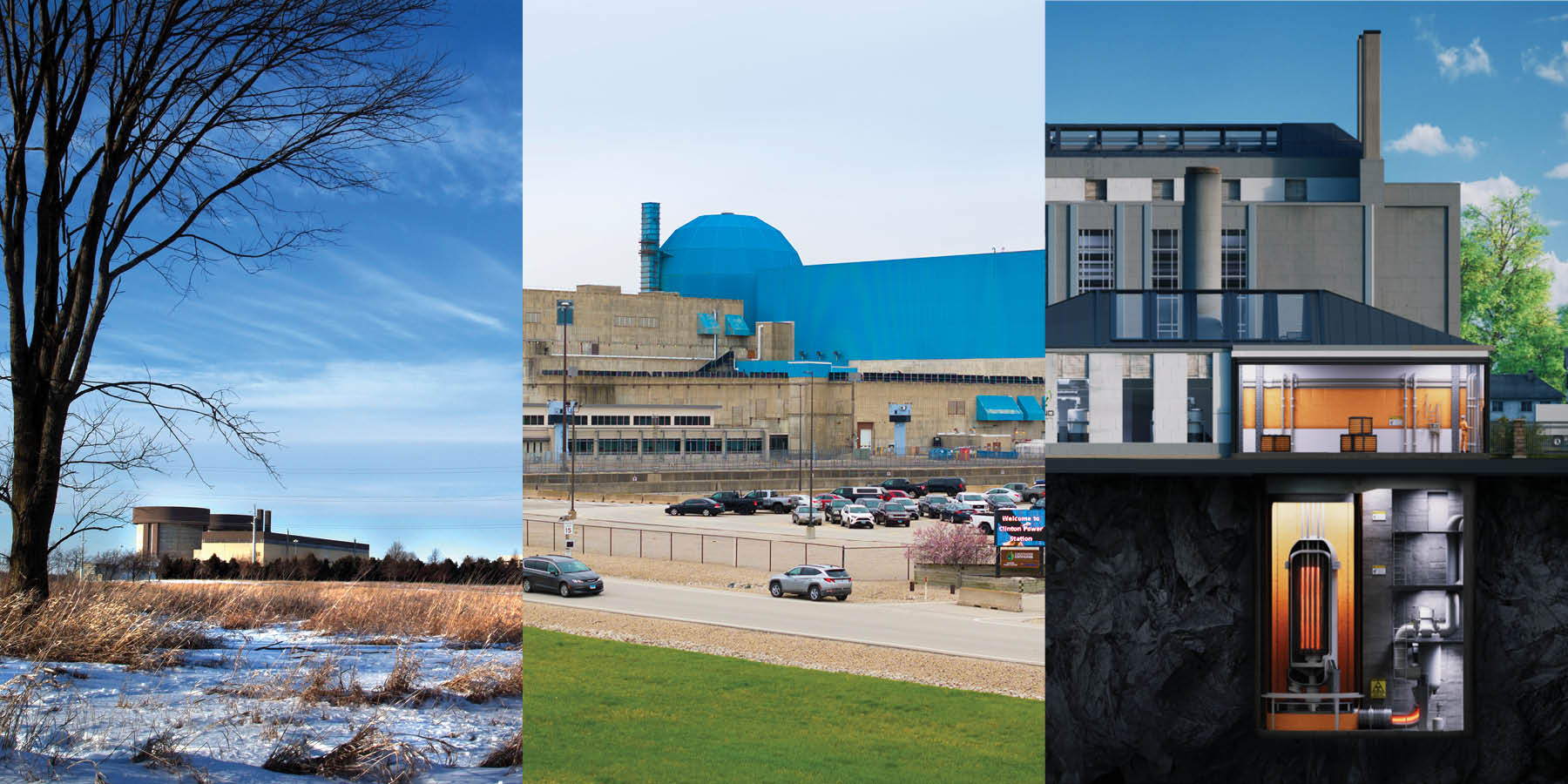
Constellation’s Clinton nuclear power plant in central Illinois is already benefiting from one such market solution. According to Pickett, Clinton is a great place for new nuclear: it has an early site permit, and Constellation signed a power purchase agreement with tech giant Meta last August. The agreement with Meta allayed concerns that Clinton would have to close after the expiration of Illinois’s ratepayer-funded zero-emission credit program, which is providing financial support for the plant through mid-2027.
“Having a partner like Meta gives [the community and Constellation] 20 years of certainty,” and it makes investing in the site possible, Pickett said. Constellation is planning additional nuclear capacity at the site, including uprates to boost its energy output by 30 MW, and Clinton is also a candidate for new nuclear. Constellation, according to Pickett, has “an opportunity to find a partner that we could work with potentially at Clinton to take advantage of the early site permit. It’s not something that Constellation can do alone, but that Meta transaction, the stability that it gives that plant, makes it more viable.”
Other market solutions could include inviting partners to site operations at existing plants. “We’ve got these nuclear plants, we’ve got available land, we’ve got access to power, we’ve got an experienced workforce,” Pickett said. “So we’re pursuing a strategy where we try to bring a partner to the site and use that opportunity to not only bring more economic development to the community but also provide a stable base for that plant beyond the term of any type of [zero-emission credit] program or federal credit.”
This approach is being put in motion at Clinton, and also potentially Byron, which has two Westinghouse PWRs licensed through 2044 and 2046, respectively. Constellation has already made rezoning requests for land near the Byron site.
Pickett is a big believer in Illinois. “We could really do advanced nuclear the best in Illinois. We’ve got a massive workforce in Illinois, we’ve got the academic community from the University of Illinois and the University of Chicago, two world-class labs at Argonne and Fermi. There really is no better place for the nuclear moment,” he said.
What about advanced nuclear?

Heidet
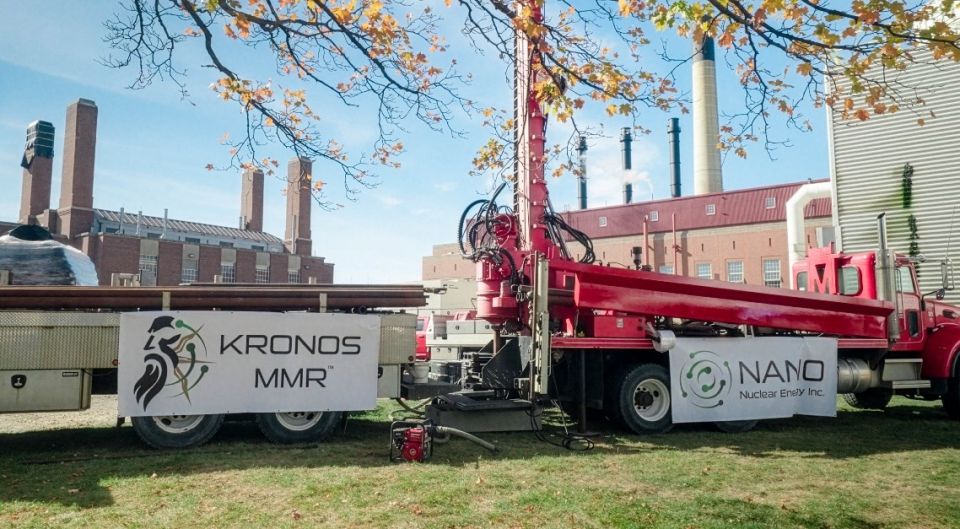
Constellation is doing a lot to help Illinois seize the “nuclear moment,” but it’s not alone. Florent Heidet, chief technical officer of Nano Nuclear, talked with NN about the extensive experience the state has as the largest producer of nuclear power in the country as a big driver behind the company choosing Illinois for its R&D headquarters.
“We made that decision because Illinois is a key state with respect to nuclear energy and future nuclear projects, and also because of the significant local workforce, attractive living conditions, and its central location—facilitating logistics all over the U.S.,” Heidet said. He also focused on Illinois’s growing energy demand as a driver for innovation and noted that the data center developments, along with an aging fleet of reactors, will drive demand for future energy projects and perhaps larger campuses.
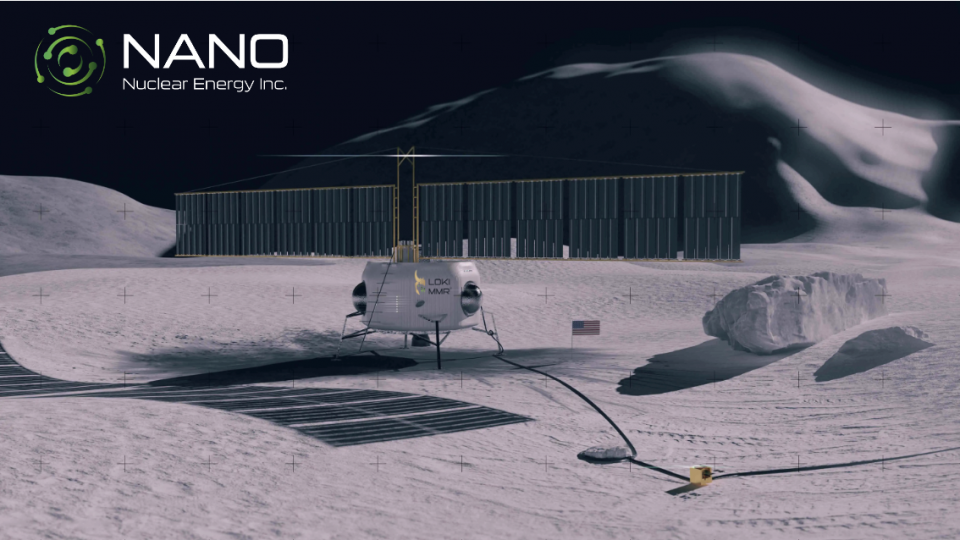
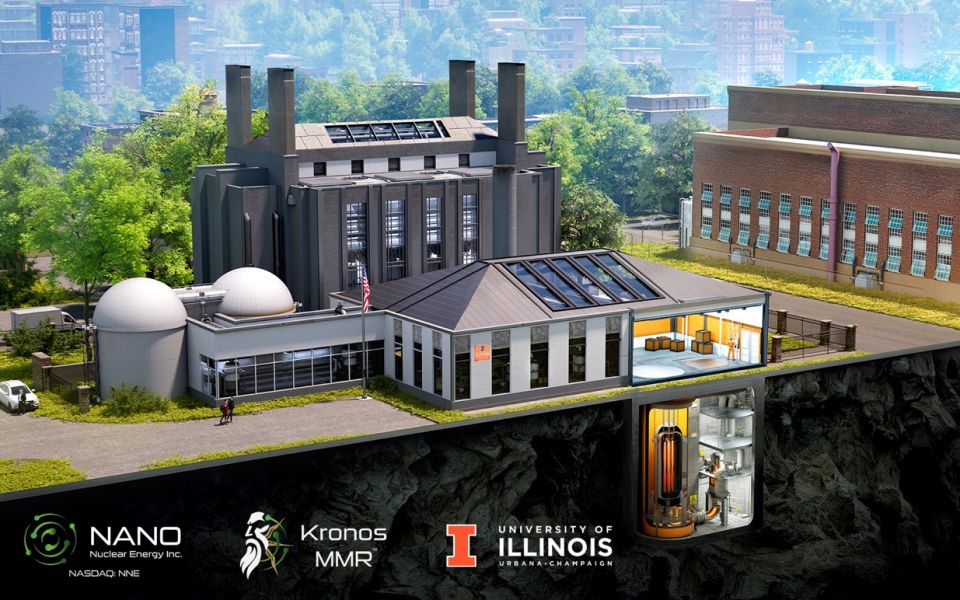
In order to prepare for deployment of their new reactor, Nano Nuclear is collaborating with the University of Illinois–Urbana-Champaign to host its Kronos micro-modular reactor. The Kronos MMR uses high-temperature, gas-cooled reactor technology and is intended to provide electric power and process heat for communities or for co-located industries, including data and AI centers, chemical plants, and industrial operations. The reactor, which can generate as much as 45 MWt, is designed to be assembled on-site as “part of a multisystem deployment to allow for scaling and lowering levelized cost of electricity,” according to Nano Nuclear.
Heidet said, “Our joint project with the University of Illinois to deploy our first Kronos reactor on campus will be the first of its kind in North America, creating an ideal platform for students to gain hands-on experience while demonstrating the Nuclear Regulatory Commission’s ability to license advanced reactors.”
At the Illinois EDC, Fey is very excited about the Kronos project, adding, “As it progresses, this partnership will continue to strengthen the nuclear ecosystem in Illinois.”
Illinois’s nuclear future
Fey points to the CRGA Act to sum up the case for new nuclear power in the state. “Nationally, the grid is seeing load growth,” she said. “The CRGA Act opens the door to expanded nuclear generation and will bring more energy storage to the grid through incentives for batteries that complement incentives for clean energy sources.”
Fey also noted that in meetings with nuclear industry prospects, multiple companies have indicated that Illinois’s existing nuclear supply chain and skilled workforce of nuclear professionals across industry, academia, and research coupled with its strong historical nuclear policy and regulatory environment are key factors in Illinois making their short list of states.
In NN’s “Top 10 states of nuclear” (January 2026, p. 30), Illinois made the list, but a number of states have a bit of a head start in courting new nuclear. With the state’s recent policy changes and support from companies like Constellation and Nano Nuclear, Illinois is now in a position to be able to invest in its nuclear assets and maintain its role as a leader in nuclear generation. Pickett put it optimistically: “Illinois is coming, folks. [Nuclear] reactors are legal now in Illinois,” he said. “I hope that we see Illinois in the mix.” It is too early to know how nuclear power will fare in the state, but many pieces are in place now to foster growth.
Footnotes
- Nida Çakır Melek and Alex Gallin, “Powering Up: The Surging Demand for Electricity,” kcFed Economic Bulletin, September 2024 (Public Affairs Department of the Federal Reserve Bank of Kansas City); Powering Up: The Surging Demand for Electricity - Federal Reserve Bank of Kansas City .
- Marcus Lu, “Mapped: U.S. states with the most data centers in 2025,” Visual Capitalist (December 12, 2025); visualcapitalist.com/mapped-u-s-states-with-the-most-data-centers-in-2025/.
- Nicolas E. Stauff et al., Preliminary Analysis of Nuclear‑Powered Data Center Scenarios, Argonne National Laboratory, ANL/NSE‑25/47 (August 31, 2025); https://doi.org/10.2172/3001074.
- A. Shehabi et al., 2024 United States Data Center Energy Usage Report, Lawrence Berkeley National Laboratory, LBNL-2001637 (December 2024); https://doi.org/10.71468/P1WC7Q.
- Chelsea Mattioda et al., “A snapshot of the energy landscape in Illinois: Considerations for the state’s energy transition,” Synapse Energy Economics Inc., prepared for the Illinois Manufacturers’ Association (April 30, 2025); synapse-energy.com/sites/default/files/A%20Snapshot%20of%20the%20Energy%20Landscape%20in%20Illinois_Synapse%20report%20for%20IMA%2024-134.pdf.
- 2025 Resource Adequacy Study, submitted to the Illinois General Assembly (December 15, 2025); ipa.illinois.gov/content/dam/soi/en/web/ipa/documents/20251215-illinois-ra-study-2025-final.pdf.
John Fabian is the Director of Publications at the American Nuclear Society.