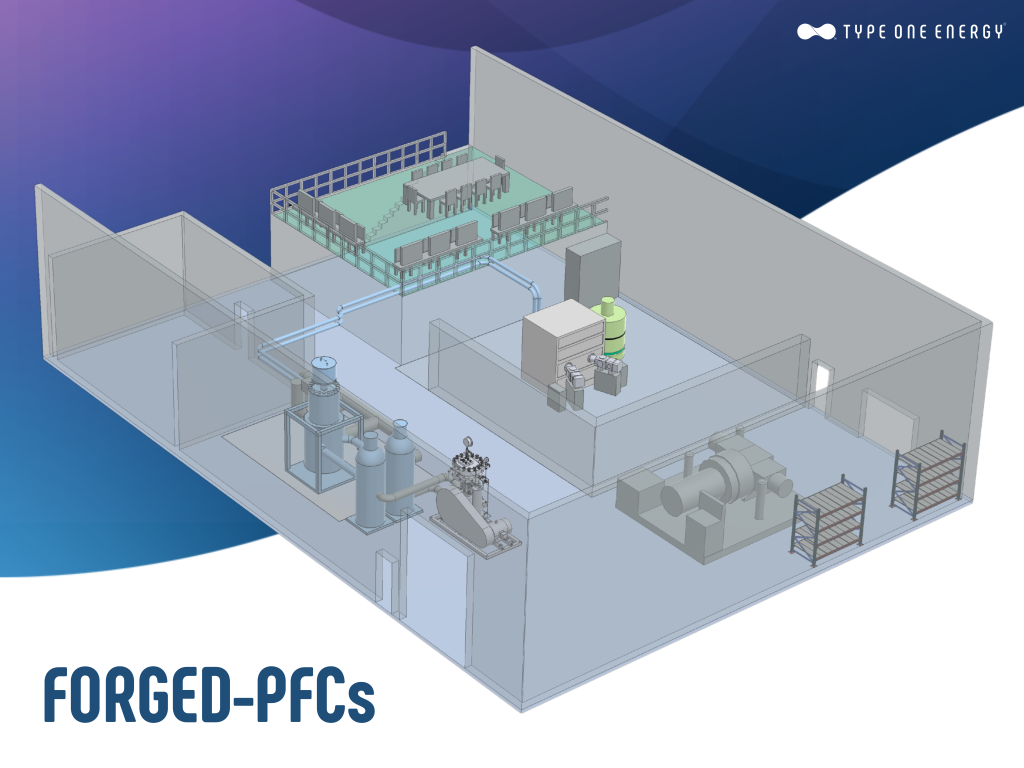
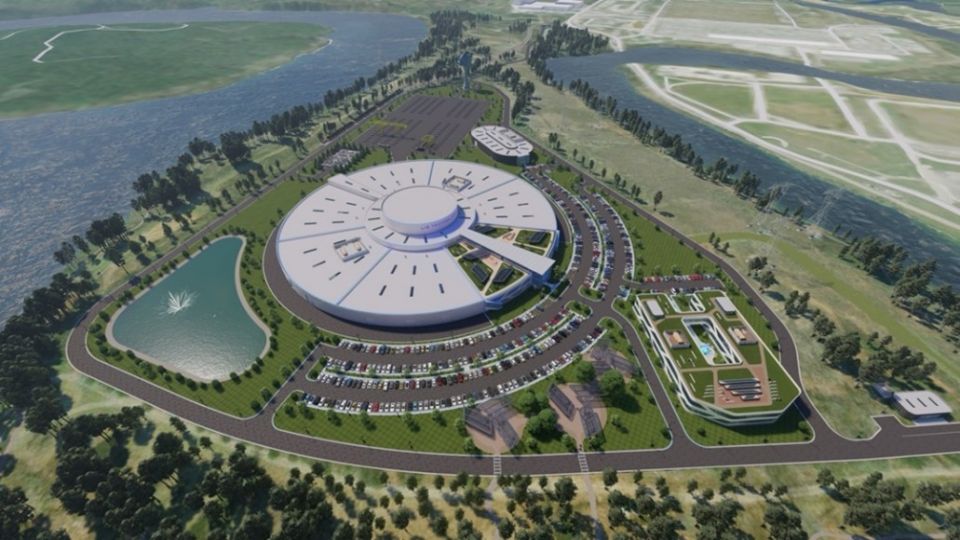
The details: The purpose of the HHF is to “drive American innovation and move fusion energy closer to reality,” the lab said. It will achieve this by evaluating how materials react under extreme conditions in a fusion device with the aim of accelerating the development of plasma-facing components in those devices.
Both private and public entities will be able to qualify and validate the materials used in fusion pilot plant designs at the HHF, which will be the second—and by far the most powerful—test facility of its kind in the United States. ORNL also said that the HHF will be the only facility of its kind in the U.S. to use pressurized helium gas cooling.
The facility will take advantage of UTK’s expertise in fusion materials design and ORNL’s fusion materials development program. Ultimately, the HHF is envisioned as a fusion development campus for the projects of each of the involved partners. The partners hope to further cement the East Tennessee region as a hub for future fusion research and manufacturing.
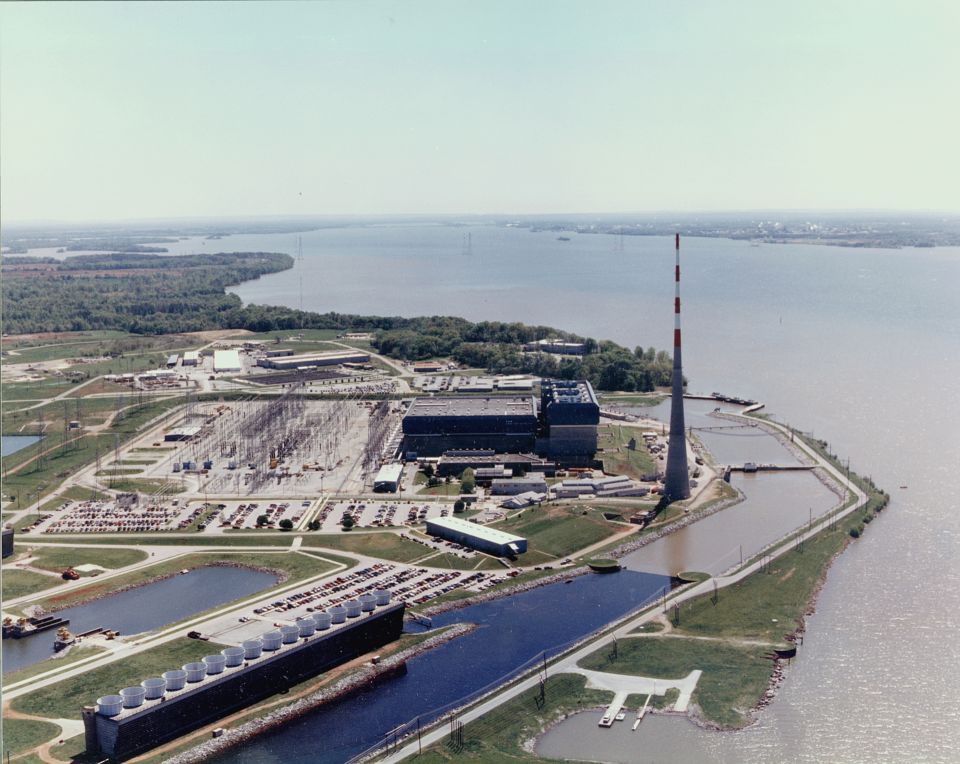
Important background: Beyond leveraging UTK and ORNL resources, the siting of the HFF at Bull Run aligns with Type One Energy projects currently in progress. In February 2024, the company announced its plans to relocate its headquarters from Madison, Wis., to Bull Run.
This move was in part compelled by a 2023 memorandum of understanding signed by TVA, ORNL, and Type One to collaborate on fusion. That collaboration developed into Project Infinity, which involves the deployment of two fusion machines: Infinity One and Infinity Two. Infinity One is a stellarator fusion prototype, while Infinity Two is a 350-MWe fusion power pilot plant. In September 2025, TVA issued a letter of intent to Type One regarding Infinity Two.
While Project Infinity is not explicitly mentioned in this most recent update from ORNL, the current partnership will directly support both Infinity projects and involves the same parties (along with UTK).
Recent funding: The HHF will be funded by the Department of Energy’s Fusion Energy Sciences program within the Office of Science, the state of Tennessee, and Type One Energy. This news comes less than a week after Type One reportedly raised $87 million, bringing its total venture investment to more than $160 million.

-3 2x1.jpg)