
2025: The year in nuclear

As Nuclear News has done since 2022, we have compiled a review of the nuclear news that filled headlines and sparked conversations in the year just completed. Departing from the chronological format of years past, we open with the most impactful news of 2025: a survey of actions and orders of the Trump administration that are reshaping nuclear research, development, deployment, and commercialization. We then highlight some of the top news in nuclear restarts, new reactor testing programs, the fuel supply chain and broader fuel cycle, and more.
New administration, new policies
New DOE leader wants to unleash American energy dominance
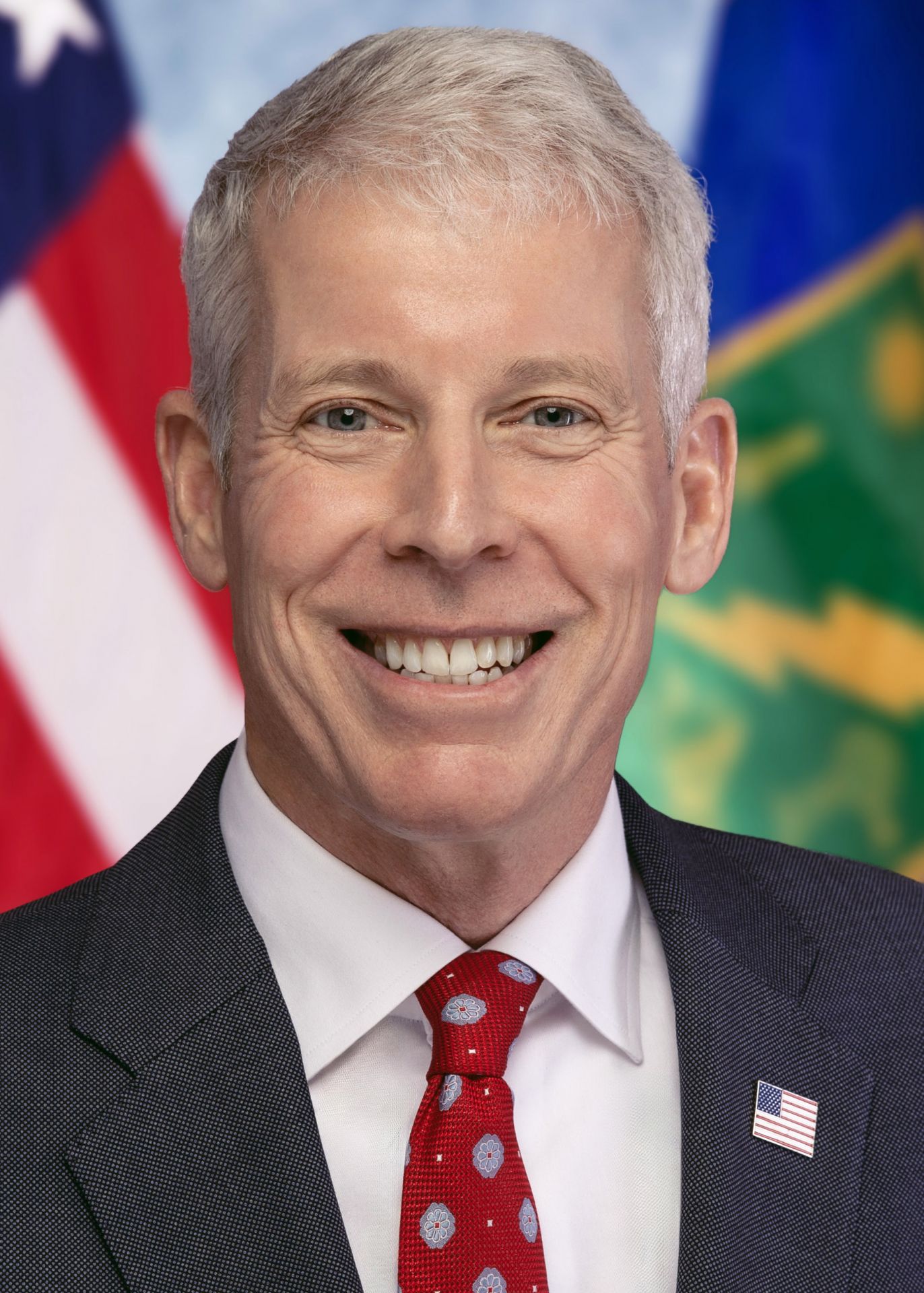
Wright
February: On February 5, Energy Secretary Chris Wright outlined his priorities and plans, including a focus on modernizing nuclear power and “taking the politics out” of energy discussions, especially as they relate to climate change.
Wright was confirmed by the U.S. Senate on February 3 and vowed the following day to “unleash American energy in accordance with President Trump’s executive orders,” in his first secretarial order. On January 20, Trump issued a far-reaching executive order (EO) titled “Unleashing American Energy,” in which he directs agencies to conduct an immediate review of “all agency actions that potentially burden the development of domestic energy resources,” including nuclear.
Trump issues EOs to overhaul nuclear industry

President Trump signs one of the four nuclear-related EOs in the Oval Office. (Photo: White House)
May: The Trump administration issued four EOs on May 23 aimed at boosting domestic nuclear deployment ahead of significant growth in projected energy demand in the coming decades. These orders aim to reclaim leadership in nuclear technology crucial for national security and competitive AI advancements.
“Reinvigorating the Nuclear Industrial Base” seeks to expand the domestic fuel supply chain and accelerate the reactor licensing process.
“Deploying Advanced Nuclear Reactor Technologies for National Security” orders the Department of Defense to deploy a reactor at an installation by 2028 and promotes international nuclear collaboration.
“Ordering the Reform of the Nuclear Regulatory Commission” calls for a comprehensive review of NRC regulations to reduce regulatory barriers to deployment.
“Reforming Nuclear Reactor Testing at the Department of Energy” establishes a DOE reactor pilot program and aims to reform the national laboratory process for reactor testing.
New DOE NEPA rulemaking and procedures prioritize efficient reactor testing
June: Meeting a deadline set by President Trump’s May 23 EO “Reforming Nuclear Reactor Testing at the Department of Energy,” the DOE on June 30 updated information on its National Environmental Policy Act (NEPA) rulemaking and published an interim final rule rescinding existing regulations alongside new NEPA implementing procedures. Trump first targeted NEPA regulations in the EO “Unleashing American Energy” signed January 20. The DOE Office of NEPA Policy and Compliance said the DOE rulemaking will “remove most of the DOE regulations” that contain NEPA implementing procedures.
The nuclear outlook on the Big Beautiful Bill
July: After a lengthy and contentious reconciliation process, on July 4, President Trump signed H.R.1, the One Big Beautiful Bill Act. The act modified tax credits from President Biden’s Inflation Reduction Act, accelerating phaseouts for wind and solar incentives while preserving support for nuclear, geothermal, and hydropower. Nuclear also gained a new tax credit for advanced facilities employing at least 0.17 percent of the local population, reinforcing its favored status under the Trump administration.
New leadership
Trump administration begins overhaul of the NRC

Hanson
June: The Trump administration continued pursuing its goal of reorganizing the Nuclear Regulatory Commission, deregulating the energy sector, and deploying advanced reactors. On June 13, NRC commissioner Christopher Hanson was dismissed from the agency, leaving one of the five seats on the commission empty.
Trump expels all but one member of nuclear waste oversight board
July: The Trump administration dismissed seven of eight board members of the Nuclear Waste Technical Review Board, the independent federal agency tasked with evaluating the technical and scientific validity of Department of Energy activities related to managing and disposing of high-level radioactive waste and spent nuclear fuel.

Nieh
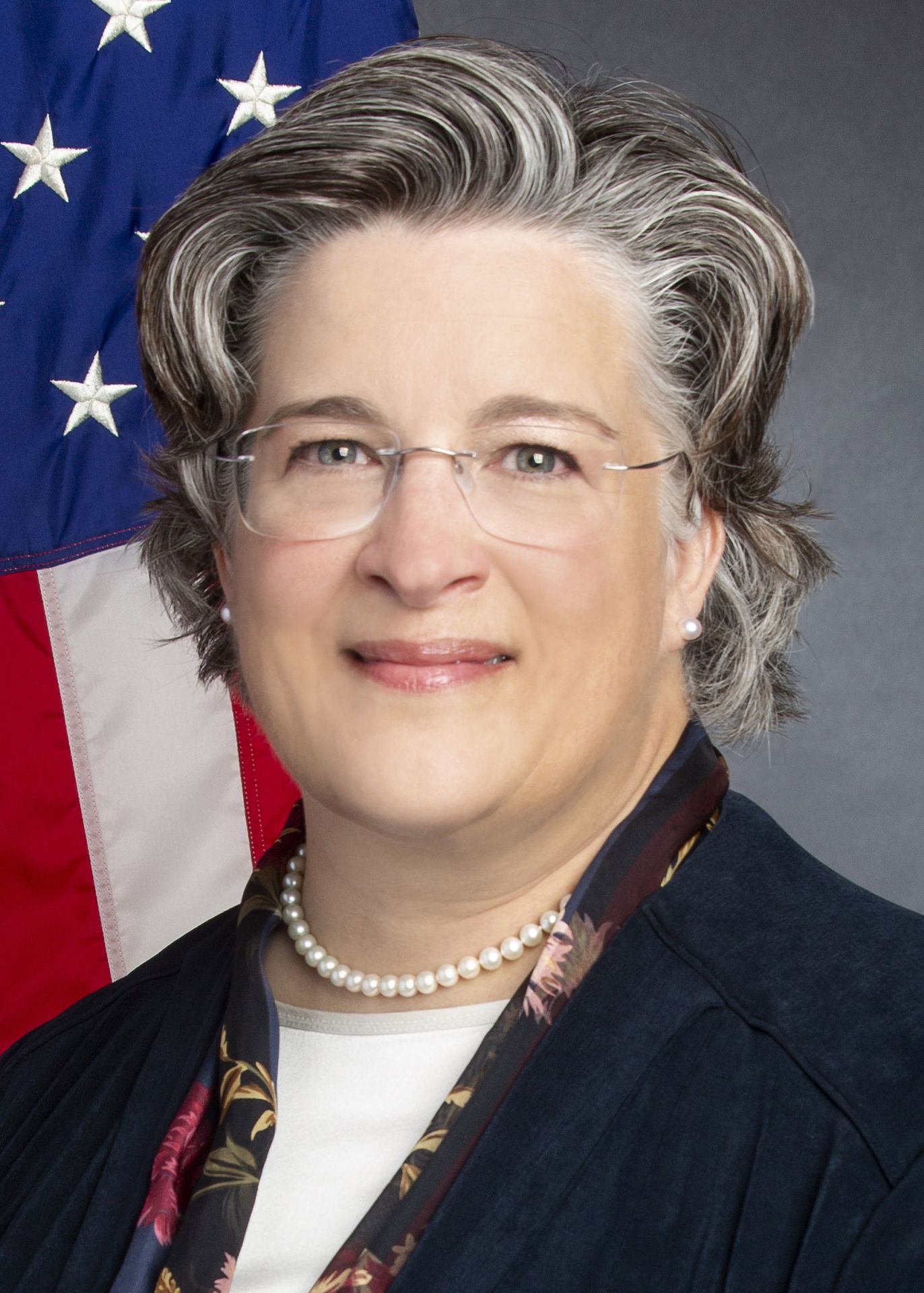
Caputo
The NRC’s Annie Caputo resigns; Ho Nieh nominated to the NRC
July: NRC commissioner Annie Caputo resigned one day after the U.S. Senate voted to reconfirm chair David Wright to the commission, leaving two seats empty. A day after Caputo’s resignation, Ho Nieh was nominated for the role of commissioner through the remainder of a term that will expire June 30, 2029. At the time of his nomination, Nieh was set to be the first former NRC resident inspector to serve as a commissioner.
Garrish is NE-1 and Williams leads the NNSA following Senate vote
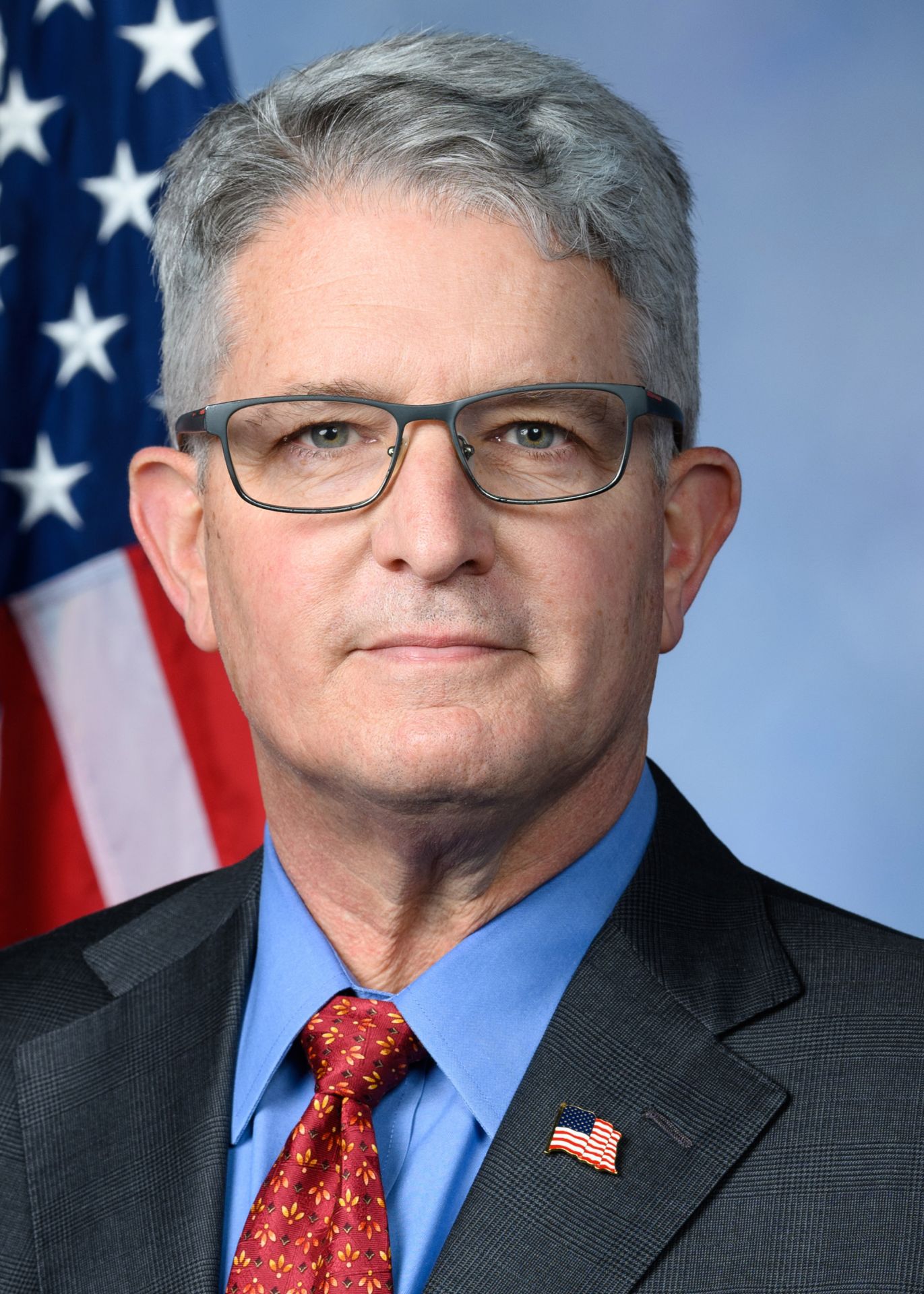
Williams

Garrish
September: On September 18, the U.S. Senate confirmed Theodore “Ted” Garrish as the DOE’s assistant secretary for nuclear energy and Brandon Williams as the DOE’s undersecretary for nuclear security and administrator of the National Nuclear Security Administration.
Douglas Weaver nominated for NRC role
November: The Trump White House nominated seasoned nuclear regulatory expert Douglas Weaver for a commissioner seat on the NRC.
He was nominated to fill the seat left vacant by Annie Caputo’s resignation. If the Senate confirms both Weaver and Nieh, the NRC will have a full panel of five commissioners for the first time during the second Trump administration.
Nieh sworn in to NRC
December: Following a 66–32 confirmation vote in the U.S. Senate in November, Ho Nieh was officially sworn in on December 4, bringing the NRC back up to four commissioners. Nieh filled the seat left vacant by Hanson’s dismissal and is set to serve through the remainder of a term that will expire June 30, 2029.
Nieh joins NRC Chair David Wright, both Republicans, along with Commissioners Matthew Marzano and Bradley Crowell, both of whom are Democrats.
Grid-scale nuclear revival
“Summer time” again? Santee Cooper thinks so
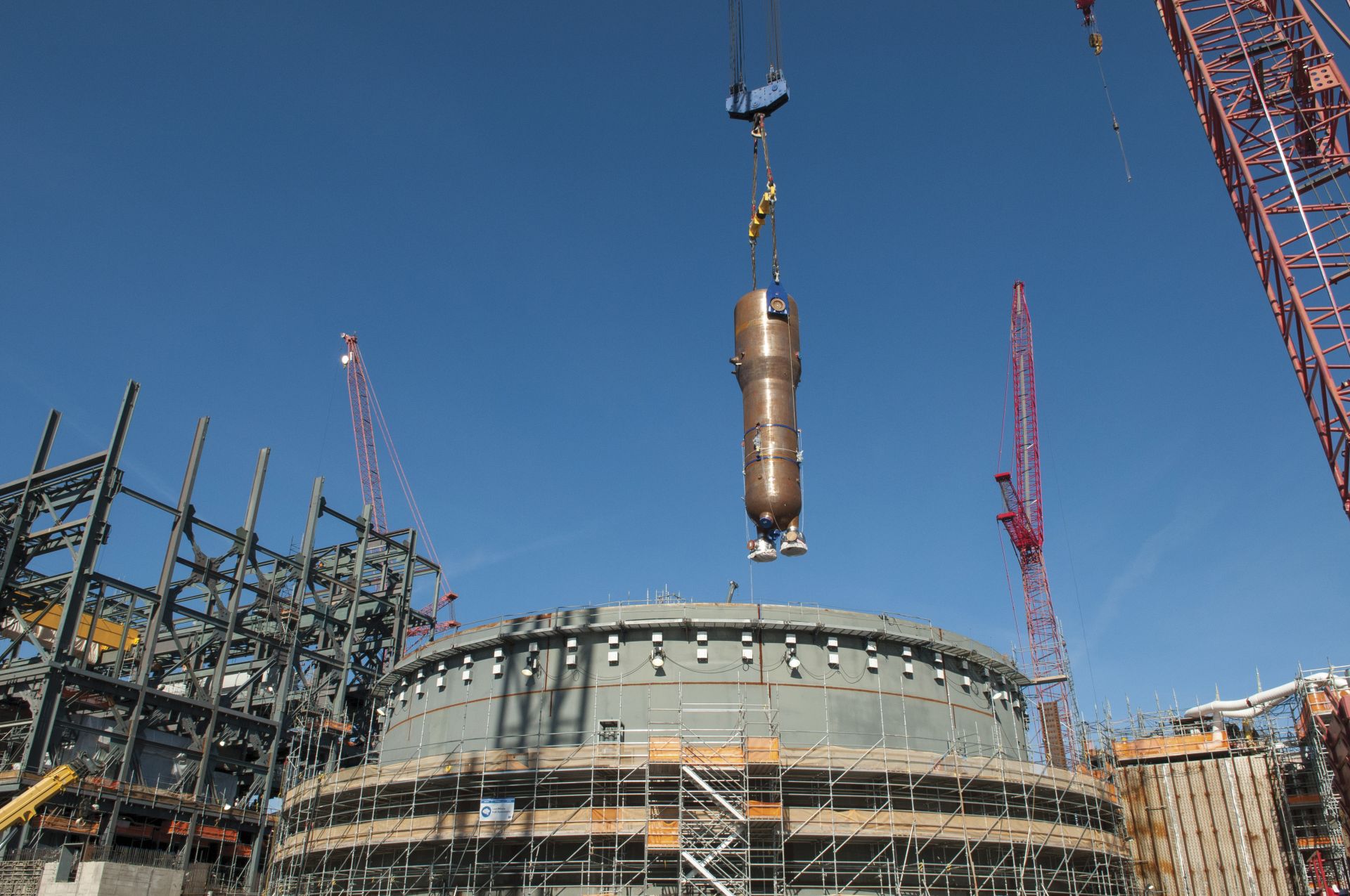
The first steam generator was installed in Summer-2’s containment on January 10, 2017. (Photo: SCE&G)
January: Santee Cooper launched a request for proposals to sell the remaining assets from the canceled Summer-2 and -3 AP1000 reactor project in Jenkinsville, S.C. The project was halted in July 2017 after costly delays and Westinghouse’s declaration of bankruptcy. Options for the site included completing one or both units or repurposing the site, which has water and transmission infrastructure in place. NRC licenses for the reactors were terminated in 2019, so any new owner would need to reapply.
NextEra files with NRC for potential Duane Arnold restart
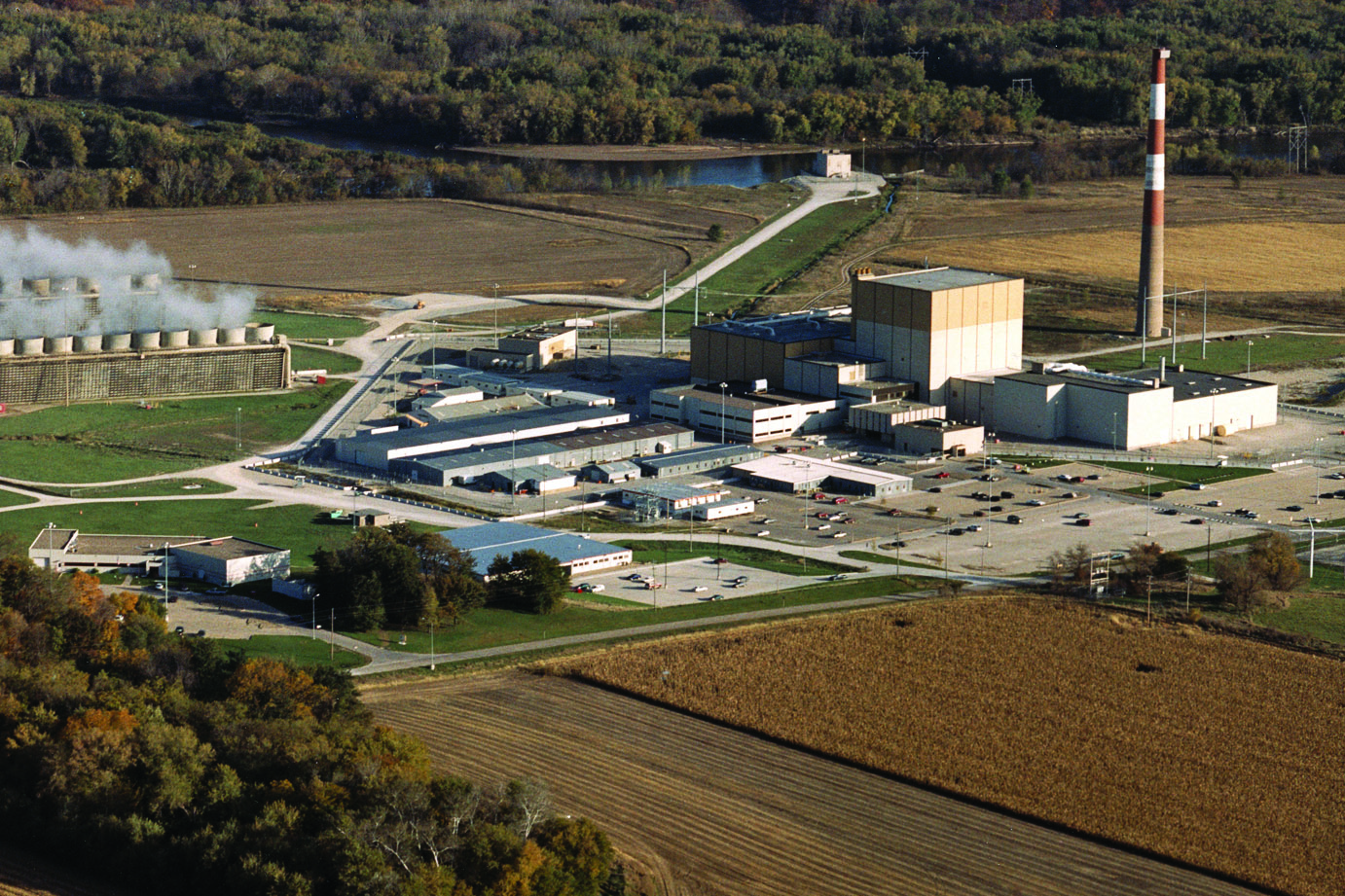
Duane Arnold nuclear power plant. (Photo: NextEra Energy)
January: NextEra Energy announced that it was working toward relicensing Duane Arnold, Iowa’s sole (and currently shuttered) nuclear power plant. NextEra CEO John Ketchum said that the company filed a licensing change request for Duane Arnold with the Nuclear Regulatory Commission, which is the first step toward getting approval to restart the plant.
OPG issued license to build an SMR at Darlington
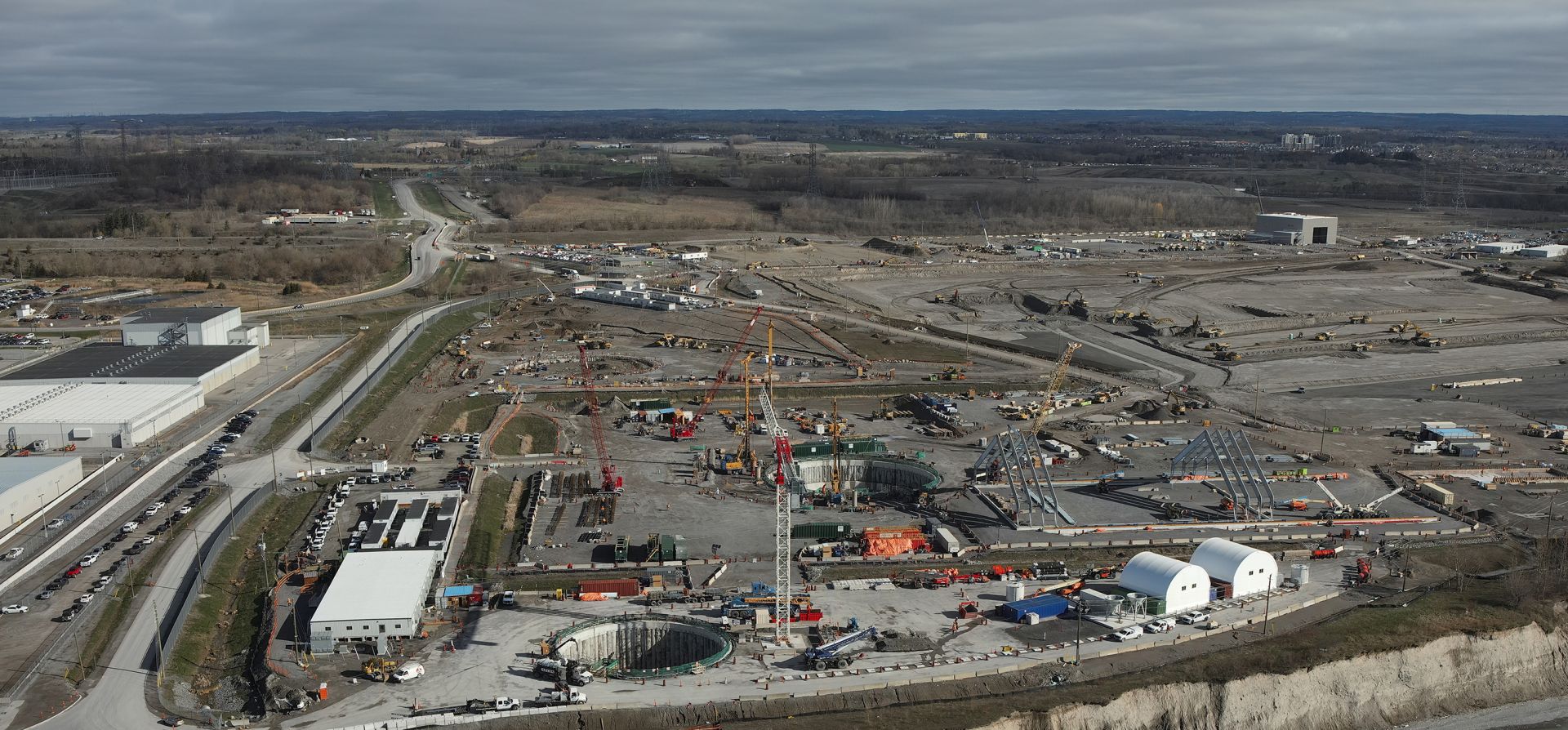
The Darlington New Nuclear Project site, future home of the first BWRX-300 SMR. (Photo: OPG)
April: The Canadian Nuclear Safety Commission approved Ontario Power Generation’s license to construct a GE Hitachi BWRX-300 small modular reactor at the Darlington site in Ontario. The license runs through March 2035, and construction was expected to begin later in 2025. OPG plans to deploy four SMRs at the site, with commercial operation of the first unit targeted for 2029. It must still obtain an operating license and meet conditions for environmental and Indigenous engagement compliance.
TVA files for Clinch River SMR construction permit
May: The Tennessee Valley Authority submitted a construction permit application to the NRC for a GE Hitachi BWRX-300 SMR at the Clinch River site in Oak Ridge, Tenn. This was the first U.S. application for the BWRX-300 design. At the time of its submittal, TVA had invested $350 million in the project and sought Department of Energy grant funding to accelerate deployment by two years, targeting commercial operation by 2033.
A big day for nuclear at the Pennsylvania Energy and Innovation Summit

The president and government officials at the July 15 Energy and Innovation Summit. (Photo: EPA)
July: On July 15, Pennsylvania hosted the inaugural Energy and Innovation Summit at Carnegie Mellon University, organized by Sen. Dave McCormick. Nuclear highlights included Constellation’s $2.4 billion plan to uprate Limerick by 340 MW and Westinghouse’s commitment to build 10 AP1000 reactors by 2030, supported by a new AI-focused partnership with Google Cloud.
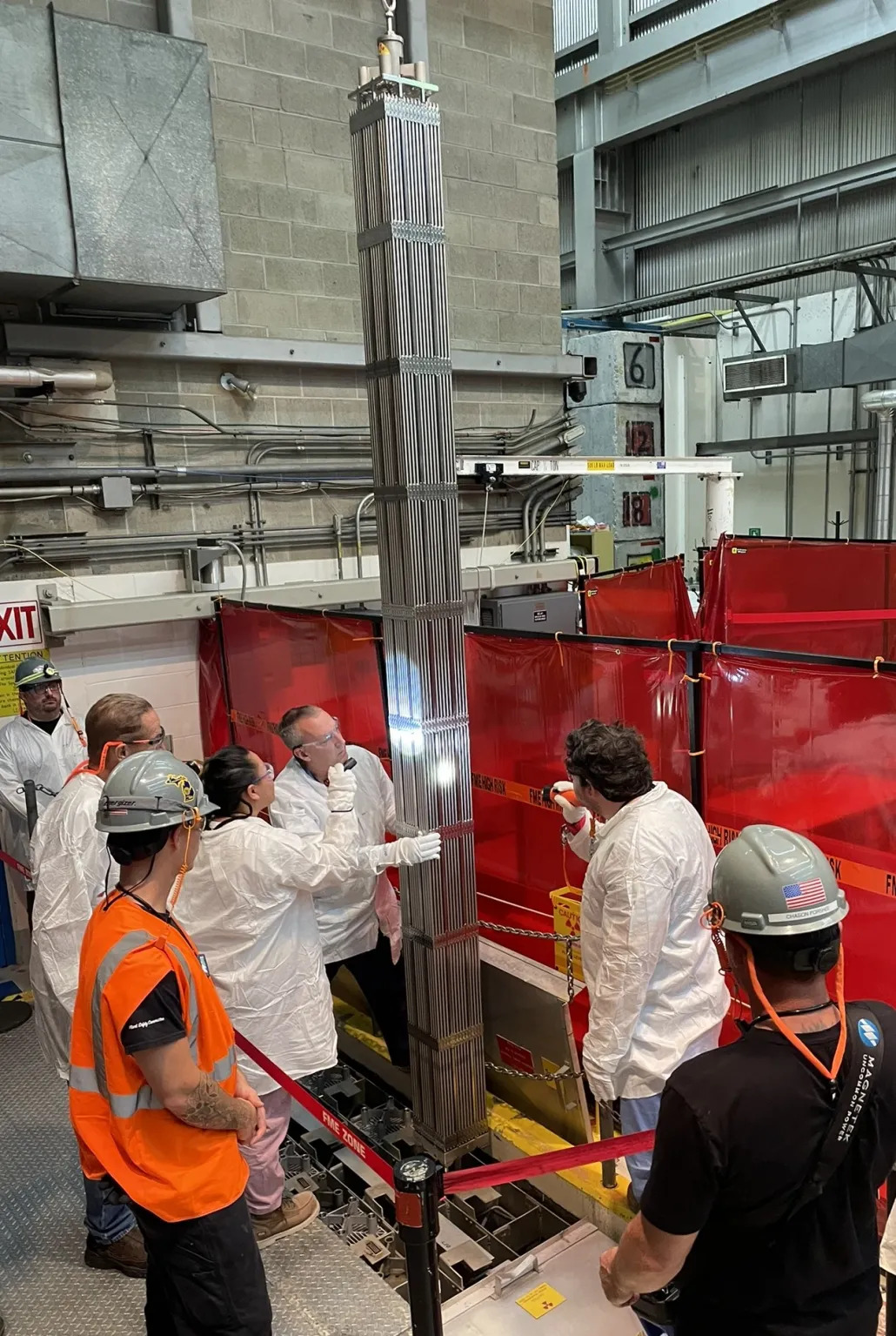
Reactor engineers at Palisades inspect new fuel assemblies before they are placed in the site’s new fuel storage racks. (Photo: Holtec)
Holtec announces new fuel arrival ahead of Palisades restart
October: The Palisades nuclear power plant received its first fuel shipment, a key step ahead of its highly anticipated restart, which was scheduled to take place by the end of the year.
The fuel for Palisades was fabricated domestically and was placed in secure storage within the plant’s spent fuel pool building until it can be loaded into the reactor core, plant owner Holtec International said in a statement.
Test, demonstrate, deploy
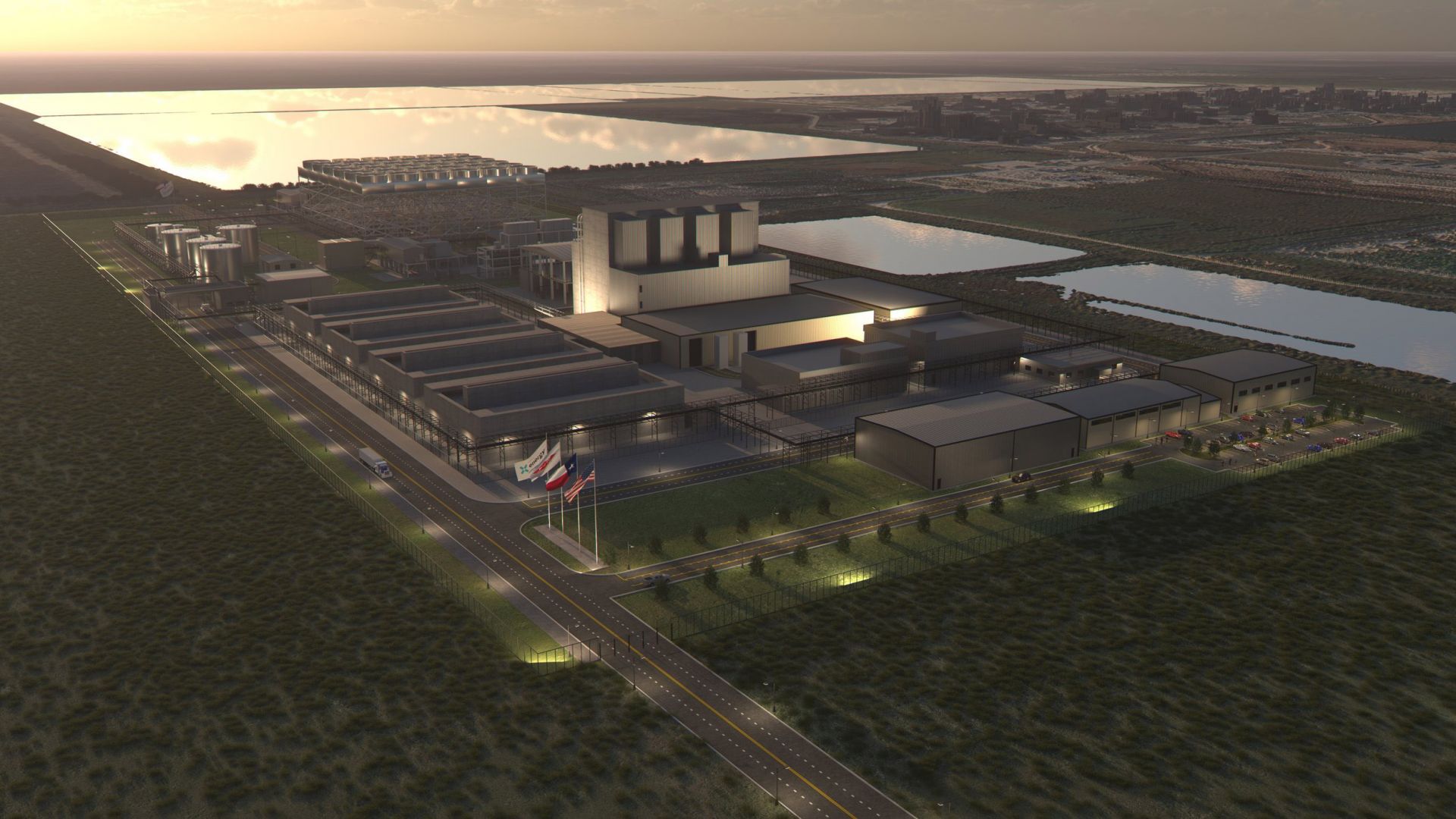
Xe-100 Dow Seadrift concept art. (Image: X-energy)
X-energy, Dow apply for construction permit
March: X-energy and Dow announced on March 31 that they submitted a construction permit application to the Nuclear Regulatory Commission for their Xe-100 small modular reactor deployment project at Dow’s UCC Seadrift Operations site in Texas. In 2023, the companies announced a joint development agreement to use X-energy’s high-temperature, gas-cooled technology to provide clean power and industrial steam at Dow’s Seadrift site, with support of the DOE’s ARDP.
U.S. advances microreactor program for military sites
April: The Defense Innovation Unit announced on April 10 next steps in its ANPI program, launched in 2024 to deploy microreactor nuclear systems for increased power reliability at select military locations. Eight companies were named as eligible to receive “other transaction” awards to provide commercially available dual-use microreactor technology at various Department of Defense installations: Antares Nuclear, BWXT Advanced Technologies, General Atomics Electromagnetic Systems, Kairos Power, Oklo, Radiant Industries, Westinghouse Government Services, and X-energy.
DOE opens pathway for developers to test fueled reactors in NRIC’s DOME
May: The National Reactor Innovation Center started accepting applications from developers ready to take a fueled microreactor to criticality inside the former Experimental Breeder Reactor-II containment building at Idaho National Laboratory, repurposed as DOME—a microreactor test bed. In May, the DOE said DOME would be ready to receive the first experimental reactor in the fall of 2026, with testing likely to begin in 2027.
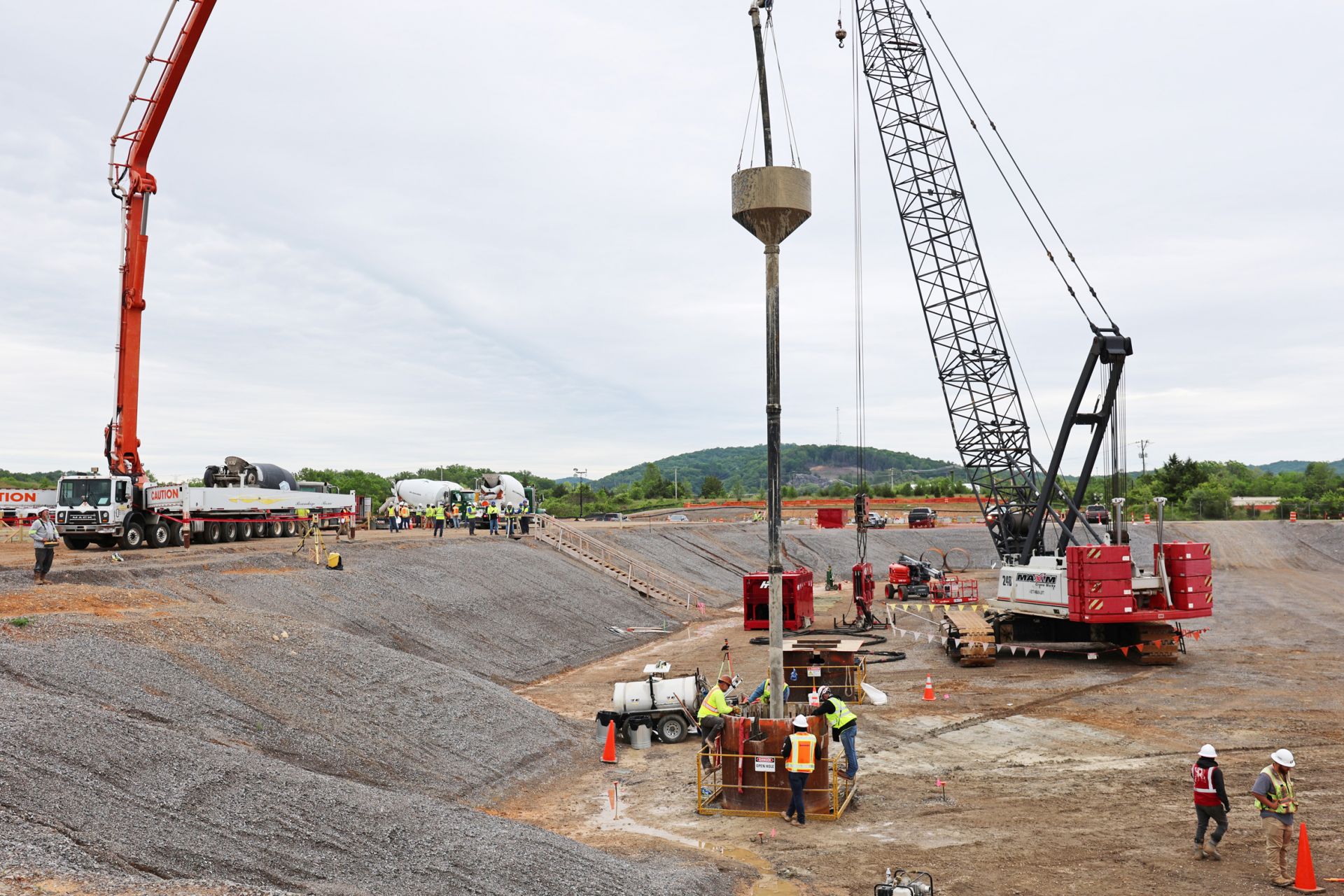
Concrete flows into the first drilled pier shaft for the Hermes foundation. (Photo: Kairos Power)
First concrete marks start of safety-related construction for Hermes test reactor
May: Kairos Power began safety-related nuclear construction for its Hermes low-power test reactor in Oak Ridge, Tenn., on May 1. Hermes, a scaled demonstration of Kairos Power’s fluoride salt–cooled, high-temperature reactor technology, became in December 2023 the first non–light water reactor to receive a construction permit from the NRC. The company broke ground at the site in July 2024.
Pilot program will let DOE authorize test reactors
June: Details of the plan to test new reactor concepts under the DOE’s authority—first outlined in the executive order “Reforming Nuclear Reactor Testing at the Department of Energy”—emerged in a DOE request for applications in June. The pilot program’s faster path to test reactor criticality offers a twofold value proposition for applicants prepared to shoulder all costs for building, testing, and decommissioning a reactor: unlocking private funding and providing “a fast track to an NRC license, and hence, commercialization.” The pilot program was envisioned as “an important step toward streamlining nuclear reactor testing and ensuring at least three reactors achieve criticality by July 4, 2026.”
Army’s Janus Program to spur new reactor deployments
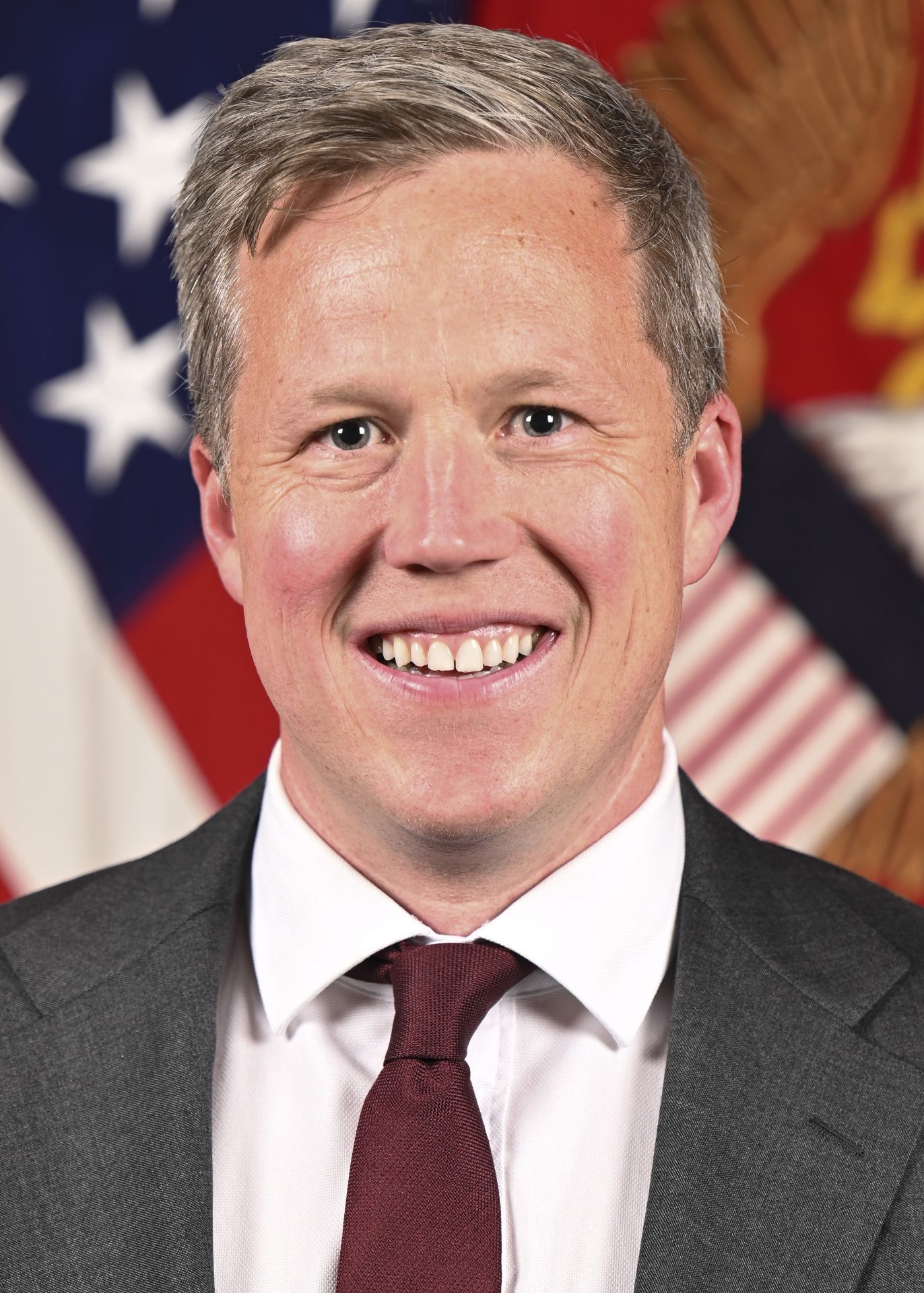
Driscoll
October: Secretary of the Army Dan Driscoll and Energy Secretary Chris Wright revealed the joint DOD-DOE Janus Program, which aims to enable and promote the deployment of next-generation reactors (up to 20 MWe) on military installations and nonpermanent operations. Janus builds off of Project Pele, a DOD program intended to design and build a mobile microreactor from BWXT Advanced Technologies at INL. The army intends to select multiple reactor designs with the goal of having an operational demonstration microreactor power plant on an installation by 2030.
Research and applications
Six FIRE collaboratives announced
January: The Department of Energy named six Fusion Innovative Research Engine (FIRE) collaboratives on January 16, funded with a total of $107 million. First announced in May 2023, the FIRE program forms virtual, centrally managed teams to bridge the Office of Fusion Energy Sciences’ basic research and the needs of the fusion industry in four cross-cutting areas of focus: fusion materials, fusion blanket and fuel cycle systems, fusion enabling technologies, and advanced simulations for design and optimization. The six chosen collaboratives are led by MIT (leader of two FIRE collaboratives), SRNL, INL, General Atomics, and the University of Tennessee.
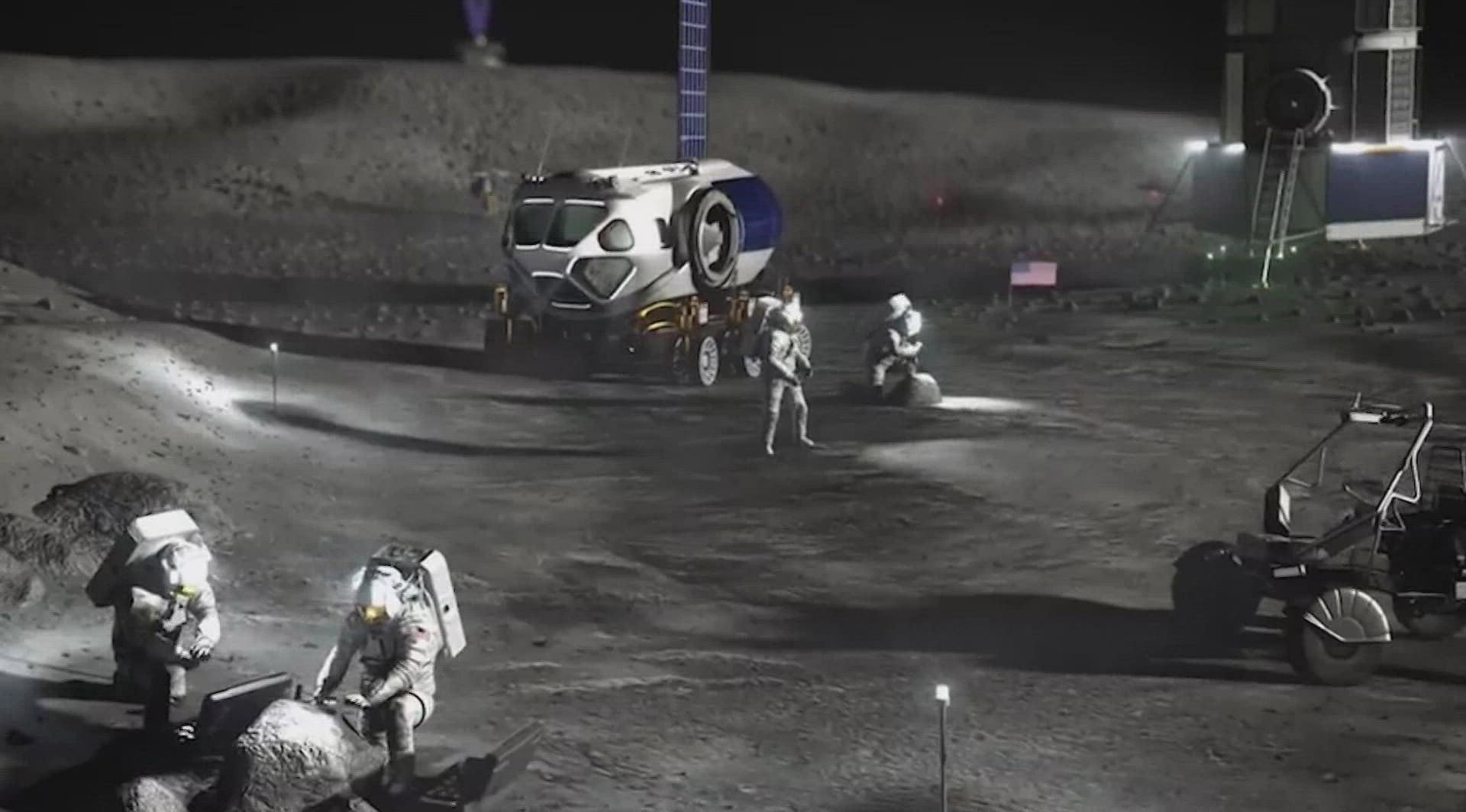
A still from a NASA video illustrating power needs on the lunar surface. (Image: NASA)
Supersized plans for lunar power
August: The Trump administration is shelving work on 40-kWe lunar fission surface power (FSP) reactor designs and pushing instead to get a 100-kWe reactor on the moon by 2030 in a preferred region with ice and sunlight. The plan, announced in August, took NASA’s Space Technology Mission Directorate off FSP work and handed the responsibility to the Exploration Systems Development Mission Directorate. An August 14 request for information asked private companies for feedback on interests, risks, capabilities, and preferred funding mechanisms for a 100-kWe reactor using a closed Brayton cycle power conversion system and designed to fit on a new breed of “heavy-class” lander that can carry up to 15 metric tons.
DOE’s latest fusion energy road map aims to bridge known gaps
 October: The DOE introduced its Fusion Science & Technology Roadmap on October 16 as a national “Build-Innovate-Grow” strategy to align public investment and private innovation to commercialize fusion energy by the mid-2030s. Hailed as bringing “unprecedented coordination across America’s fusion enterprise,” the road map echoes plans issued by the DOE’s Office of Fusion Energy Sciences in 2023 and 2024, with a new emphasis on the convergence of AI and fusion. The document identifies the key research, materials, and technology gaps that must be closed to build a fusion pilot plant, spanning materials, plasma systems, fuel cycles, and plant engineering.
Nuclear for AI / AI for nuclear
Fermi America, Texas Tech share vision for massive power and data complex
June: Texas Tech University and Fermi America announced plans on June 26 to build an advanced energy and AI campus in Amarillo, Texas, near the Pantex nuclear weapons plant. The 5,769-acre site would integrate nuclear, natural gas, solar, and battery storage to deliver up to 11 GW of power and 18 million square feet of AI capacity. Fermi America’s confidential Nuclear Regulatory Commission application reportedly seeks approval for four AP1000 reactors, though details remain limited. Geotechnical work has begun, and 1 GW of power is targeted by late 2026. Texas Tech expects the project to provide research opportunities and workforce training.
Constellation, Meta sign 20-year deal to source Clinton’s power
June: Meta and Constellation teamed up with a 20-year power purchase agreement (PPA) that has the tech giant buying power from the energy company’s single-unit Clinton nuclear power plant in Illinois. For Meta, the PPA supports its AI goals and data center operations in the Midwest. For Constellation, it justifies investing in license renewal and continued operations at Clinton.

This still from a June 2025 CFS video shows the start of assembly for the SPARC tokamak. (Photo: CFS)
Google wants to buy 200 MW from CFS
June: Google said in June that it planned to buy half of the power that Commonwealth Fusion Systems plans to generate from an ARC fusion power plant in Chesterfield County, Va., under a PPA said by Google to be “the largest direct corporate offtake agreement for fusion energy.” The agreement depends on CFS achieving net fusion energy from its demonstration tokamak, called SPARC, which is currently under construction at its headquarters in Devens, Mass.
Four DOE sites selected to host AI data centers
July: The DOE in July named four sites—Idaho National Laboratory, the Oak Ridge Reservation, the Paducah Gaseous Diffusion Plant, and the Savannah River Site—where private companies could soon site data center projects. The announcement followed an executive order issued by President Trump on July 23 designed to ease federal regulatory burdens for AI data center projects. The EO—“Accelerating Federal Permitting of Data Center Infrastructure”—defines data center projects as facilities that require greater than 100 MW of new load dedicated to AI. It also directs the secretary of commerce to launch an initiative to provide financial support to new projects, directs the Environmental Protection Agency to streamline permitting, and marks nuclear as one of the energy technologies that will be used to support data centers.
A new collaboration among Kairos, TVA, and Google
August: Kairos Power, Google, and the Tennessee Valley Authority announced on August 18 a new PPA between Kairos and TVA to supply up to 50 MW to the TVA grid, which powers two data centers owned by Google. This agreement marked a significant milestone: It was the first time a U.S. utility had entered into a PPA to buy power from a Gen IV reactor. The reactor that will provide the power is Kairos’s Hermes 2, which is slated to enter commercial operation in 2030. This development built on Kairos’s multiplant PPA with Google in October 2024 in which the former agreed to supply the latter with 500 MW by 2035.
Uranium supply
DOE commits to supplying HALEU to five advanced nuclear companies
April: The Department of Energy announced its first round of conditional commitments to provide HALEU to five U.S. nuclear developers under the HALEU Availability Program that began in 2020. Out of 15 companies that requested HALEU, five were selected based on prioritization criteria: TRISO-X, Kairos Power, Radiant Industries, Westinghouse Electric Company, and TerraPower.
SRS could produce 3.1 MT of HALEU as downblending plan OK’d
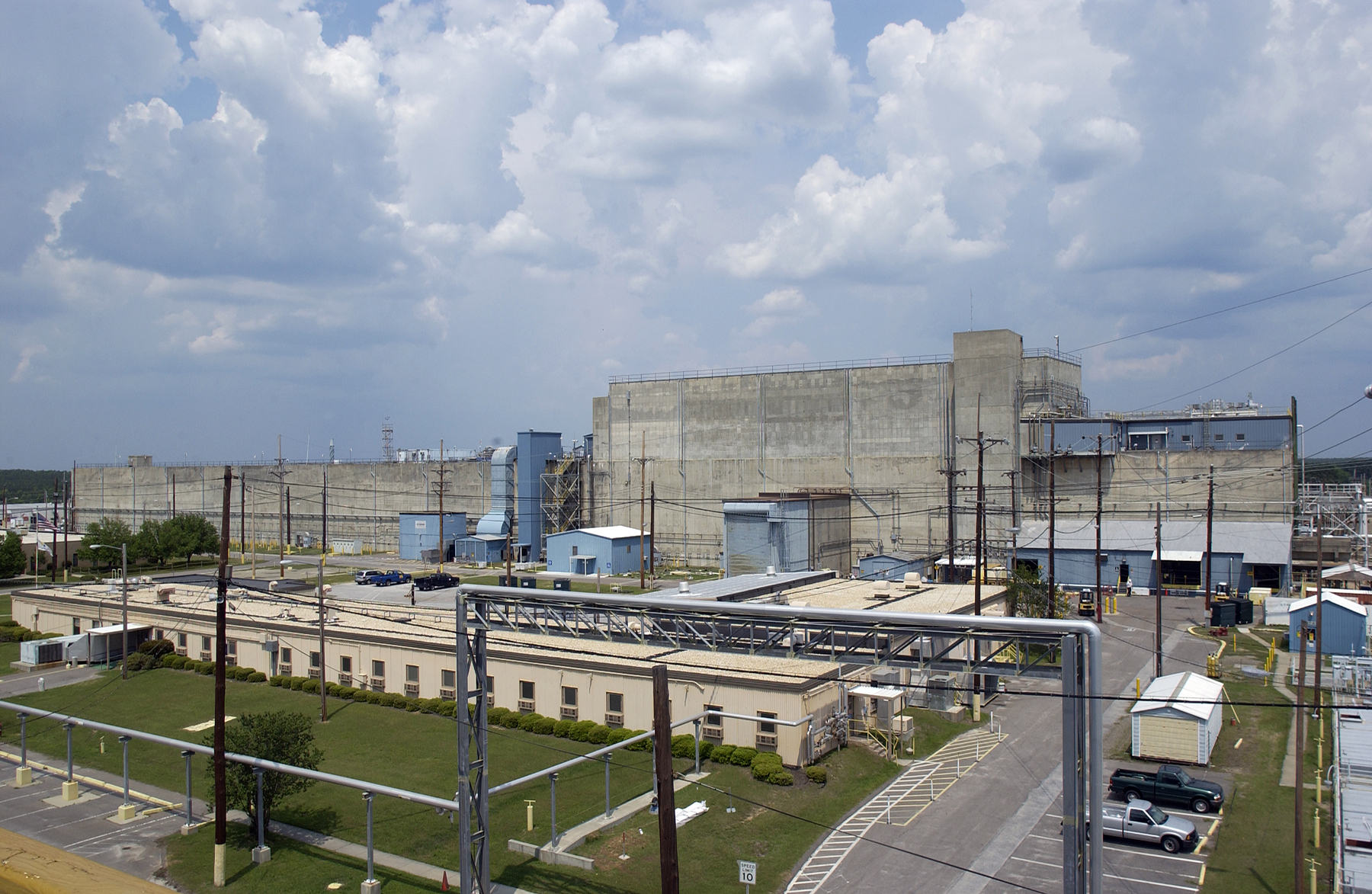
SRS’s H Canyon. (Photo: Savannah River Site)
July: The DOE’s Savannah River Site last downblended HEU in the site’s H Canyon in 2011, producing LEU for light water reactor fuel. In July, the DOE published an amended record of decision and supplement analysis describing a plan to downblend HEU currently stored as uranyl nitrate liquid in SRS’s H Canyon. About 3.1 metric tons of HALEU could be produced from 2.2 MT of HEU in the next two to four years, according to the ROD. That HALEU would then be transported by the DOE in liquid form to “an off-site commercial vendor” for fabrication into reactor fuel.
GLE, General Matter to build enrichment plants near Paducah’s depleted U
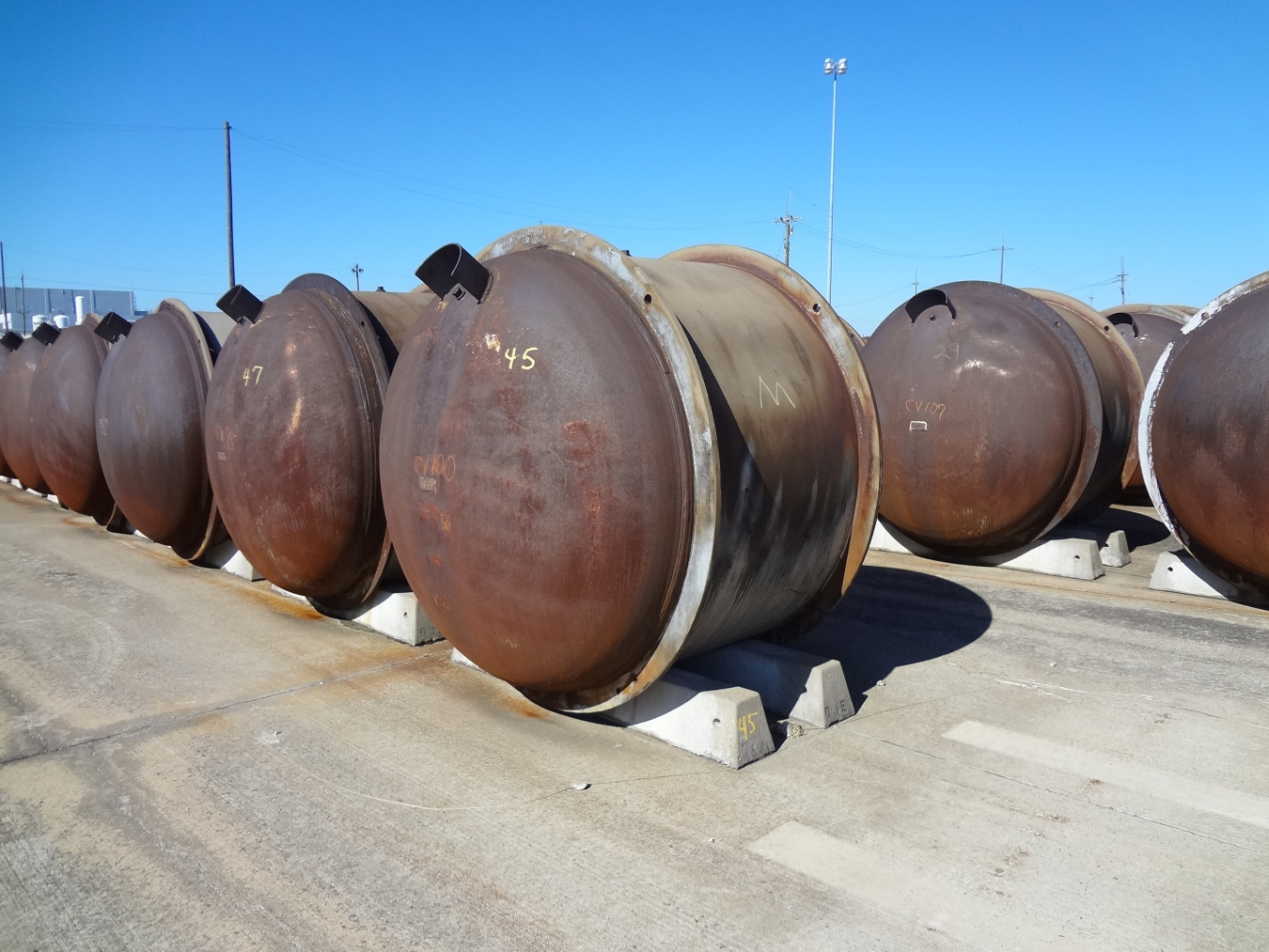
Uranium hexafluoride cylinders in a storage yard at the Paducah site. (Photo: DOE)
July: Global Laser Enrichment submitted a safety analysis report to the Nuclear Regulatory Commission for its planned Paducah Laser Enrichment Facility in early July, completing its license application after submitting an environmental report in December 2024. Using laser enrichment technology licensed from Silex Systems, GLE wants to reenrich depleted uranium hexafluoride (DUF6) from legacy DOE gaseous diffusion plant operations to provide a new source of domestic uranium.
August: General Matter emerged in late 2024 as a uranium enrichment contender and signed a lease with the DOE’s Office of Environmental Management in August 2025 for the reuse of a 100-acre parcel of federal land at the former Paducah Gaseous Diffusion Plant for a new uranium enrichment facility. The lease provides General Matter with a minimum of 7,600 cylinders of DUF6 to supply fuel for future reenrichment operations. Construction on the new facility is expected to begin in 2026, with uranium enrichment operations planned for 2034.
DOE allocates HALEU to Antares, Standard Nuclear, and ACU/Natura
August: The DOE made conditional commitments on August 26 to provide HALEU to three companies: reactor developer Antares Nuclear; fuel fabricator Standard Nuclear; and Natura Resources, which is backing Abilene Christian University’s development of a small Molten Salt Research Reactor and pursuing a commercial reactor design of its own. Following a contracting process, the DOE said that some of the companies could receive HALEU later in 2025.
Fuel cycle
DOE-NE invokes Defense Production Act for newest fuel consortium
August: In August, the DOE’s Office of Nuclear Energy set up a nuclear fuel Defense Production Act Consortium to allow interested companies to work together to increase uranium availability ahead of the consortium’s first meeting in mid-October. The Defense Production Act goes beyond the HALEU Availability Program to allow industry consultation on actions while defending consortium members from the antitrust laws that typically prohibit such consultation.
DOE fast-tracks fuel fabrication under new pilot program
September: Within three weeks of announcing a Fuel Line Pilot Program in mid-July for reactors being tested under the Reactor Pilot Program, the DOE announced its first selectee in August: Standard Nuclear of Oak Ridge, Tenn. At the end of September, the DOE welcomed four more would-be fuel fabricators to the program. Oklo, Terrestrial Energy, TRISO-X, and Valar Atomics were named “conditional selections.” Like the reactors they’re meant to fuel, the fabrication facilities would be authorized by the DOE under “a fast-tracked approach to enable future commercial licensing activities for potential applicants.”
U.S. nuclear fuel recycling takes two steps forward
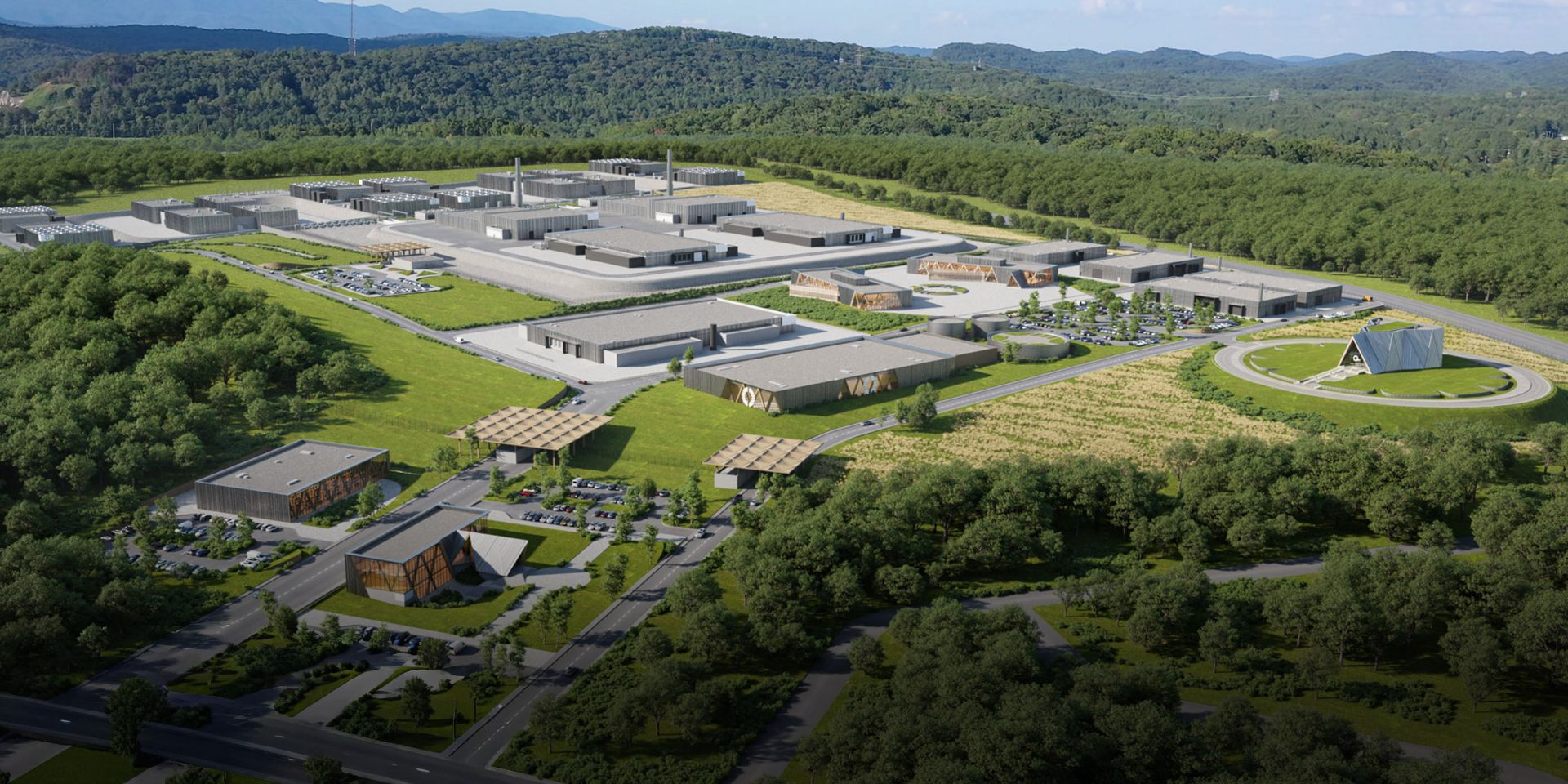
Oklo’s proposed Advanced Fuel Center in Tennessee. (Image: Oklo)
September: Two companies took plans to recycle the nation’s used nuclear fuel to a commercial scale. California-based Oklo announced plans to design, build, and operate a spent fuel recycling facility in Oak Ridge, Tenn., as part of a $1.68 billion advanced fuel center. The recycling facility will reprocess spent fuel into fresh fuel for fast reactors like Oklo’s Aurora. Oklo expects to begin producing metal fuel by the early 2030s, following regulatory review and approvals. Also, Washington, D.C.–based Curio announced the completion of laboratory-scale demonstrations of its NuCycle voloxidation processing technology with support from national laboratories, as well as the DOE’s ARPA-E CURIE program and GAIN voucher initiative.
Surplus plutonium for power reactor fuel: What’s on offer
October: The DOE has a plan for private companies to “dispose of surplus plutonium”—about 19.7 metric tons in both oxide and metal forms—by fabricating it into fuel for “advanced nuclear technologies.” A Surplus Plutonium Utilization Program request for applications was released in October, and applications were due November 21. The plutonium on offer has already been processed by the National Nuclear Security Administration. As with the Reactor Pilot Program and the Fuel Line Pilot Program, the DOE plans to use “other transaction agreements” under the new RFA to fast-track authorization.
Waste management
Construction begins on Swedish repository
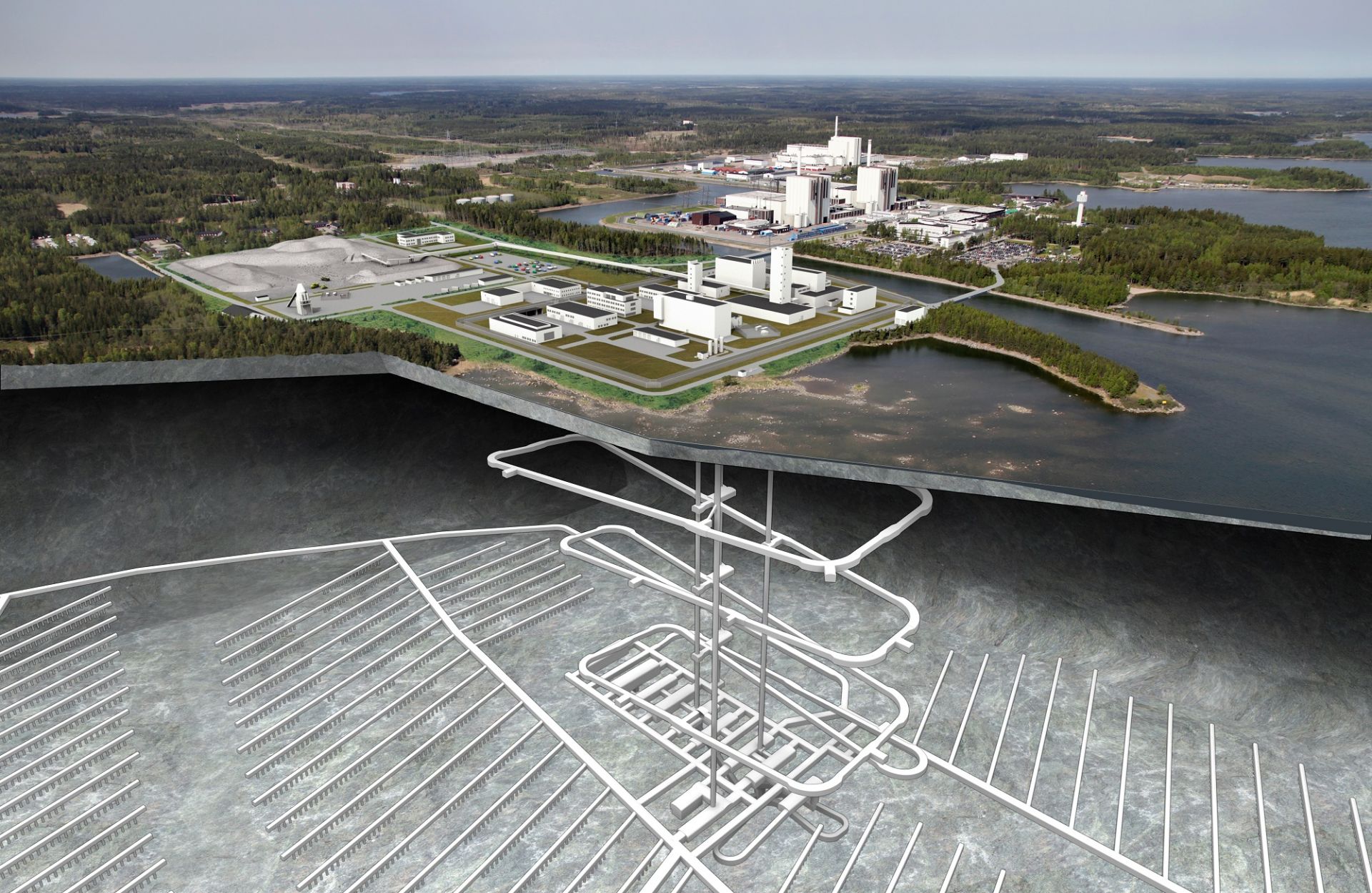
Concept art of the Forsmark geologic repository for spent nuclear fuel in Sweden. (Image: SKB)
January: On January 15, the Swedish Nuclear Fuel and Waste Management Company (SKB) broke ground on its spent nuclear fuel repository near Forsmark nuclear power plant. SKB, which is owned by Sweden’s nuclear power plants, expects the final repository will be ready for disposal in the 2030s and will be fully extended in the 2080s. Construction is expected to take 10 years before disposal can begin, after which the repository will be gradually extended over a long period.
WIPP commissions new SSCVS
March: On March 4, the Department of Energy’s Office of Environmental Management announced that it had completed the commissioning of a new, nearly $500 million, large-scale ventilation system at its Waste Isolation Pilot Plant, the DOE’s geologic repository for defense-related transuranic waste in New Mexico. The Safety Significant Confinement Ventilation System (SSCVS) includes two primary buildings: the Salt Reduction Building, which prefilters salt-laden air coming from the underground repository, and the New Filter Building, which houses fans and HEPA filtration to further clean the air.
INL gets waiver to study spent fuel
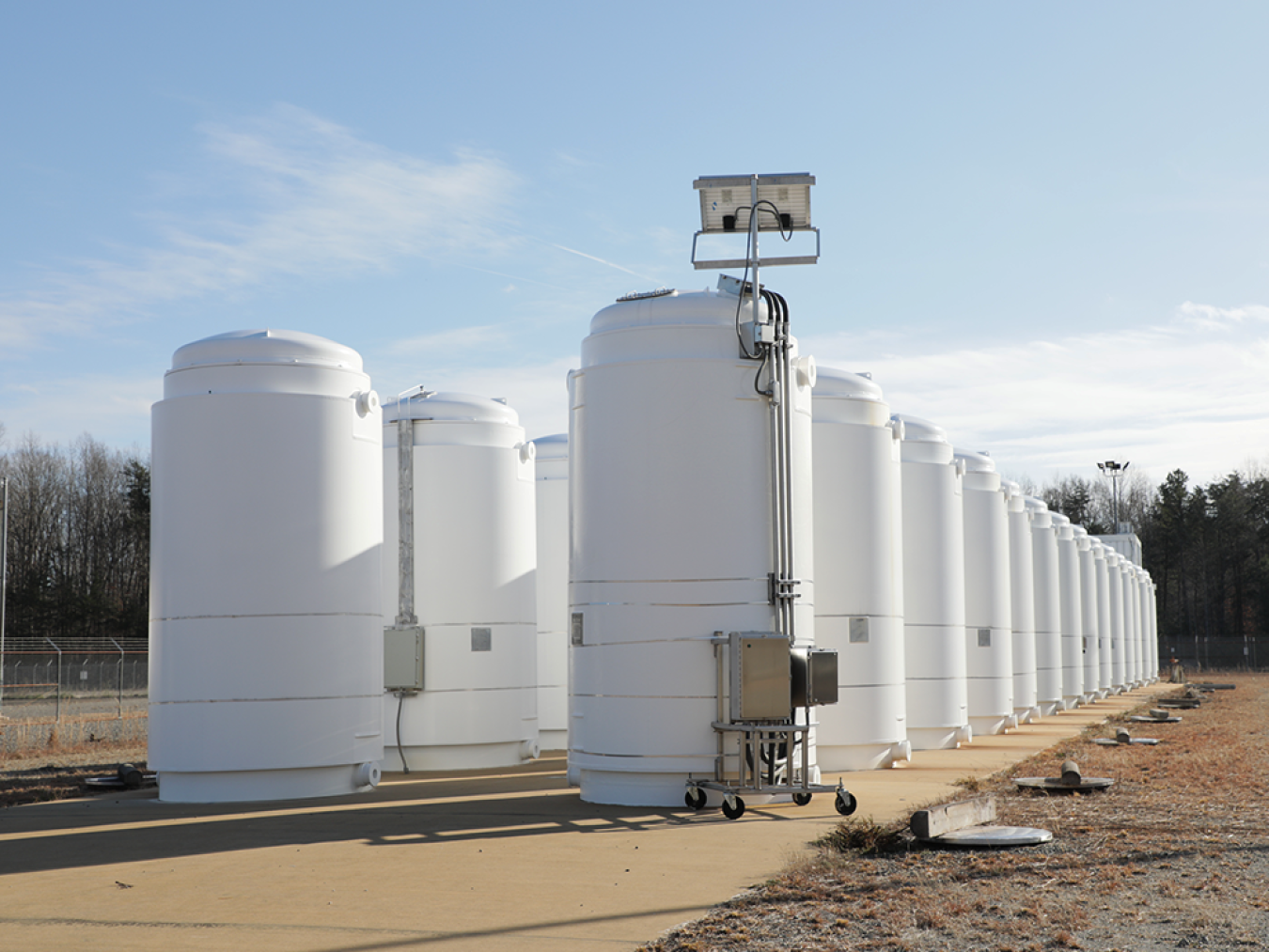
The high-burnup research cask (center) stands with other spent nuclear fuel dry storage casks at the North Anna ISFSI in Virginia. (Photo: Dominion Energy)
April: An agreement signed by the state of Idaho and the DOE opens the way for a single cask of high-burnup spent nuclear fuel to be shipped from Dominion Energy’s North Anna nuclear power plant in Virgina to Idaho National Laboratory for research purposes. Data gathered from the project will be shared with the Nuclear Regulatory Commission and nuclear plant operators to help inform regulatory decisions about extending dry storage licenses beyond the typical 40-year period. The DOE announced on July 7 that it anticipated delivering the research cask of high-burnup spent fuel from North Anna to INL by fall 2027.
Hanford completes 2,000-gallon TBI waste shipment
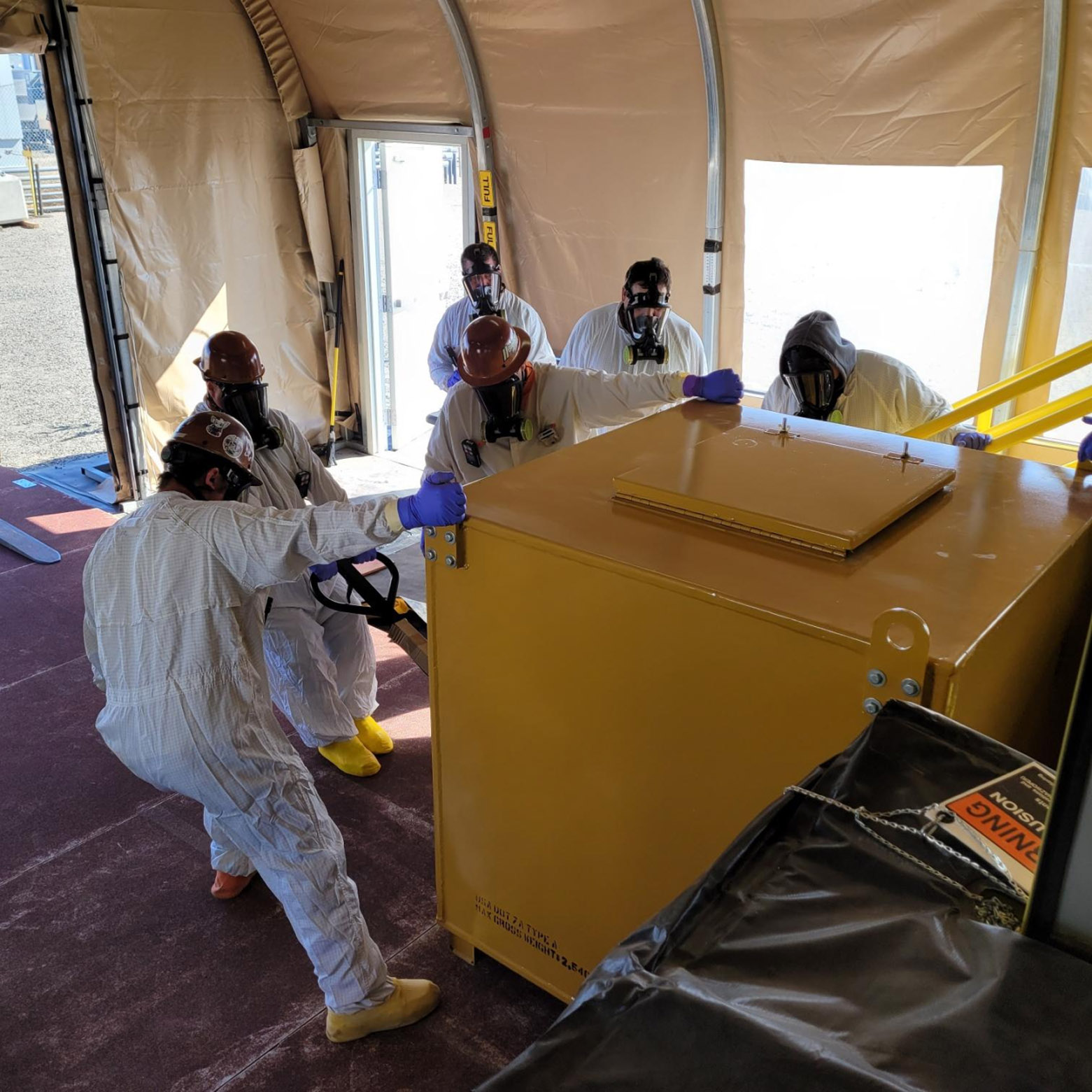
Hanford workers move a 330-gallon double-wall transport container of treated tank waste. (Photo: DOE)
May: The DOE announced the completion of two shipments of treated, low-activity tank waste from the Hanford Site as part of its Test Bed Initiative (TBI) demonstration project. The two shipments, each containing 1,000 gallons of TBI waste, will be solidified in grout and permanently disposed of at Waste Control Specialists’ federal disposal facility in Andrews County, Texas, and at EnergySolutions’ disposal facility in Clive, Utah.
The Hanford TBI project is intended to demonstrate the feasibility of alternative options for the treatment and disposal of the low-activity portion of Hanford’s approximately 56,000 gallons of radioactive tank waste, generated from defense-related plutonium production.
Supreme Court rules in favor of NRC on Texas waste storage
June: After hearing arguments in March, the Supreme Court ruled on June 18 in favor of the NRC in Texas’s lawsuit against the licensing of Interim Storage Partners’ consolidated interim storage facility, reversing a lower court decision that vacated ISP’s license. The decision also restored Holtec International’s license for a similar CISF in New Mexico. Holtec, however, announced in October that it was holding off on plans to build the facility, citing continued state opposition. While the Supreme Court, by 6–3, found that the plaintiffs were not entitled to challenge the NRC’s licensing decision under the Hobbs Act, the court deferred ruling on the NRC’s authority to license away-from-reactor spent fuel storage facilities. SCOTUS may revisit that decision—the antinuclear group Beyond Nuclear filed a petition with the court on October 31, once again challenging Holtec’s CISF license.
Hot commissioning at Hanford vitrification facility
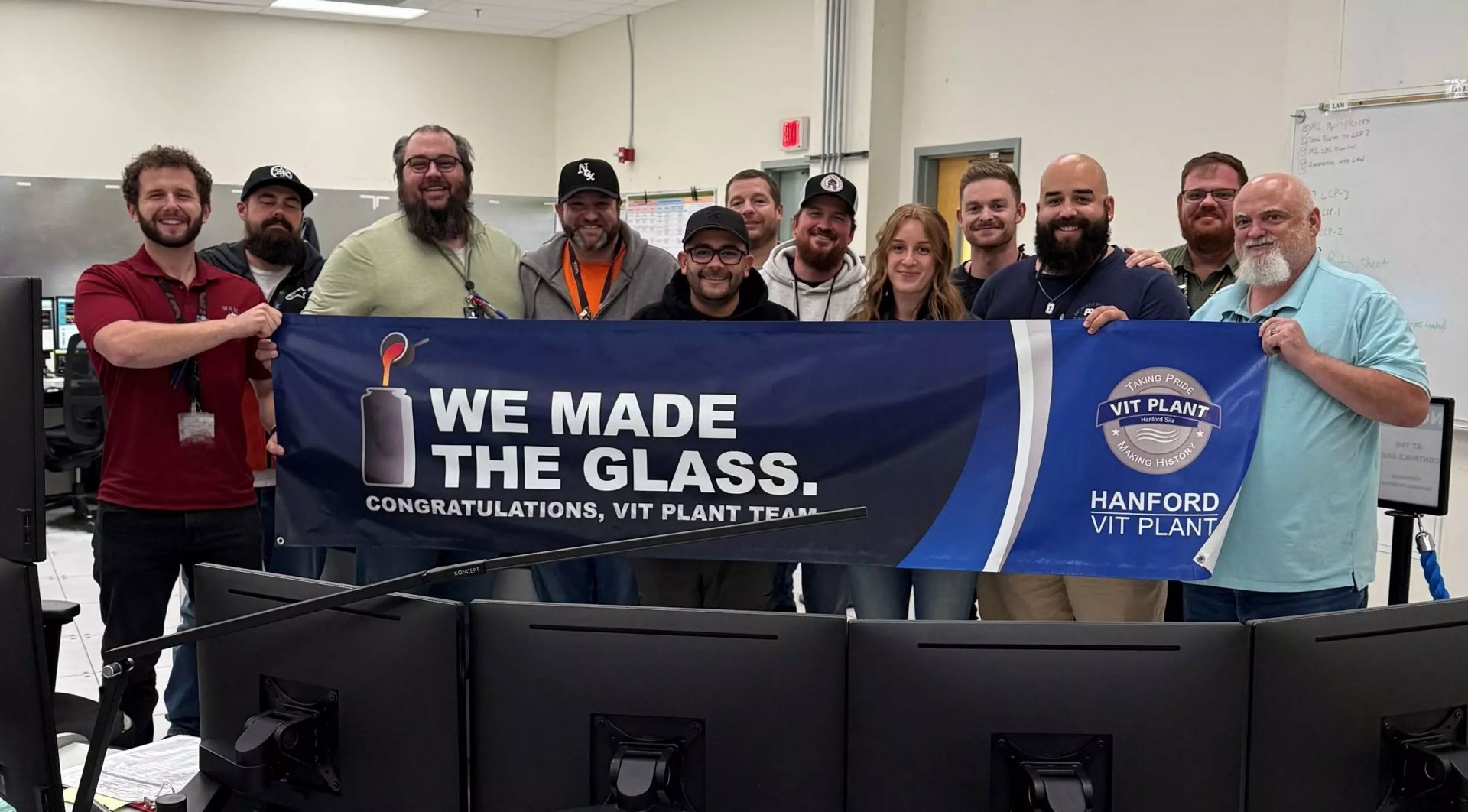
Hanford’s WTP crew celebrates the first vitrification of radioactive waste in the plant’s LAW Facility. (Photo: Bechtel)
October: At Hanford, after more than two decades of planning and construction, the DOE began hot commissioning of the Waste Treatment and Immobilization Plant’s Low-Activity Waste (LAW) Facility with the vitrification of radioactive waste in October. The milestone event in solving one of the nation’s most complex environmental challenges enabled the DOE to meet its October 15 deadline with the state of Washington to demonstrate the WTP’s ability to vitrify radioactive waste. During hot commissioning, LAW Facility systems will be tested and validated prior to obtaining regulatory approval for full-scale operations.