
-3 2x1.jpg)
DNFSB spots possible bottleneck in Hanford’s waste vitrification
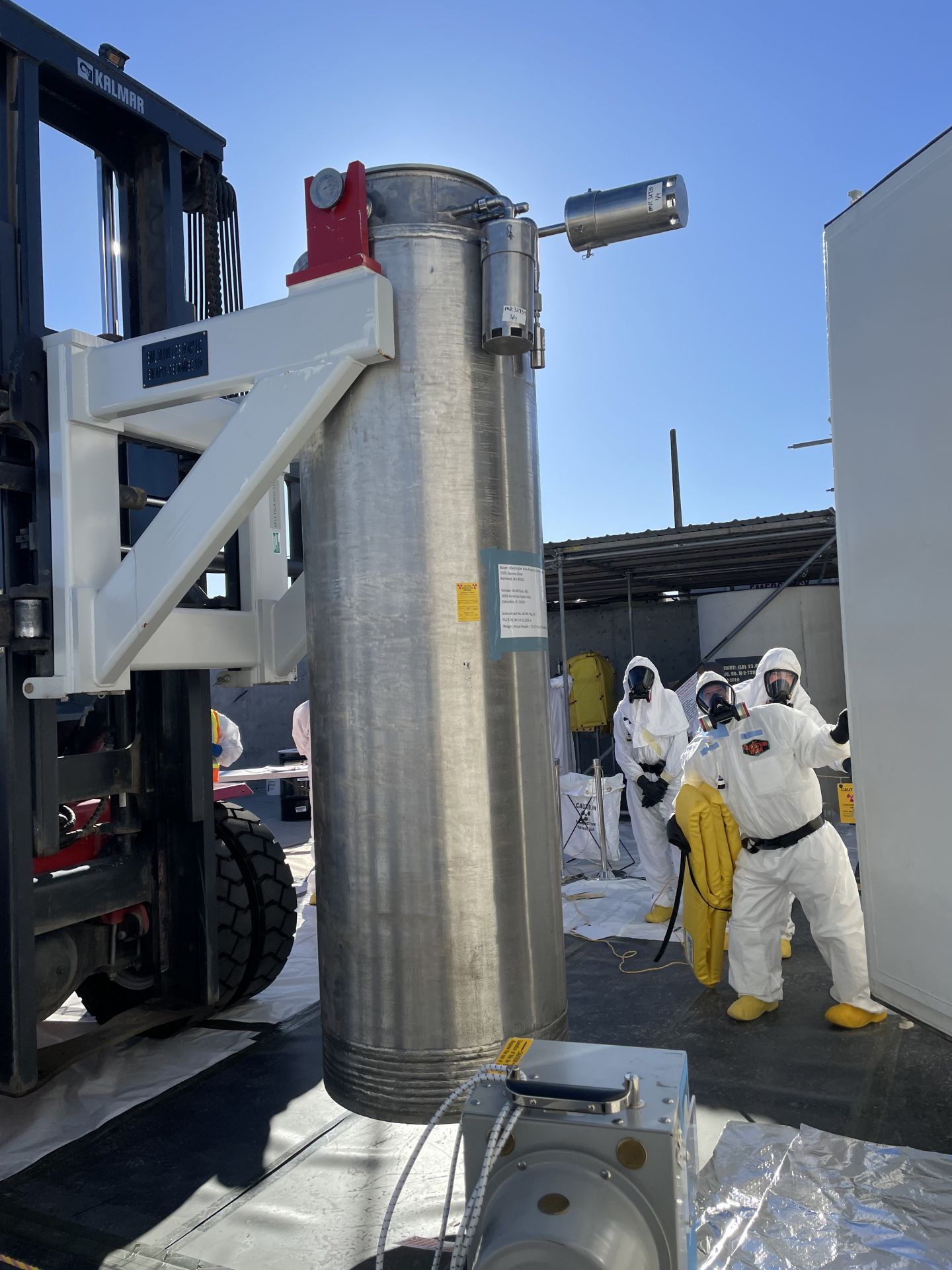
Workers change out spent 27,000-pound TSCR filter columns and place them on a nearby storage pad during a planned outage in 2023. (Photo: DOE)
While the Department of Energy recently celebrated the beginning of hot commissioning of the Hanford Site’s Waste Treatment and Immobilization Plant (WTP), which has begun immobilizing the site’s radioactive tank waste in glass through vitrification, the Defense Nuclear Facilities Safety Board has reported a possible bottleneck in waste processing. According to the DNFSB, unless current systems run efficiently, the issue could result in the interruption of operations at the WTP’s Low-Activity Waste Facility, where waste vitrification takes place.
During operations, the LAW Facility will process an average of 5,300 gallons of tank waste per day, according to Bechtel, the contractor leading design, construction, and commissioning of the WTP. That waste is piped to the facility after being treated by Hanford’s Tanks Side Cesium Removal (TSCR) system, which filters undissolved solid material and removes cesium from liquid waste.
According to a November 7 activity report by the DNFSB, the TSCR system may not be able to produce waste feed fast enough to keep up with the LAW Facility’s vitrification rate.