
-3 2x1.jpg)
Interns to Industry: Connecting students to the workforce
The nuclear industry has long recognized a shortage of both skilled craft labor and professional talent. As global demand for reliable energy continues to rise—across the United States and internationally—that need has not only increased but has become critical.” This is a truth that nuclear industry consultant Jeffery P. Hawkins understands, and it is why he developed a program called Interns to Industry. The former Fluor Corporation executive said that “there has been a deficit of qualified resources in the nuclear industry, and this is forecasted to be even more so in the future, so I am working with various universities to determine how to customize their curriculums to fit the forecasted needs of the industry.”
As a growing number of universities are showing interest in Interns to Industry, Hawkins has been busy this academic year working with the University of North Carolina–Charlotte. The program was officially launched there during the fall 2025 semester.
Industry expertise

Hawkins
Hawkins is a subject matter expert in project execution for emerging nuclear and reactor technologies, including small modular reactors and fuel cycle innovation. He has more than four decades of domestic and international experience leading engineering, procurement, and construction projects.
Today, he heads his own firm, JHawk Consulting, teaming with industry leaders in the planning and execution of various types of contracts supporting both government and private-sector stakeholders in the advancement of next-generation nuclear technologies.
“One of the most rewarding aspects of operating my own business has been the ability to stay actively connected to the industry and to maintain strong relationships within my professional network,” Hawkins said. “I have valued the opportunity to share the experiences I’ve gained and the lessons learned that I’ve acquired over the years, and it has been especially gratifying to see how others are able to apply my insights to strengthen their own work, capabilities, and decision-making.”
UNC Charlotte partnership
UNC Charlotte was one of the inspirations for Hawkins’s post-retirement work with the nuclear industry.
“When I retired as a vice president executive at Fluor, I suspected I might stay involved in the nuclear industry in some capacity,” he said. About six months into his retirement in 2019, UNC Charlotte contacted him to discuss ways to strengthen their ties to the nuclear industry.
“What was scheduled as a brief 30-minute call with UNC Charlotte and a key industry advocate quickly turned into a two-hour discussion,” Hawkins said. “Shortly afterward, I traveled to meet with them and a university dean in person. Those meetings went extremely well and ultimately led to an ongoing advisory role supporting their efforts across a range of DOE-related projects, FOA [funding opportunity announcement] pursuits, and various other initiatives, including focusing on connecting the university and students to the nuclear industry and its needs.”
Hawkins also serves as a strategic advisor for UNC Charlotte’s Energy Production and Infrastructure Center (EPIC), which was established in 2009 to help supply highly trained and qualified engineers to meet the needs of the energy industries in the Carolinas. He provides consulting and technical guidance on advanced nuclear construction methodologies, modularization strategies, and digital twin technology applications, with the goals of improving cost, schedule, and performance certainty. His work also helps support DOE-sponsored demonstration and research programs at EPIC that integrate academia, utilities, and private industry.
The next generation
In his role, Hawkins uses his nuclear industry network and expertise to facilitate the program between UNC Charlotte and corporate participants. “My goal is to leverage my industry network to connect the university with leading nuclear companies, to gain insight into current and future skill-set requirements, and to help align academic preparation with the workforce needs of the nuclear sector,” he said.
GE Vernova and Fluor were two companies with which Hawkins facilitated meetings with UNC Charlotte representatives in late 2025, “and both organizations are now fully engaged and supportive.”
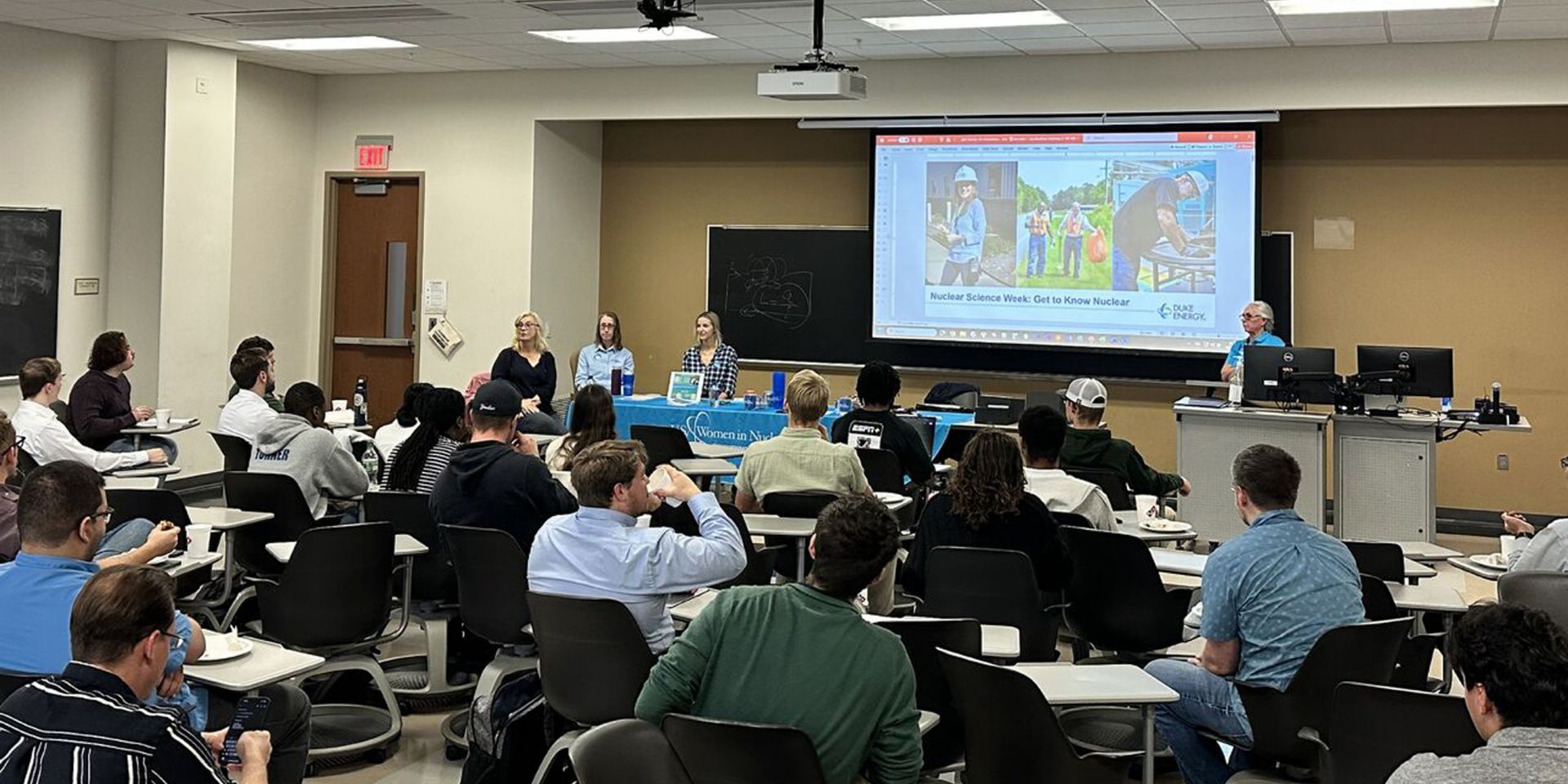
On the university side, Hawkins explained that “student outreach begins within the engineering and construction management programs. UNC Charlotte screens students for interest, aptitude, and alignment with the skill sets sought by the participating companies.” The university hosts meet and greets, career fairs, and networking opportunities, such as a Duke Energy event during Nuclear Science Week last October, to bring together students and industry.
Hawkins continues, “Once students are chosen, they gain hands-on experience working with the companies that selected them, with the goal of receiving an employment offer prior to graduation. This creates a clear win-win—companies secure well-prepared talent, the university strengthens its industry partnerships, and students gain a direct pathway to meaningful careers.”
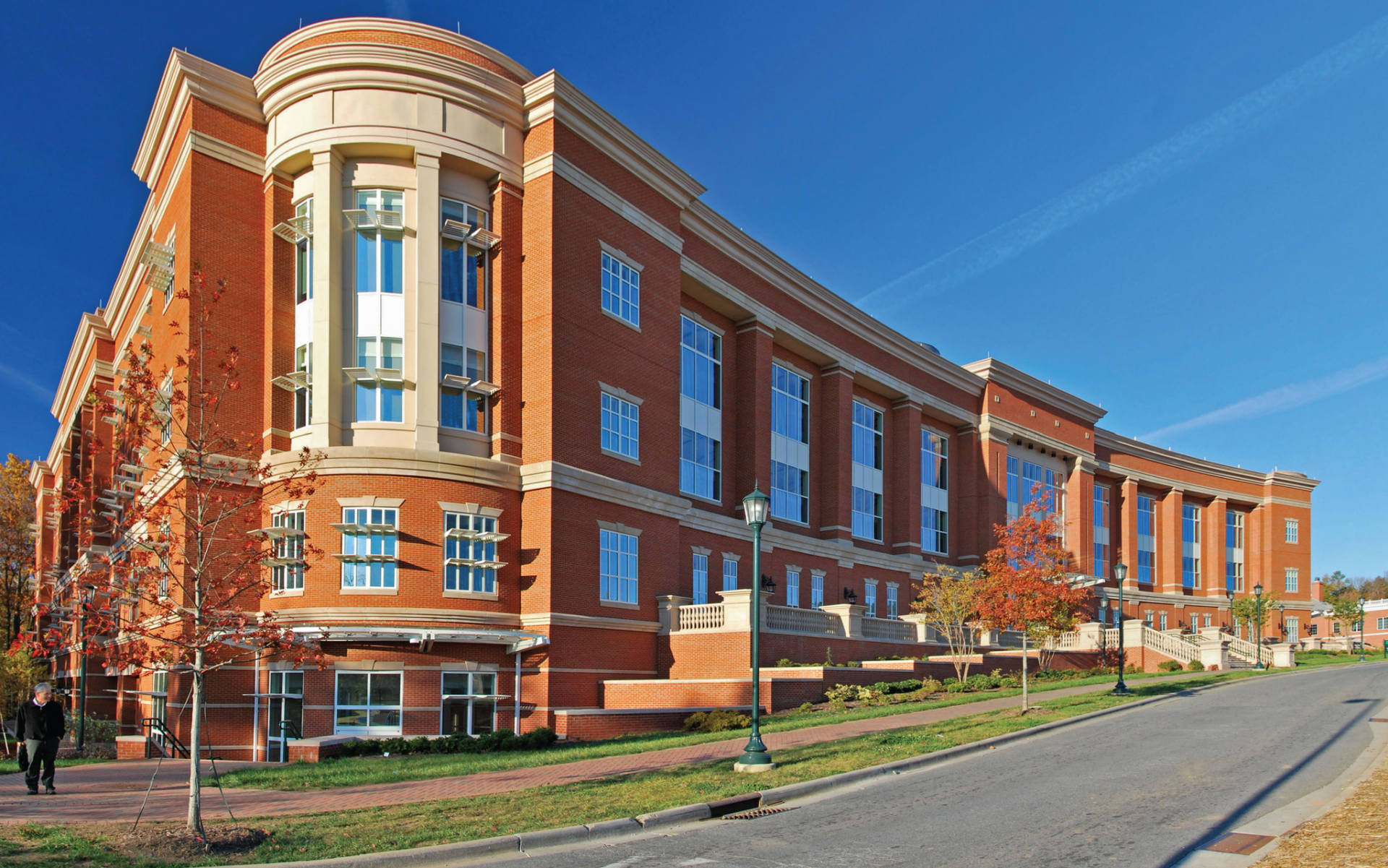
The EPIC building on the UNC Charlotte campus. (Photo: UNC Charlotte)
EPIC
More than 250 regional energy corporations and organizations participate in UNC Charlotte’s EPIC, including Duke Energy, Dominion Energy, Siemens, Framatome, and the Electric Power Research Institute.

Cox
EPIC Executive Director Robert Cox, an associate professor of electrical and computer engineering, also serves as UNC Charlotte’s sponsor for Interns to Industry. Cox directs EPIC as a state-of-the-art research institution that works within UNC Charlotte’s William States Lee College of Engineering to provide both education and research opportunities for students who have energy-related interests.
“Part of EPIC’s mission is to create a pipeline for engineering talent for the electric power industry. My team in EPIC has members that focus on connecting our students to companies in the electric power sector,” Cox said.
EPIC includes a board of advisors that oversees the center’s strategy and builds industry relations and an implementation team that aligns the university’s curriculum with industry needs, identifies research topics, and assists students with their research projects. Hawkins’s Interns to Industry efforts are helping EPIC strengthen its relations with the nuclear energy industry in the area of strategic workforce development.
“EPIC has two full-time employees focused on engineering talent for the electric power sector. Those team members work with our external partners to develop a calendar of events that expose our students to industry partners,” Cox explained. “Most notably, we run a lunch-and-learn series every Tuesday in which our external partners come to the university and present to our students. The primary focus is to be extremely proactive in connecting our students with internship opportunities.”
Program expansion
Noting that the electric power industry is expected to need around a half-million new employees within the next five years, Cox envisions expanding UNC Charlotte’s industry placement efforts in the future. “I believe the industry program will only continue to grow and expand. The need for engineering talent and construction management execution attributes is extremely strong in the industry today,” he said.
Hawkins agreed that UNC Charlotte is just the beginning of the Interns to Industry program. “Several other universities have already heard about this initiative and have expressed interest in exploring similar programs. I’m open to those conversations, as the workforce gap is real and growing across the industry, and I’m committed to helping wherever I can.”
He added that he is “grateful for the rewarding career and accomplishments I have experienced, and I remain driven to apply my knowledge, lessons learned, and expertise to support the nuclear industry’s continued progress and success.”