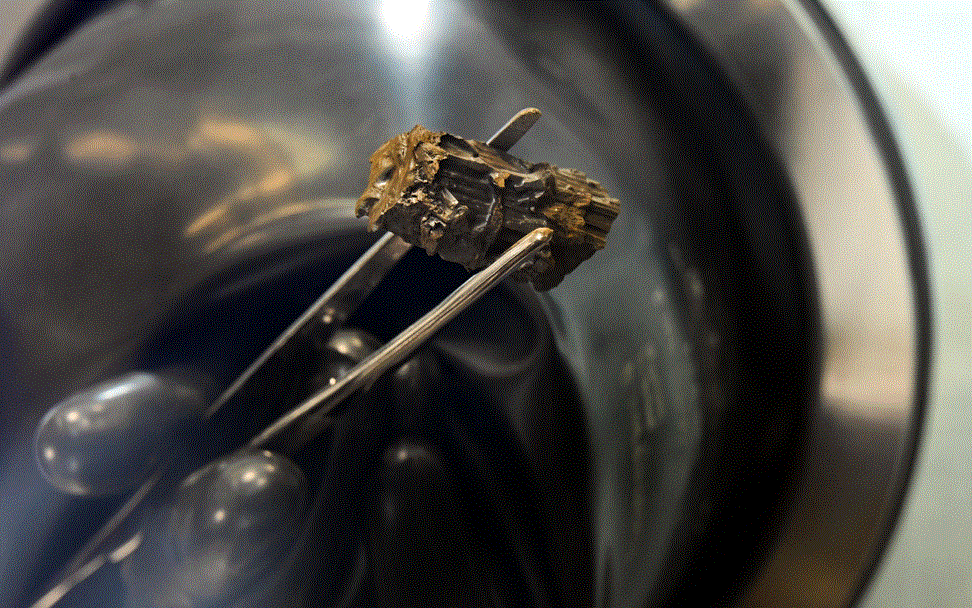
Certain fast-spectrum molten salt reactor (MSR) developers are considering uranium trichloride/uranium tetrachloride (UCl3/4) as a fuel salt. Getting this from the light water reactor fuel cycle would be challenging, however, as conversion from a fluoride to a chloride is not trivial. Starting from metal is an option, but a commercial source of enriched uranium metal would be required. Experts at Idaho National Laboratory recently succeeded in producing UCl3/4 fuel for the Molten Chloride Reactor Experiment (MCRE), starting from a metal. While commendable, this does not represent a commercial source.
There is also thorium to consider. It is attractive because it does not require enrichment; the thorium cycle is used to breed U-233 fuel. A big issue is sourcing the thorium itself. Thorium exists as a byproduct of rare-earth metal mining. Though it is not itself designated as a “critical mineral,” it faces similar challenges and is needed to support thorium-based MSR concepts.
While thorium concentrates may be available abroad, there is little to be found domestically. A market—or government programs—would need to emerge, attractive enough to justify the cost that existing mines would incur to develop facilities and engage in the regulatory process to produce a thorium product. Even if thorium concentrates were to become domestically available or could be sourced abroad, specialized facilities would be needed to convert them into fuel salts.
One recurring issue is the need for commercial facilities with the ability to produce and handle salts suitable for use in MSRs. There is some progress in that direction, including through Arbor Halides, a start-up out of the University of Michigan. We have opened a commercial facility dedicated to producing uranium and thorium salts to support the MSR industry and have secured a Nuclear Regulatory Commission license to handle depleted uranium and thorium, moving us closer to a domestic fuel salt supply chain.
Adam Burak (adam.burak@arborhalides.com) is the founder and president of Arbor Halides and an assistant research scientist in the Nuclear Engineering and Radiological Sciences Department at the University of Michigan, focused on advanced reactor technologies and thermal hydraulics.

-3 2x1.jpg)