-3 2x1.jpg)
Fusion energy: Progress, partnerships, and the path to deployment

Over the past decade, fusion energy has moved decisively from scientific aspiration toward a credible pathway to a new energy technology. Thanks to long-term federal support, we have significantly advanced our fundamental understanding of plasma physics—the behavior of the superheated gases at the heart of fusion devices. This knowledge will enable the creation and control of fusion fuel under conditions required for future power plants. Our progress is exemplified by breakthroughs at the National Ignition Facility and the Joint European Torus.

Troy Carter
Advances in enabling technologies, such as high-field superconducting magnets and high–average-power lasers, have also fundamentally changed what is possible. Together, these developments have given investors confidence, unlocking unprecedented private investment and catalyzing a nascent fusion industry that is now building demonstration facilities and laying the technical foundations for first-of-a-kind power plants.
Fusion start-ups are proceeding at pace, advancing multiple concepts spanning magnetic and inertial confinement and hybrid systems. Importantly, this progress is not occurring entirely behind closed doors. The physics and technology underpinnings of commercial fusion concepts are increasingly being published in the peer-reviewed literature, reinforcing confidence across the scientific and engineering communities. Public-private partnerships, including support through the Department of Energy’s Fusion Milestone Program, are helping align private ambition with national capabilities, accelerating progress while maintaining rigor.
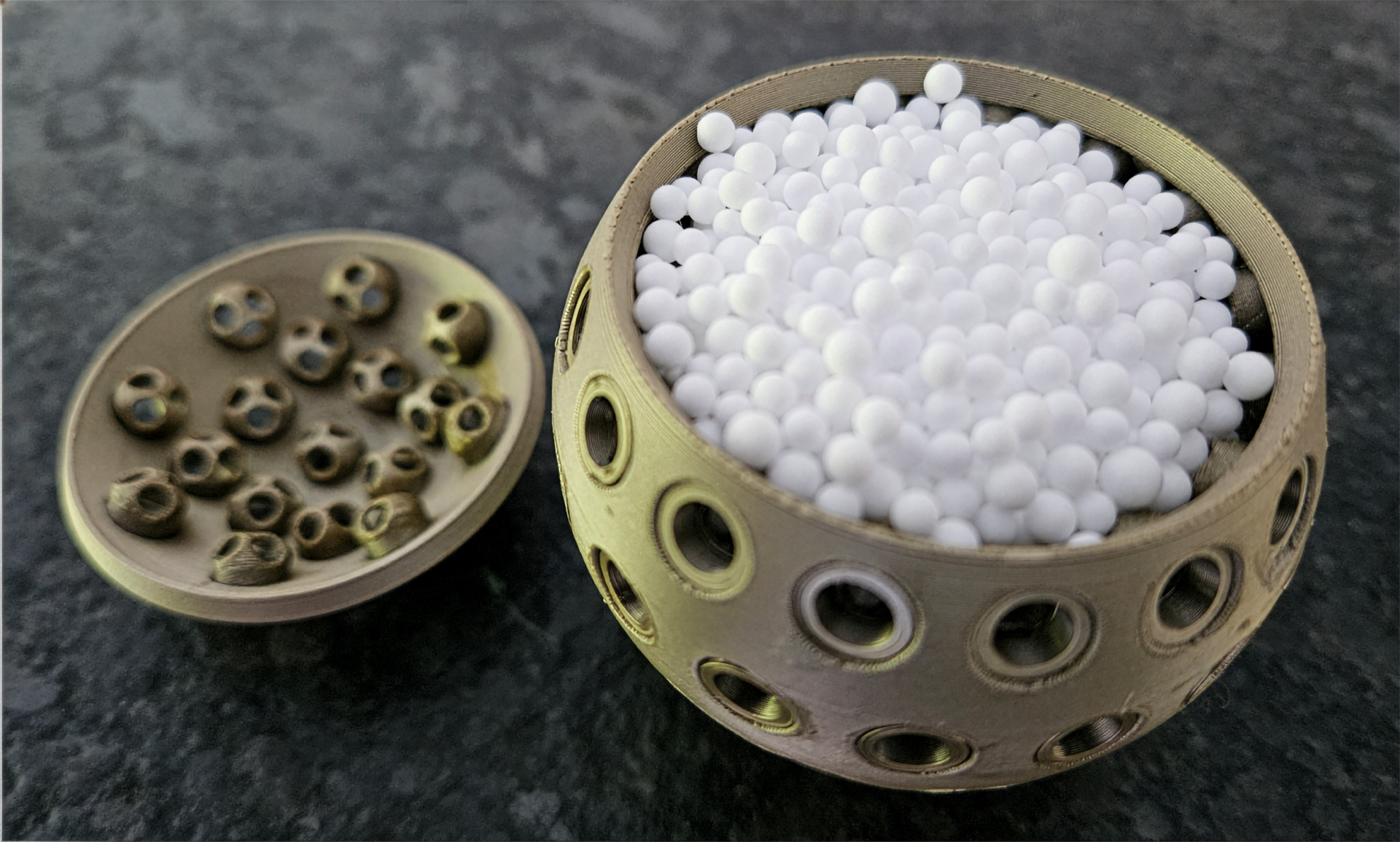
A component mock-up from ORNL’s nested pebble bed blanket (NesPeB) concept, which uses beryllide shells filled with lithium-ceramic tritium breeder pellets in a gas-cooled bed behind the first wall. This design provides excellent heat transfer and a high tritium breeding ratio using natural lithium. (Image: Vittorio Badalassi/ORNL)
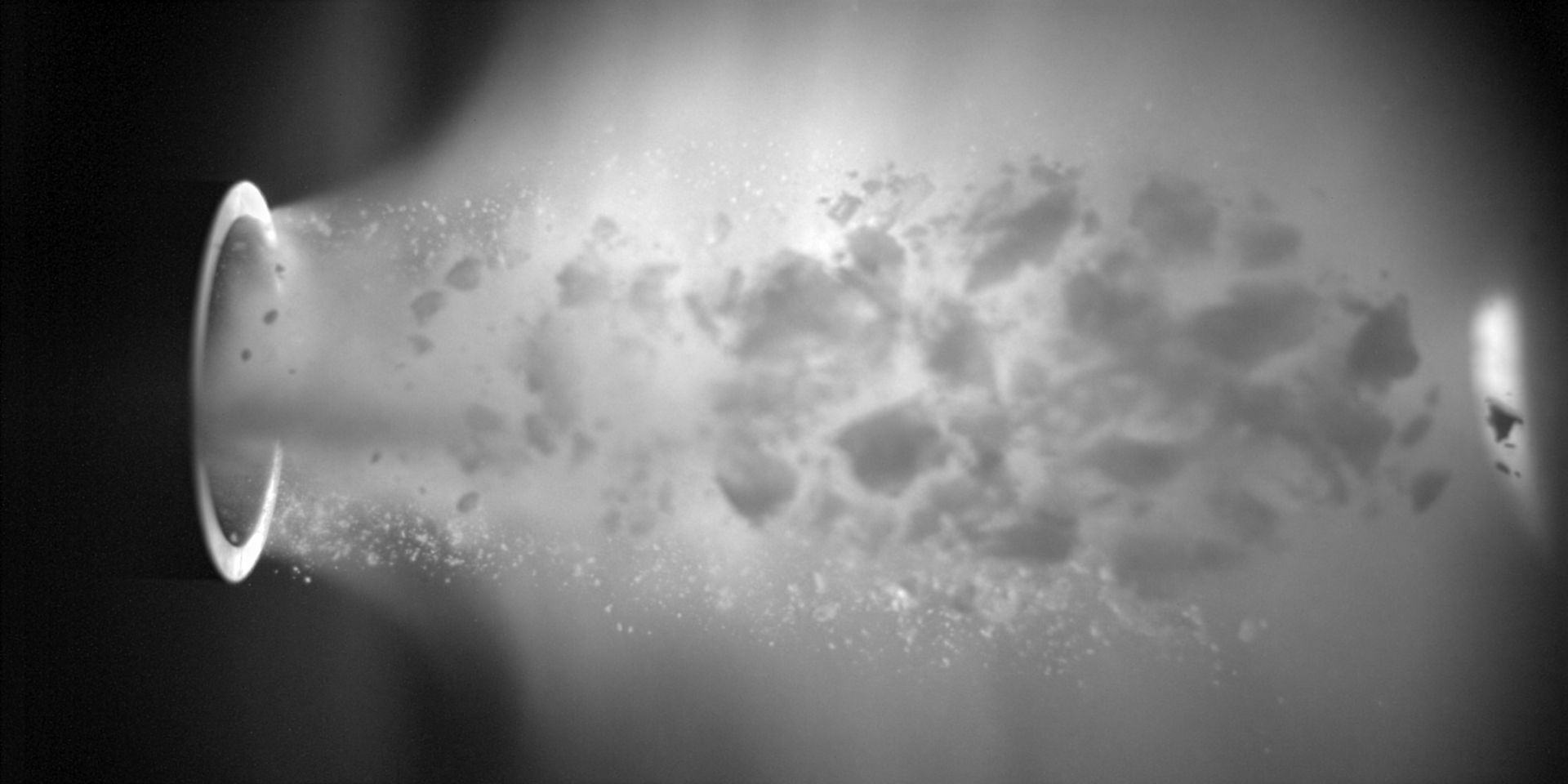
The fragment plume from a shattered pellet injection experiment at ORNL. Shattered pellet injection technology developed at ORNL is deployed on fusion devices all over the world and will inform the design of the disruption mitigation system for ITER. (Photo: Trey Gebhart/ORNL)
However, as I discussed with partners from academia and industry in a recent congressional hearing, it is essential to be clear-eyed about what remains to be done. Significant gaps in science and technology must still be closed to achieve reliable, economic, and deployable fusion power plants. Recognizing this, the DOE recently released a comprehensive fusion science and technology road map that builds on recent strategic planning efforts and lays out a path forward. This road map highlights the need for continued advances in plasma physics, the development of materials capable of withstanding intense neutron fluxes and heat loads, and progress in enabling technologies. Among these challenges, fusion blankets—which are required to breed tritium fuel while extracting heat—are one of the most critical and complex. Addressing these gaps will require sustained investment, coordinated research and development, and the deployment of new testing facilities capable of reproducing fusion-relevant conditions.
The emerging fusion industry has set ambitious timelines, and those ambitions are an asset if we align around them effectively. To succeed, and for the United States to capture the opportunity to lead the global fusion industry, we must work together. Partnerships are the linchpin. Collaboration among private companies, national laboratories, and universities brings together much-needed innovation, infrastructure, and talent. Equally important are partnerships with state and local governments, regional institutions, and economic development organizations that can help anchor fusion development within communities.
“All hands on deck” is not a slogan—it is a requirement. Standing up the required research and development effort, along with the necessary testing facilities, will demand a coordinated national approach. In parallel, we must invest in workforce development—training scientists, engineers, technicians, craft workers, and operators who can build and support both near-term demonstrations and first-ever fusion power plants. Fusion will also require new and expanded supply chains, from advanced manufacturing of superconductors to specialized materials and components. A benefit to this national approach is that by building these capabilities domestically, we will strengthen U.S. competitiveness and resilience.
We should also leverage powerful synergies between fusion and fission. The nuclear fission community—across industry, academia, and the national laboratories—has decades of experience in areas directly relevant to fusion, including molten salts, materials science, neutronics, and nuclear engineering. Fusion stands to benefit enormously from this expertise, and many researchers and institutions are already contributing across both domains.
At the same time, fusion and fission are distinct technologies with different operating principles, safety characteristics, and regulatory needs. The Nuclear Regulatory Commission’s decision to regulate fusion differently from fission reflects this and provides an important foundation for timely deployment. Fusion will certainly benefit from close connections to the fission community, but it also needs a distinct voice to ensure that its unique characteristics and opportunities are fully recognized.
Ultimately, fusion and fission are not competitors—they are complementary solutions. Meeting rapidly growing global energy demand will require every viable energy source. Together, fusion and advanced fission offer the promise of abundant, reliable, and transformative energy. With continued progress, strong partnerships, and sustained commitment, fusion can move from promise to practice—and help shape a more prosperous energy future.
Troy Carter is the director of the Fusion Energy Division at Oak Ridge National Laboratory.

.jpg)