Radiological legacy: U.S. nuclear testing in the Marshall Islands ended in 1958, but a United Nations report in 2012 stated that the effects of the testing are long-lasting. As described by the Atomic Heritage Foundation, “Today, radiation-related cancers and birth defects are a major problem faced by the Marshallese. The RMI [Republic of the Marshall Islands] also struggles with high suicide rates and high alcoholism rates. Diabetes (due to large amounts of imported, processed food) and cancer are the top two causes of death. Environmental issues such as rising sea levels, and degradation attributed to the nuclear testing, are also problems and often force residents to move between atolls.”
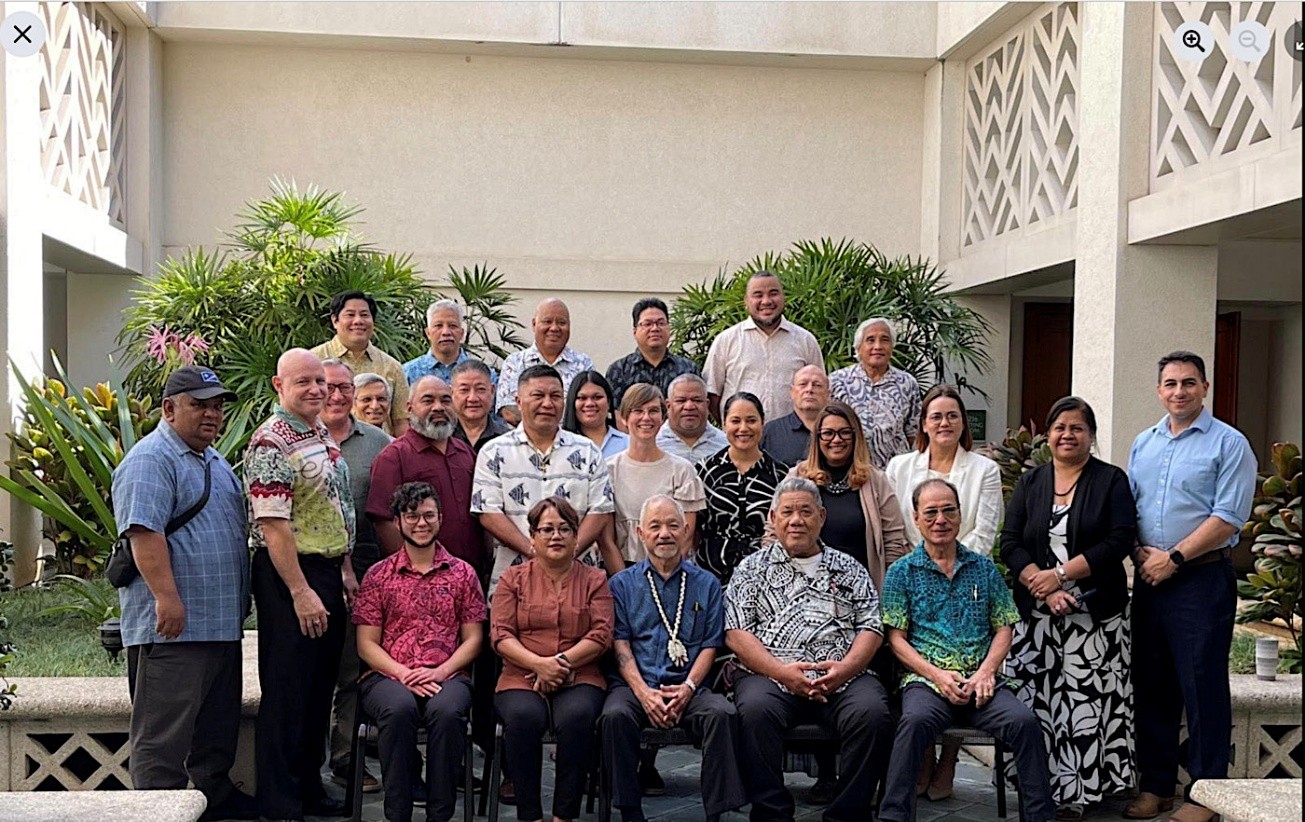
Meeting delegations: At the DOE-RMI meeting, the RMI delegation was led by Minister of Foreign Affairs and Trade Kalani R. Kaneko and included other cabinet officials, technical experts, and leaders from the four nuclear-affected atoll communities, which are Bikini, Enewetak, Rongelap, and Utrok. The DOE delegation consisted of several officials, including S. Robin Elgart, director of health studies and former worker programs at EHSS and head of the office’s programs in the Marshall Islands and Japan. On the agenda were such issues as health programs, environmental monitoring, policy, and technical collaboration.
The ongoing Special Medical Care Program and the Section 177 Health Care Program were discussed, as were recently developed patient education materials about thyroid health. A comprehensive status update on the Environmental Monitoring Program, including recent reports, key findings, and forthcoming plans, was presented. Representatives from the atolls gave statements, and there was a formal review of action items. Dedicated breakout sessions were held for each of the atolls, and a technical team roundtable was convened. Two open discussion periods further addressed matters of concern.
Responsibilities: Minister Kaneko emphasized the principle that decisions about the Marshall Islands must never be made without the Marshall Islands’ input. “Our engagement with DOE remains vital to the health, safety, and future of our people—especially those affected by the nuclear testing program,” he said. “This annual meeting is not simply a technical dialogue but a reaffirmation of the moral and historical responsibilities that bind our two nations.”
Kaneko also stressed that the RMI expects full transparency in environmental monitoring and scientific research, including sharing data with affected communities, expansion of the DOE health programs to include Bikini and Enewetak, closer collaboration with RMI technical ministries and agencies, and tangible outcomes with measurable indicators to ensure long-term progress in addressing all RMI concerns regarding the U.S. nuclear weapons testing legacy.
Sovereign nation: The RMI is a sovereign nation that once was a U.S. territory. In 1983 it signed a Compact of Free Association with the United States and gained independence in 1986 when the compact went into effect. An amended compact was later agreed to, and the Marshall Islands’ relationship of free association with the United States officially continues indefinitely.