
The transformation of the NRC: 50 years of commissioners

The dust is beginning to settle following the whirlwind of changes at the Nuclear Regulatory Commission over the past year, and 2025 ultimately may be viewed as a transformative year, as well as the year the NRC celebrated its golden anniversary. The 12 months of that milestone year brought more change to the agency in its composition, its mandate, and its relationship to the executive branch than any comparable period in the preceding four decades.
Now at 51 years and counting, the NRC is working with a full commission and issuing new rulemakings to both regulate and support the next round of nuclear deployments. With the turbulence of 2025 still fresh in our minds, Nuclear News decided it was a good time to revisit the professional backgrounds of all 42 NRC commissioners who have served over the agency’s 50-year history to see how the composition of the commission has evolved over time.
The turbulence
The changes at the NRC are the result of a combination of legislation (NEIMA and the ADVANCE Act), President Trump’s executive orders (specifically EO 14300), and the recent Supreme Court ruling Trump v. Slaughter, which affirmed the president’s authority to dismiss the heads of independent agencies.
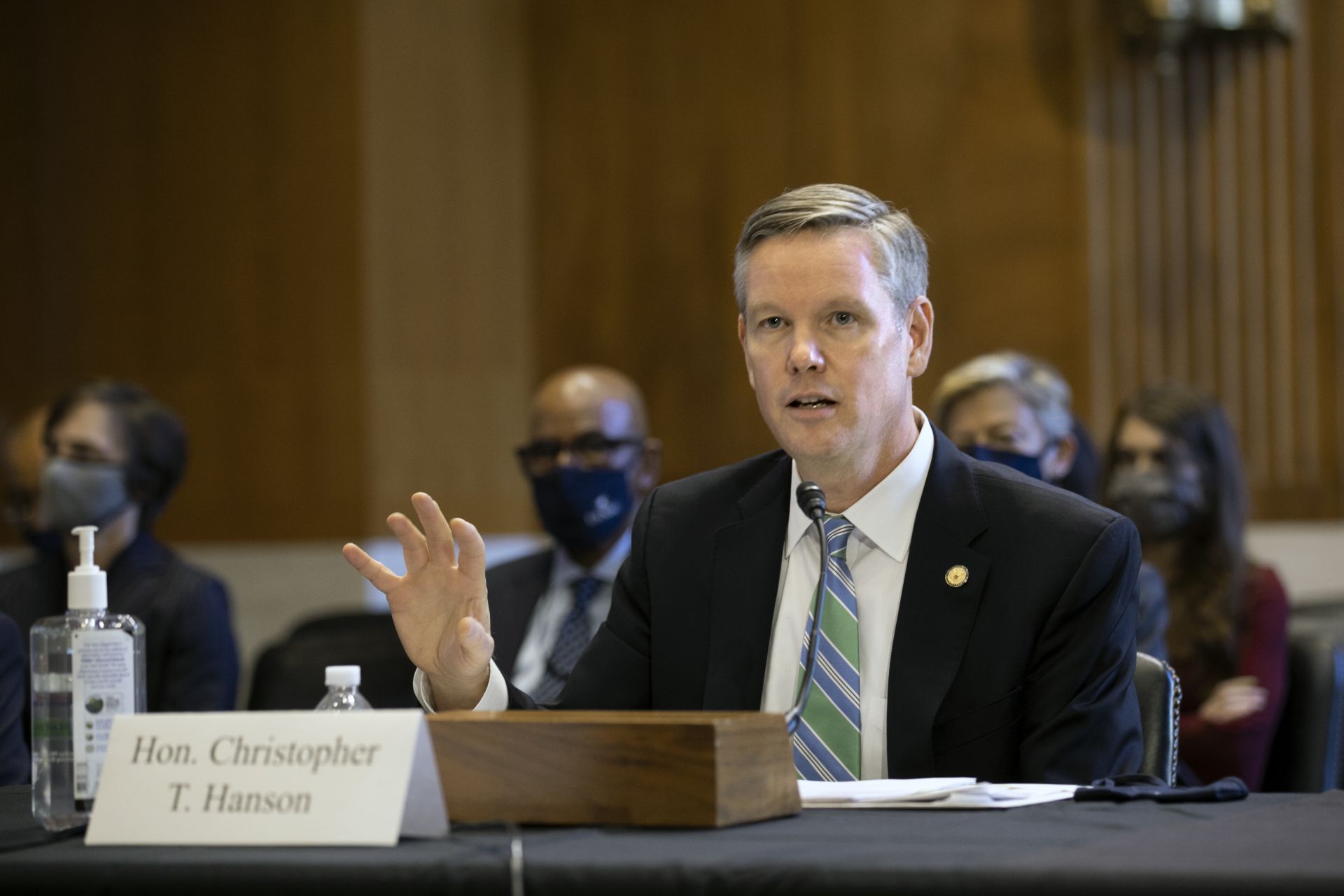
In 2021, Christopher Hanson testified before the Senate Environment & Public Works committee as NRC chairman. (Photo: NRC)
Congress began reshaping the NRC’s role through the Nuclear Energy Innovation and Modernization Act (NEIMA) of 2019, which modernized the agency’s fee structure, established performance metrics, and directed it to develop a technology-inclusive licensing framework for advanced reactors. Building on those reforms, the Accelerating Deployment of Versatile, Advanced Nuclear for Clean Energy (ADVANCE) Act of 2024 further shifted the agency’s mission by directing the NRC to facilitate the deployment of civilian nuclear technologies while maintaining its commitment to public health and safety. Together, these laws established the legislative foundation for the more sweeping executive actions that followed in 2025.
While there were many EOs within the first 100 days of the new administration that affected all agencies, including the creation of the Department of Government Efficiency and the Office of Management and Budget’s review of new rules, it wasn’t until May 2025 that the Trump administration focused on the NRC with EO 14300, “Ordering the Reform of the Nuclear Regulatory Commission.” This EO directed the agency to undertake a wholesale revision of its regulations, with proposed rules due within nine months and final rules within 18. Then, on June 14, the president dismissed Chris Hanson, who was serving as commissioner after being replaced as chairman by David Wright at the start of Trump’s second term. This marked the first dismissal of a sitting commissioner in the agency’s history. Hanson’s dismissal, the expiring term of then Chairman Wright, who was later renominated and reconfirmed to the commission, and Commissioner Annie Caputo’s resignation at the end of July left the NRC operating with the bare statutory quorum of three (Bradley Crowell, Matthew Marzano, and Wright).
The turbulence extended beyond the commission itself. The agency lost more than 500 staff members over the course of 2025 from a workforce of roughly 2,800, according to testimony before Congress by Commissioner Crowell. The departures included the executive director for operations, the general counsel, and many of the agency’s most senior technical experts.
By year’s end, however, the commission had once again filled out. With Wright back in and the additions of Ho Nieh and Douglas Weaver, sworn in on December 4 and December 22, respectively, the full complement of five commissioners was restored for the first time in over a year. Then, on January 8, 2026, the president designated Nieh the agency’s 20th chairman. In less than 12 months, the churn produced a new commission with a mandate to completely rebuild the agency’s long-standing rules and regulations and its workforce.
Enabling nuclear power
The work in front of the commission is formidable, but the new commissioners are running with the philosophy mandated by the ADVANCE Act. Nieh has left no doubt about how the agency intends to carry out that mandate. As he said at the ANS Annual Conference in Denver earlier this year, “The NRC will not be an impediment to nuclear deployment. There’s a new NRC that has emerged, one that enables the safe use of nuclear technologies.” Nieh clarified that “enabling is aligning our regulations with actual risks and operational needs. Enabling is adapting our regulatory frameworks for new technologies, and enabling is adding regulatory flexibility where safety is maintained. Enabling is not a shortcut, it’s not a compromise. Enabling is how the NRC fulfills its safety mission and delivers benefit to America.”
The record so far backs the rhetoric. In March, the commission finalized 10 CFR Part 53, the risk-informed, technology-inclusive licensing framework, 21 months ahead of its statutory schedule as the first new reactor licensing pathway since Part 52. A proposed Part 57 rule for high-volume microreactor licensing followed weeks later. The agency has delivered over 20 draft rulemakings under EO 14300, with more in progress, covering everything from Parts 50 and 52 modernization to National Environmental Policy Act implementation and a reconsideration of the “as low as reasonably achievable” (ALARA) principle and the linear no-threshold model (LNT) that have anchored radiation protection since 1971, all while a surge of license applications moves into the pipeline. It does seem, as Nieh said in Denver, that this is “the most consequential moment in the history of American nuclear energy in 50 years.”
The commissioners
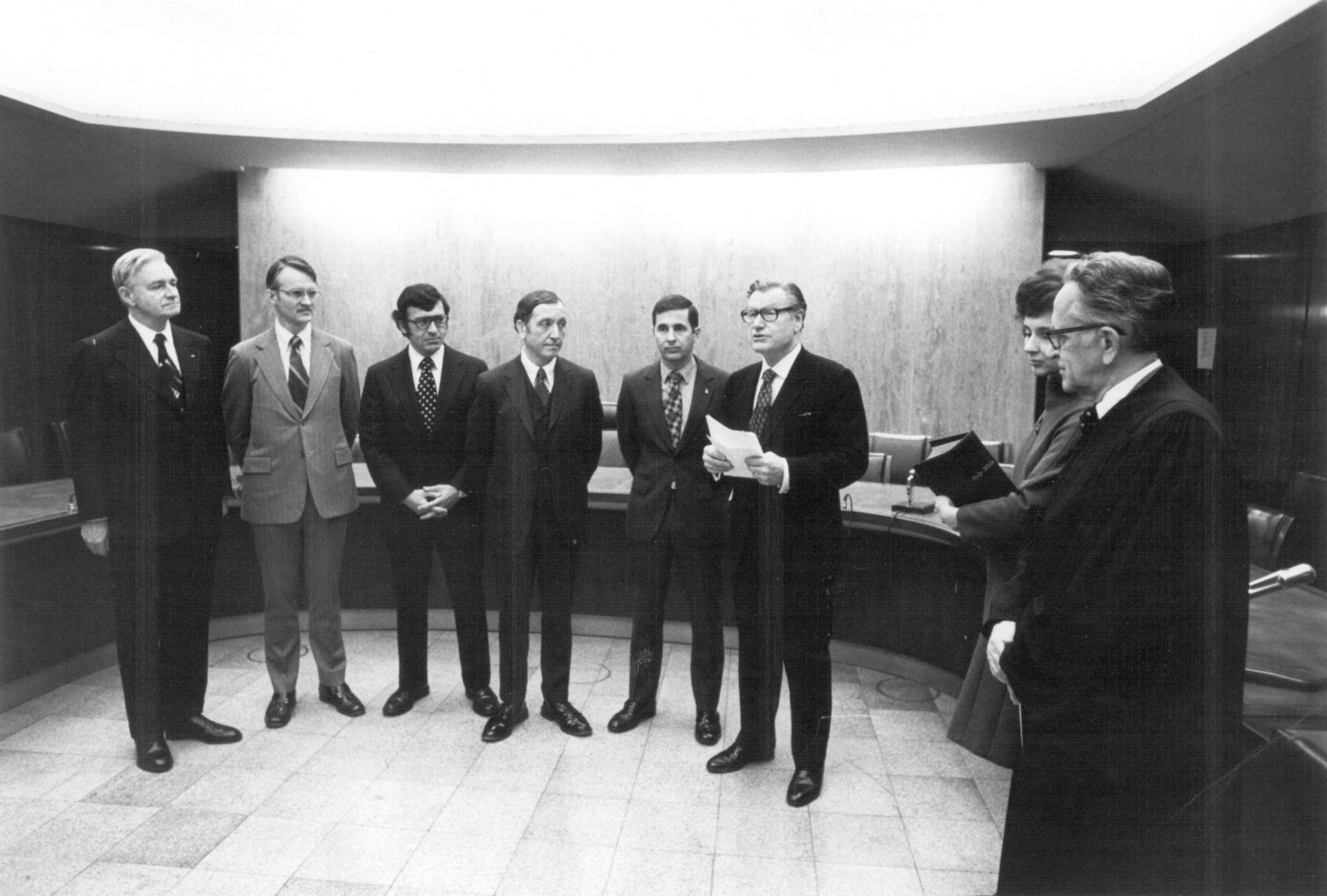
The NRC commissioners at the first swearing-in ceremony at the U.S. Capitol, January 23, 1975. Fron left: Richard T. Kennedy, Edward A. Mason, Victor Gilinsky, Marcus A. Rowden, William Anders (chairman), Vice President Nelson A. Rockefeller, Mrs. Valerie Anders, and Supreme Court Justice Harry A. Blackmun. (Photo: NRC)
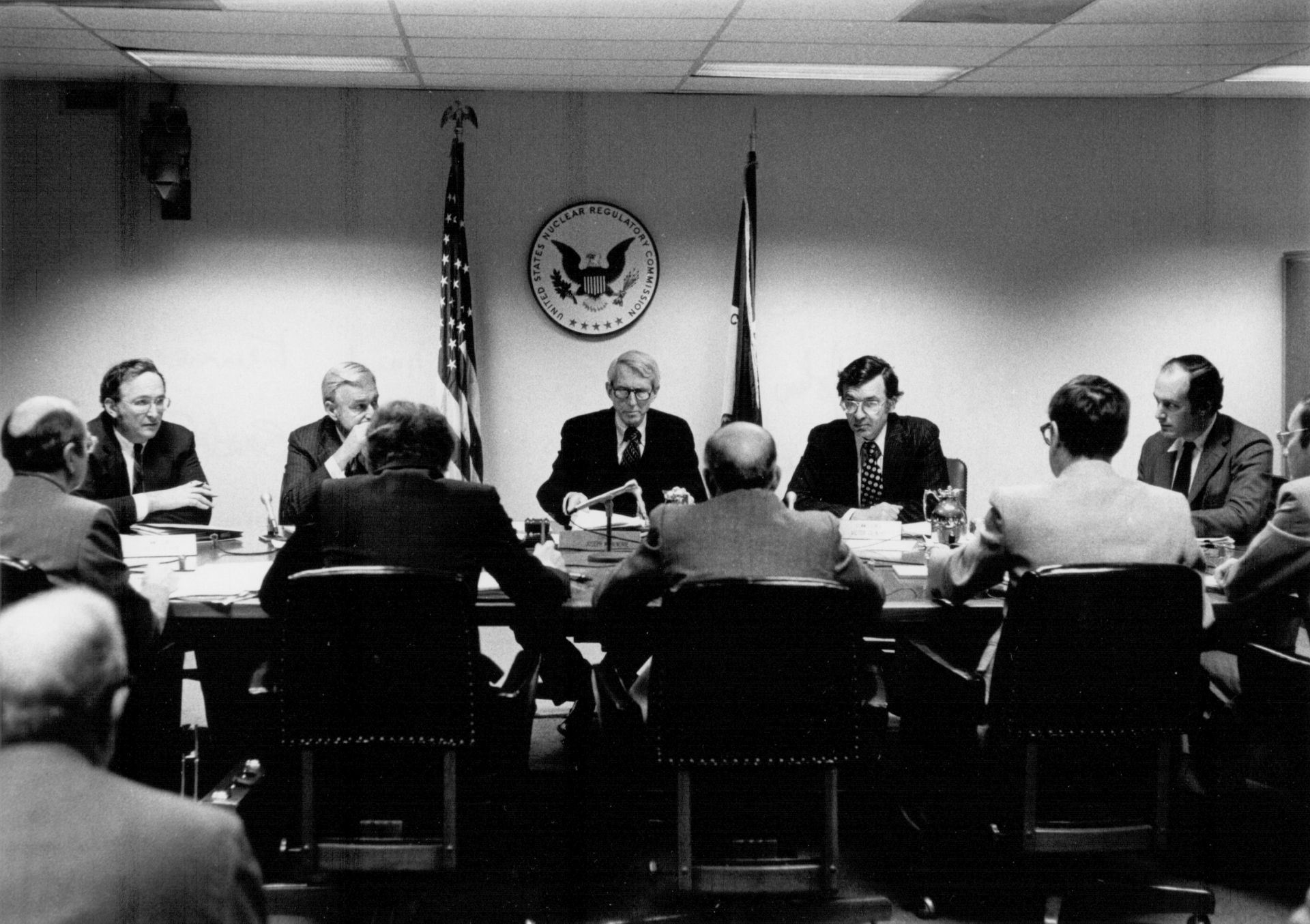
NRC Chairman Joseph Hendrie (center) and the rest of the commission in a briefing on April 4, 1979, days after the accident at Three Mile Island-2. (Photo: NRC)
When the NRC was formed by the Energy Reorganization Act of 1974, it inherited the regulatory responsibilities of the Atomic Energy Commission, which the act dissolved. The first commission, seated on January 19, 1975, comprised William Anders (chairman), Marcus Rowden, Edward Mason, Victor Gilinsky, and Richard Kennedy. While the NRC was designed and functions as a markedly different agency from its predecessor, each of the first commissioners other than Kennedy came into the agency with AEC experience. In addition to their AEC experience, Anders, Mason, and Gilinsky had technical backgrounds, while Rowden was a lawyer. For his part, Kennedy came to the NRC following a 30-year career in the Army, most of which was spent in policy and strategic defense roles.
The first commission, nominated by Republican president Gerald Ford, consisted of two Republicans, one Democrat, and two Independents.
Two of the first five commissioners (Anders and Mason) resigned before the end of their terms, but after these early changes, the NRC experienced a long period of relative stability. Between Mason’s resignation in 1977 and Dale Klein’s in 2010, only three commissioners resigned prior to completing their terms: Peter Bradford (in 1982), Ivan Selin (in 1995), and Richard Meserve (in 2003).
In the years since Klein’s resignation in 2010, 10 commissioners have served and departed the NRC, eight of whom (Klein, Gregory Jaczko, William Magwood, Allison Macfarlane, Stephen Burns, Kristine Svinicki, Hanson, and Caputo) departed before the conclusion of their terms: seven via resignation and one (Hanson) through dismissal. Broadly, the stability of the 20th-century NRC stands in sharp contrast to the comparatively rapid turnover of the 21st-century NRC.
Commissioner characteristics
There are no specific qualifications for service on the commission, and as such, the commissioners have had disparate backgrounds. Nonetheless, the list of 13 characteristics in Table 1 covers much of the scope of experiences pertinent to the job. It includes the percentage of all 42 past and sitting commissioners who possessed a listed characteristic prior to beginning service on the commission.
Table 1. Commissioner Characteristics
|
Measuring solely by the number of attributes possessed, William Ostendorff and Nunzio Palladino claim the title of most broadly experienced NRC commissioners, each having six of the listed characteristics. Both the mean and median number of the attributes possessed by individual commissioners is three.
The most commonly held characteristic (at 74 percent) among NRC commissioners is education in a technical field, defined—in similar NN features published in July 2015 and February 2021—as holding at least a bachelor’s degree in science, engineering, or health physics.
That percentage has always been high and has actually increased since the early 1980s. It stands as the only characteristic in this list shared by the majority of commissioners.
The next most common characteristic is political experience at the federal level—serving either in the White House, in a congressional office, or as a political appointee in an executive agency. In the early decades of the NRC, that number was generally in the 20 percent range, but that has changed in the past 30 years. Since 1996, 14 out of 20 commissioners (70 percent) have had a political background.
The remaining characteristics have applied to 23 percent or less of commissioners, reflecting the significant variance in backgrounds across the individuals who have served in the role.
As for political leanings, of the 42 commissioners who have served, 19 are identified as Republicans, 16 as Democrats, and 7 as Independents. Burns (who began his term in 2014) is the most recent commissioner identified as an Independent. The remaining six Independents began their service on the commission before 1987.
The current commission
Zooming in on the five current commissioners reveals many significant departures from historical averages.
Table 2. Current Commission
|
Three of the five commissioners—or 60 percent—have been educated in a technical field. That figure, while high, is 14 percent lower than the historical average.
Political experience also comes in at 60 percent, which is 15 percent higher than the average and reflects the previously mentioned increase in political experience on the commission since the turn of the century.
Another experience shared by three of the five commissioners is time spent in the nuclear industry. Among other roles, Marzano spent time as a reactor operator at Constellation’s Braidwood plant, Nieh worked as vice president of regulatory affairs at Southern Nuclear, and Weaver worked as vice president of regulatory affairs at both Holtec and Westinghouse. Historically, only 21 percent of NRC commissioners had experience in the nuclear industry prior to joining the agency—markedly lower than the current commission’s experience.
The final characteristic shared by three commissioners is experience with the U.S. Navy nuclear propulsion program. Both Nieh and Marzano served as instructors at Knolls Atomic Power Laboratory for the Navy’s Nuclear Power Program, while Weaver served in the U.S. Navy for two decades in various active and reserve roles.
Table 2 also reveals some areas of experience not held by any of the current commissioners. None of the current commissioners have experience teaching at the college level, none hold a law degree, and none have worked at a national laboratory. Macfarlane, who began her term in 2013, was the most recent commissioner who was also a college professor. Burns, who began in 2014, was the most recent to hold a law degree. Peter Lyons, who began in 2005, was the most recent commissioner with national laboratory experience. While Marzano served as a detailee from Idaho National Laboratory on the Senate Committee on Environment and Public Works for about two years, only more substantive experience (such as Lyons’s decades at Los Alamos National Laboratory) was included in this data.
The final two characteristics not shared by any of the current commission are membership in the National Academies of Sciences or Engineering and membership in the Advisory Committee on Reactor Safeguards. While membership in the ACRS was not uncommon during the 1980s, only one former ACRS member has joined the commission since 1989: George Apostolakis, who began his term in 2010 and also is the most recent commissioner to have been a member of the National Academies.
Commission chairmen
The NRC defines the role of chairman as both the official spokesman and principal executive officer for the agency. To see these responsibilities through, the chairman is afforded certain administrative authorities to oversee and guide the NRC’s work.
While the chairman of the NRC usually aligns in political party with the president, there have been many times throughout the agency’s history when that has not been the case. The chairman was not from the party of the president during substantial portions of the presidencies of Republicans Ronald Reagan, George H. W. Bush, and George W. Bush, as well as Democrats Jimmy Carter and Bill Clinton. Four of the first seven chairmen were Independents, but the only Independent chairman since 1991 has been Burns.
It has usually been the case that a new president will allow an NRC chairman to continue to serve in that capacity, even if they are not of the party of the president. For example, in 1977, President Carter followed Gerald Ford into the presidency but allowed Independent Rowden to serve out his term as chairman.
However, there have been four cases of a premature change in NRC chairmanship shortly after the election of a new president of a different political party. (In this case, a premature change refers to a situation in which the president appoints a new chairman, but the unseated chairman continues to serve as a commissioner.) The first occurred early in the term of Ronald Reagan, who appointed Republican Joseph Hendrie as chairman in March 1981, replacing Independent John Ahearne. The move was seen as a reaction to the slow pace of reactor licensing under Ahearne following the Three Mile Island-2 accident in March 1979. Interestingly, Hendrie had served as chairman from 1977 until President Carter replaced him with Ahearne in December 1979, in the aftermath of TMI.
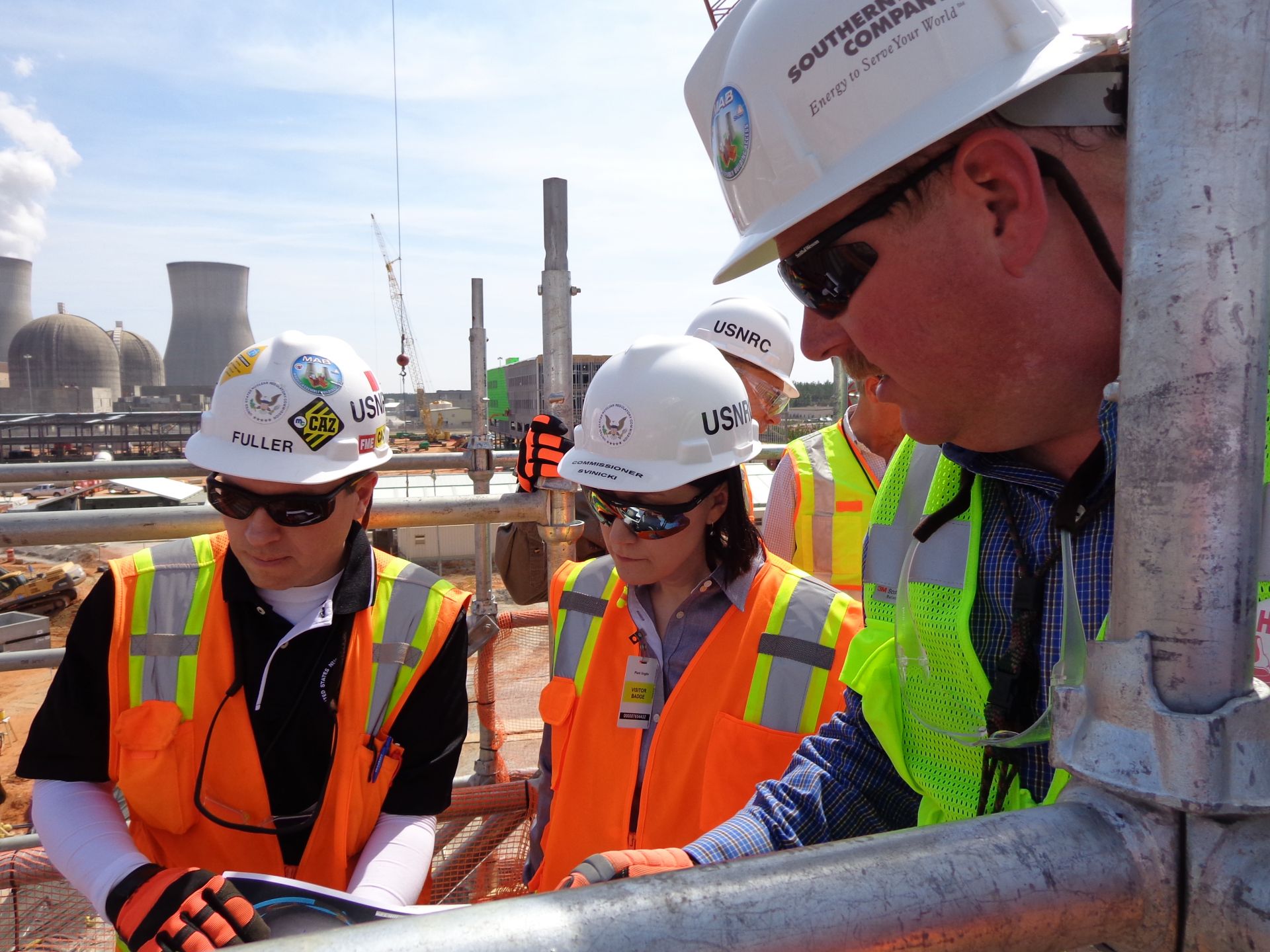
NRC Commissioner Kristine Svinicki (center) on a tour of the Vogtle construction site in April 2014. (Photo: NRC)
The second instance occurred when President Barack Obama replaced Republican Klein with Democrat Jaczko in May 2009. The promotion of Jaczko was seen by many as part of the Obama administration’s initiative to end the Yucca Mountain project. The third instance was when President Trump replaced the Independent Burns with Republican Svinicki in 2017, during his first term, and the fourth was when Trump replaced Hanson with Wright in his second term. This final change stands out as particularly notable, considering Trump’s unprecedented dismissal of Hanson five months later.
The second Trump administration has seen one more change in chairmanship worth remarking on. At the start of 2026, Trump appointed Nieh as chairman, returning Wright once again to the role of commissioner. This change stands out as different from the previous four, considering it did not fall along party lines, and wasn’t the first change of a new administration.
Backgrounds of the chairmen
When Wright was appointed chairman of the NRC, he had more than seven years of experience as a commissioner. While it might seem desirable to select a chairman with prior commission experience, that approach is actually as much the exception as the rule. Hendrie became chairman immediately upon his appointment in 1977, as did Palladino in 1981, Selin in 1991, Meserve in 1999, Klein in 2006, and Macfarlane in 2013.
In addition, Shirley Jackson, Burns, and Nieh all became chairman within one to two months of joining the commission. In a further distinction, when he joined the commission, Nieh had already served in various NRC roles for more than 20 years. He is the first former NRC resident inspector to serve as a commissioner or chairman.
There have been 20 chairmen since the NRC was formed in 1975, 18 of whom served in their roles for at least a year. The shortest term was that of Greta Dicus, who served in the role for just four months in 1999. Wright, with 10 total months split between two terms, had the second-shortest tenure as chairman.
Based on official NRC biographies, Table 3 examines the same 13 characteristics covered in Table 1 but restricts data to the 20 chairmen. The right column shows the difference between the value for all chairmen and the value for all commissioners (as provided in Table 1). A positive number means that the population of chairmen possessed this trait to a greater extent than the population of all commissioners.
Table 3. Chairmen Characteristics
|
Most of the characteristics were present in the population of chairmen to a similar extent to which they were present in the population of all commissioners. There are, however, three notable points of divergence.
An even higher percentage of chairmen (80 percent) received technical educations than the commissioner population at large. Despite this overall trend, three of the four most recent chairmen (Burns, Hanson, and Wright) did not have technical backgrounds.
A smaller percentage of chairmen had a political background prior to service on the commission—35 percent as opposed to 45 percent. However, just as political experience has been increasing in recent decades in the overall pool of commissioners, so too has it been increasing among chairmen. Five of the eight most recent chairmen acceded to the office with political experience.
Finally, three chairmen (Rowden, Meserve, and Burns) have held a law degree, while a total of nine commissioners have held that distinction.
Observations and analysis
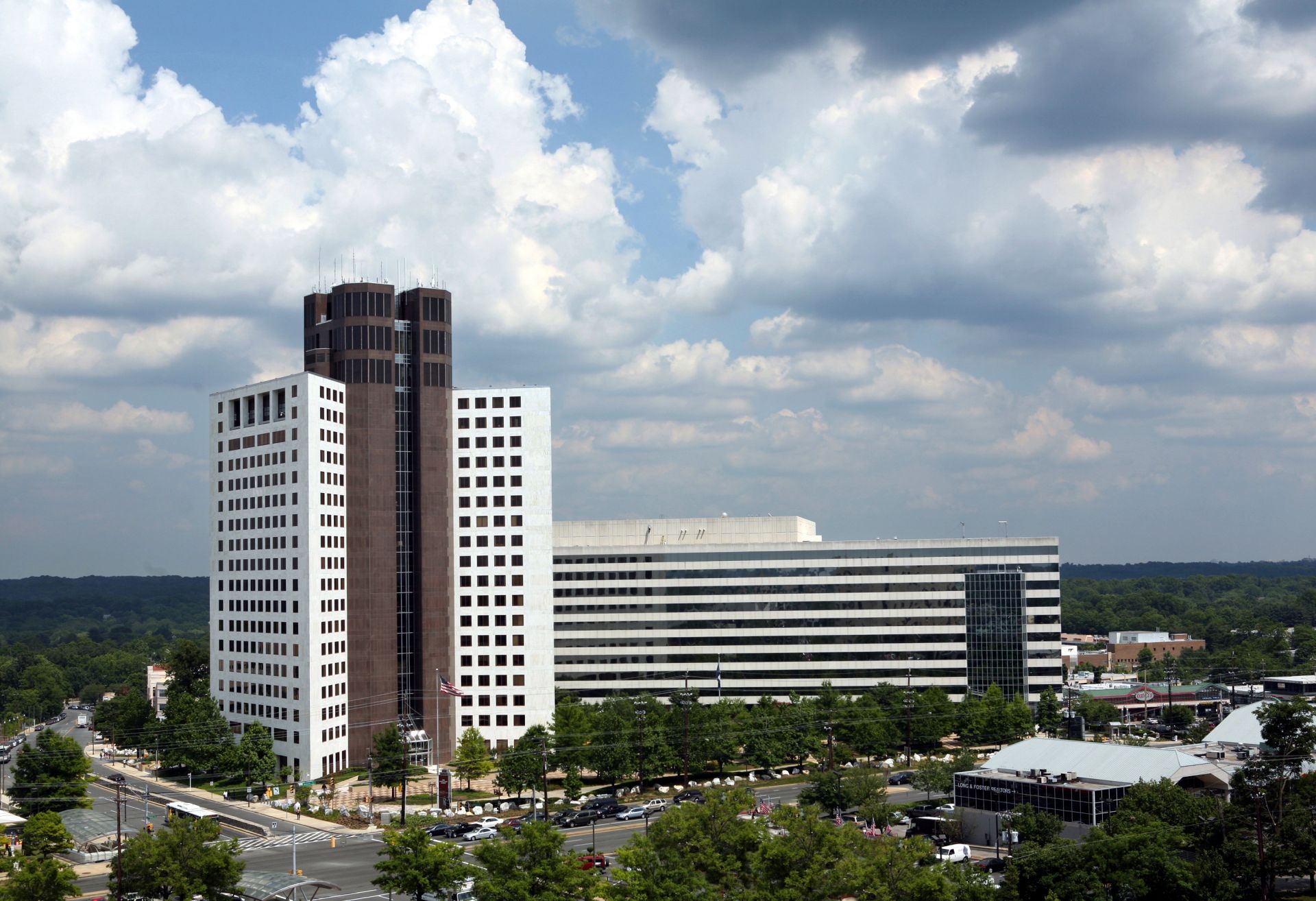
NRC headquarters in Rockville, Md. (Photo: NRC)
While it is instructive to examine the historical characteristics of the commissioners, it is important to note that a correlation has never been made between any such characteristics and actual job performance. In fact, there is no objective ranking system for commissioner job performance, so any such correlation, if developed, would necessarily be subjective and therefore somewhat suspect. It appears logical that certain types of experience—such as a technical education or prior experience with the NRC—would be beneficial for commissioners, but there is no way to establish how important such experience might be.
This list of 13 characteristics is not without blind spots of its own. Management experience may well be a useful qualification for commissioners, even though it is not included on the list. While day-to-day management of the NRC employees is not a direct responsibility of the commissioners, they select the NRC staff’s senior management team and set in place policies and directives that influence how well and how efficiently the NRC carries out its mission. The primary reason for not including management experience is the difficulty in assessing that characteristic in an objective manner for all 42 past and present commissioners.
Similarly, there is an international component to the job of a commissioner, whose duties include interacting with nuclear safety regulators from around the world. Accordingly, international experience may be a desirable attribute for commissioners, but because it is difficult to objectively assess what constitutes significant international experience, that characteristic is not included in this assessment.
Another inherent difficulty in analyzing the effectiveness of any one commissioner is the fact that each cannot be considered in isolation but also must be evaluated as one member of a commission. In addressing the wide range of issues that may arise in the NRC’s regulatory work, it would seem to be advantageous to have commissioners with a variety of backgrounds and experiences.
Despite its shortcomings, this review still allows for the gleaning of useful data and surprising trends. More than any other change, the sharp rise in political experience among commissioners and chairmen alike sends a strong signal that the historical insulation of the NRC from partisan politics appears to have come to an end. This is only reinforced by the lack, in recent years, of commissioners who identify as Independent.
Not reflected in the tables above is another important trend: the overall decrease in the commission’s stability. During much of the NRC’s history, the commission was a very stable body where commissioners served to the end of their terms, and many served for more than a single five-year term. That stability has decreased lately, as a result of increased turnover from resignations—along with the aforementioned dismissal.
The NRC is now in an unprecedented time. The rate and ambition of new commercial plans emerging from private industry are matched only by the rate and ambition of the agency’s proposed and enacted regulatory reforms. While political experience continues to trend upward among commissioners, the safe and beneficial use of nuclear technology continues to depend on a competent, diligent, and independent regulator.
Lucas Geiger is an associate editor for Nuclear News.