-3 2x1.jpg)
Nuclear News accepting 2026 nominations for 40 Under 40
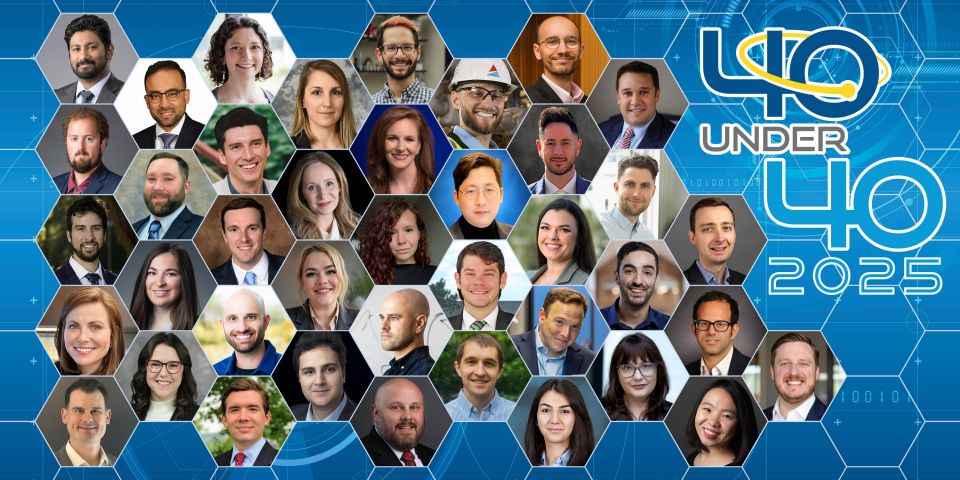
The nomination period for the 2026 Nuclear News 40 Under 40 list is now open. The list aims to highlight people in the nuclear community who are making significant, early-career achievements. All nominations must be submitted online by 11:59 p.m. (CDT) on May 1, 2026.
Criteria for nominees: Nominees must be 39 years old or younger and must be current members of ANS through December 31, 2026. Candidates can be nominated either by their workplace or institution or by another ANS member. Those selected for either the 2024 40 Under 40 list or the 2025 40 Under 40 list are not eligible for renomination this year.
Next steps: The nomination form is available on ANS’s website. It must be filled out completely and include the following:
- The nominee’s name, job title, contact information, and date of birth.
- The sponsor’s name, job title, and contact information.
- The nominee’s CV (as an attachment).
- The sponsor’s formal letter of recommendation (as an attachment).
- A second, optional formal letter of recommendation (as an attachment; no more than two letters will be accepted).
Recommendation letters should include an overview of the nominee’s achievements with clear examples of the individual’s leadership, impact, and potential for future contributions to the nuclear community. All nominees will be evaluated by Nuclear News staff on a variety of factors, including but not limited to the following:
- Technical achievements, such as whether the nominee is studying nuclear science or engineering at an accredited institution or holds an advanced degree in nuclear science (a degree in nuclear engineering is not a requirement for nomination); and/or whether the nominee has presented research at a student or technical conference.
- Professional achievements, such as work in design, engineering, or operations in the nuclear power field or other applications of nuclear technology; and/or whether the nominee displays scientific or technical capacity in a nuclear discipline.
- Leadership and impact, such as contributions to the dissemination of nuclear science knowledge through teaching, mentoring, social media, or public outreach; participation in scientific organizations and/or associations; and/or receipt of awards and honors, whether that recognition is organizational, local, regional, national, or international.
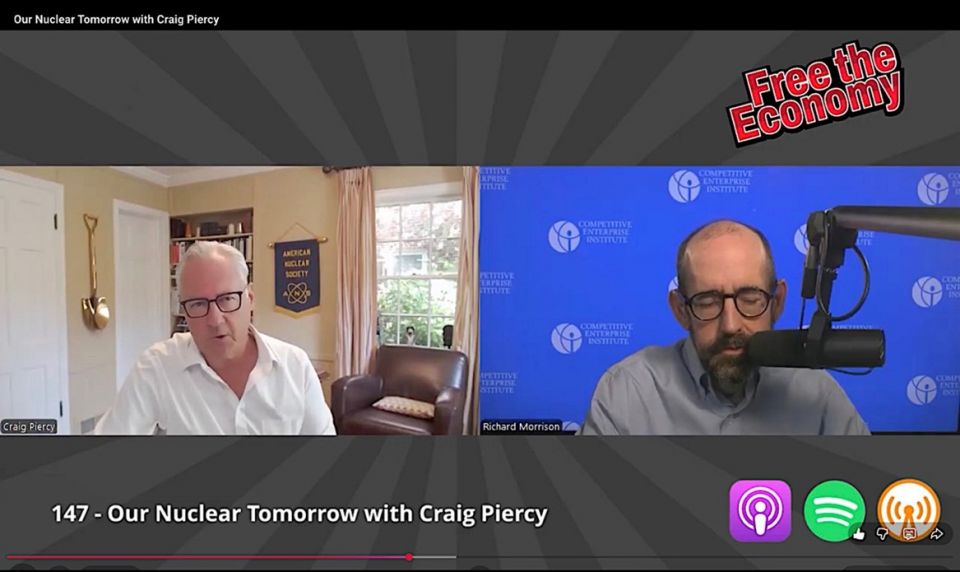
Recent webinar: Yesterday, American Nuclear Society CEO Craig Piercy hosted a roundtable with five members of the 2025 40 Under 40 list to discuss the state and future of the industry.
In introducing the importance of the discussion, Piercy said, “The U.S. nuclear enterprise is undergoing a significant generational transition. At ANS we now have more members under the age of 40 than we do over the age of 65. That’s a milestone that would’ve been hard to imagine even a decade ago.” Alongside this generational shift, the U.S. industry is now being asked to do more than ever in terms of scaling up project deployment.
With those two trends in mind, Piercy first asked the panelists, “How does this generation see nuclear differently than previous generations?”
Christopher Perfetti, an associate professor at the University of New Mexico, responded that millennials and younger generations are looking at nuclear power as a necessity for mitigating climate change, gaining energy independence, and generally supplanting carbon fuels.
He also highlighted that, now, young people are seeing a particularly exciting time to enter the industry, with the pathway to working in “pie-in-the-sky” areas like fusion or space nuclear through various start-ups now more feasible than ever.
Later in the talk, Piercy asked, “If you had the authority to remove one bottleneck in the system, whether it’s technical, regulatory, or cultural, and you had a day to do it, what would you do?”
Jordan Rice, a risk-informed engineering director at Southern Company, responded, “I would remove the cultural hesitation to retire requirements that no longer provide meaningful risk reduction. Risk-informed regulation was intended to be a two-way door, add focus where risk is high, and remove burden where it’s low. We’ve gotten so much better at the first part than the second.”