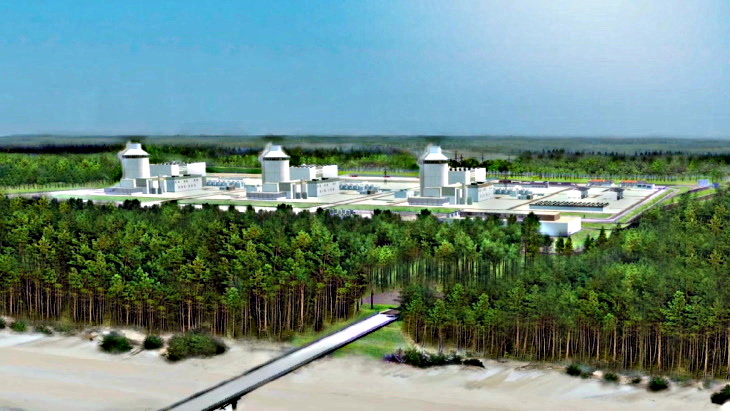
In Europe, the U.K.’s Hinkley Point C offers a similar example. Approved in 2016 with an estimated cost of £18 billion (about $24.7 billion), the project’s expected cost has since risen reportedly to more than £40 billion (or more than about $54.8 billion). Such overruns cause the industry to turn to taxpayers and ratepayers to assume all of the risk, further disincentivizing cost and schedule reduction for the people carrying out the construction.
This creates a cycle that is hard to break out of and hurts the nuclear industry. When taxpayers are responsible for cost, public support does not improve, and delivery models do not innovate. Political pressure increases, injecting further uncertainty into project management, and each new project is seen as riskier than the last. Over time, these dynamics raise financing costs, slow down approvals, and constrain deployment.
Instead of designing nuclear sites as bespoke megaprojects that carry the risk of high cost overruns, nuclear projects should be designed to use fixed-price contracts enabled through standard form factors and off-site prefabrication and outfitting. Blue Energy is approaching this by designing plants to be built in existing fabrication yards using repeatable processes and proven supply chains. This approach enables fixed prices and removes risk from ratepayers and taxpayers.
The primary hurdle to nuclear power’s global expansion is the delivery and contracting model that weakens accountability and undermines trust. What’s encouraging is that this barrier is solvable. By borrowing proven methods from adjacent energy sectors like oil and gas, liquefied natural gas, and offshore wind, we can rebuild trust from capital markets and the public, and we can enable nuclear power to scale at the pace demanded by civilization’s growing needs.
Jake Jurewicz (jake@blueenergy.co) is the cofounder and CEO of Blue Energy.


.png)