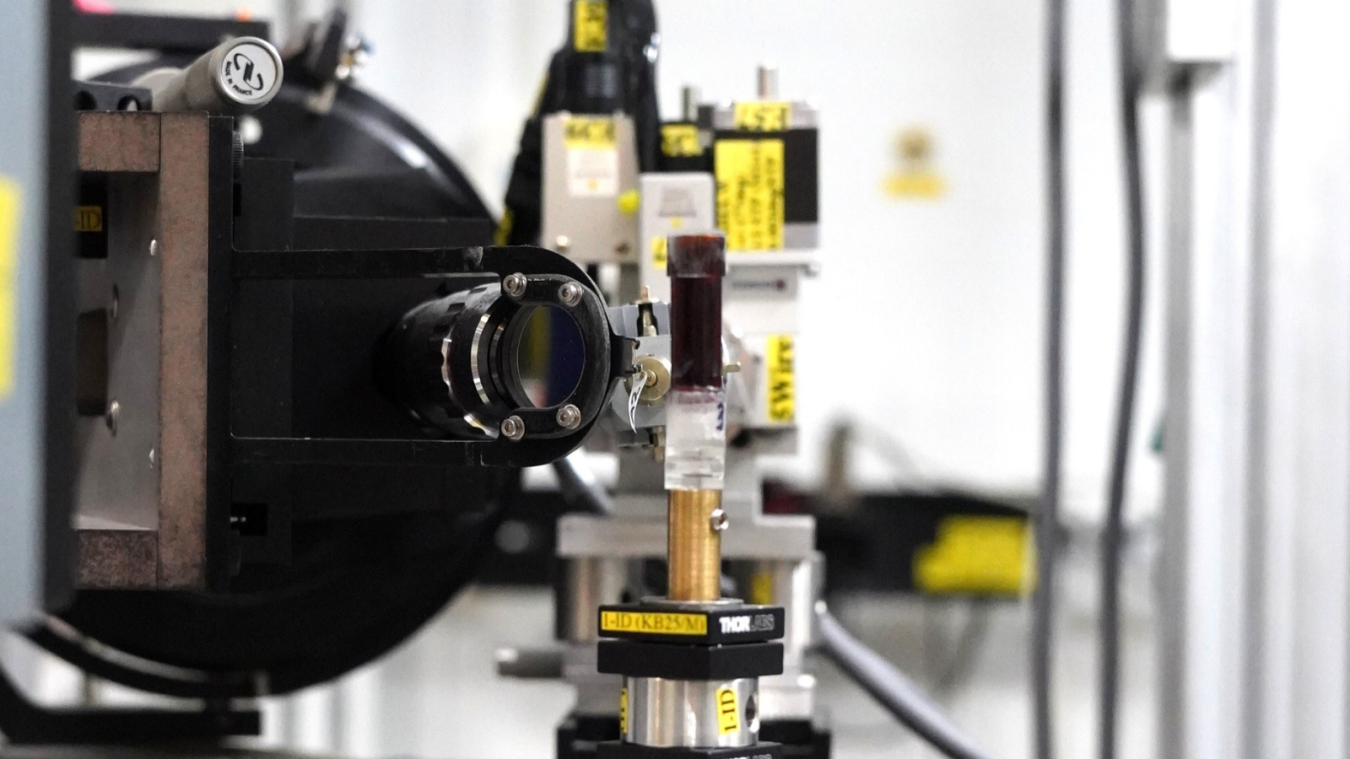
New lab: Argonne’s newest facility is its Activated Materials Lab (AML). Located at the lab’s Advanced Photon Source (APS), it will directly support research conducted at the APS—including research on materials used in reactors. While Argonne has been researching irradiated materials at the APS for about 30 years, it lacked a specialized laboratory for irradiated materials.
The design, construction, and operation of the AML is funded by the Department of Energy Office of Nuclear Energy’s Nuclear Science User Facilities. According to Argonne, AML will “improved sample accessibility and flexible operation, minimizes the cycle time between samples, enhances scientific productivity, and enables the expansion of in situ testing capabilities” at the APS.
AI tools: Argonne also continues to make progress on its development and implementation of AI, aiming to leverage 60 years of research into tools that can help design reactor fuels. Currently, the lab is tackling the burnup and temperature limits of uranium-zirconium fuel with an AI-driven approach. Leaning on existing metallic fuel data from previous experiments involving Chicago Pile-5, Experimental Breeder Reactor-II, the Fast Flux Test Facility, and more, Argonne has developed two new AI tools.
It calls the first “Dr. Metal,” which it describes as “a generative AI Chatbot system designed to act as a virtual assistant knowledgeable of metallic fuel research and the historical dataset.”
The second is named the “FGB Microstructure Generator.” Unlike the broadly useful Dr. Metal, this tool is specifically tailored to predict how fission gas bubbles—or FGBs—form and change inside fuel during reactor operation.
Measurement technique: Aside from a new facility and new AI tools, Argonne also recently announced the validation of a technique for measuring thermal conductivity (TC) inside reactor fuel. Accurate TC measurement helps researchers understand how fuel will behave under extreme conditions, and by extension, supports efficient and safe reactor operation. However, obtaining accurate TC measurement during reactor operation has been a persistent challenge.
To overcome this challenge, Argonne is employing the use of a technique called the suspended bridge method, which involves the use of “two tiny microfabricated platforms connected by an ultrathin sample” to test the TC of various materials in a vacuum, including those relevant to nuclear fuel research.
This technique was developed through research supported by the DOE’s National Nuclear Security Administration. Abdellatif Yacout, a senior researcher at Argonne, said about the suspended bridge method, “This is a big step forward in understanding and optimizing nuclear fuel performance. It not only enhances reactor safety but also supports the design of next-generation nuclear systems.”

-3 2x1.jpg)