Beyond the classroom: How a corporate-university partnership benefits the community
 2x1.jpg)
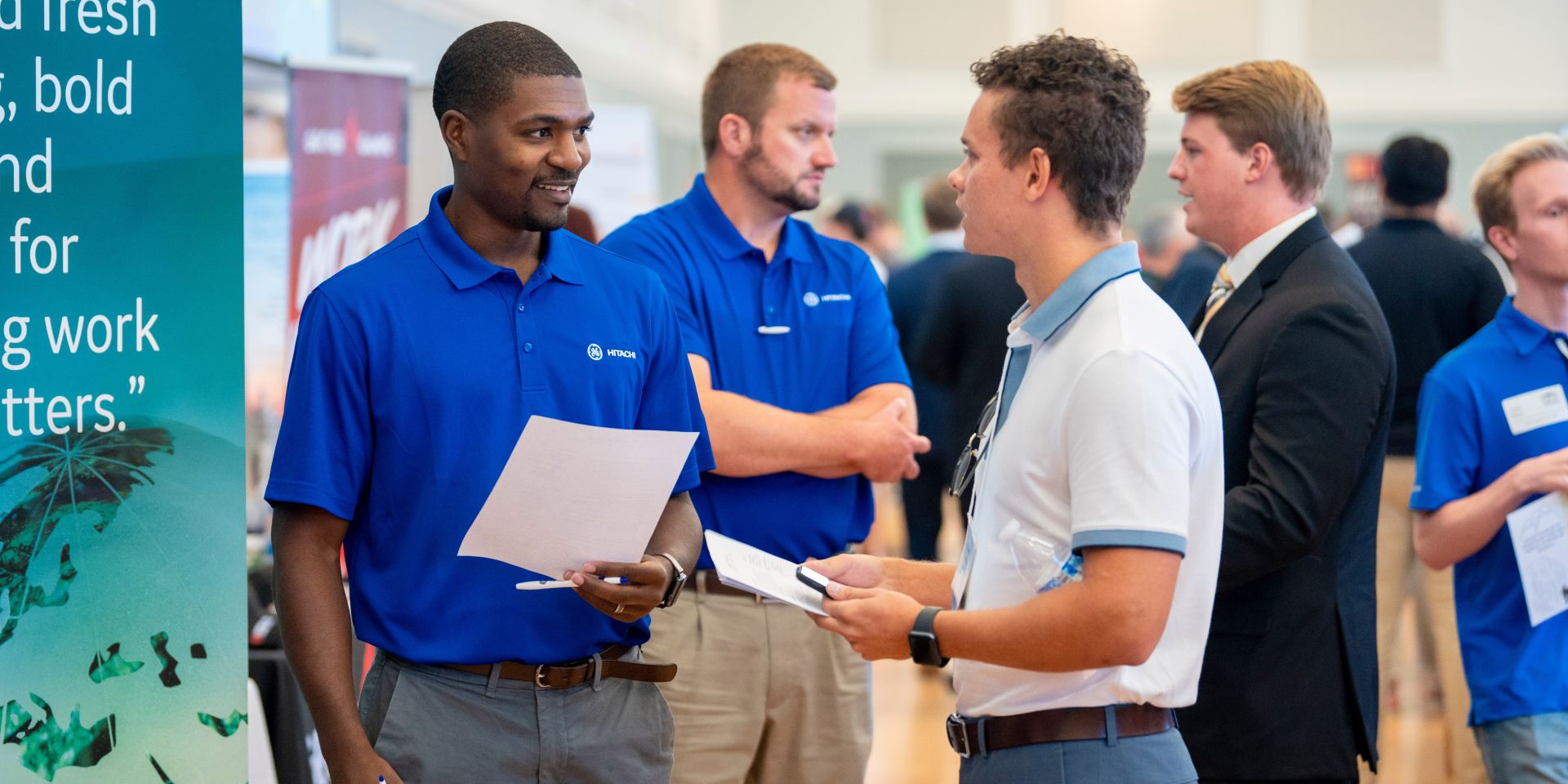
For the past several years, the University of North Carolina–Wilmington has hosted volunteer instructors from Wilmington-based GE Vernova Hitachi Nuclear Energy who teach engineering courses and engage with students. This guest instructor program has grown under the guidance of Amy Craig Reamer, associate professor of practice and director of engineering in the UNCW College of Science and Engineering’s Department of Computer Science. Under her oversight, an informal but strong public-private partnership has been established to the benefit of UNCW students and the wider Wilmington community.
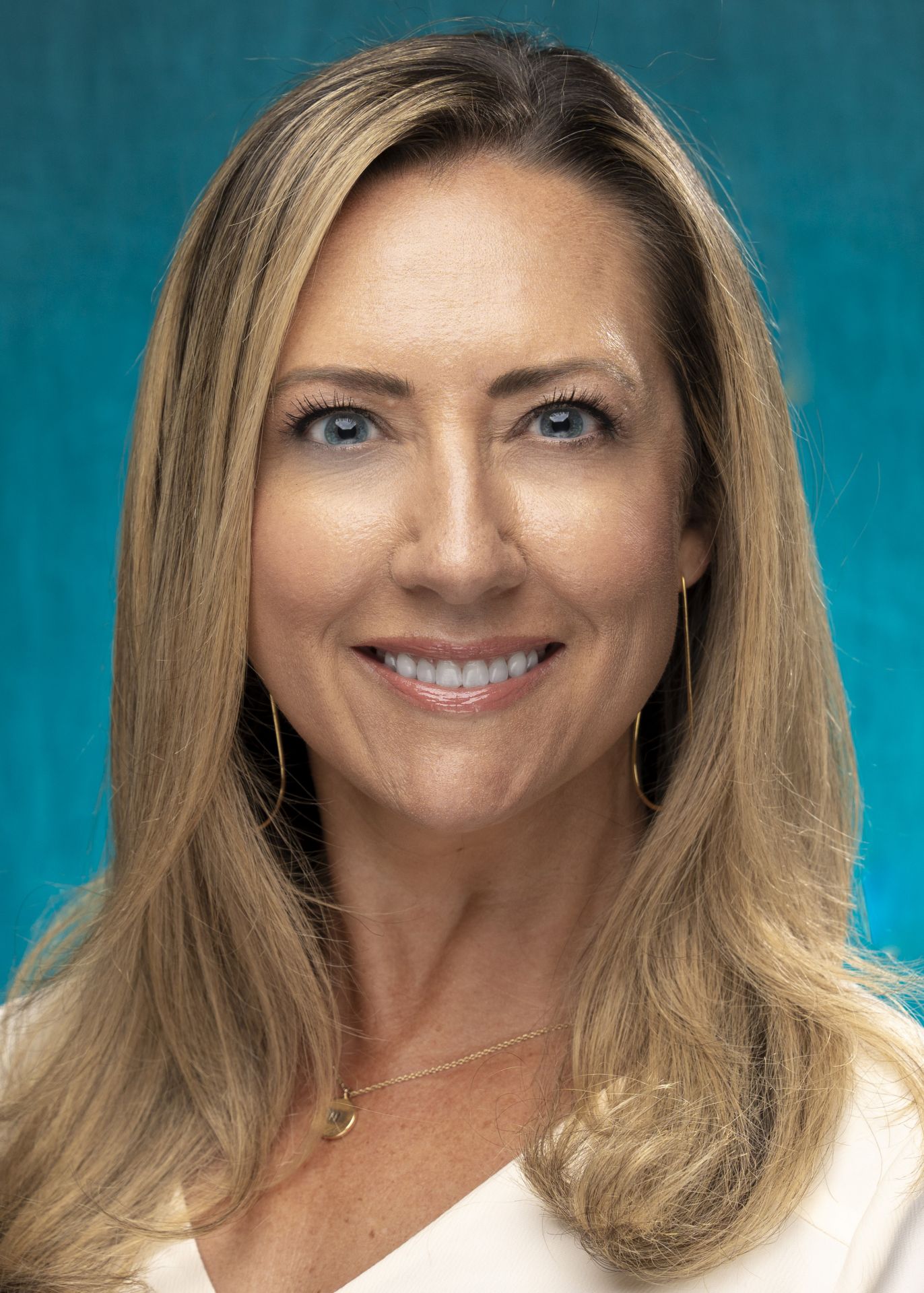
Reamer
The UNCW-GVH partnership has gone beyond teaching university students. Reamer explained in the North Carolina Nuclear Advisory Council’s newsletter in August 2025, “Over the past decade, GVH engineers have judged design projects at our annual showcase, taught seminar courses to first-year engineering students, mentored students interested in nuclear energy, and facilitated engineering courses that we offer in partnership with NC State on UNCW’s campus. They eagerly volunteer at K-12 engineering education events and regularly consult with me on workforce trends so I can equip the engineers of tomorrow with the skills needed to thrive.”
Reamer recently told Nuclear News, “The initial purpose of the program was to give UNCW engineering students meaningful opportunities to engage with practicing engineers in our community. As one of the region’s largest employers of engineers, GE was a natural fit. The company was already involved in several campus initiatives, such as judging science fairs and supporting K-12 STEM competitions, but I wanted to extend that engagement to our engineering students. The idea was to create a more direct connection between classroom learning and the professional engineering community.”
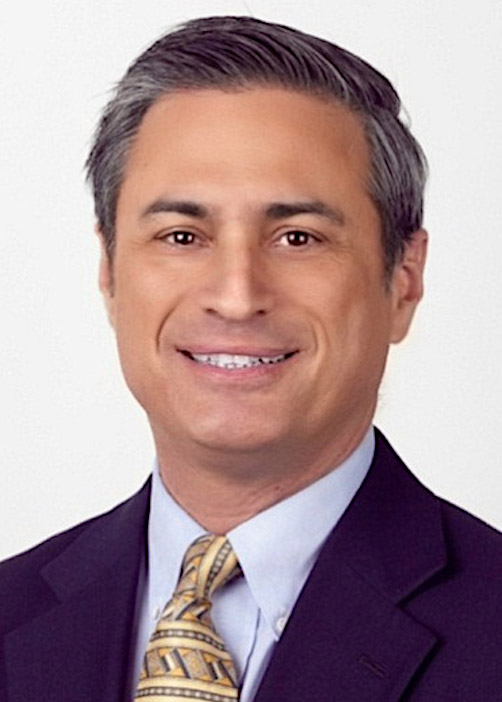
Zino
Collaborating closely with Reamer in the partnership is John F. Zino, chief consulting engineer for advanced nuclear plant technology at GVH. Zino teaches first-year engineering seminar courses at UNCW and is also an associate teaching professor in the Department of Nuclear Engineering at North Carolina State University, where, like Reamer, he is an alumnus. He said in the Nuclear Advisory Council newsletter, “The GVH-UNCW partnership is much bigger than just me teaching a class or two every fall. We have GVH engineers helping with robotics/electronics labs, leading and judging first-year engineering design projects, [and] doing outreach with K-12 students.”
Zino explained to NN that, for GVH, the partnership with UNCW has two main advantages. “First, it gives GVH engineers the opportunity to give back to the local community through outreach events that encourage aspiring engineers to enter technology fields, such as nuclear, mechanical, and electrical engineering. Second, it helps to provide a pipeline of future engineering talent, not just for GVH but for the overall nuclear industry.”
A growing partnership
Reamer built on an existing UNCW-GVH relationship to make it an even greater success. “GE has enjoyed a long-standing relationship with UNCW—well before my tenure began in 2012,” she said. “That year, I was appointed director of the NC State Engineering 2+2 Transfer Program at UNCW, and I wanted to strengthen ties between our students and local industry. My initial outreach to GE was through their North American Young Generation in Nuclear (NAYGN) chapter.”
She continued, “Early on, I organized a community-wide effort to mobilize engineering volunteers to visit K-12 classrooms during National Engineers Week. The GE engineers responded enthusiastically, and together we reached dozens of classrooms across the Wilmington area. From those connections, I invited GE NAYGN members to deliver a guest lecture on nuclear energy in my Introduction to Engineering class, EGN101. They’ve come back every year since, and that consistent engagement gradually evolved into the broader partnership we have today.”
Zino added, “My involvement began in 2019 when I approached Dr. Reamer about incorporating some elements of a class I was already teaching at UNCW into the engineering curriculum. We partnered to create an engineering first-year university studies course called UNI102 that is specifically tailored to engineering students. This course focuses on skills that are important for young engineers to develop—such as logical and critical thinking skills, understanding the differences between high school and college learning styles, and doing a deep dive into an engineering disaster study to help students develop an engineering mindset. A year after I began teaching this class, Thad Leister joined me and we have been co-teaching it ever since.”
Reamer noted that although she hasn’t formally tracked the total number of GVH employees who have been involved on campus, it is likely that more than 50 have participated during the past 13 years. “Aside from John and Thad,” she said, “Tim Clark [a senior electrical engineer] has been our resident electrical engineering lab facilitator in the evenings since 2016, and Doug Nay [a capital projects engineer] has been our most long-standing judge for the annual Engineering Design Day event we host for first-year students.”
GVH-led courses
GVH guest instructors teach several different courses at UNCW. “John and Thad teach UNI102, which is a first-year seminar course that is linked to the EGN101 class that I teach,” Reamer said. “As UNCW has expanded to offer its own engineering programs in coastal engineering, intelligent systems engineering, and software engineering, their involvement has grown as well. They now teach multiple sections each year. Tim leads the evening labs and problem sessions associated with the electrical and computer engineering courses that we offer through distance education in partnership with NC State and our 2+2 engineering program.”
The contributions of these industry experts to the students’ educational experiences have been invaluable, Reamer emphasized. “Their teaching presence on our campus has been instrumental in connecting classroom learning with real-world engineering practice, giving our students early exposure to the mindset and rigor of actual engineers,” she said.
In addition to the regular courses taught by GVH employees, students also get the opportunity to hear from young engineering professionals from the company who are closer to their own age. These include people from GVH who are members of NAYGN. They visit Reamer’s Intro to Engineering class each year to present guest lectures about nuclear energy and work with the students in special sessions. She noted that these sessions are “typically a highlight of the semester, as students participate in hands-on activities and demonstrations alongside our guest engineers from GVH.”
Zino said, “Many of the early-career GVH engineers who support the program through groups such as NAYGN and WIN [Women in Nuclear] are involved in STEM community outreach events with local K-12 schools and events such as Nuclear Science and Technology Week each year.”
The UNCW engineering faculty have been happy to work with GVH employees in their teaching efforts—and partnership opportunities continue to expand as new technologies are being developed. Reamer explained, “UNCW is relatively new to the engineering game, having launched its first degree program in 2019 with the nation’s first B.S. in coastal engineering. As our programs have continued to grow and evolve, and as new engineering faculty have joined UNCW, I’ve been eager to connect them with my long-standing contacts at GVH.”
She is particularly excited about opportunities for collaboration between the school’s intelligent systems engineering students and GVH on projects related to robotics, automation, and nuclear systems, she said. “As our campus continues to expand its engineering footprint, I see even greater potential for faculty across disciplines to engage in guest lectures, joint projects, and industry-sponsored design experiences in partnership with GE.”
SparkNC
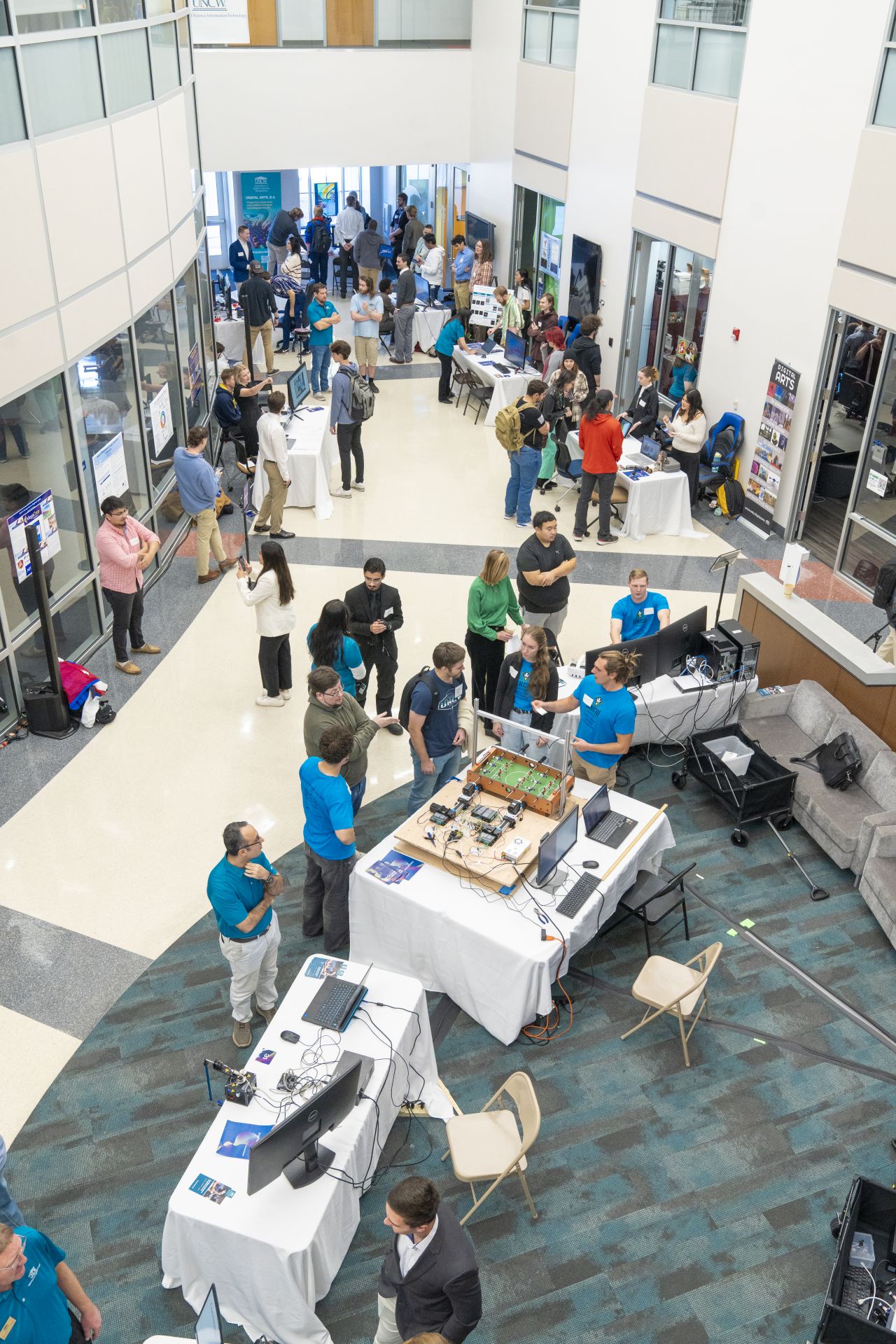
Students attend the Computing Showcase and Reverse Career Fair at UNCW’s Congdon Hall. (Photo: Jeff Janowski/UNCW)
UNCW’s community collaborations continue to grow. In addition to GVH, the university recently involved NAYGN and WIN in a collaborative outreach event with SparkNC, a North Carolina education network that “empowers [high school] students to build skills and explore careers in tech fields like cybersecurity, artificial intelligence, software development and computer systems engineering,” according to its website.
SparkNC has played an important role in the GVH-UNCW partnership—with some assistance from the American Nuclear Society—Reamer explained. “In July 2025, about a dozen GVH employees visited our campus to participate in the SparkNC Annual Conference. Through our connection with Steve Rea, we collaborated with Uchenna Ezibe from ANS to demonstrate a cloud chamber to conference attendees.” (ANS’s Visualizing Radiation Cloud Chamber Kit provides materials to build four cloud chambers that allow students to see the effects of ionizing radiation.)
Ezibe is the senior manager of STEM programs at ANS. Rea, an ANS member and NC State alumnus, serves as a nuclear energy industry advisor to that university and is also the cofounder and chair emeritus of the North Carolina Nuclear Advisory Council.
Positive results
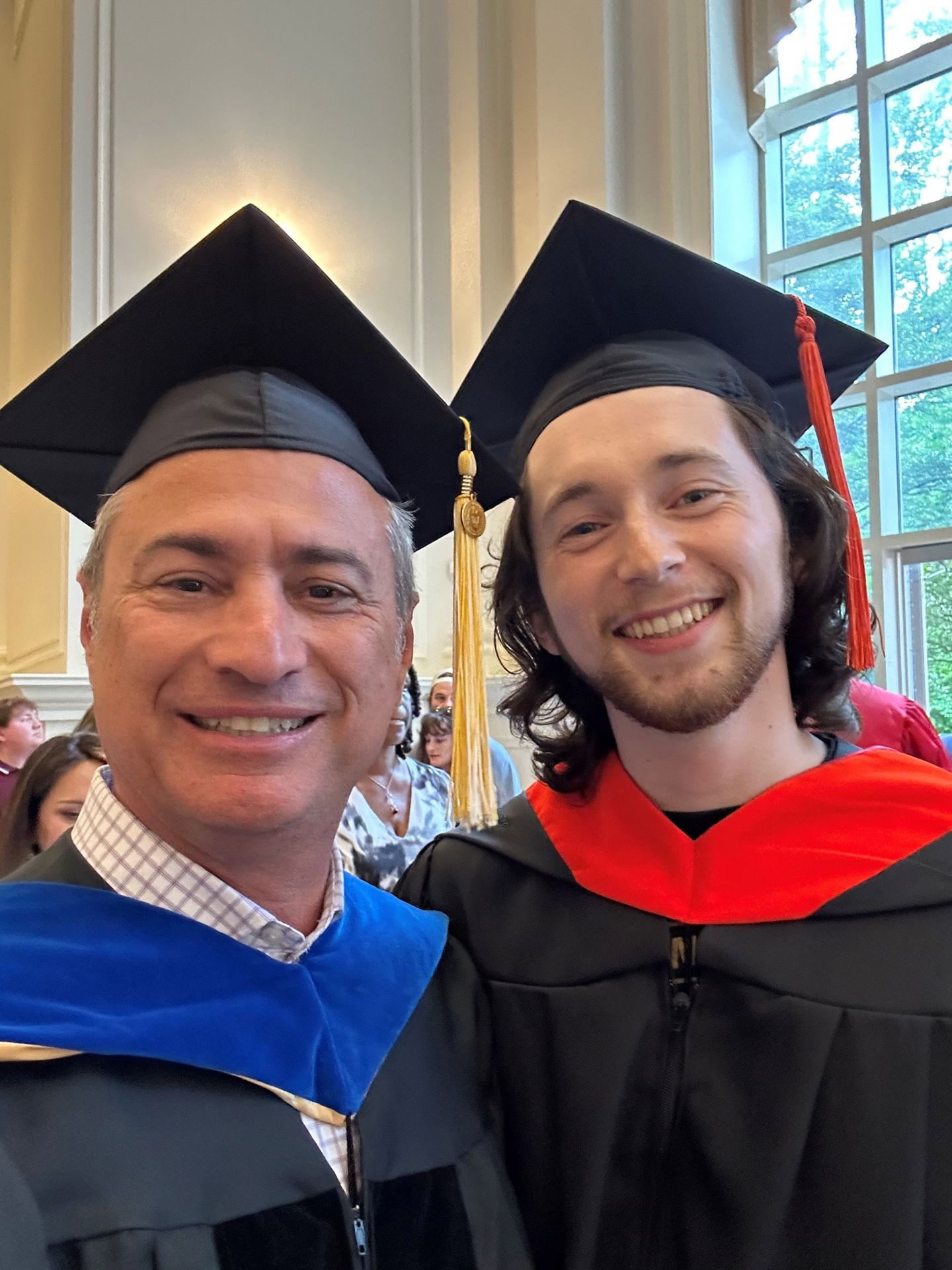
John Zino (left) poses with James (Ty) Krec during Krec’s graduation from NC State with a master’s degree in nuclear engineering in May 2025. Zino is now serving on Krec’s Ph.D. dissertation committee. (Photo: John Zino)
Interacting with industry professionals early in their academic careers has helped shape UNCW students’ academic and professional paths. For example, James (Ty) Krec, a former student in the Engineering 2+2 Transfer Program at UNCW who transferred to the nuclear engineering program at NC State, “has gone on to do remarkable things in the field,” said Reamer.
Zino also had great things to say about Krec. “Since I also hold a faculty appointment in the nuclear engineering department at NC State, there have been a couple of interesting experiences where I have gotten to reconnect with some of my former UNCW 2+2 students who went on to complete their degrees at NC State. Ty went on to complete his bachelor’s and master’s degrees in nuclear engineering, and I am now serving on his Ph.D. dissertation committee.”
Krec, who is now in the third year of his doctoral program at NC State, told NN, “When I started at UNCW as a freshman, I knew that I wanted to be an engineer, but I was unsure of exactly what aspect of engineering I wanted to pursue in my education and in my career. In my perspective, Dr. Zino and Dr. Reamer have been invaluable as they truly care about the well-being and success of their students. What I found most valuable is the emphasis on the application of education in the workforce. Being able to contextualize how the education can be applied was inspiring and helped establish the passion and direction for my continued education. For example, while I was in the 2+2 program, Dr. Zino was collaborating with NC State and invited me to meet with his senior design group, and that helped to inspire me to follow a similar path.”
Meaningful education
Reamer stressed that the commitment of the GVH employees to the university “goes well beyond teaching and guest lectures; it’s genuine mentorship and community engagement. They are always quick to share their contact information with students and follow up afterward for one-on-one conversations, offering guidance that often extends well beyond the classroom. Partnerships like this are what make engineering education meaningful and relevant, and I’m proud of what we’re building together.”
Reamer, Zino, and their colleagues at UNCW and GVH are demonstrating how public institutions of higher education and private corporations in the nuclear energy sector can coordinate their efforts for the mutual benefit of students, community, and industry. As the Nuclear Advisory Council newsletter observed, “Perhaps this type of public/private partnership has merit in other community college and university settings around North Carolina.”