Gov. Pritzker issues EO to boost nuclear energy in Illinois
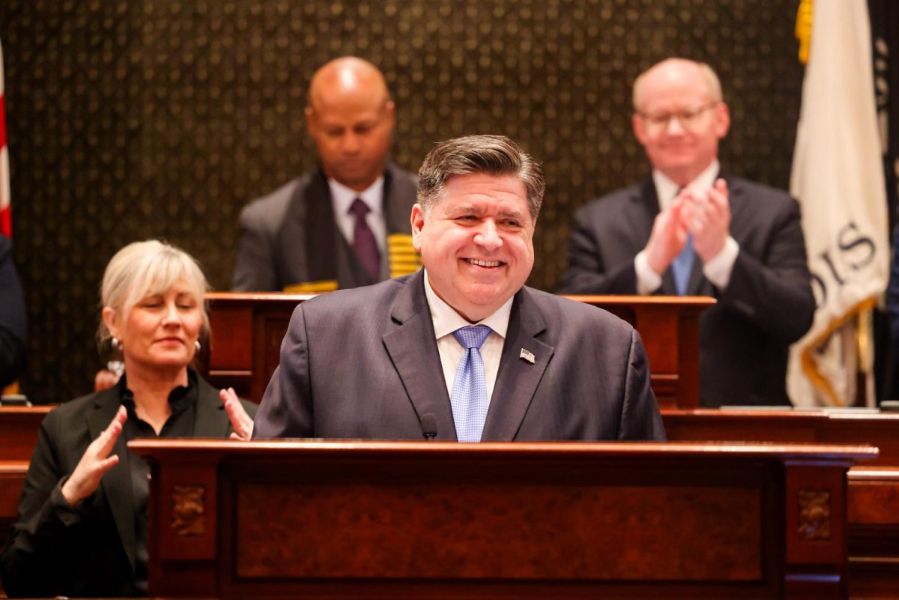
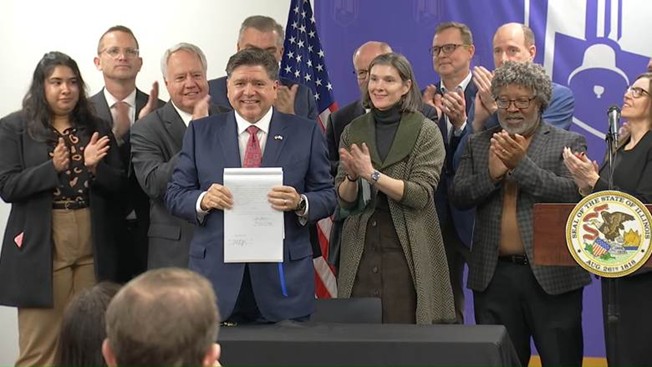
Illinois Gov. J. B. Pritzker issued a new executive order (EO) on February 18 directing both the Illinois Power Agency and the Illinois Commerce Commission to issue a notice of intent (NOI) to potential developers of new nuclear power plants.
The signing of that EO took place on the same day Pritzker delivered his 2026 State of the State address, in which he set a goal of building at least 2 gigawatts of new nuclear capacity in the state.
The NOI: The NOI—which must be jointly issued by the IPA and ICC within the next 60 days—is intended to reach developers seeking to build “nuclear power generation facilities that will benefit Illinois residential ratepayers.” No reactor type or size is specified.
Utilities will also be able to respond to the NOI with potential expansion of or uprates to existing nuclear sites in the state.
After the issuance of the first NOI, the ICC will issue a second NOI requesting information from communities interested in hosting a new nuclear facility. Throughout this process, the ICC, the IPA, and a handful of relevant state agencies will enlist subject matter experts from the Nuclear, Plasma, and Radiological Engineering Department of the University of Illinois’s Grainger College of Engineering.
The EO reiterates that the ultimate goal of these NOIs is the deployment of at least 2 gigawatts of new nuclear capacity from either new sites or uprates, and states a goal of construction beginning by 2033.
Reports to come: The EO also calls for the establishment of an interagency working group that includes representation from the ICC, the IPA, the University of Illinois, the state Department of Commerce and Economic Opportunity, and several other relevant state departments.
The working group will issue a report within 120 days of the first NOI’s issuance that examines any roadblocks to new deployment. That report will include the following:
- A review of existing statutory and regulatory authority.
- Safety, environmental, interconnection, and procurement regulation recommendations.
- Methods to evaluate proposals for new facilities, including interconnection issues and short- and long-term risk to the state and utility customers.
In addition to this primary report, the working group will draft any legislation needed to enact its recommendations.
The DCEO is further tasked with investigating three more areas of key consideration: workforce needs, supply chain, and emerging technologies. The EO calls for the DCEO to generate reports on workforce and supply chain but not on emerging technologies.
Finally, the DCEO is asked to consider funding a nuclear energy and nuclear energy supply chain manufacturing training academy in the fiscal year 2027 budget.
Looming energy needs: In December, the ICC and the IPA, along with the Illinois Environmental Protection Agency, released the 2025 Resource Adequacy Study, which found that by 2035, Illinois will lose its status as an energy exporter and is projected to import 7 terawatt-hours per year by 2045.
Pritzker is responding to sharply increasing energy needs not only by spurring new generation but also by proposing a two-year pause on the authorization of new data center tax credits—acknowledging that much of the increase in energy demand stems from the AI and data center sectors. “We need to think critically about our future energy usage with the needs of Illinois households at the forefront,” he said during his State of the State address, adding that “with the shifting energy landscape, it is imperative that our growth does not undermine affordability and stability for our families.”
Moratorium lift: This call for new development comes shortly after Pritzker’s January signing of the Clean and Reliable Grid Affordability Act, which fully lifted the moratorium on new power reactors being built in Illinois.
In 2023, Pritzker signed a bill that lifted the state moratorium on small reactors but vetoed one that would have done the same for large reactors. At the time, he said that large-scale reactor builds would lead to “exorbitant ratepayer-funded bailouts.”
In the ensuing three years, he has flipped his opinion on large-scale nuclear, saying during his State of the State address that “Illinois is already number one in clean nuclear energy production. That is a leadership mantle we must hold on to. Producing even more energy is vital to keep up with increasing demand and bring down prices.”