-3 2x1.jpg)
Restart progress and a new task force in Iowa
This week, Iowa Gov. Kim Reynolds signed an executive order to form the Iowa Nuclear Energy Task Force, the purpose of which will be to “advise her, the General Assembly, and relevant state agencies on the development and advancement of nuclear energy technologies and infrastructure in the state.”
Its formation is one of two good pieces of nuclear news coming out of Iowa this week. At the local level, the Linn County Board of Supervisors approved a Host Community Agreement with NextEra Energy—a step forward in the plan to restart Duane Arnold nuclear power plant.
The order: Reynolds has appointed Mark Nutt, an Iowa native who is also director of nuclear energy programs at Pacific Northwest National Laboratory, to serve as the task force’s chair. In total, the group will include at least 11 members with representation from utilities, power production companies, local government, academia, the Iowa Utilities Commission, and the Iowa General Assembly.
In all, the governor’s order charges the task force with eight initial duties, all of which generally expand on its first: “evaluating the state’s role in deploying and using advanced nuclear reactors.”
Other highlights include a call to assess emerging technologies like small modular reactors and fusion energy, promoting workforce development through industrial and academic collaboration, and recommending best practices for nuclear waste management.
Initial taskforce members include executives from Alliant Energy Iowa, MidAmerican, and Next Era; union leaders; academics; and various key local and state representatives.
On the state’s nuclear future, Reynolds said, “With our strong foundation in manufacturing and energy innovation, we are uniquely positioned to lead the nation in developing and deploying nuclear technologies.”
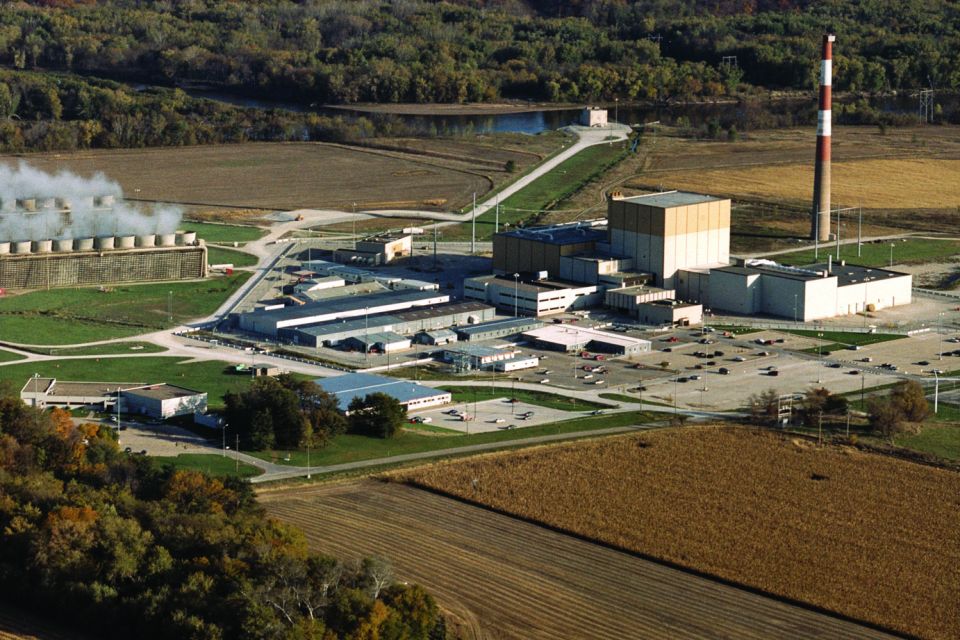
Duane Arnold: In October 2025, NextEra officially announced its plans to restart Duane Arnold, Iowa’s only nuclear power plant, which was shuttered in October 2020. This plan is being financially backed by Google, which has entered into a 25-year power purchase agreement with NextEra. Since then, work has progressed toward the plant’s restart, which is targeted for the first quarter of 2029.
Prior to any restart, local approval must be granted by Linn County, where the plant is sited. This week, NextEra and the county made significant progress on that front with their entrance into a host community agreement. According to the Linn County Board of Supervisors, the agreement puts “residents and public safety first by ensuring that any project-related financial impacts to the county fall on the nuclear energy company, not taxpayers.”
The agreement also requires NextEra to make fixed annual payments to the county to support expenses incurred in connection with the project. This payment will support everything from infrastructure maintenance and improvement to community outreach programs. The first fee of $1.9 million will be levied when the facility begins selling electricity. Each year after that, the payment increase by 5 percent “to keep up with inflation and long-term service needs.” The county also highlighted that NextEra will pay its property taxes in full as part of this agreement.
The county described this arrangement as the first of its kind and hopes that it can be used as “a model for other communities across the country to secure a voice in the process as nuclear power reemerges as an energy source.”
“The Board of Supervisors does not decide whether the nuclear plant reopens or how nuclear waste is stored—those and other critical decisions are made by other state and national regulatory authorities,” said Linn County supervisor Kirsten Running-Marquardt, chair of the board of supervisors. “Our role is to review and act on the rezoning application, and we are using the authority we do have to give the people of Linn County a seat at the table.”
.jpg)