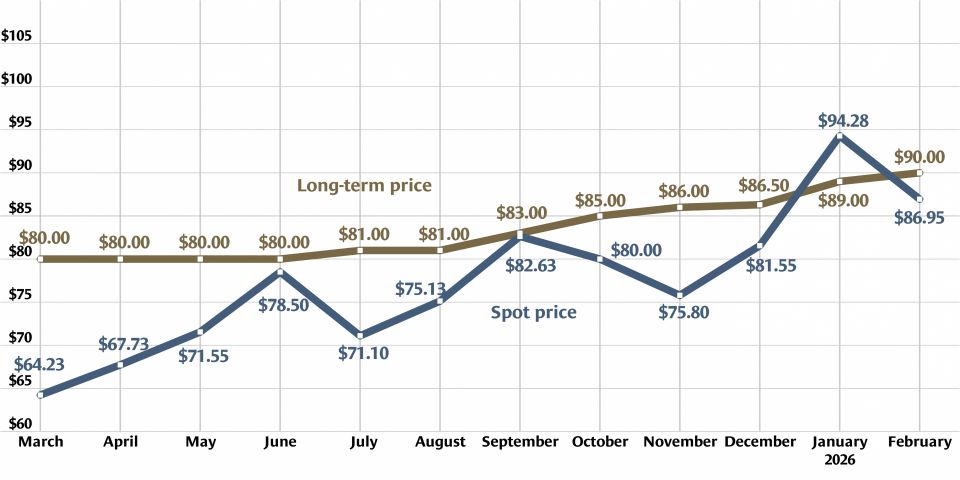
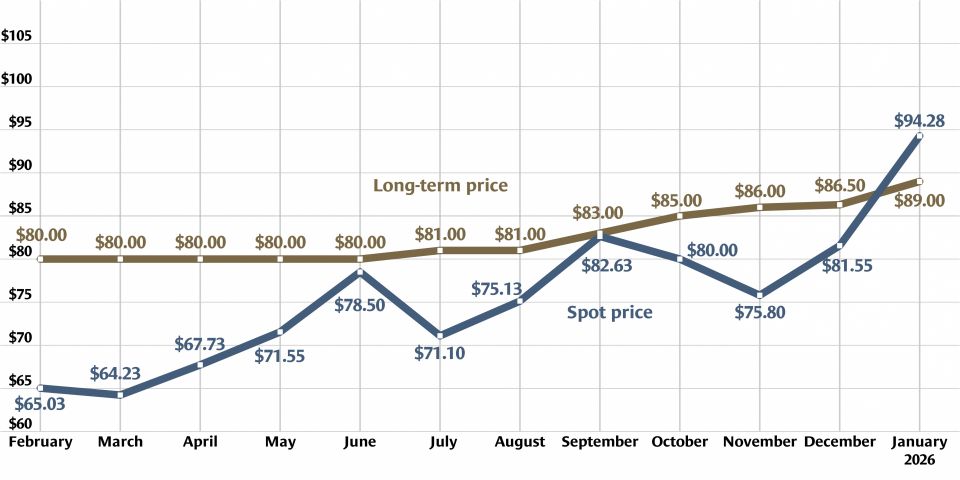
Regulations, new plants, domestic enrichment: Trading Economics attributed the recent price increase to “fresh buying from physical funds and speculative demand in the longer term” and noted that the U.S. government has reduced regulations for the construction and permitting of uranium converters and enrichers.
The firm further noted the recent signing of contracts for the construction of new nuclear power plants, including a partnership among the government, Cameco, Westinghouse, and Brookfield Asset Management to accelerate the deployment of 10 Westinghouse reactors in the U.S.
In addition, the DOE announced earlier this week $2.7 billion in contracts to American Centrifuge Operating, General Matter, and Orano Federal Services to “provide enrichment services to help establish a U.S. supply of high-assay low-enriched uranium (HALEU).”
Physical funds: According to Trading Economics, “Bets of higher investment in the sector due to governments aiming to increase energy security and pledges of expenditure on power-hungry datacenters supported buying from physical uranium funds.”
In late December, the firm said that “Sprott's physical uranium fund, the world's largest, increased its holdings of yellowcake by 100,000 pounds to echo similar moves from other funds, triggering an increase in speculative buying. Buying from physical funds this year were consistent with bets that power-hungry data center expenditure will spur increased capacity for nuclear fuel in the US and other major economies.”
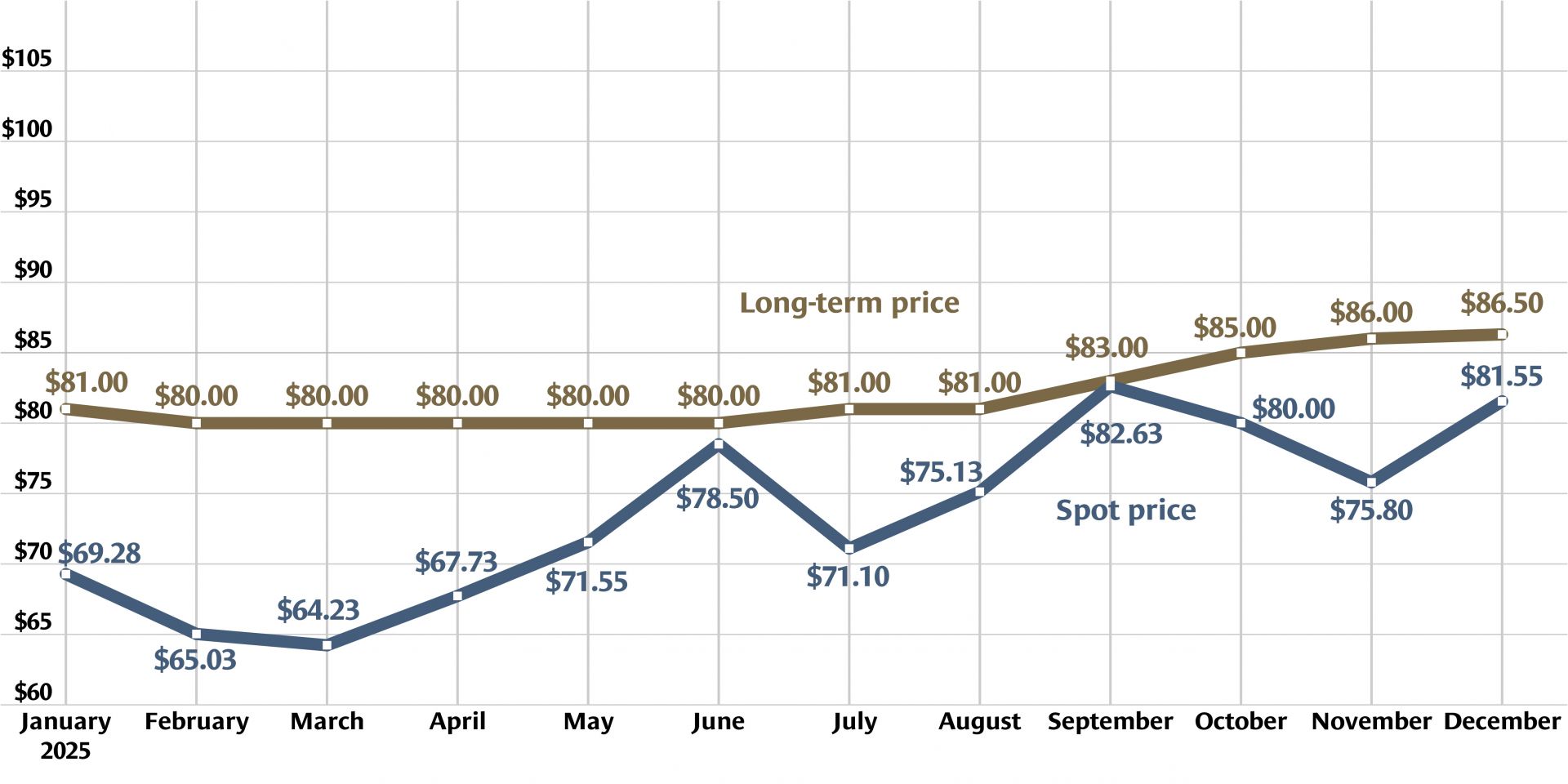
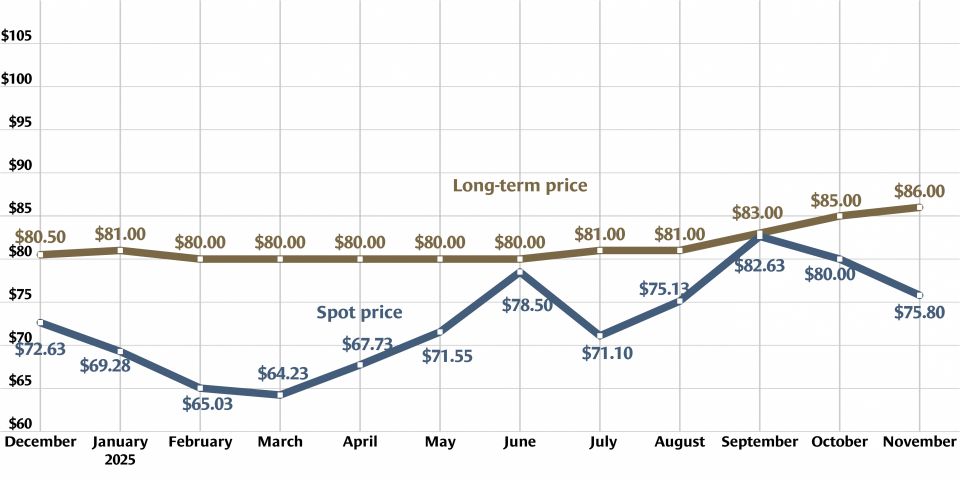
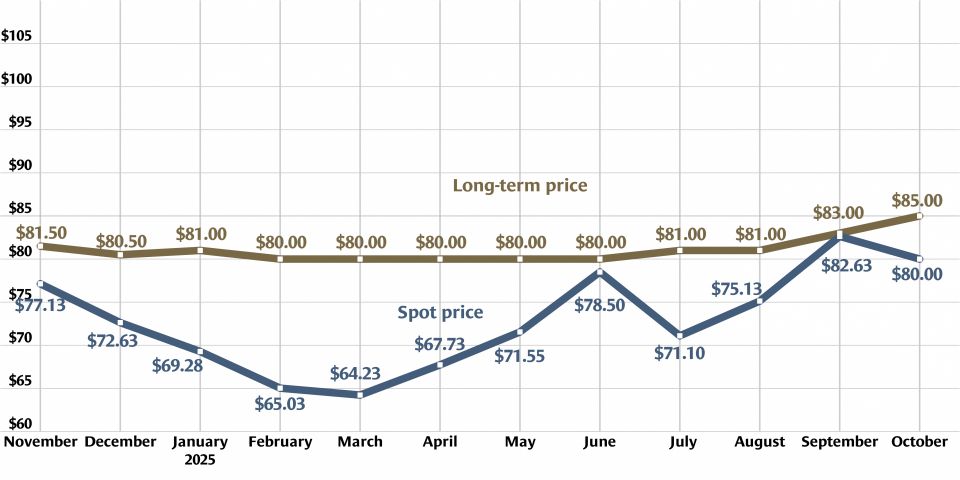
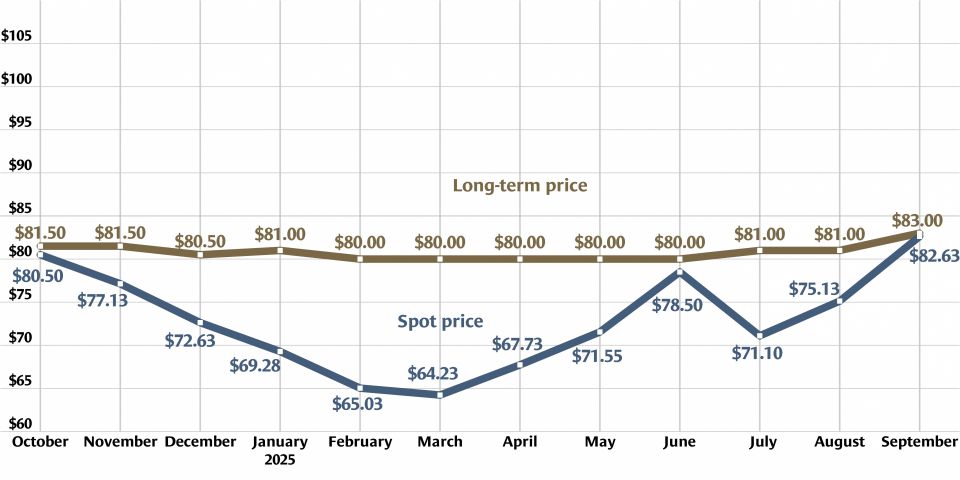
Spot prices: Cameco calculated an end-of-December spot price for uranium of $81.55/lb. This is the second-highest spot price posted by the Canadian uranium firm in 2025—the highest being $82.63/lb at the end of September. The lowest spot price listed by Cameco in 2025 was $64.25/lb, at the end of March.

-3 2x1.jpg)