-3 2x1.jpg)
My Story: John L. Swanson—ANS member since 1978
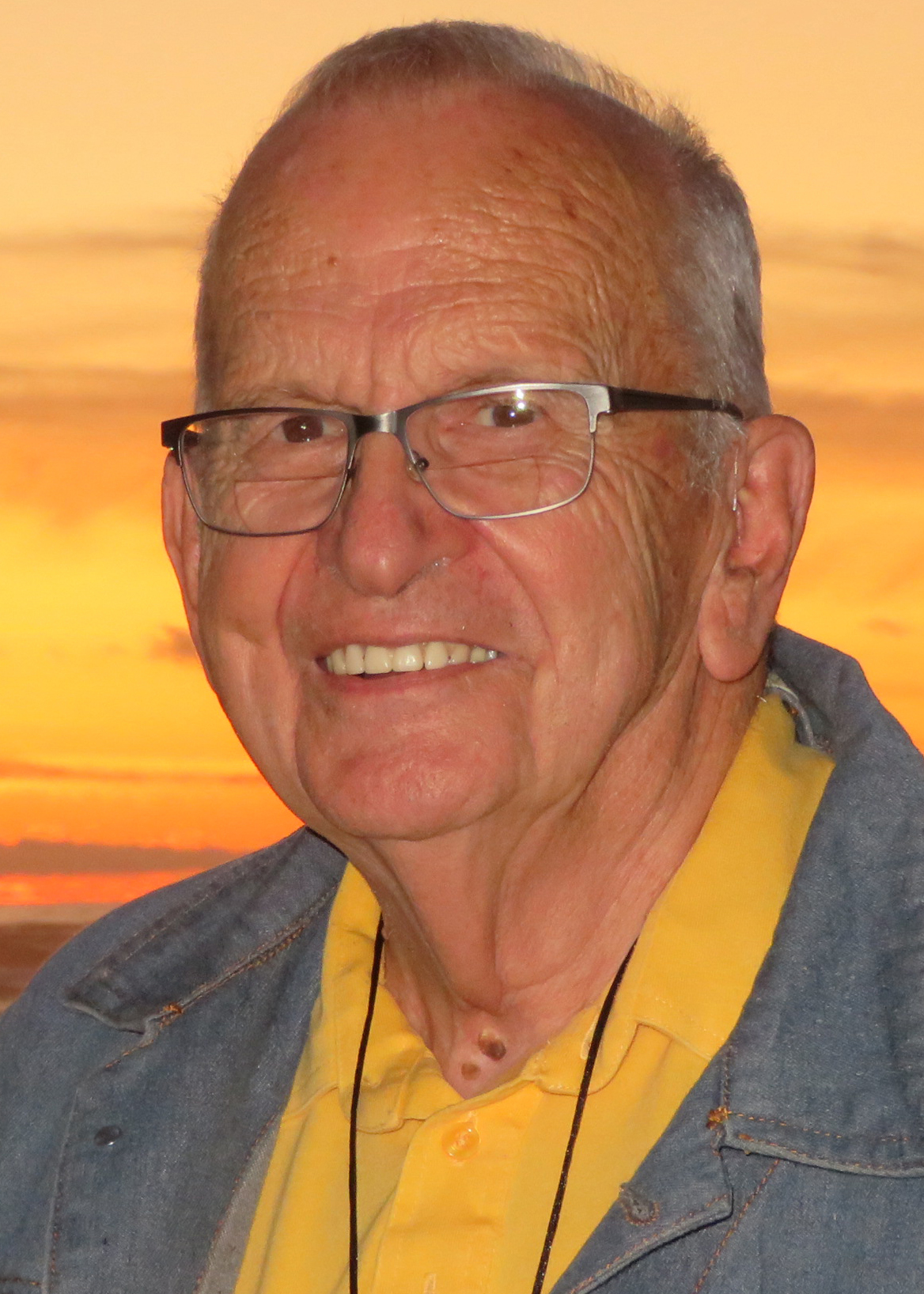
. . . and in 2019, on his 90th birthday.
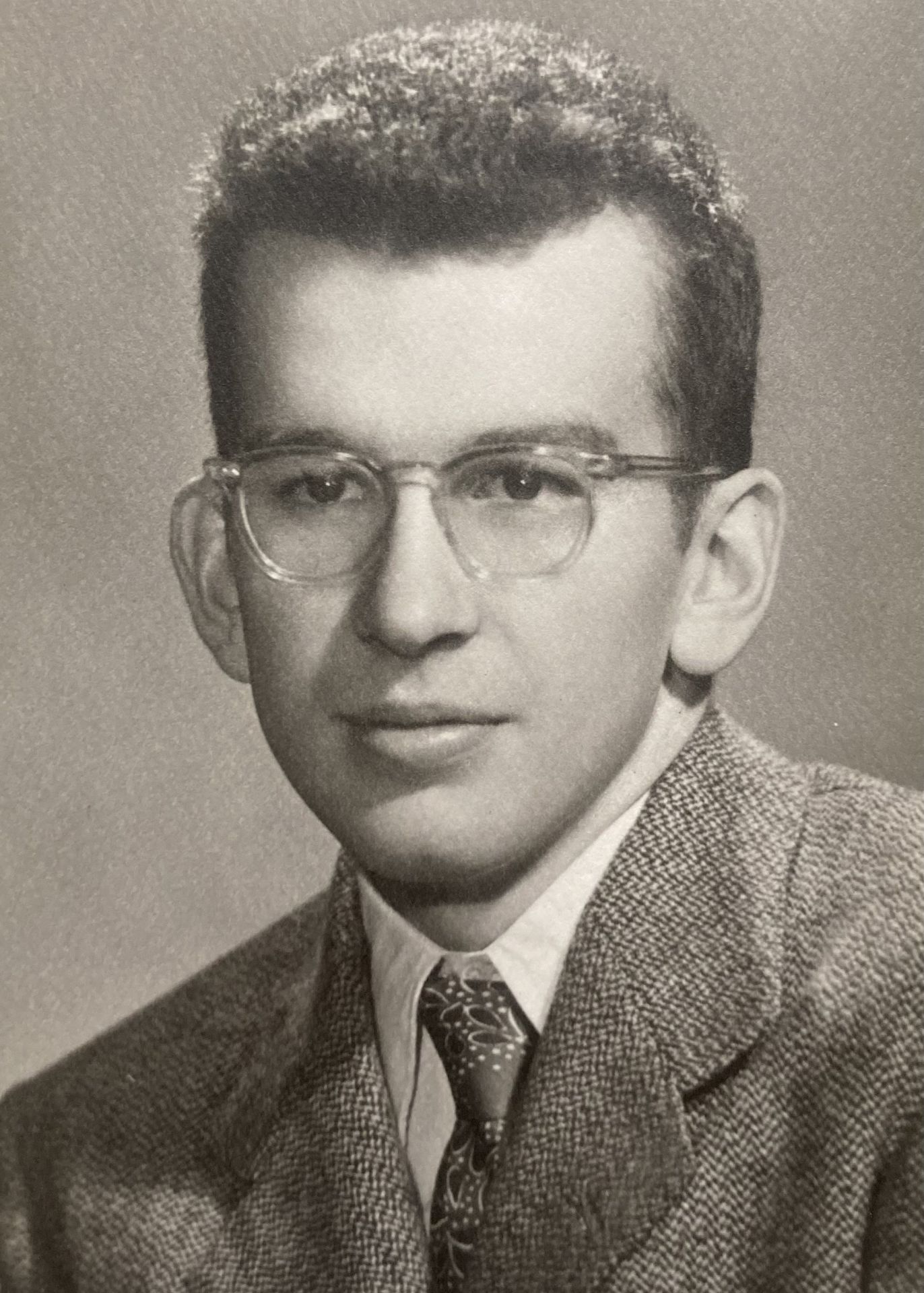
Swanson in 1951, the year of his college graduation . . .
My pre-college years were spent in a rural suburb of Tacoma, Wash. In 1947, I enrolled in Reed College, a small liberal arts school in Portland, Ore.; I majored in chemistry and graduated in 1951. While at Reed, I met and married a young lady with whom I would raise 3 children and spend the next 68 years of my life—almost all of them in Richland, Wash., where I still live.
I was fortunate to have a job each of my “college summers” that provided enough money to cover my college costs for the next year; I don’t think that is possible these days. My job was in the kitchen/dining hall of a salmon cannery in Alaska. Room and board were provided and the cannery was in an isolated location, so I could save almost every dollar of my salary.
My career in the nuclear industry began several months after college graduation, when I was hired by the General Electric Company to work at the Hanford Site, which they were managing under contract with the Atomic Energy Commission. I eventually became what I’ll call a “process development chemist.” My job comprised activities that ranged from basic chemistry to flowsheet development to interaction with engineers involved in plant operations. Later on, I was removed from lab work and became what I’ll call a “paper studies chemist,” where I addressed more complete systems aspects of spent fuel reprocessing and nuclear waste management.
For those who don’t know, the Hanford Site was established, near the city of Richland in southeast Washington state, during World War II – to produce plutonium for use in atomic bombs. It was one of three major sites of the Manhattan Project, along with Oak Ridge, Tennessee, where uranium was enriched in the U-235 isotope to make bomb-grade material, and Los Alamos, New Mexico, where the bombs were designed and built.
Plutonium was produced by irradiating aluminum alloy-clad uranium metal fuel elements in water-cooled and graphite-moderated reactors (called “piles” back then). Three reactors operated during World War II and six more were added during the Cold War. The plutonium was recovered and separated from uranium and fission products by chemical means in “reprocessing plants”. Three different processes were used in such plants over the years at Hanford. The “Bismuth Phosphate” process was a batch, carrier precipitation, process which was used about 1944-1956; the “REDOX” process was a continuous, solvent extraction, process that was used about 1952-1967; and, the “PUREX” process was an improved continuous solvent extraction process that was used about 1956-1972 and 1983-1990.
In the mid-1960s, the Atomic Energy Commission decided to change the Hanford Site management system from a single contractor to multiple contractors (one for the reactors, another for the reprocessing plants, etc.). As part of this process, Battelle Memorial Institute established a Pacific Northwest Laboratory (PNL) and assumed management of what had been GE’s Hanford Laboratories Operation, of which I was a member. Shortly after I retired, PNL became a national laboratory (PNNL).
My first assignment at the Hanford Site in GE’s “tech grad” program was in a research group whose efforts were centered on the chemical separations aspects of spent fuel reprocessing and waste management. Those areas turned out to be the ones in which I spent the vast majority of my career, some highlights of which I will discuss here.
After about three years of working on projects under the lead of Ph.D. chemists, I was assigned my own projects. A few years later, I had my first patent, for the “Zirflex process,” which allowed zirconium alloy–clad fuel elements to be processed in REDOX and PUREX plants, which had been designed to process aluminum alloy–clad fuel elements.
I continued to do experimental work in support of the Hanford PUREX plant off and on until it was shut down several decades later. One of the last such projects was memorable not only because it successfully determined the reason for some excessively rapid dissolution reactions that were occurring in the plant, but also because it required—and received—excellent coordination and cooperation among people from four different contractors.
In the 1970s, I also did several flowsheet development studies in support of a privately-funded plant that was being constructed at Barnwell, SC to reprocess spent fuel from commercial power reactors, using a variation of the PUREX solvent extraction process that had proven so successful in reprocessing spent fuel from AEC/DOE reactors at the Hanford and Savannah River sites (as well as in other countries). Such work came to an abrupt end late in that decade when President Carter issued an executive order banning the reprocessing of commercial spent fuel in this country. This ban was removed a few years later, but there has been little new private-sector interest in commercial fuel reprocessing until just recently.
An interesting feature of this privately-funded work was that some of my colleagues at PNL were, at the same time, doing work in support of a different company’s (EXXON Nuclear’s) plan to build a plant for the same purpose. Thus, for several years, proprietary considerations severely limited the helpful discussions of our work that we were accustomed to having.
I was also involved in a commercial fuel reprocessing activity in the late 1970s that did not involve lab work; it was in the final stages of preparation of a DOE-funded document in support of a generic environmental impact statement on the management of wastes produced in the commercial nuclear power light-water reactor fuel cycle. My small role was to help standardize the inputs from multiple sources; I mention it here only because it taught me a lesson that I hadn’t realized before – and that few current advocates of commercial fuel reprocessing seem to consider.
This lesson is that commercial fuel reprocessing alone is not likely to provide much, if any, decrease (relative to disposal of packaged spent fuel) in the volume of wastes that require geological disposal. The act of reprocessing can indeed give a significant decrease in the volume of “high-level waste” to be disposed of in a geologic repository, but it also generates significant amounts of contaminated wastes (e.g., ventilation filters, failed equipment, protective clothing), as well as fuel element cladding hulls, that contain transuranic elements at levels higher than are allowed for near-surface waste disposal.
When the focus at Hanford shifted from plutonium production to site remediation, I studied the applicability of chemical separations processes to reduce the concentration of transuranic elements in Hanford’s tank wastes so that the treated wastes might be disposed of more cheaply, as low level waste. Results were promising, but this approach was not chosen for implementation.
After the downfall of the Soviet Union, the United States sought meaningful ways to support Russian scientists and engineers so that they would not be tempted to use their skills in support of nuclear activities in rogue nations. In 1993, I was asked to join a Department of Energy delegation to Russia to evaluate some programs that workers there had proposed for treatment of U.S. defense wastes. A personal highlight of that trip was a half-hour “private conversation” with a Russian engineer. Though neither of us could speak the other’s language, we communicated just fine using flow diagrams, numbers, and chemical symbols.
For several years following my 1995 retirement from Pacific Northwest Laboratory [the same year “National” was added to its name], I remained moderately active as a consultant, primarily serving as a member of various national groups and panels that addressed treatment options for stored reprocessing wastes—especially the tank wastes at Hanford. In 2000, I was very honored to receive the Glenn T. Seaborg Actinide Separations Award of the Actinide Separations Conference.
Finally, I will mention how fortunate I was in my career. It began at a time and place when the lack of a Ph.D. was not given the weight it carried later, and most of it was at a time when experimentalists could do their work without being burdened by lots of unnecessary paperwork. I got to interact with lots of very smart people, not only at PNL and Hanford, but nationwide. The vast majority of these people were also nice human beings and became lifelong friends.
We welcome ANS members with long careers in the community to submit their own stories so that the personal history of nuclear power can be captured. For information on submitting your stories, contact nucnews@ans.org.
Editor's note: A previous version of this story incorrectly attributed the Glenn T. Seaborg Actinide Separations Award to the American Chemical Society rather than the Actinide Separations Conference. Nuclear News regrets this error.