-3 2x1.jpg)
The legacy of Windscale Pile No. 1
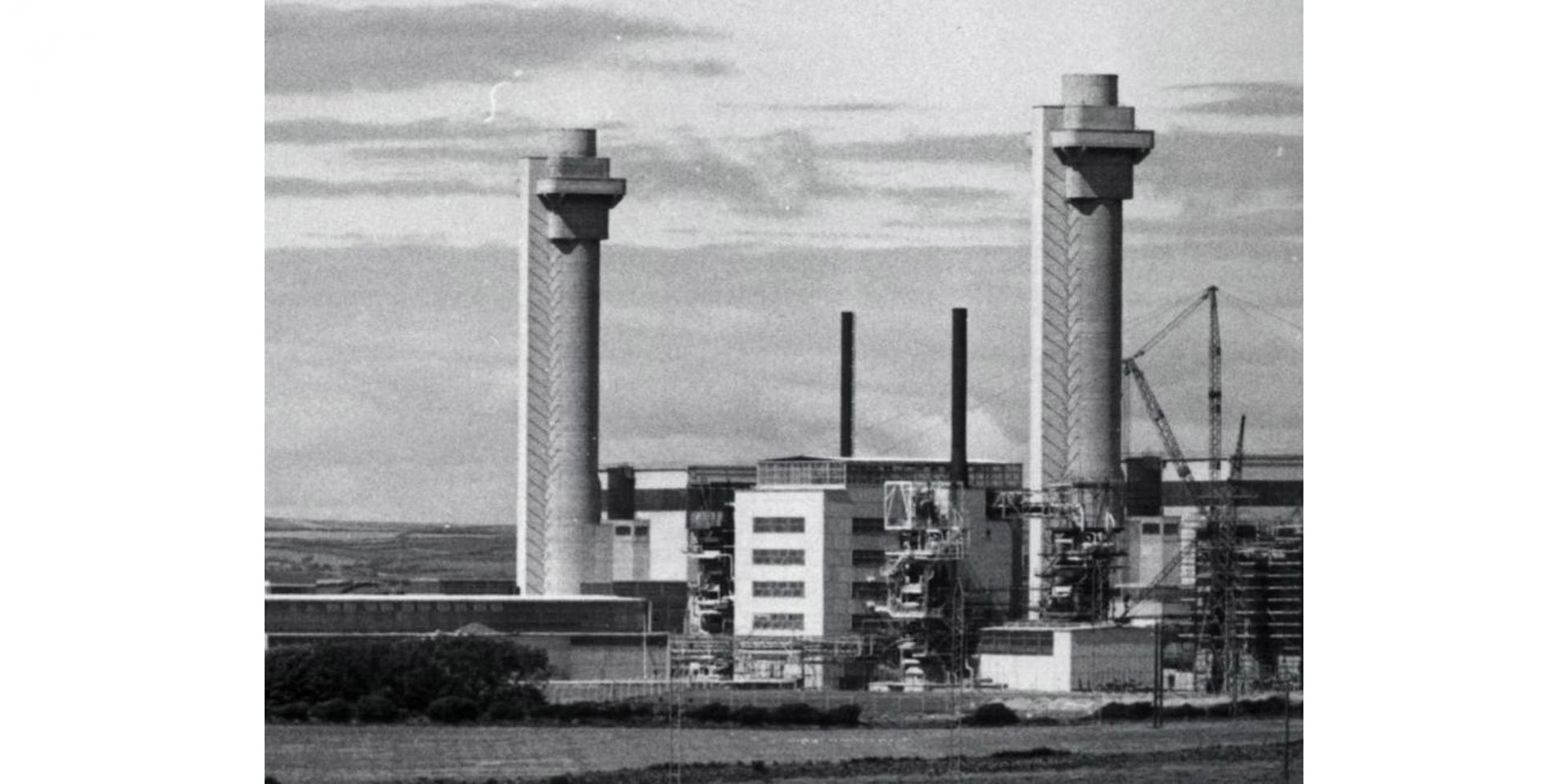
The core of Pile No. 1 at Windscale caught fire in the fall of 1957. The incident, rated a level 5, “Accident with Wider Consequences,” by the International Nuclear and Radiological Event Scale (INES), has since inspired nuclear safety culture, risk assessment, accident modeling, and emergency preparedness. Windscale also helped show how important communication and transparency are to gaining trust and public support.
The Pile No. 1 fire served as an example of the importance of examining risks that develop when aspects of many different complex systems, each with their own inherent risks, are combined into one functional system. The risks of a graphite-moderated, air-cooled reactor came to light because of Windscale. The incident provided inspiration for the risk studies that would come later, such as WASH-1400 and probabilistic risk assessment (PRA).
Thomas R. Wellock, in the Nuclear News article “The origins of The Reactor Safety Study” (September 2021, p. 42), gave a history of WASH-1400: “The major contributors to overall risk came not from a design basis accident or catastrophic vessel failure, but seemingly minor events such as small-break LOCAs, human error, and common-cause events.” By applying this logic to earlier events at Windscale Pile No. 1, it could be argued the common-cause event (excess heat in the core graphite) and human error in attempting to extinguish the fire were major contributors to the overall risk of fire at the site.
Background
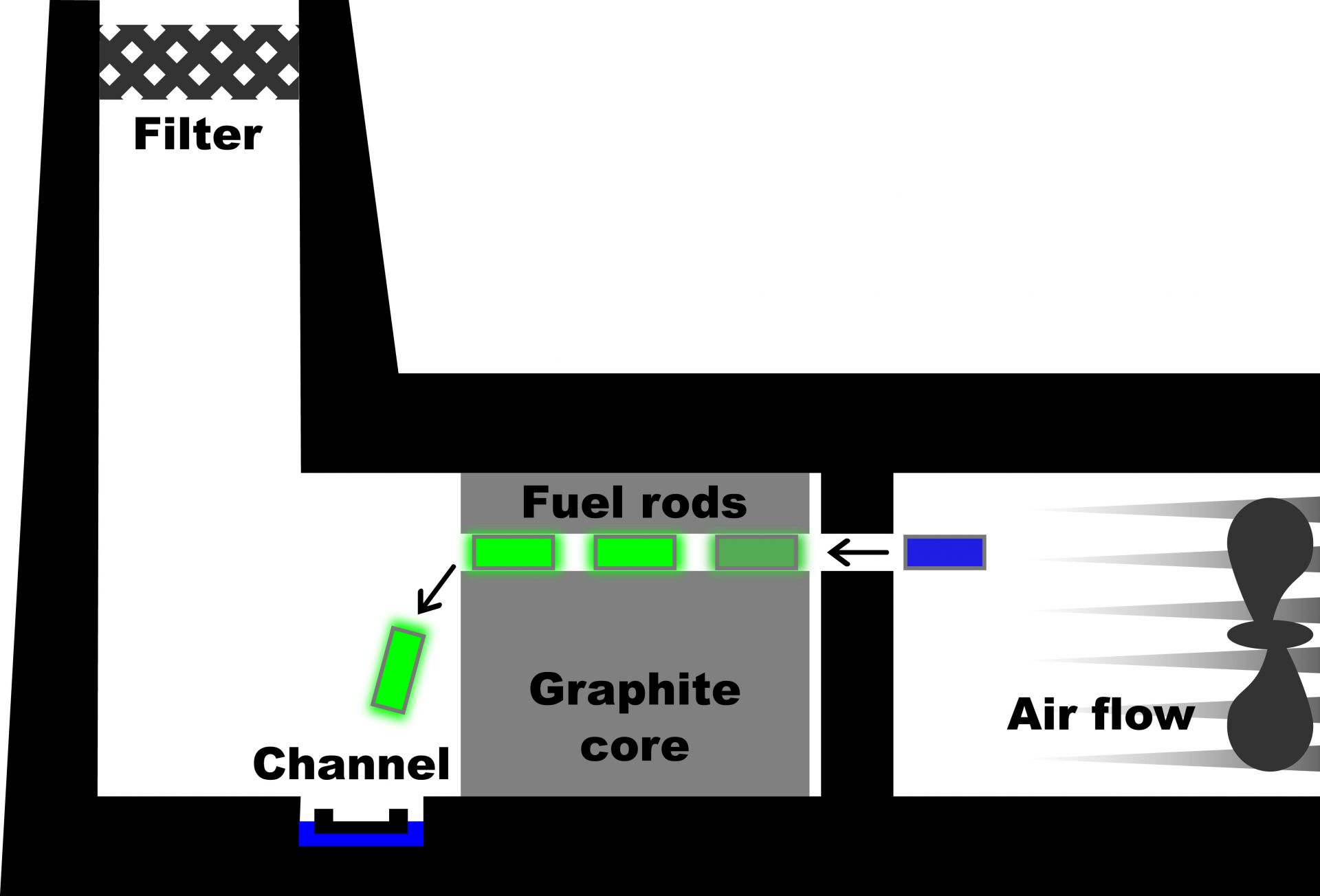
A diagram of the Windscale nuclear reactor. (Image: Wikimedia Commons)
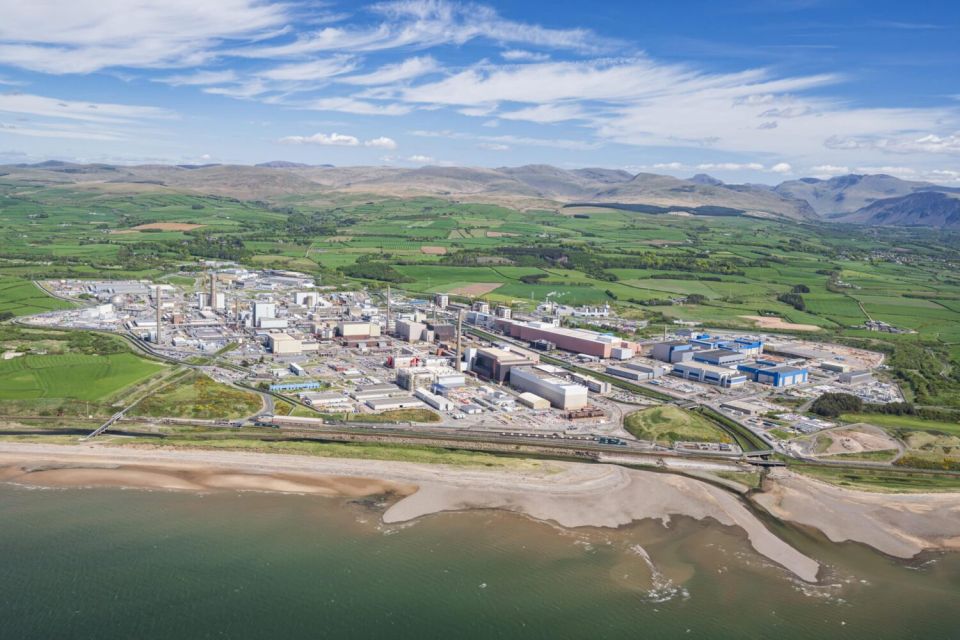
The British government initiated its development of nuclear technology after the Atomic Energy Act of 1946 ended nuclear collaboration between the United States and its World War II allies (specifically, the United Kingdom and Canada). What followed were the Windscale Piles, in Seascale, Cumberland, England, which were planned and built with the aim of producing plutonium for defense purposes. Windscale Pile No. 1 became operational in 1950, and Windscale Pile No. 2 followed shortly in 1951.
The U.K. government realized early in the design process that, if a water-cooled reactor were to be used, the site was not large enough to provide a safety barrier in case of an accident. If the flow of water coolant were to be interrupted, an evacuation and exclusion zone could require ample land area that the U.K. simply did not have. The government thus decided to construct both reactors with a natural draft air convection core cooling system, with a massive cooling chimney at each reactor that would soar nearly 400 feet into the air.
In the reactor design, fuel channels ran horizontally to the core and were surrounded by graphite. The chimney, located at the back of the pile, would carry heat away through natural convection. Industrial fans positioned at the front of the core could be turned on to enhance the effect of natural convection. Each fuel cartridge was about one foot in length and was protected by a finned casing. The fuel was loaded into the core from the front of each pile, and as each new cartridge was added, previously irradiated cartridges, which now contain plutonium, were pushed out the back side to fall into a pit of cooling water.
The incident
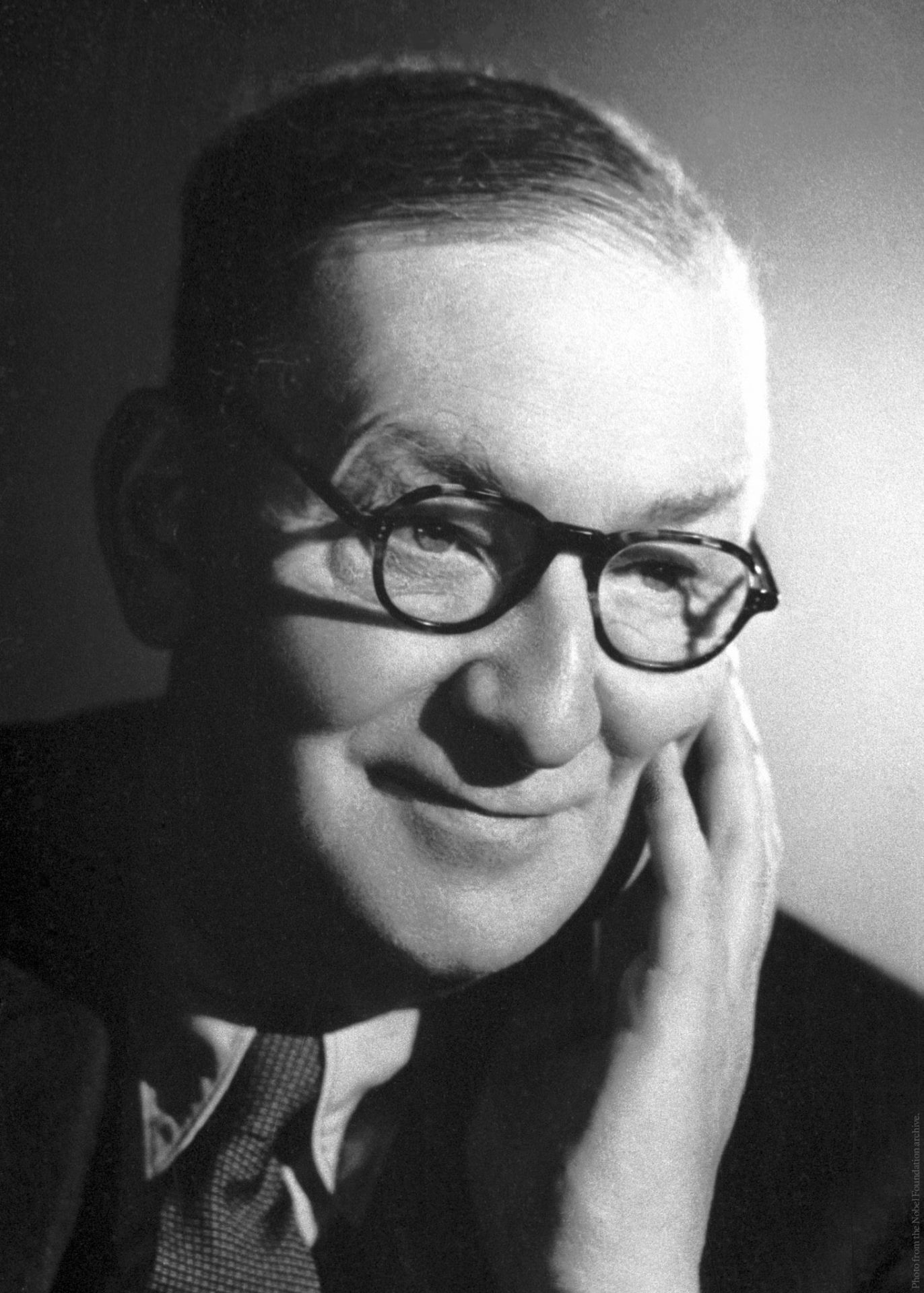
Cockroft
Various situations that could potentially jeopardize the structural integrity of each pile were considered for the reactor design. Situations included everything from fuel becoming lodged in the fuel channels to irradiated fuel cartridges breaking open after being pushed into the cooling pit. Sir John Cockcroft, a pioneer of nuclear physics, suggested that if there were a fire at the rear of the reactor, the uranium could ignite, causing radioactive elements to escape from the chimney. He recommended that filters be added to each chimney. This concern, however, was disregarded until late in construction. Only after the chimneys were built were filters assembled and fitted to the top of each structure. The filters, mocked by engineers as “Cockcroft’s follies,” would soon prevent a radiological disaster.
On October 7, 1957, the core of Pile No. 1 was heating up unusually. The reactor operators attempted to release excess heat by means of a Wigner release, a routine way to expel the buildup of energy from neutrons bombarding the graphite in the reactor core. The attempted Wigner release helped relieve core temperatures, but operators noticed that the temperature in fuel channel 2053 was still rising. The next morning, another Wigner release was conducted and appeared to be successful.
Typically, a Wigner release would reduce energy in the core in a short amount of time, and temperatures would start to level off and then fall. On October 10, however, thermocouples monitoring the Pile No. 1 core indicated that temperatures were headed in the wrong direction. To reverse the temperature rise, operators turned on the industrial cooling fans to assist the natural draft convection and provide additional cooling to the core. But soon after, radiation detectors within the chimney indicated that there had been a release of radioactivity.
Adding airflow via the cooling fans had been a mistake. After inspecting a fuel channel, operators realized that the core was on fire. The increased airflow had fanned the flames at the rear of the reactor, causing the fire to engulf additional fuel channels. The blaze began to burn uncontrollably, and soon, the radiation readings in the chimney began to increase. The fire likely had been burning for the previous two days.
Operators attempted to extinguish the fire by increasing fan speed in hopes of blowing out the flames. Instead, this action only increased the size of the blaze. Next, operators tried to use carbon dioxide to starve the fire of oxygen, but not enough carbon dioxide was pumped into the fire to successfully extinguish it.
By October 11, the fire was still raging, fueled by roughly 11 tons of uranium. Using water to extinguish the fire was the least desirable option due to a possible hydrogen explosion. Operators feared that the red-hot fuel elements could strip the oxygen away from water, leaving hydrogen. Any presence of highly explosive hydrogen in the core would be disastrous.
Eventually, however, it seemed the only remaining option, and so the operators proceeded to douse the fire with water. The core was monitored for signs of a hydrogen reaction as water was added, and although there was no buildup or explosion, ultimately the water also proved unsuccessful in fighting the fire.
The operators seemed out of options. As a last resort, they shut down the large industrial cooling fans, thinking that the fans may be providing an ample supply of oxygen to keep the fire alive. Sure enough, after the fans were shut down, the flames started to retreat, and soon the fire went out.
Both Windscale reactors were shuttered after the fire, which remains the U.K.’s largest nuclear incident. It would have been far worse if not for the “Cockcroft’s folly” filters.
In the 1960s, fuel removal and operations to isolate contamination were conducted, and demolition of Pile No. 1 started in late 2018. The Nuclear Decommissioning Authority and Sellafield Ltd. are managing the site, with core components and fuel elements contained and sealed.
Understanding the thermal state of the reactor’s core during a buildup of energy from neutrons bombarding the graphite in the reactor’s core was key. Windscale was one of the first case studies that helped nuclear engineers around the world develop an understanding of the risks involved and serious potential consequences that can result from normal operations that do not go as planned. The events at Windscale helped the international nuclear industry develop nuclear safety standards during engineering, construction, and operations. The fire 68 years ago in Pile No. 1 also helped the international nuclear industry with radiation monitoring efforts, decommissioning, and long-term storage methods.
Editor’s note: This article has been expanded from the original version published in Nuclear News in October 2022.
Jeremy Hampshire is an ANS member whose avocation is writing about the history of nuclear science and technology. His experience includes time as a lead nuclear quality assurance auditor and a senior nuclear technical advisor.