Now, another one of those selected companies, Berkley, Calif.–based Deep Fission, has a significant announcement of its own. In a press release today, the company unveiled that it has raised $30 million in a “heavily oversubscribed private placement offering at $3.00 per share.”
Deep Fission also revealed that it has completed a go-public reverse merger transaction with Surfside Acquisition.
Some background: Deep Fission is pursuing the development of the 15-MWe Deep Fission Borehole Reactor-1 (DFBR-1), a pressurized water reactor that the company plans to site one mile underground via a 30-inch borehole.
Alongside Curio, Kairos, and NuCube Energy, the DOE awarded Deep Fission a Gateway for Accelerated Innovation in Nuclear (GAIN) voucher in January. This voucher is intended to support the company in working with INL to assess the thermal hydraulics involved in siting a microreactor underground.
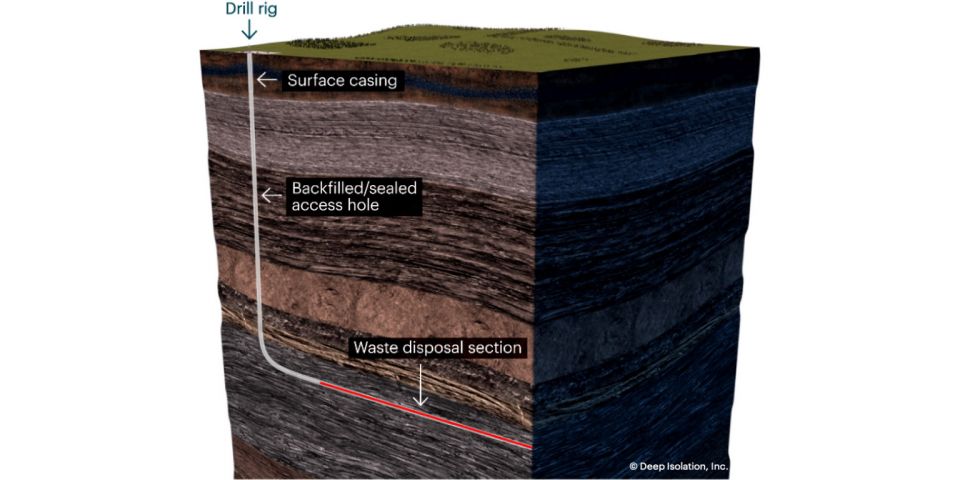
Deep Fission maintains close ties with Deep Isolation, a company that seeks to leverage its directional drilling technology for long-term nuclear waste disposal in deep boreholes. Both companies were cofounded by father-daughter business partners Richard and Elizabeth Muller. Elizabeth is the former CEO of Deep Isolation and the current CEO of Deep Fission.
Quotable: “This is a unique moment for the nuclear industry. Deep Fission has the right technology, at the right time, and in the right place. With this funding, we can begin building our pilot reactor with the goal of completion in 2026. We believe we can scale our technology rapidly and profitably to address the massive energy demand from AI data centers and other customers around the world,” said Elizabeth Muller, evincing alignment with the DOE’s hope that pilot projects in their program will mature into widely deployed commercial technologies.


 2x1.jpg)