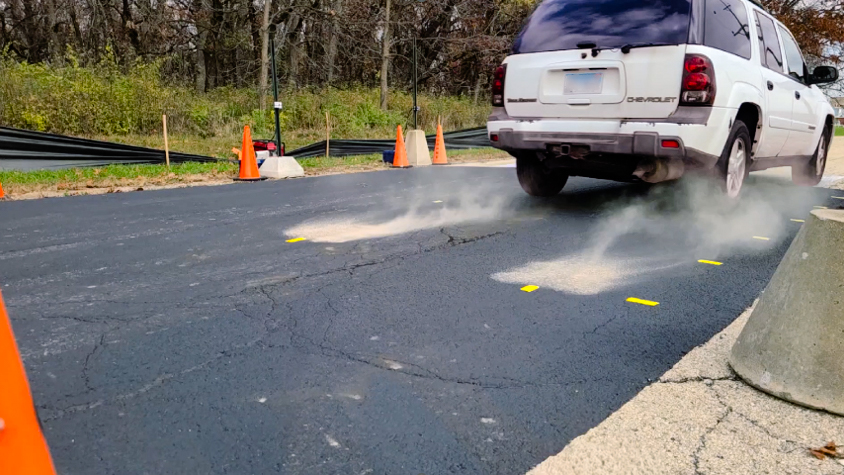
An emergency vehicle test to measure the amount of dust resuspended from the ground. (Photo: Argonne National Laboratory)
Researchers at Argonne National Laboratory have conducted experimental tests on how particles from paved surfaces become suspended from activities such as walking, driving, and vacuuming, aiming to improve modeling of radiological and other contamination scenarios where emergency operations may kick up hazardous dust.
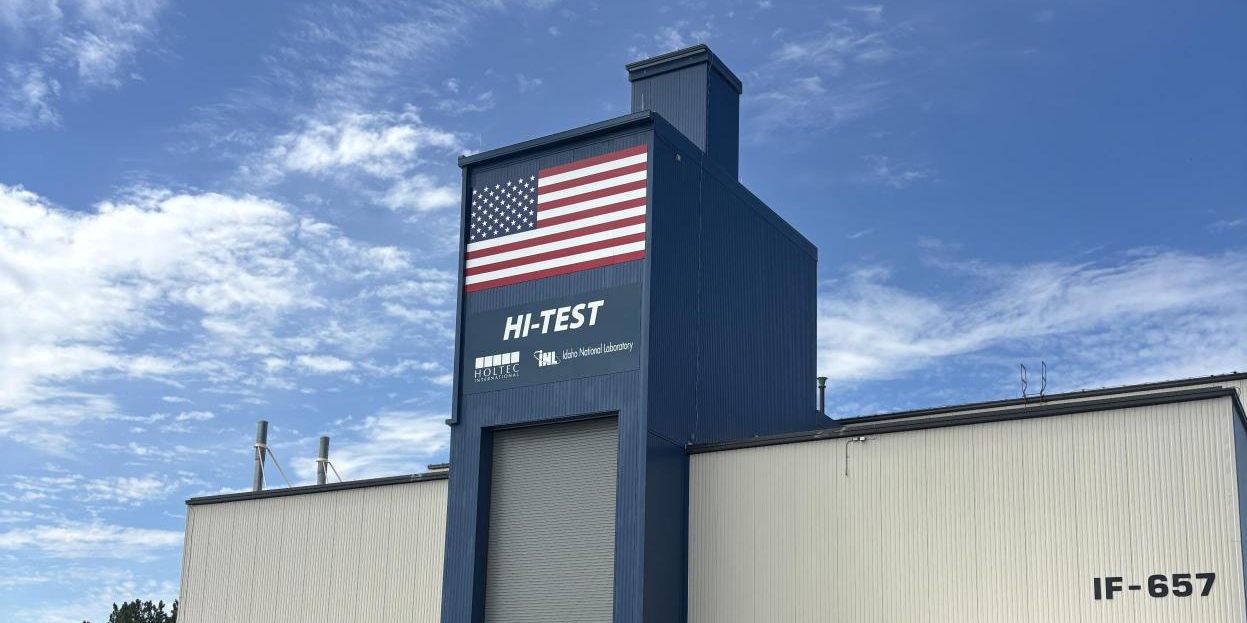
The HI-TEST facility at Idaho National Laboratory. (Photo: Holtec)
Holtec has announced it is advancing with component fabrication for a testing facility at Idaho National Laboratory that it will use to quantify performance margins of its SMR-300 pressurized water reactor. The facility, dubbed HI-TEST, will use test loops to replicate accident scenarios and steam generator behavior, aiming also to support future power uprating for SMR-300 units.
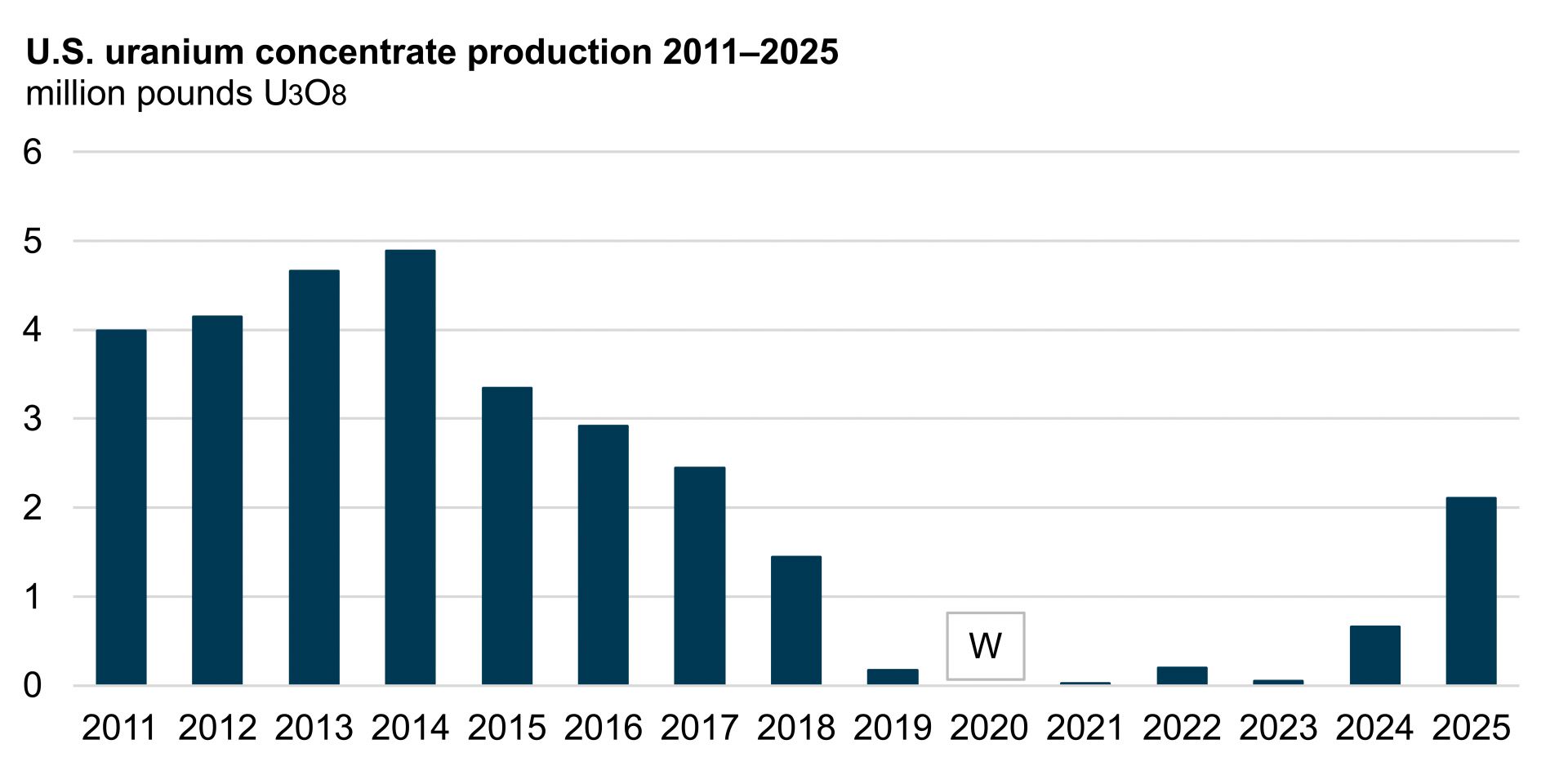
U.S. U3O8 production more than tripled from 2024 to 2025. (Image: Energy Information Administration)
Data source: U.S. Energy Information Administration, Monthly Energy Review, and Domestic Uranium Production Report
Note: W=Data withheld to avoid disclosure of individual company data.
According to the Energy Information Administration (EIA), the amount of uranium concentrate produced in the United States in 2025 was more than three times greater than that produced the year before, and amounted to about 2.1 million pounds of U3O8, compared with the 657,000 pounds generated in 2024. It’s the largest amount produced in the United States since 2017.
The future of nuclear depends not only on new technology, but on preserving the knowledge behind decades of safe operation.
The nuclear industry is entering a new chapter.
Existing plants are extending operating lives beyond their original design expectations. New reactor technologies are moving from concept to construction. Investment in domestic manufacturing and fuel production is accelerating, and utilities are strengthening supply chains to support decades of future operation.
At the same time, another transition is taking place.
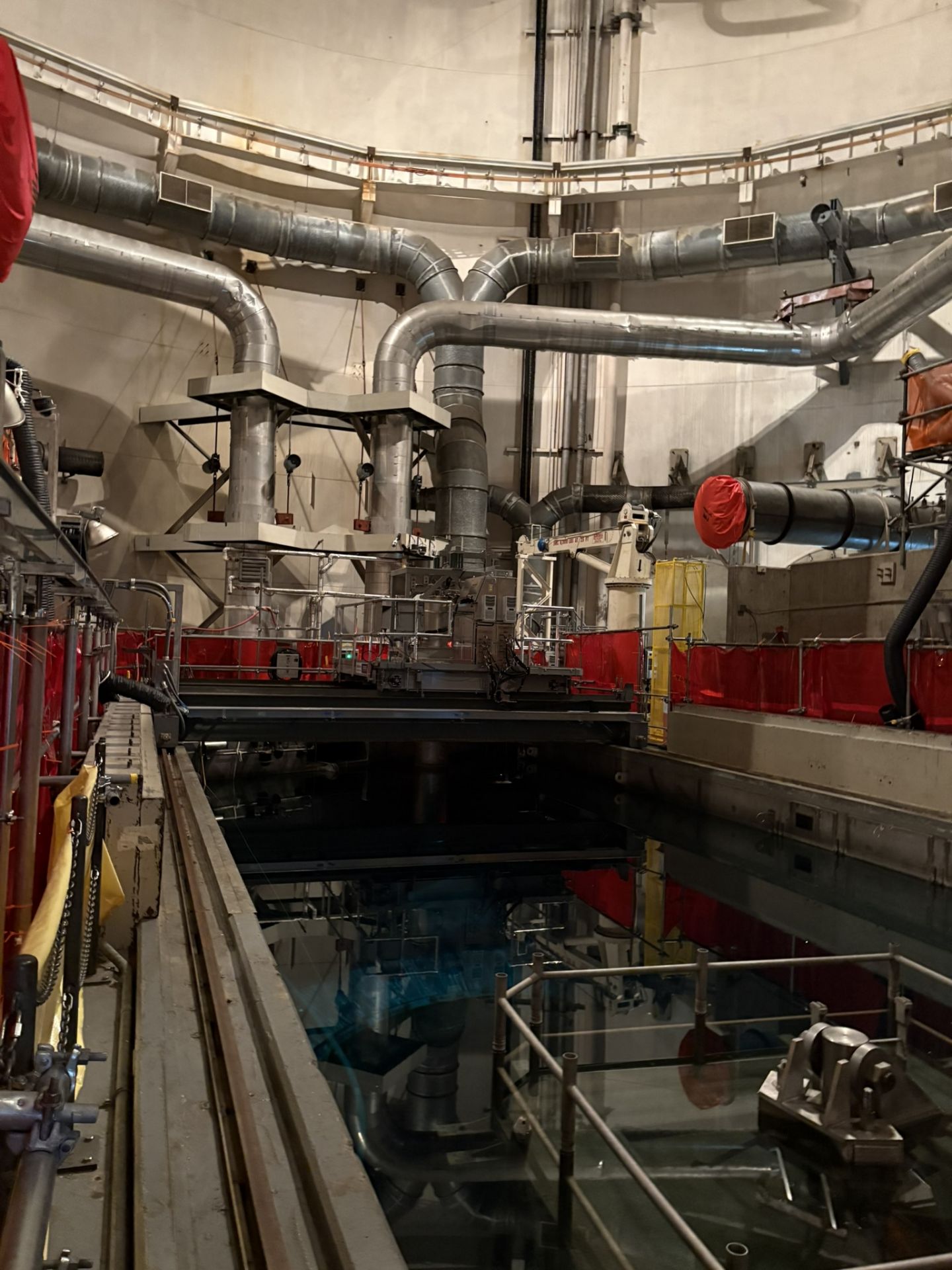
The Palisades reactor cavity and fuel-handling machine. (Photo: Holtec)
The Palisades nuclear power plant has drawn closer to restart, as plant staff began the process of loading fuel into the reactor vessel on Sunday morning.
The commencement of fuel loading places the Covert, Mich., facility in Mode 6—or the refueling stage—under the plant’s technical specifications, plant owner and operator Holtec International said in a news release. The Palisades reactor core consists of 204 fuel assemblies that include new fuel and partially used fuel from the plant’s most recent operating cycles. According to Holtec, the fuel loading is being conducted in accordance with plant procedures and technical specifications.
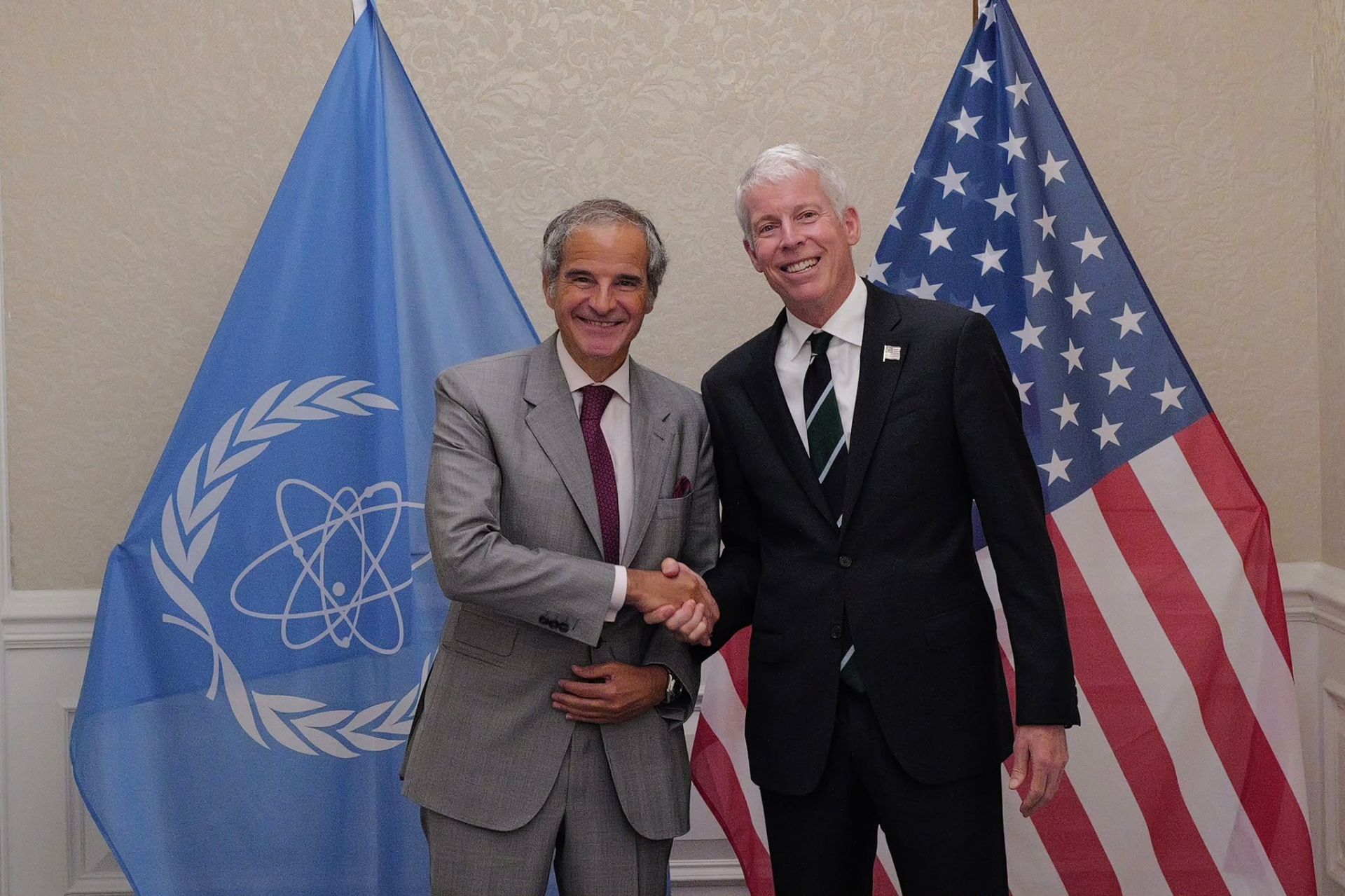
IAEA Director General Rafael Mariano Grossi (left) and DOE Secretary Chris Wright. (Photo: IAEA)
Just days after the Department of Transportation’s Maritime Administration (MARAD) and the Port of Corpus Christi announced a partnership to explore the development of small modular reactors in the U.S. seaport, multiple other maritime nuclear announcements were unveiled to the public, including another MARAD partnership.
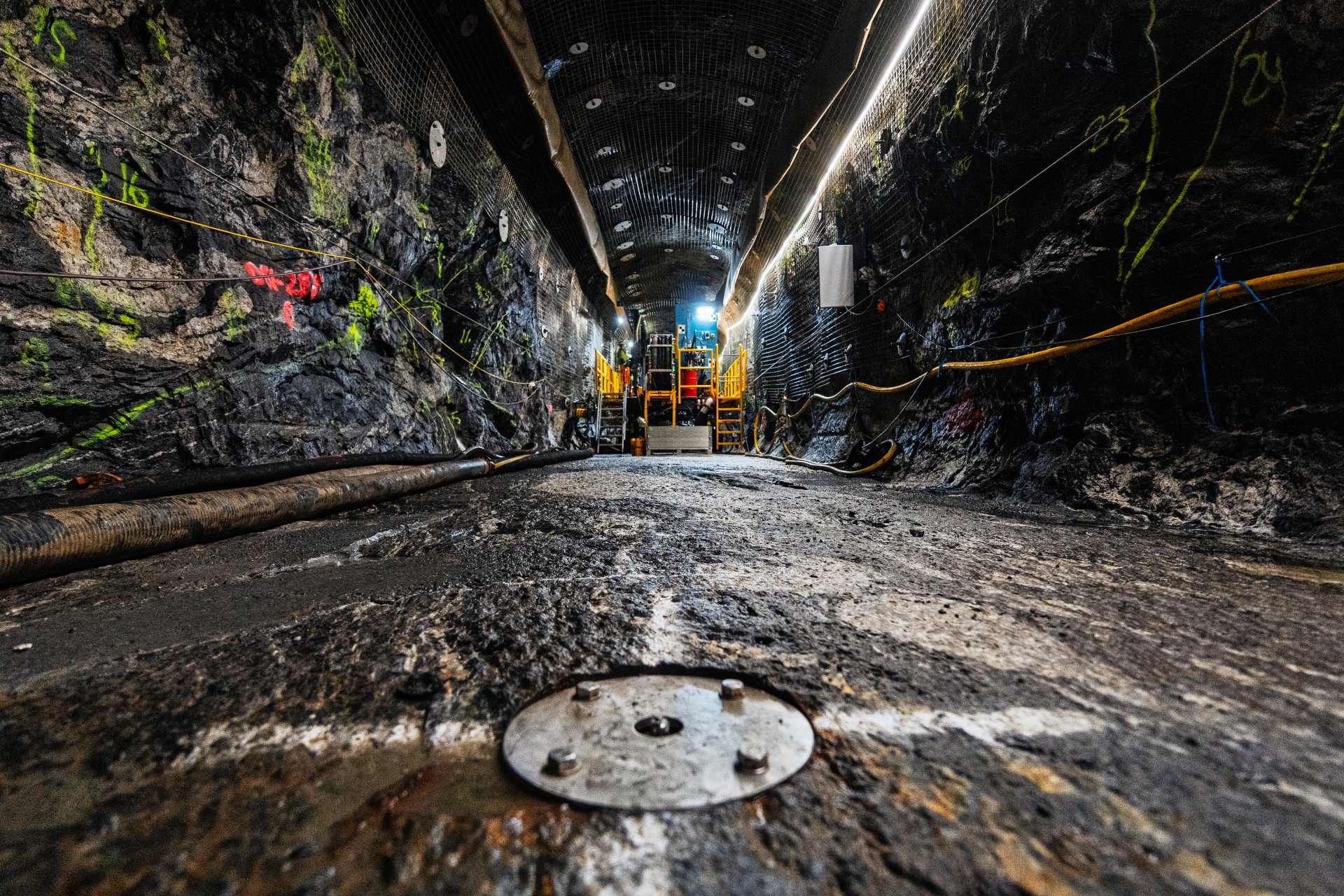
The disposal tunnel where the drilling of holes for nuclear waste has begun at Posiva’s Onkalo deep geological repository in Finland. (Photo: Posiva)
Last week the Finnish nuclear waste management company Posiva began drilling holes for final disposal at the Onkalo deep geological repository, near the Olkiluoto nuclear power plant in western Finland. The company’s German-made Deposition Hole Boring Machine (DHBM) took about 10 hours to drill the first hole, with a depth of 8.4 meters and a diameter of 1.75 meters, into the 1.9-billion-year-old bedrock. This is the first deposition hole intended for an iron-copper canister containing spent nuclear fuel—though test holes have been drilled at the site since 2022.
The Onkalo repository received a favorable safety assessment from the Radiation and Nuclear Safety Authority of Finland earlier in August.
IAEA Director General Rafael Mariano Grossi speaking at NECX 2026. (Photo: ANS/NEI)
Last week, the American Nuclear Society and the Nuclear Energy Institute jointly hosted the second annual Nuclear Energy Conference & Expo in Dallas, Texas. NECX serves as both a combination and evolution of ANS’s Utility Working Conference and NEI’s Nuclear Energy Assembly.
For the second year in a row, NECX brought together utilities, advanced reactor developers, suppliers, regulators, policymakers, investors, engineers, and innovators for a wide range of discussions pertaining to the present and future of the industry.
TRISO particle fuel is fully encapsulated by layers of carbon- and ceramic-based materials that prevent the release of radioactive fission products. Each particle (roughly the size of a poppy seed) acts as its own containment system and is more resistant to neutron irradiation, corrosion, oxidation, and high temperatures than traditional reactor fuels. (Image: LLNL)
Lawrence Livermore National Laboratory has formed a strategic partnership with Ampera to develop the company’s nuclear fuel concept through a project named THUNDER, for Thorium Unimodal Droplet Ejection for Reactors.
The focus of THUNDER is fabricating TRISO made with kernels of thorium rather than the usual uranium. LLNL and Ampera will evaluate and optimize liquid metal–jetting technology to produce highly uniform, spherical kernels of thorium-232 for later processing into TRISO fuel.
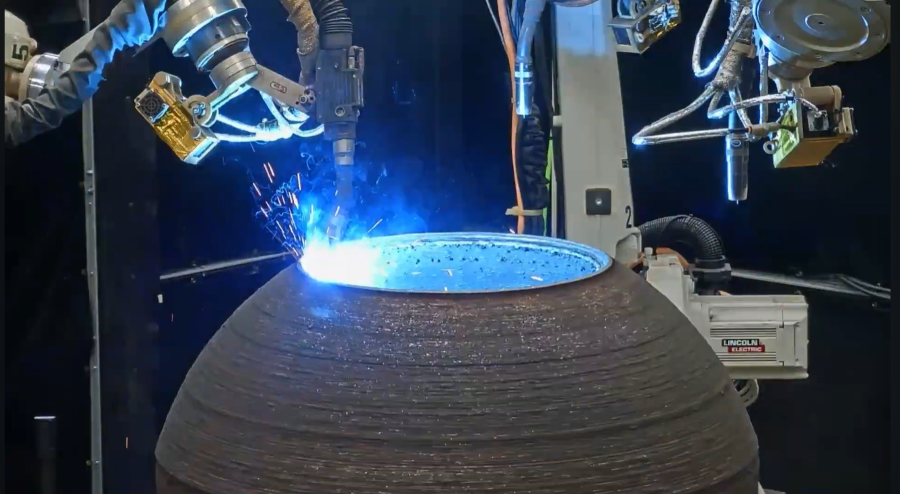
A model pressure vessel being printed at ORNL, showing that a nuclear-appropriate metal alloy can be formed into a complex domed shape. (Photo: ORNL)
Oak Ridge National Laboratory and Idaho National Laboratory have announced they will collaborate to help industry develop a process for wire arc 3D printing of industrial pressure vessels used for nuclear energy and chemical processing.
“By working with industry to demonstrate, validate, and qualify advanced manufacturing technologies, we can reduce risk, accelerate deployment, and strengthen the domestic supply chains essential to America’s energy future,” said Robert Wagner, ORNL associate laboratory director for energy science and technology.
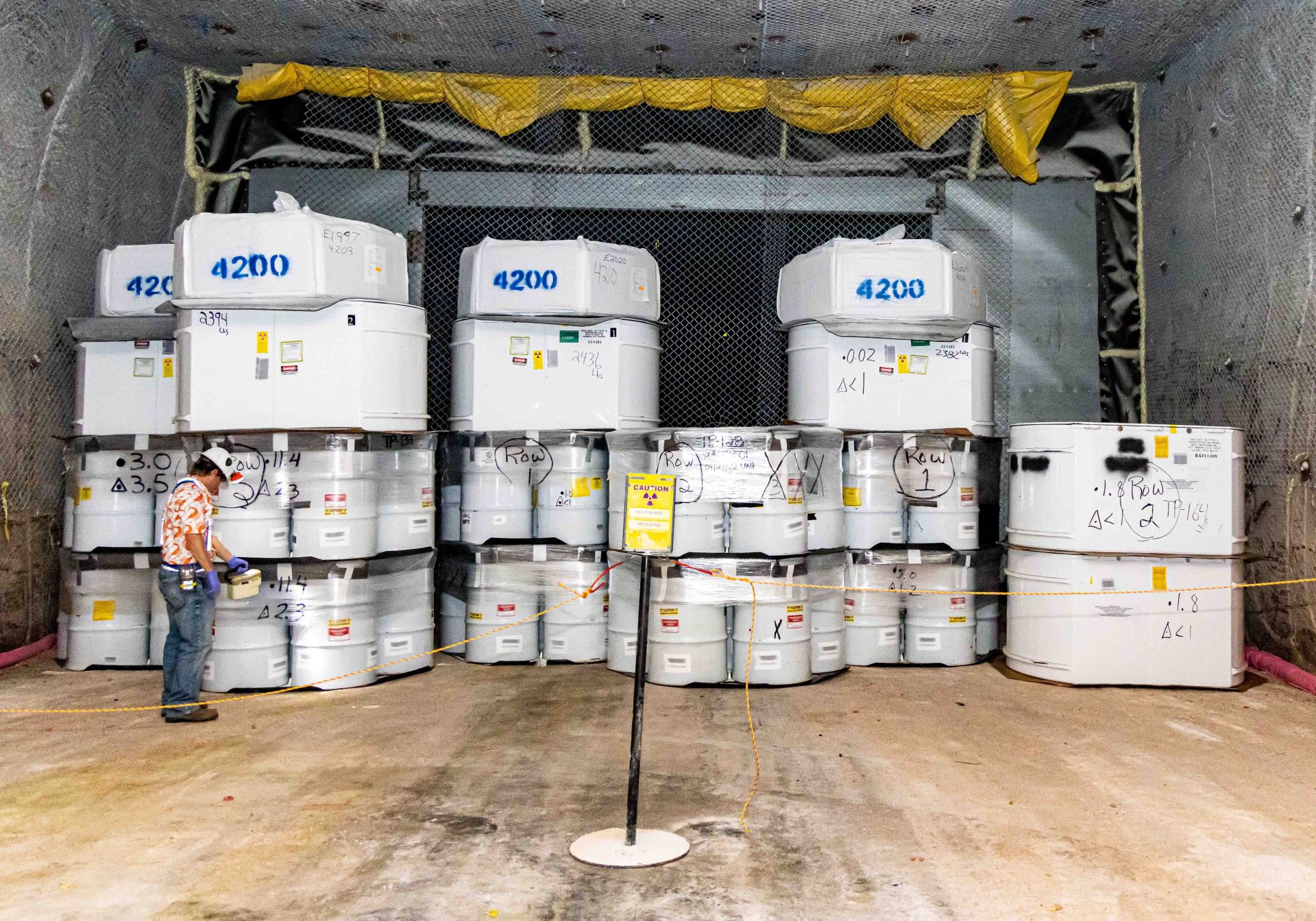
A radiological control technician checks radiation readings on waste containers arriving at WIPP. (Photo: WIPP)
In an amendment to a 1998 record of decision, the Department of Energy is expanding the available space at its Waste Isolation Pilot Plant deep geological repository for defense-related radioactive waste, and is also now planning to accept waste at the facility for 50 more years than previously planned. The amended decision, which was signed on August 18 by Tim Walsh, assistant secretary for Environmental Management, commits the DOE to a WIPP operating horizon extending to about 2083.
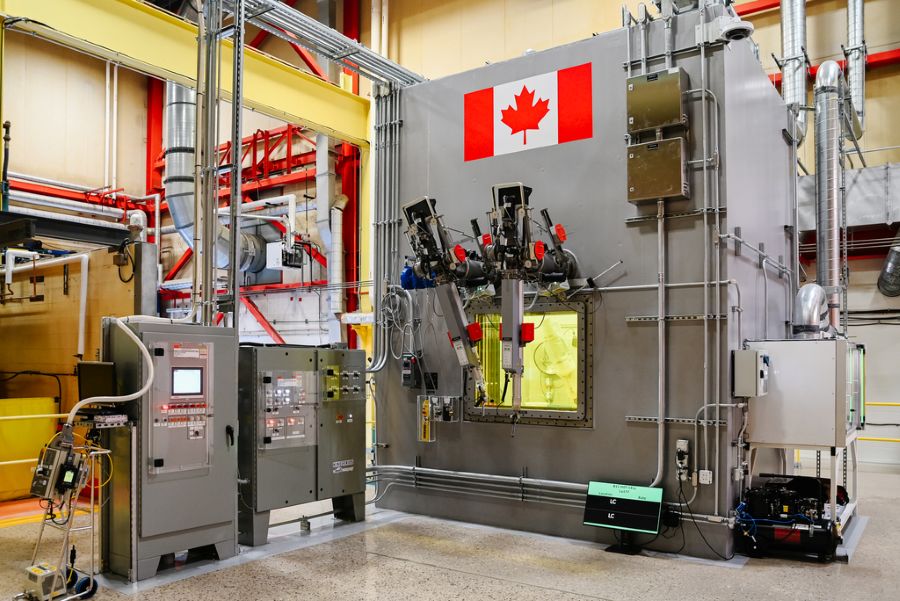
Bruce Power’s hot cell for the TCR step of lutetium-177 production, in Tiverton, Ontario. (Photo: Bruce Power)
The Canadian Nuclear Safety Commission has given Bruce Power approval to operate the company’s hot cell facility in Tiverton, Ontario, for medical radioisotope processing. This approval allows the facility to conduct Target Carrier Removal (TCR), a key step in the production of lutetium-177, an isotope used to treat prostate and gastric cancers.