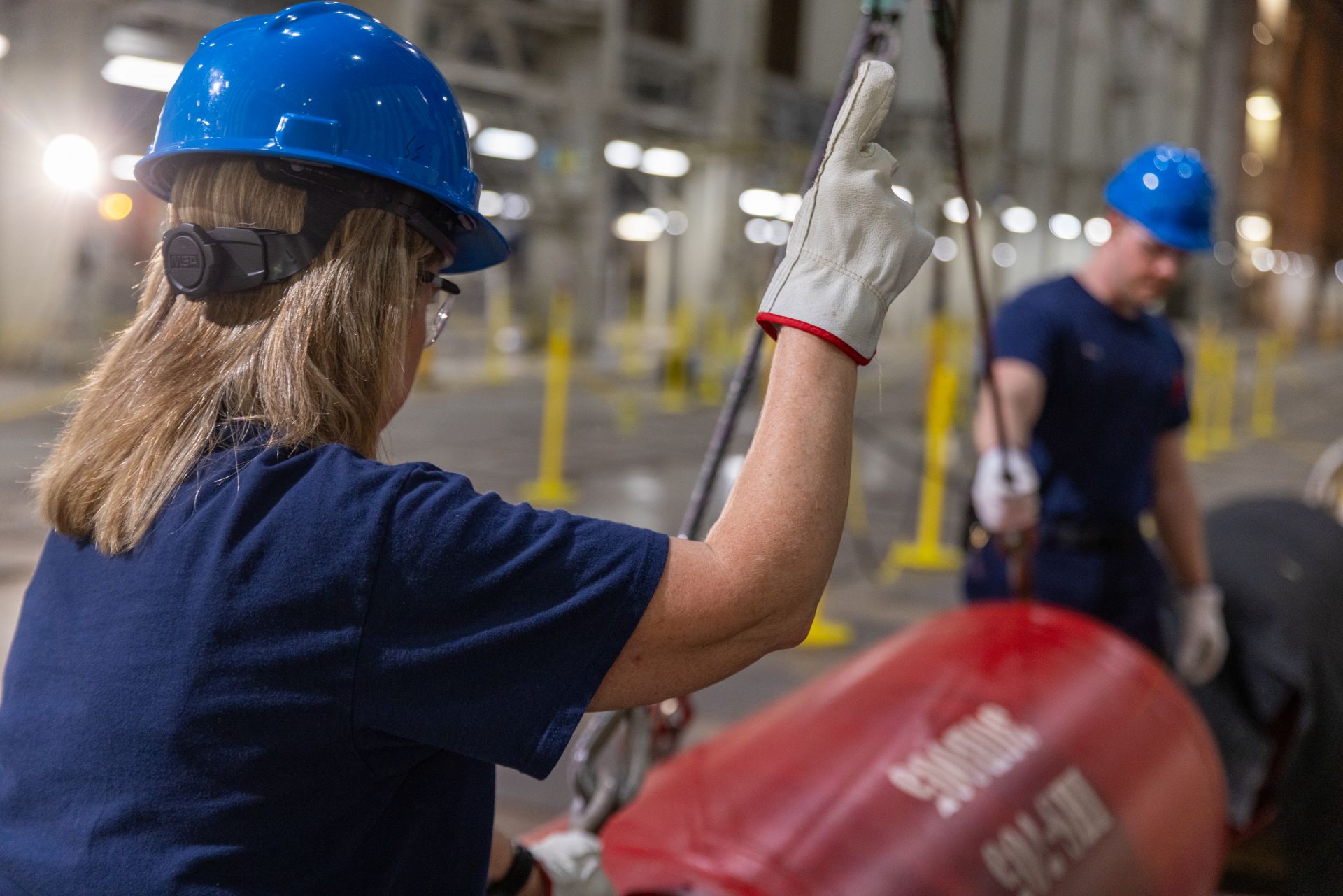
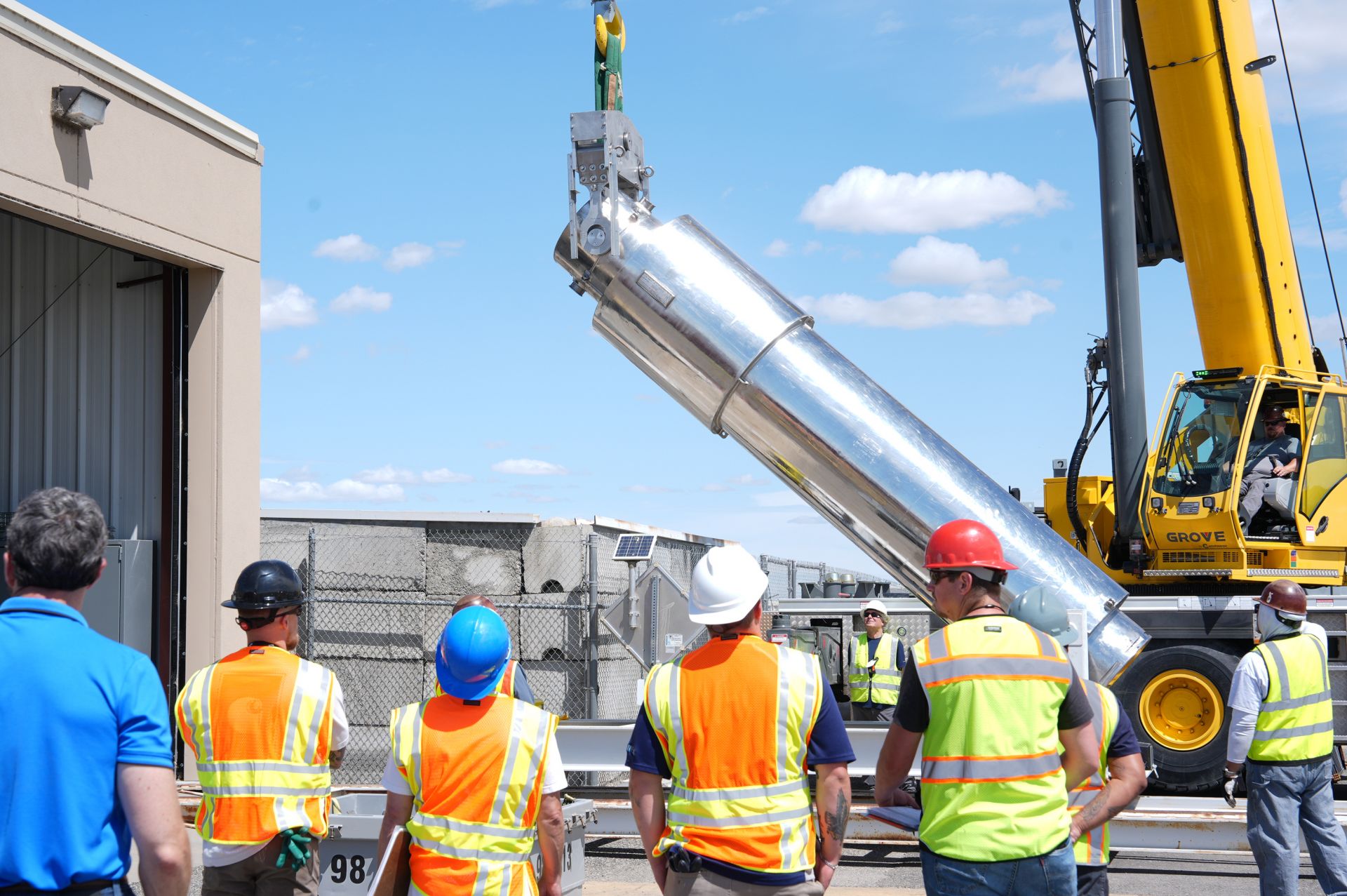
Centrus employees maneuver a cylinder at the American Centrifuge Plant in Piketon, Ohio. (Photo: Centrus Energy)
Centrus Energy announced a plan yesterday to add 300 new jobs at Centrus’s uranium enrichment plant in Piketon, Ohio, “in advance of federal funding decisions.” The company envisions adding capacity for both low-enriched uranium and high-assay low-enriched uranium production at its American Centrifuge Plant, but the “size and scope” of public and private investment is “subject to being selected for funding by the U.S. Department of Energy.”
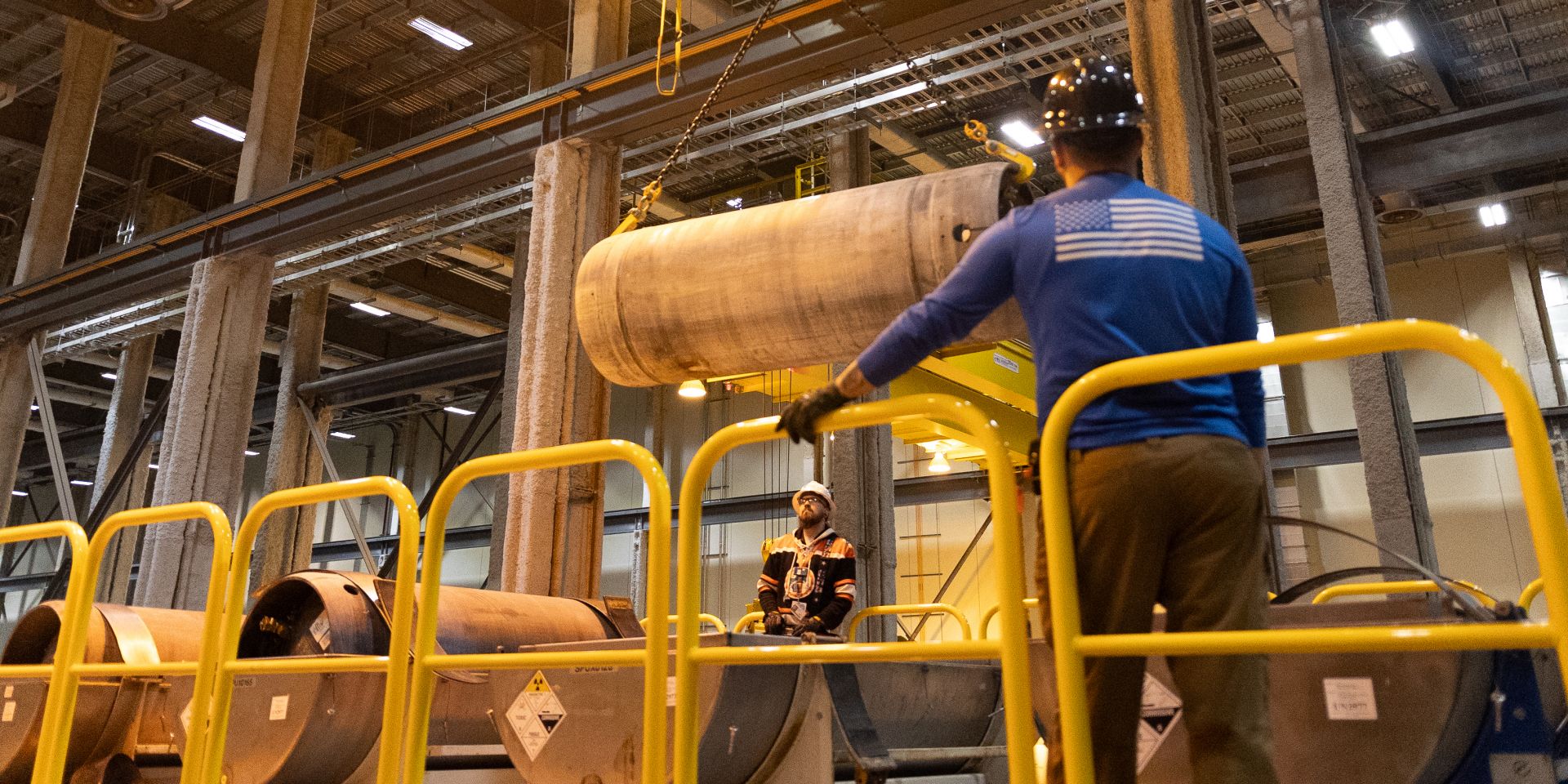
Urenco USA employees move a uranium hexafluoride cylinder to an overpack in preparation for shipping to a fuel fabricator.(Photo: Urenco USA)
The startup of a new cascade of gas centrifuge at Urenco USA’s (UUSA) uranium enrichment facility in Eunice, N.M., came ahead of schedule and on budget, according to the company.
Kairos Power’s fluoride salt–cooled high-temperature Reactor (KP-FHR) uses TRISO fuel embedded in annular graphite pebbles roughly the size of a golf ball. (Photo: Kairos Power)
Kairos Power and BWX Technologies announced today that they will work together to “collaboratively explore” optimizing commercial production of TRISO fuel for Kairos’s planned advanced reactor fleet—beginning with the 50-MWe Hermes 2, slated for operation in 2030—and other potential customers. Their collaboration could include jointly developing a TRISO fuel fabrication facility.
Fuel rods were delivered to PNNL in late June 2025 in a 30-ton canister. (Photo: Andrea Starr/PNNL)
Eleven high-burnup fuel rods manufactured by Global Nuclear Fuel have been delivered to Pacific Northwest National Laboratory for a battery of destructive tests. PNNL’s evaluation will provide GNF and the Department of Energy with information about the performance of the fuel, which—like other fuels developed through the DOE’s Accident Tolerant Fuel program— was engineered to handle longer operating cycles, improve fuel cycle economics, and support power uprates for existing light water reactors.
Concept art showing the Aurora Powerhouse. (Image: Oklo)
A strategic collaboration has been launched by Lightbridge Corporation and Oklo Inc. to explore locating Lightbridge’s fuel fabrication facility within Oklo’s planned advanced fuel manufacturing facility. The collaboration aims to “accelerate the commercialization of advanced nuclear fuels through joint fuel fabrication and research and development, including manufacturing fuel using repurposed plutonium from legacy materials,” according to the companies.
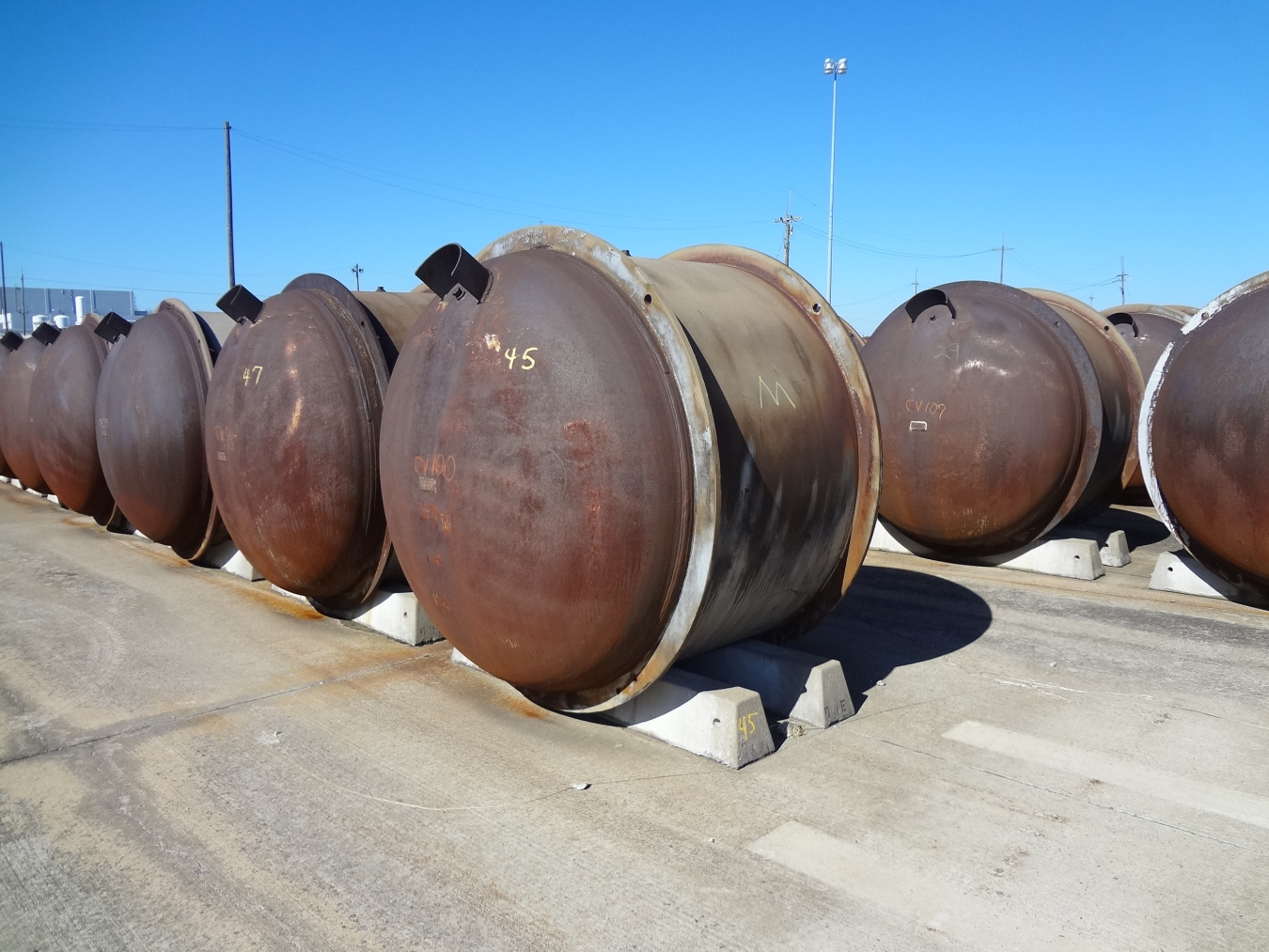
Uranium hexafluoride cylinders stand in a cylinder yard at the Paducah site. (Photo: DOE)
The Department of Energy’s Office of Environmental Management announced it has signed a lease with General Matter for the reuse of a 100-acre parcel of federal land at the former Paducah Gaseous Diffusion Plant in Kentucky for a new private-sector domestic uranium enrichment facility.
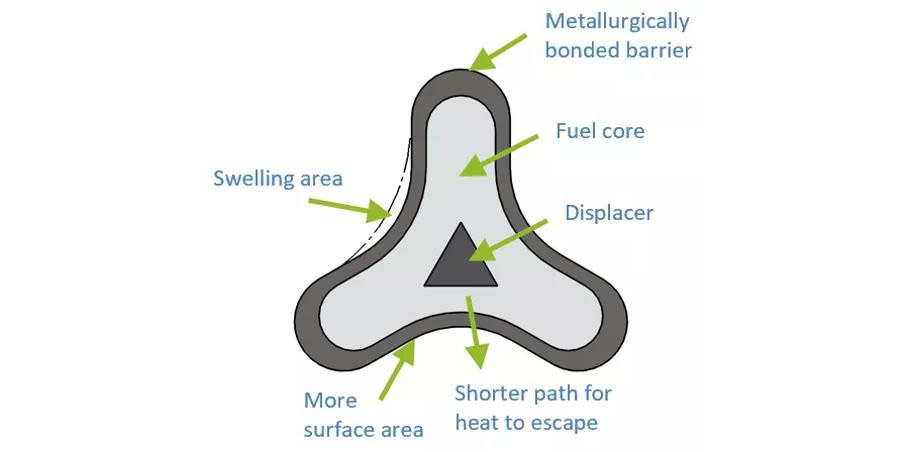
Diagram showing the structure of Lightbridge Fuel. (Image: Lightbridge)
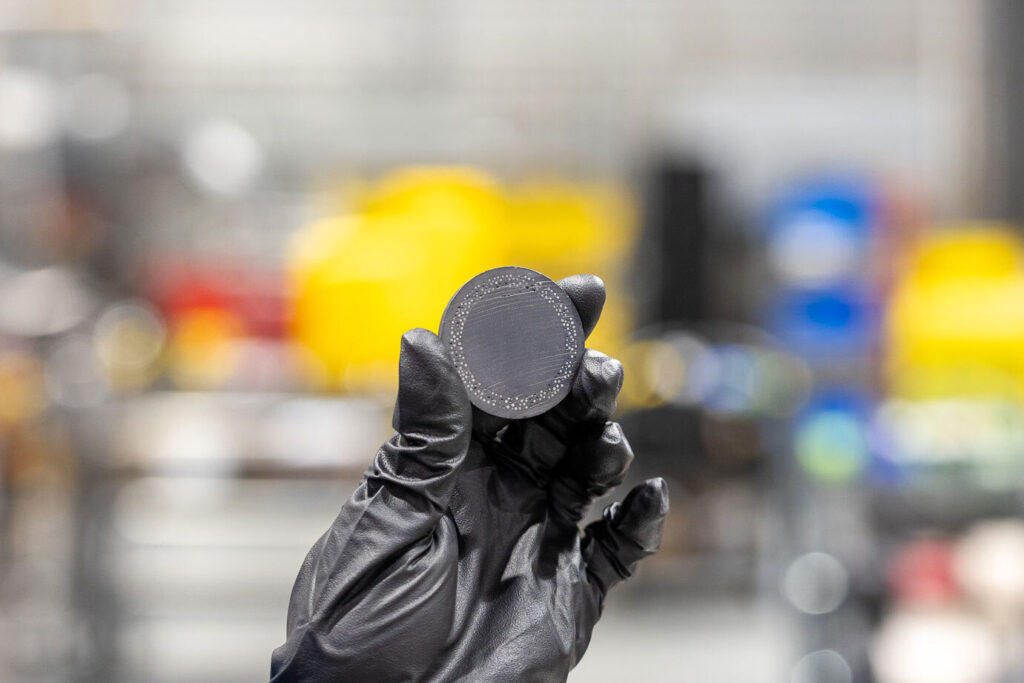
Lightbridge Corporation has fabricated samples of nuclear fuel materials made of an enriched uranium-zirconium alloy, matching the composition of the alloy that the company intends to use for its future commercial Lightbridge Fuel product. The fuel is designed to improve the performance, safety, and proliferation resistance of nuclear reactors, according to the company. The enriched coupon samples will now be placed into capsules for irradiation testing in Idaho National Laboratory’s Advanced Test Reactor.
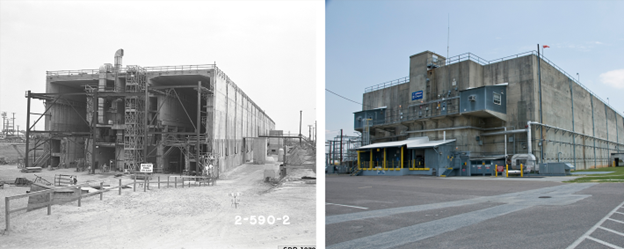
H Canyon under construction in the early 1950s (left) and in 2010. (Photos: Savannah River Site)
From 2003 to 2011, staff at the Department of Energy’s Savannah River Site downblended high-enriched uranium in the site’s H Canyon, producing over 300 metric tons (MT) of low-enriched uranium that was fabricated into fuel. The facility has since been idled, but downblending could soon begin again—this time to high-assay low-enriched uranium (HALEU).
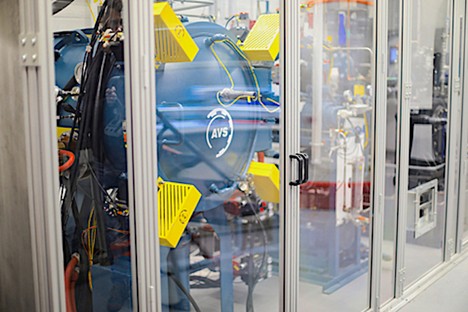
The chemical vapor infiltration furnace at BWXT’s Lynchburg Technology Center in Lynchburg, Va. (Photo: BWXT)
BWX Technologies (BWXT) has achieved a key milestone in its project to additively manufacture advanced forms of TRISO fuel for Generation IV advanced nuclear reactors. The Lynchburg Technology Center of subsidiary company BWXT Advanced Technologies, located in Lynchburg, Va., has successfully installed and tested a chemical vapor infiltration (CVI) furnace that solidifies pre-forms that are then filled with TRISO particles, a fuel consisting of carbon and silicon layers surrounding a uranium kernel.
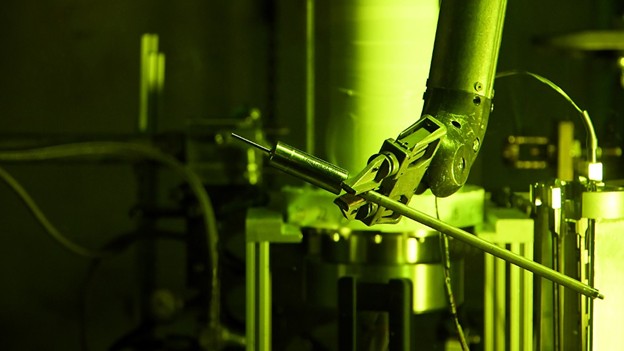
A commercially irradiated, refabricated test rod in an INL hot cell. (Photo: INL)
An article in the OECD Nuclear Energy Agency’s July news bulletin noted that a first test has been completed for the High Burnup Experiments in Reactivity Initiated Accident (HERA) project. The project aim is to understand the performance of light water reactor fuel at high burnup under reactivity-initiated accidents (RIA).
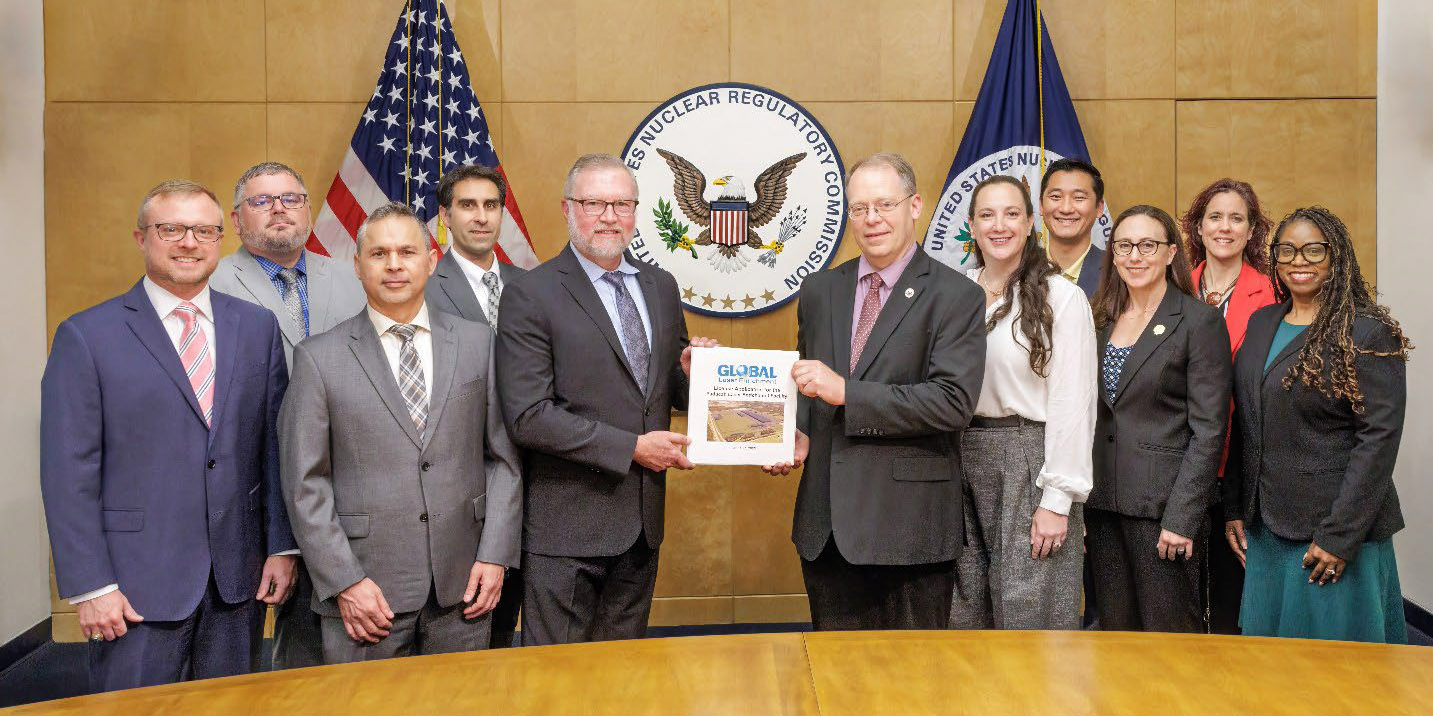
From left: GLE’s Stephen Long, Scott Steuer, Jesus Diaz-Quiroz, Nima Ashkeboussi, and Timothy Knowles, with the NRC’s Matt Bartlett, Samantha Lav, Robert Sun, Shana Helton, Andrea Kock, and Kimyata Morgan-Butler. (Photo: GLE)
Global Laser Enrichment announced that it has submitted its safety analysis report to the Nuclear Regulatory Commission for the planned Paducah Laser Enrichment Facility (PLEF). This follows GLE’s December 2024 submission of the plant’s environmental report, now completing GLE’s full license application for NRC review.